Walk
At the roots of western civilization
Athens, Greece
Walk
At the roots of western civilization
Athens, Greece
8.2 km
Distance
3h30
Durée
27
Audios
Loop
Parcours
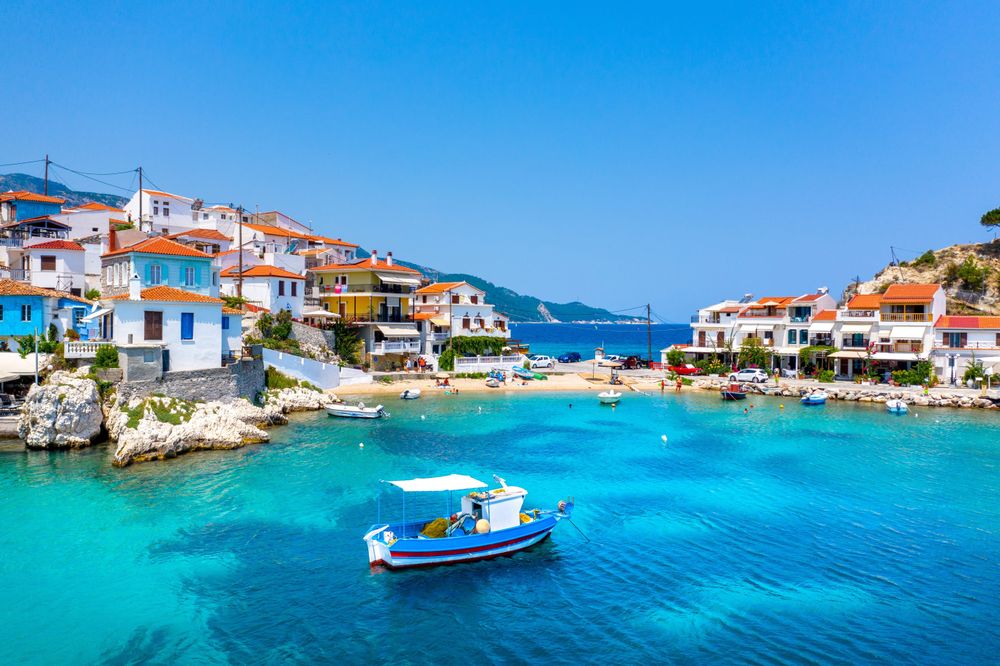
Greece doesn't reveal itself — it unfolds. Between the golden columns of its ancient temples, the absolute blue of the Aegean Sea, and the white stone alleyways winding down to the harbours, every step opens a new chapter of a story thousands of years in the making. Visiting Greece means accepting the pace of its tales, the scent of oregano, and the bells that ring out in the evening light. With Ryo audio-guided tours available in Athens, Chania, Fira and Heraklion, this age-old country tells its story differently: by walking, by listening, by immersing yourself in it.
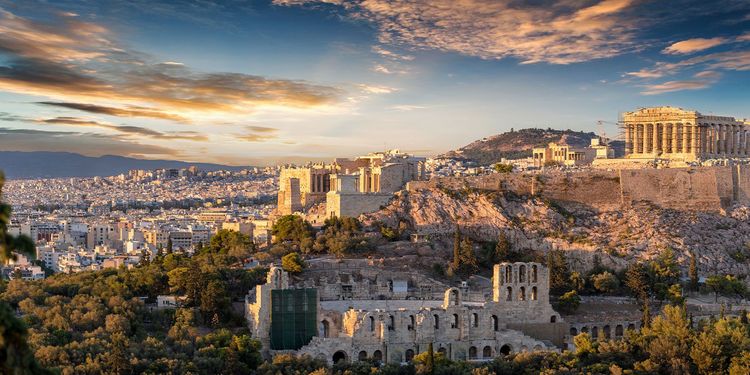
At the foot of the Acropolis, Athens pulses with an energy that is at once ancient and alive. The Ryo audio-guided tour "In the Footsteps of Western Civilisation" takes travellers to the heart of its archaeological sites, museums with extraordinary collections, and neighbourhoods where ancient philosophy still seems to linger in the air. The Agora, the Parthenon, the alleyways of Monastiraki: Athens rewards those who know how to look up and listen closely.
In the north-west of Crete, Chania carries within it the traces of every civilisation that has shaped it, from the Minoans to the Ottomans by way of the Venetians. The Ryo tour "6 Names for 7,000 Years of History" guides travellers along the old harbour with its distinctive domes, through the covered souk, and on to the remnants that bear witness to a past as dense as it is fascinating.
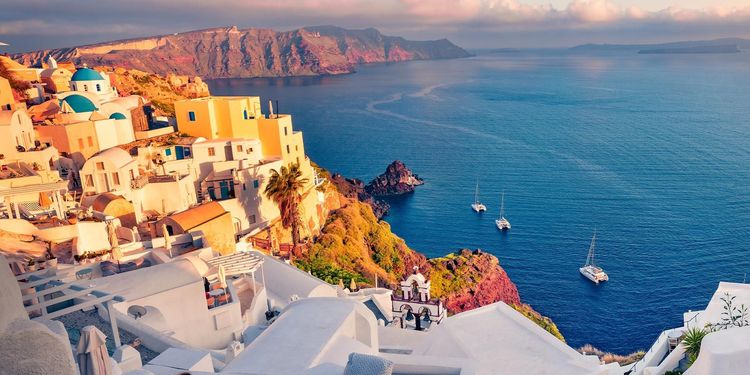
Clinging to the edge of the volcanic caldera, Fira offers one of the most breathtaking panoramas in the entire Mediterranean basin. The Ryo tour "Santorini's Perched Jewel" invites visitors to explore the suspended pathways between sky and sea, to understand the geological origins of this unique landscape, and to sense the island life hidden behind its immaculate white façades.
The capital of Crete, Heraklion blends the power of Minoan myth with the elegance of Venetian fortifications. The Ryo tour "Where the Minotaur Meets the Venetians" retraces the history of this crossroads city, from the ruins of the Palace of Knossos to the ramparts overlooking the Mediterranean, via an archaeological museum of world renown.
Beyond the cities covered by Ryo, Greece unfolds territories of exceptional richness. The Peloponnese invites travellers to explore ancient sites such as Mycenae and Olympia, the birthplace of the Games. Further north, Meteora raises its monasteries perched atop vertiginous rocky pinnacles, offering an experience that is at once spiritual and geological. The Cyclades, of which Mykonos is the most celebrated, offer an archipelago of whitewashed villages bathed in light. Delphi, on the slopes of Mount Parnassus, is a reminder that Greece was long considered the navel of the world. Finally, Epirus, Greek Macedonia, and Thessaly draw travellers seeking wilder landscapes, from dense forests to agricultural plains.
Spring, from late March to early June, is generally the ideal time to visit Greece: the light is soft, the vegetation is in bloom, and the archaeological sites can be enjoyed without crowds. Autumn, from September to November, offers similar conditions with a sea that is still warm. Summer attracts the greatest number of travellers, particularly to the islands, but the heat can be intense and the sites very busy. Winter is better suited to Athens and cultural getaways on the mainland, away from seasonal tourist flows.
Mainland Greece is easily covered by car or bus between major cities and archaeological sites. To reach the islands, ferries are the traditional and often most picturesque means of transport, while flights save time on longer routes. In cities, walking remains the curious traveller's best ally: it is on foot, weaving through alleyways and squares, that Greece reveals its most beautiful secrets.
Spring and autumn are generally the most pleasant seasons for exploring Greece. Temperatures remain mild, the landscapes are bright, and ancient sites can be enjoyed in good conditions. Summer is ideal for the islands and the seaside, but it is worth anticipating larger crowds at iconic locations.
A one-week stay allows you to combine Athens with an island such as Santorini or Crete. Two weeks offer the opportunity to explore several regions, alternating between the mainland and the archipelagos, and to linger among historical sites and authentic villages. For a more complete itinerary including the Peloponnese, Meteora, and several islands, allowing more time is advisable.
Ferries provide regular connections between most islands and mainland ports, with a frequency that varies by season. Some routes between more distant islands are also served by domestic flights. On the ground, a hire car or scooter allows you to explore the islands freely at your own pace.
The Acropolis of Athens and its Parthenon rank among the most iconic monuments of the ancient world. The Santorini caldera, the Minoan palace of Knossos near Heraklion, the monasteries of Meteora, and the site of Delphi are among the experiences that many travellers place at the heart of their itinerary. The old harbours of Chania and Heraklion, a legacy of Venetian rule, are also well worth exploring in depth.
Greek cuisine celebrates the Mediterranean in all its generosity: olive oil, cheeses such as feta, grilled vegetables, varied mezze, and fresh fish make up meals that are at once simple and flavourful. Cretan honey, Kalamata olives, and wines produced on volcanic terroirs such as Santorini are among the flavours to discover throughout the journey. Sharing a meal in a local taverna remains one of the most authentic ways to connect with Greek culture.
Greece lends itself very well to independent travel. Tourist infrastructure is well developed, the locals are welcoming, and English is generally understood in frequented areas. The Ryo audio-guided tours available in Athens, Chania, Fira, and Heraklion allow you to explore these cities at your own pace, with no group constraints or fixed schedules, while enjoying rich, contextualised narratives directly from your smartphone.