





Walk
The Heart of the House of Savoy
Turin, Italy
Walk
The Heart of the House of Savoy
Turin, Italy
6.8 km
Distance
2h45
Durée
22
Audios
Loop
Parcours
Shutterstock
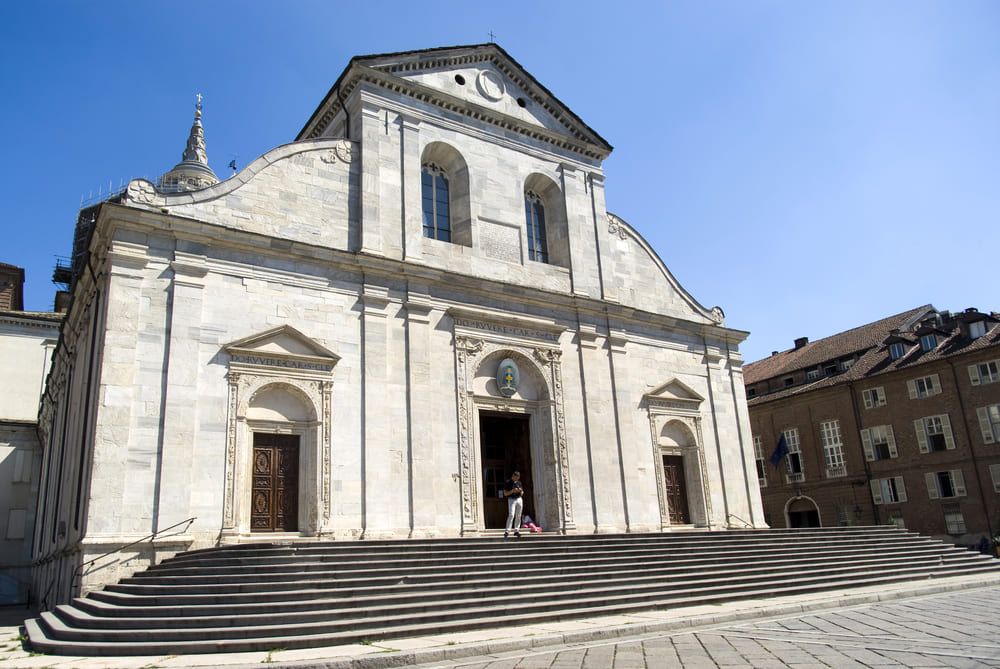
Saint John the Baptist Cathedral, or Duomo of Turin, is the main church of the city, famous for housing the Holy Shroud. The Turin audio-guided tour stops here, with respect, to evoke this emblematic sanctuary, the spiritual heart of the city.
Saint John the Baptist Cathedral, the main church of Turin, was built in the Renaissance. It is world-famous for keeping the Holy Shroud, the shroud venerated by many faithful, housed in the chapel dedicated to it. Sober on the outside, the building is a high place of faith and religious history of Turin, where the Shroud is presented to the public only on exceptional occasions.
You admire the Renaissance architecture of the cathedral, its interior and the chapel dedicated to the Holy Shroud, in an atmosphere of contemplation. The Shroud itself is presented only on exceptional occasions. It is a major stop for lovers of religious heritage, to be discovered with respect, in the heart of Turin.
Saint John the Baptist Cathedral lies in the heart of the historic centre of Turin, near the Royal Palace and the Palatine Gate, reachable on foot. A working Catholic place of worship, it can be visited with respect for services; entry is generally free, but hours vary. The Holy Shroud is displayed only on exceptional occasions. It is best to enquire before coming.
Because it keeps the Holy Shroud, the shroud venerated by many faithful, housed in a dedicated chapel; it is the main church of Turin.
In the heart of the historic centre of Turin, near the Royal Palace and the Palatine Gate.
Aucun avis pour le moment
