





RyoCity
The Parthenopean City
Naples, Italy
RyoCity
The Parthenopean City
Naples, Italy
5.7 km
Distance
2h15
Durée
19
Audios
Boucle
Parcours
Shutterstock
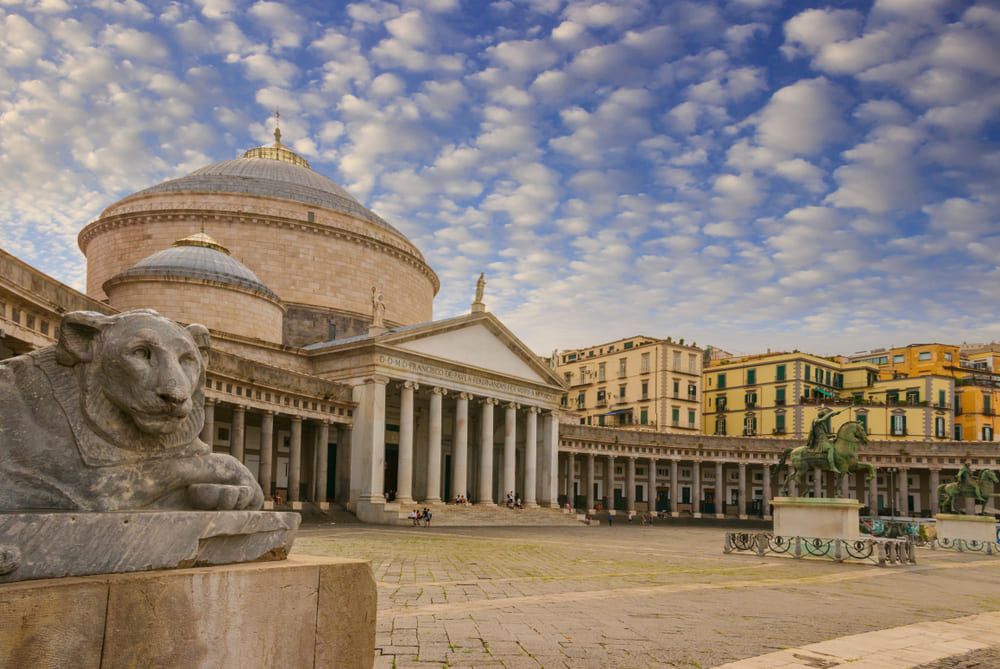
This is Naples’ grand ceremonial square, Piazza del Plebiscito—an elegant open space framed by two imposing landmarks: the Basilica of San Francesco di Paola and the Royal Palace. Together, they create a rare sense of openness in a city known for its constant buzz, with more than 25,000 square meters to pause and take it all in. The square takes its name from the plebiscite of October 21, 1860, which marked a key step toward Italian unification. At the time, Italy was still a collection of independent states, gradually joining to form a single nation—from the first territorial unions, to Rome becoming the capital, and finally to the recognition of Vatican City as an independent state in 1929. In 1860, the central provinces joined the Kingdom of Sardinia, while Savoy and Nice were ceded to France in exchange for Napoleon’s support. Facing you, in the center of the sweeping colonnade, stands the Basilica of San Francesco di Paola, built in 1817 by King Ferdinand I of Bourbon as a vow to God after reclaiming the kingdom from French occupation. Designed by Pietro Bianchi and inspired by Rome’s Pantheon, it is one of Naples’ largest churches, crowned by a dome supported by 34 Corinthian columns, each 11 meters high. Opposite it is the Royal Palace, one of four Bourbon residences when Naples was capital of the Kingdom of the Two Sicilies. Commissioned in 1600, it first served as the residence of Spanish viceroys, then Austrian viceroys, depending on who ruled Naples. The monumental statues in the exterior niches were added in 1888 by King Umberto I, representing the kings of Naples through the centuries. Today, part of the palace houses the National Library, while its oldest wing contains a history museum where visitors can explore grand halls and trace the city’s past through the dynasties that shaped it.
