





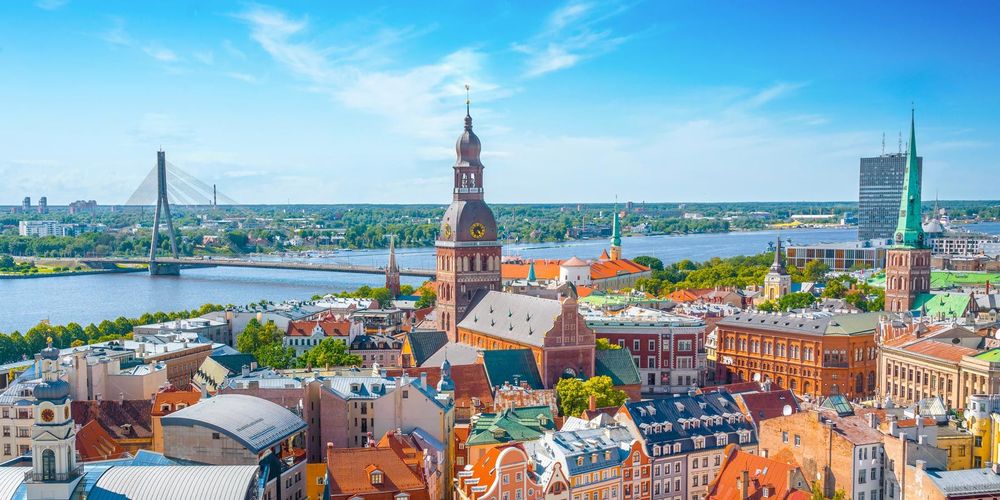
Walk
The Little Paris of the Baltics
Riga, Latvia
Walk
The Little Paris of the Baltics
Riga, Latvia
4.3 km
Distance
2h00
Durée
28
Audios
Loop
Parcours
Shutterstock
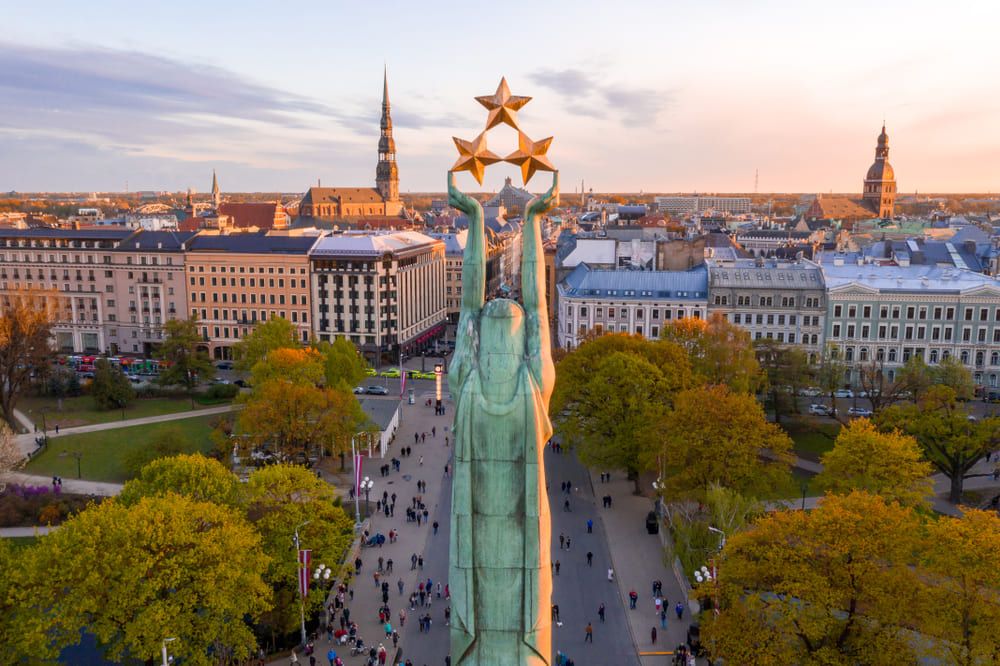
A solemn place of remembrance on the Riga audio-guided tour, the Freedom Monument is a major national memorial. It pays tribute to the soldiers who fell during the Latvian War of Independence, from 1918 to 1920.
Inaugurated in 1935 and forty-two metres high, the monument was entirely funded by donations from the Latvian people, which reinforces its symbolic value. At its summit stands a female copper figure, nicknamed Milda, who represents Freedom and holds three golden stars symbolising the three great historic regions of the country: Vidzeme, Latgale and Courland.
At its base, fifty-six sculptures and bas-reliefs tell the history, culture and values of Latvia, with scenes of family, work, struggle and spirituality, as well as references to the fights for independence. Walk around the monument with respect to appreciate all its symbolism, in memory of the soldiers it honours.
The Freedom Monument stands in the centre of Riga, between the old town and the modern district. Freely accessible, it can be seen at any time, with respect for this place of remembrance.
The soldiers who fell during the Latvian War of Independence, from 1918 to 1920.
Freedom; she holds three stars symbolising the regions of Vidzeme, Latgale and Courland.
Aucun avis pour le moment
