





Walk
The Little Paris of the Baltics
Riga, Latvia
Walk
The Little Paris of the Baltics
Riga, Latvia
4.3 km
Distance
2h00
Durée
28
Audios
Loop
Parcours
Shutterstock
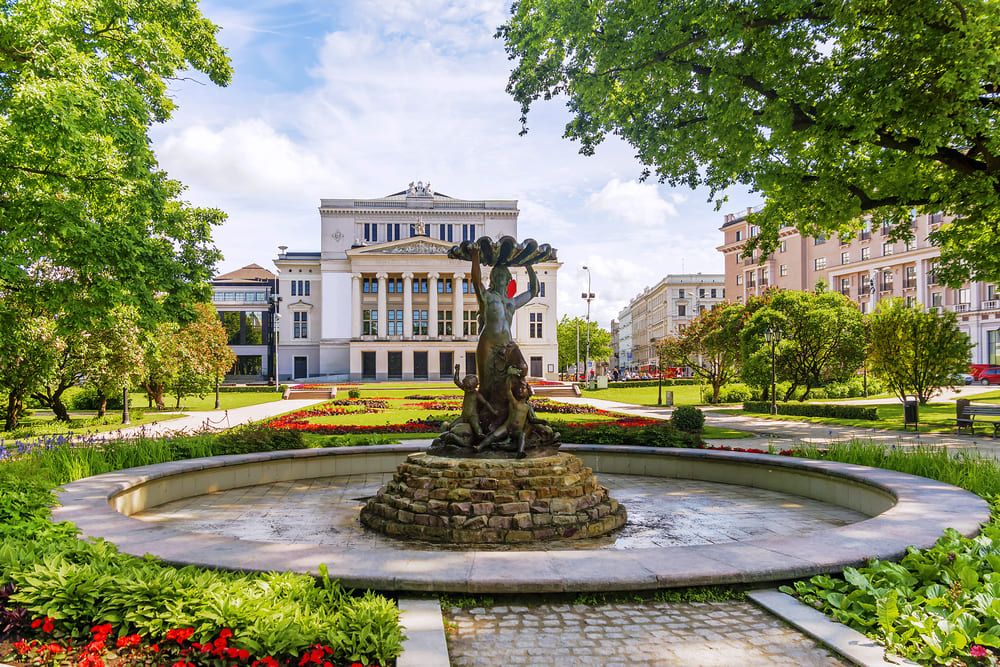
A cultural stop on the Riga audio-guided tour, the Latvian National Opera is recognisable by its six imposing columns, on the edge of the Riga canal. This neoclassical building, inaugurated in 1863 as the municipal theatre, is one of the great cultural symbols of the capital.
Destroyed by a fire in 1882, the building was rebuilt a few years later while keeping its original style, then entirely modernised in the 1990s. Since the birth of the Latvian National Opera in 1918, this place has become the heart of the country's musical life, hosting operas, ballets and symphony concerts.
Several world-renowned Latvian artists, such as the dancer Mikhail Baryshnikov or the conductor Andris Nelsons, made their debut or performed here. Long before them, the composer Richard Wagner held the position of conductor here from 1837. Admire the neoclassical facade of this great music venue.
The Latvian National Opera is on the edge of the Riga canal, near the old town. Programming and performance times should be checked depending on the season with the institution.
Richard Wagner was a conductor there from 1837.
The Latvian National Opera was born in 1918, in this theatre inaugurated in 1863.
Aucun avis pour le moment
