





Walk
The Little Paris of the Baltics
Riga, Latvia
Walk
The Little Paris of the Baltics
Riga, Latvia
4.3 km
Distance
2h00
Durée
28
Audios
Loop
Parcours
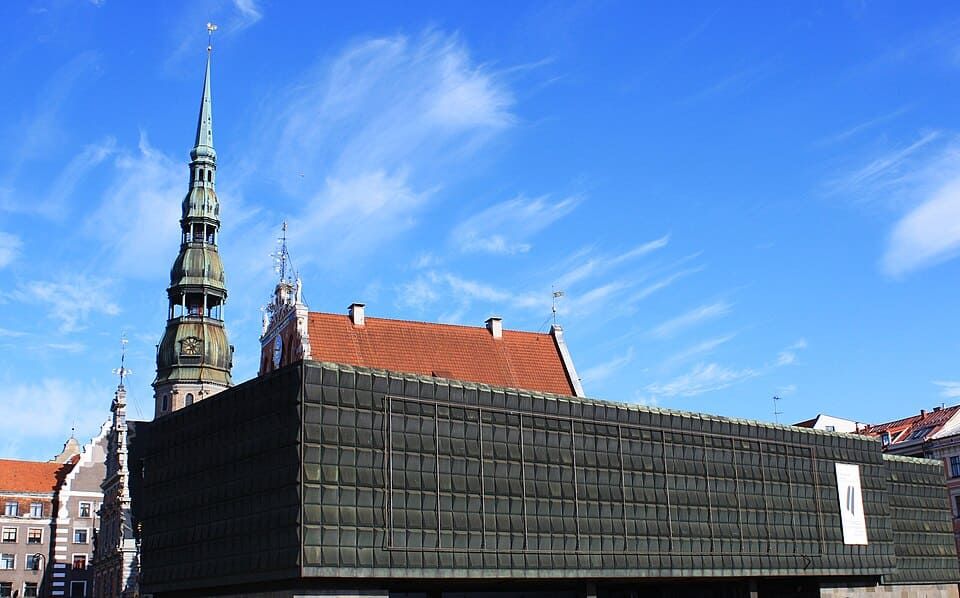
©Сергей Алексеев, CC BY 3.0 <https://creativecommons.org/licenses/by/3.0/deed.fr>via Wikipedia Commons
A solemn place of remembrance on the Riga audio-guided tour, the Museum of the Occupation of Latvia, founded in 1993, has the mission of recounting what the country and its people experienced under the totalitarian regimes between 1940 and 1991.
Because of its strategic position on the Baltic Sea, Latvia was invaded without a declaration of war by the USSR in June 1940. Mass arrests followed and the deportation of more than fifteen thousand people to Siberia and Kazakhstan. In June 1941, Nazi Germany invaded the USSR and quickly occupied the country. This period was marked by the Holocaust in Latvia, where nearly seventy thousand Jews were killed.
After the Nazi defeat, the Red Army retook Latvia in 1944 and the country became a Soviet republic again until its independence in 1991. The museum displays objects, archives and testimonies to transmit this painful memory. Walk through this place with contemplation and respect, in memory of the victims.
The Museum of the Occupation is in the centre of Riga. A place of remembrance, it is visited with respect and contemplation; days, hours and access conditions should be checked depending on the season.
The history of Latvia under the Soviet and Nazi totalitarian regimes, between 1940 and 1991.
In 1993, shortly after Latvia's return to independence in 1991.
Aucun avis pour le moment
