





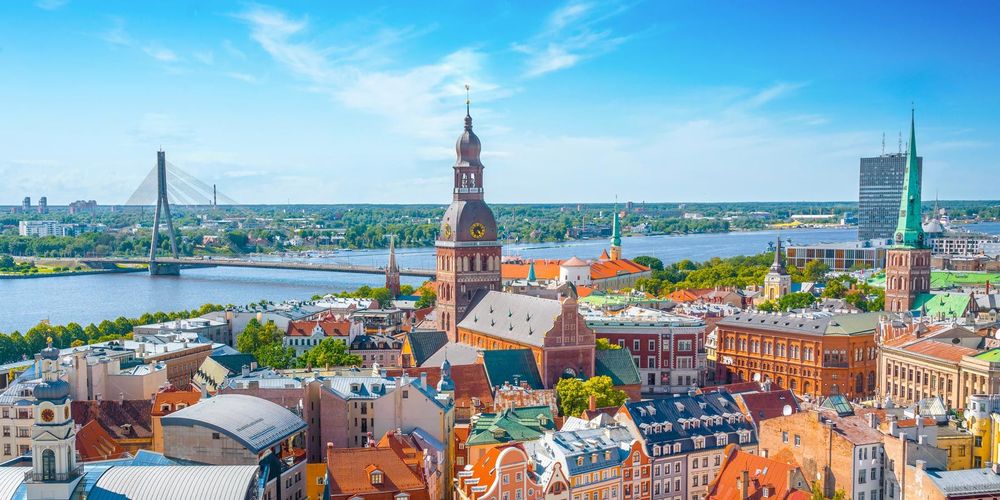
Walk
The Little Paris of the Baltics
Riga, Latvia
Walk
The Little Paris of the Baltics
Riga, Latvia
4.3 km
Distance
2h00
Durée
28
Audios
Loop
Parcours
Shutterstock
A stop on the Riga audio-guided tour, this viewpoint is on Dome Square, a nerve centre to which seven main arteries of the city lead. A circular bronze plaque on the ground recalls that Riga's historic centre has been a UNESCO World Heritage site since 1997.
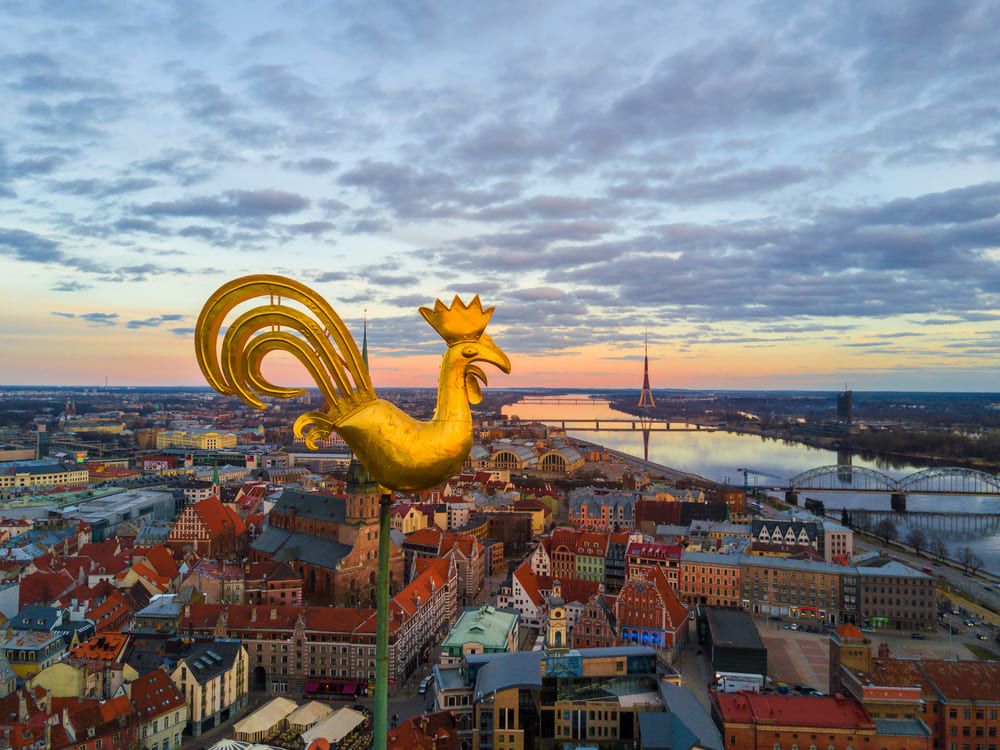
From this point, a few steps towards the building with the majestic balcony allow you to glimpse at the same time the three golden roosters that top the city's bell towers. These roosters are not merely decorative: in the past, they served as landmarks for sailors.
According to tradition, the roosters had a golden side and a black side: when the wind turned, the visible face indicated the coming weather. The gold announced calm weather and the possible entry of ships into the port, the dark side signalled storms and dangers. Look up to spot these three golden sentinels above Riga.
The viewpoint is on Dome Square, in the heart of Riga's old town. Freely accessible, it can be discovered at any time.
As landmarks for sailors: depending on the visible face, they announced calm weather or storms.
Since 1997, as a bronze plaque on Dome Square recalls.
Aucun avis pour le moment
