


Walk
The Little Paris of the Baltics
Riga, Latvia
Walk
The Little Paris of the Baltics
Riga, Latvia
4.3 km
Distance
2h00
Durée
28
Audios
Loop
Parcours

Shutterstock
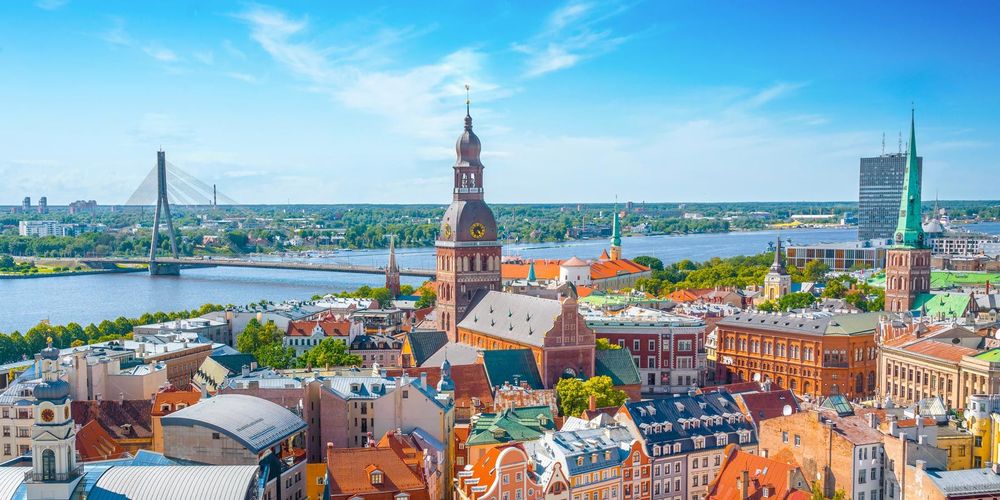
A stop on the Riga audio-guided tour, this viewpoint invites you to contemplate the calm waters of the Daugava and to sit for a moment on the steps. Facing you stands the National Library of Latvia, and behind you, the statue of the Great Kristaps.
According to tradition, this kindly giant lived on the banks of the river and helped travellers cross it by carrying them on his back. One stormy night, he carried a child who grew heavier and heavier, as if he were carrying the whole world, before understanding that it was Christ himself. As a reward, he received a treasure said to have served to found the city of Riga.
Over time, Kristaps became a protective figure, a symbol of courage and devotion, and the inhabitants still leave offerings there. From this viewpoint, admire the modern silhouette of the national library, nicknamed the Castle of Light, reflected in the Daugava.
The viewpoint is on the banks of the Daugava, in the centre of Riga, opposite the National Library. Freely accessible, it can be discovered at any time.
A kindly giant of legend, who became a protective figure linked to the founding of Riga.
The Castle of Light, because of its modern silhouette reflected in the Daugava.
Aucun avis pour le moment