





Walk
The Capital disguised as a village
Luxembourg, Luxembourg
Walk
The Capital disguised as a village
Luxembourg, Luxembourg
5.5 km
Distance
2h15
Durée
19
Audios
Loop
Parcours
Shutterstock
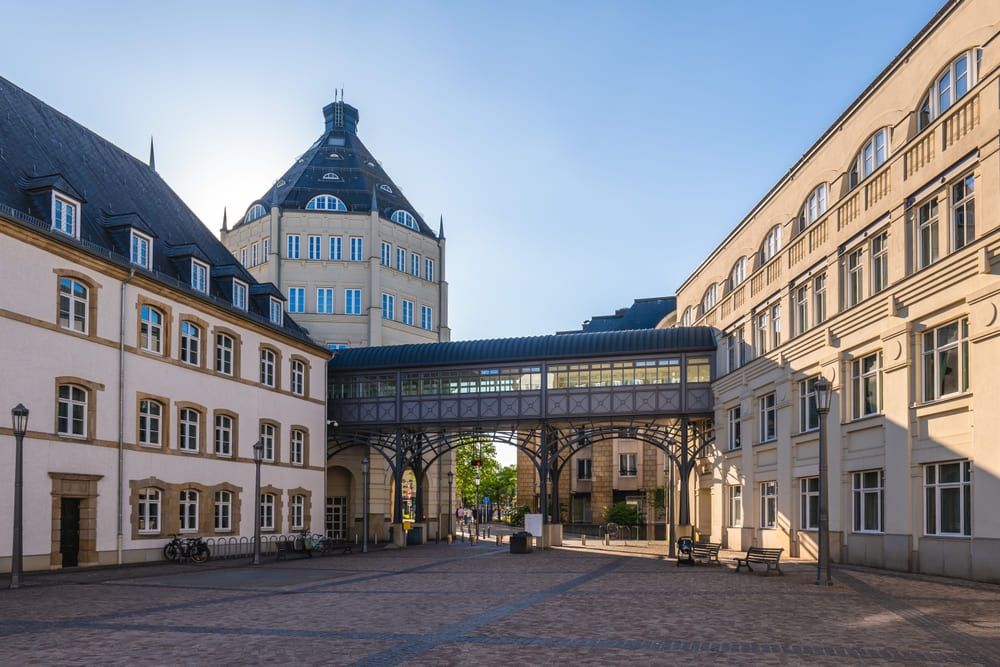
The Luxembourg audio-guided tour leads you to the Saint-Esprit plateau, where the judicial city now stands. In 1234, you would have arrived in the heart of the Saint-Esprit convent, which gave its name to the place.
In the fourteenth century, the plateau was integrated into the third wall of the city. Under the Spanish, in the sixteenth century, it took on a military character later reinforced by Vauban. In 1992, the government decided to create a judicial city there. The complex seen today is the work of the Krier brothers, two Luxembourgish architect-urbanists, inaugurated in the early 2000s.
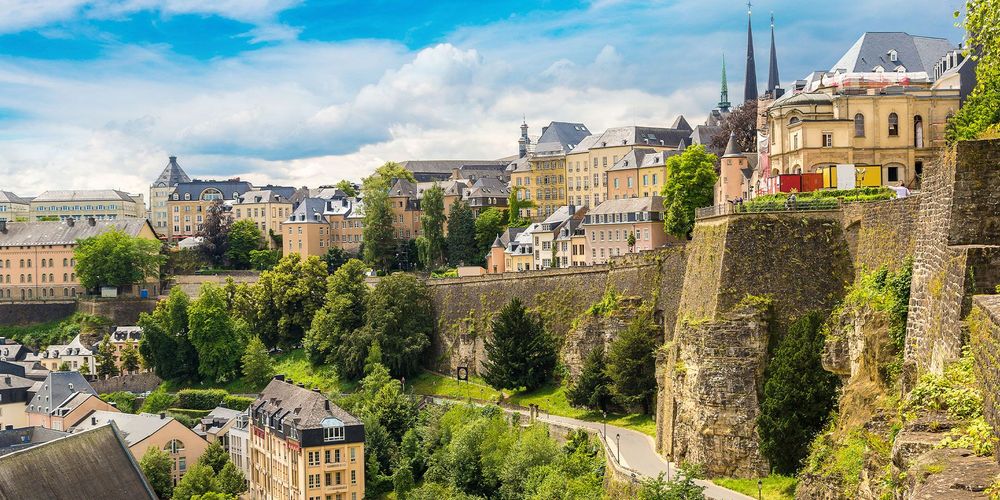
The judicial city blends contemporary architecture with remains of the old fortifications. The plateau offers fine views over the lower town and the valley. It is a place where military history converses with modern justice, illustrating Luxembourg's ability to reinvent its historic sites.
The Saint-Esprit plateau is in the old town of Luxembourg, above the Grund district, to which it is linked by the Grund lift. The surroundings and viewpoints are freely accessible; the judicial city is an institutional site whose interior access is regulated.
There is the judicial city, created from 1992 and the work of the Krier brothers, on the site of a former convent and then a military citadel.
In the thirteenth century, the plateau housed the Saint-Esprit convent, which gave it its name, before being integrated into the city's fortifications.
Aucun avis pour le moment
