




Walk
Along the canals
Amsterdam, Netherlands
Walk
Along the canals
Amsterdam, Netherlands
Distance
6.3 kmDurée
2h30Audios
30Parcours
Loop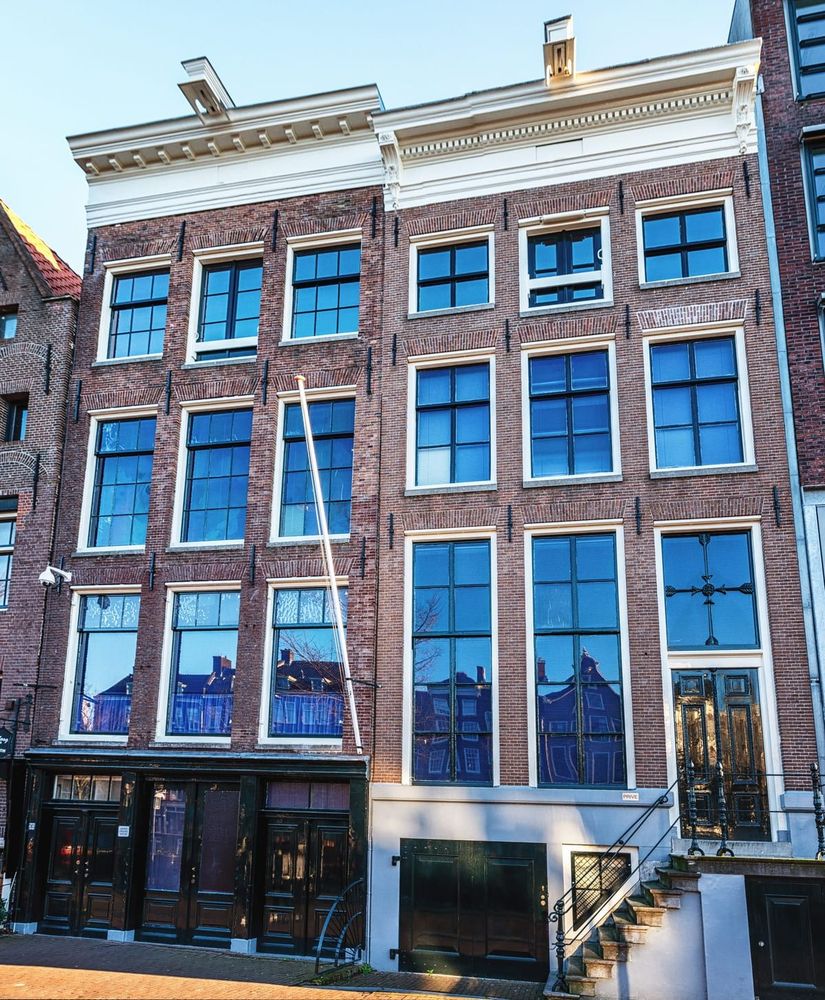
Shutterstock
The Amsterdam audio-guided tour leads you to the Anne Frank House, a major place of memory where a Jewish teenager and her family hid for more than two years to escape Nazi persecution.
During the Second World War, Anne Frank, a Jewish teenager persecuted by the Nazis, hid with her family in the annex of this house for more than two years. She kept a diary there, in which she recounted the daily life of the occupants of the hiding place. Found by her father, the only survivor of the family, this diary was published in 1947 under the name of the Diary of Anne Frank and became a testimony of worldwide significance on the horror of the Shoah. Anne Frank did not survive the war. The house, preserved, today allows one to walk through the rooms of the hiding place and to discover extracts from the diary, with respect and contemplation.
The visit leads through the secret annex where the Frank family lived, behind the famous pivoting bookcase. The bare rooms, the extracts from the diary and the period documents offer a moving immersion in this history. It is an essential place of memory, which invites reflection on tolerance and the remembrance of the victims of Nazism.
The Anne Frank House is on the Prinsengracht, in the centre of Amsterdam. The visit is in high demand and is organised in time slots; it is advisable to find out in advance about the access arrangements from the official website.
A Jewish teenager who, persecuted during the Second World War, kept a diary that became a worldwide testimony on the Shoah.
The secret annex where the family lived, extracts from the diary and documents that retrace this history and call for remembrance.
Aucun avis pour le moment
