
Walk
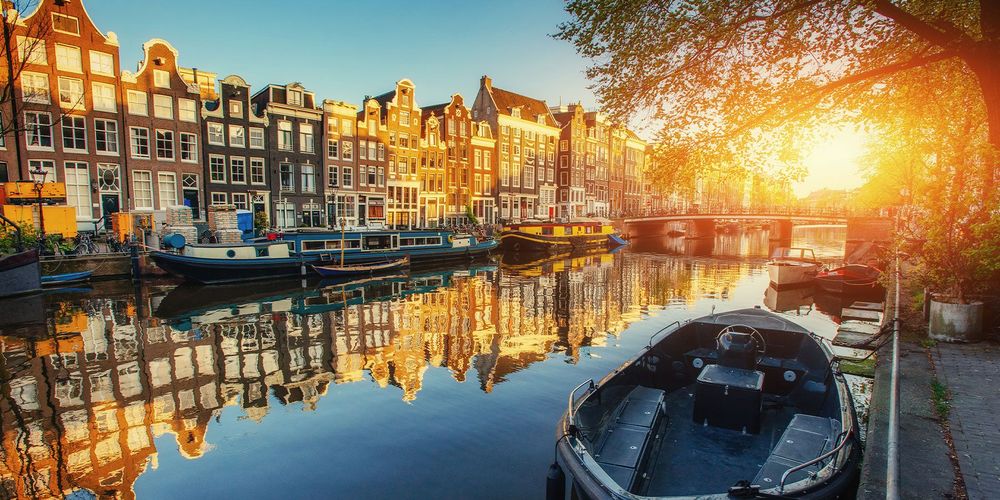
Short version - Along the canals
Amsterdam, Netherlands
Walk
Short version - Along the canals
Amsterdam, Netherlands
Distance
3.8 kmDurée
1h30Audios
21Parcours
Loop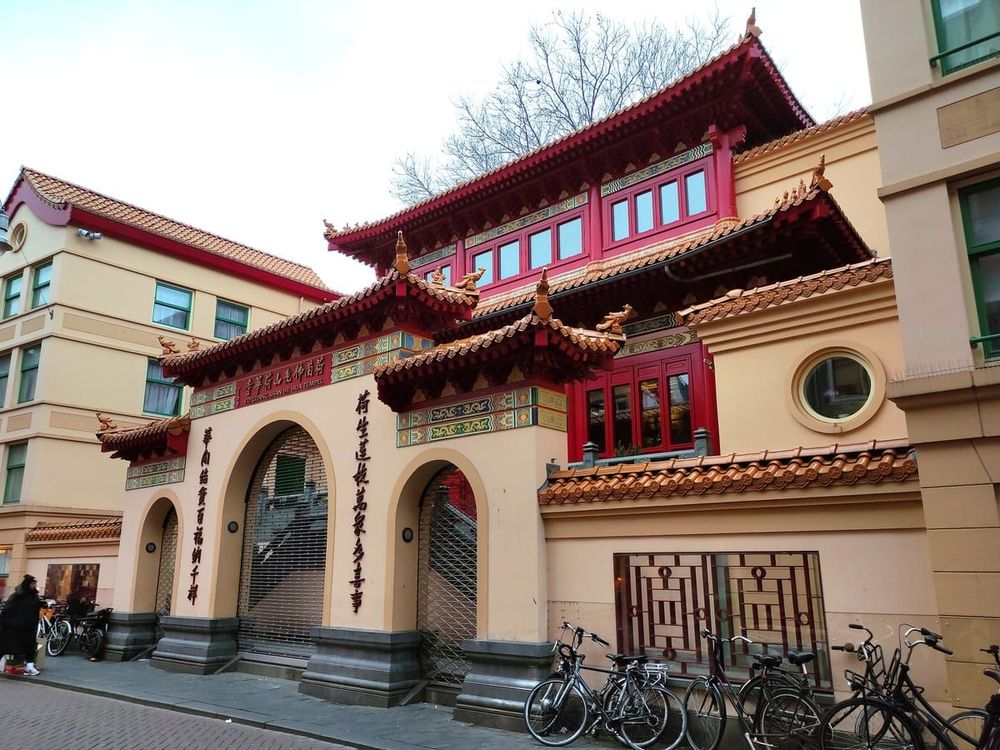
Shutterstock
The Amsterdam audio-guided tour leads you to the heart of the Chinatown, before the Fo Guang Shan He Hua temple, the largest Buddhist temple of traditional Chinese style in Europe.
Built in 2000, the He Hua temple, whose name means "Lotus Flower" in Mandarin, is the largest Buddhist temple of traditional Chinese style in Europe. It is dedicated to Guanyin, bodhisattva of compassion and a rare female figure of Buddhism. The building was constructed by the Buddhist order Fo Guang Shan, a community originating from Taiwan whose approach is part of humanistic Buddhism. Its presence in the heart of the Chinatown of Amsterdam testifies to the cultural and spiritual diversity of the city. Visitors are invited to enter by one of the side doors to discover the sanctuary with respect for the place.
The He Hua temple stands out by its traditional Chinese architecture, its curved roofs and its colourful ornaments, which contrast with the surrounding Dutch façades. Inside, the sanctuary dedicated to Guanyin invites to calm and contemplation. It is a peaceful and exotic place, which reveals another face of Amsterdam, open to the cultures of the world.
The Fo Guang Shan He Hua temple is in the Chinatown of Amsterdam, near the Nieuwmarkt square. A place of worship open to visitors, it is discovered with respect and calm; one enters by a side door, according to the opening hours to be checked on site.
"Lotus Flower" in Mandarin; the temple is dedicated to Guanyin, bodhisattva of compassion.
It is the largest Buddhist temple of traditional Chinese style in Europe, built in 2000 by the Fo Guang Shan order.
Aucun avis pour le moment