





Walk
A humble Arabia
Muscat, Oman
Walk
A humble Arabia
Muscat, Oman
10.4 km
Distance
4h00
Durée
29
Audios
Loop
Parcours
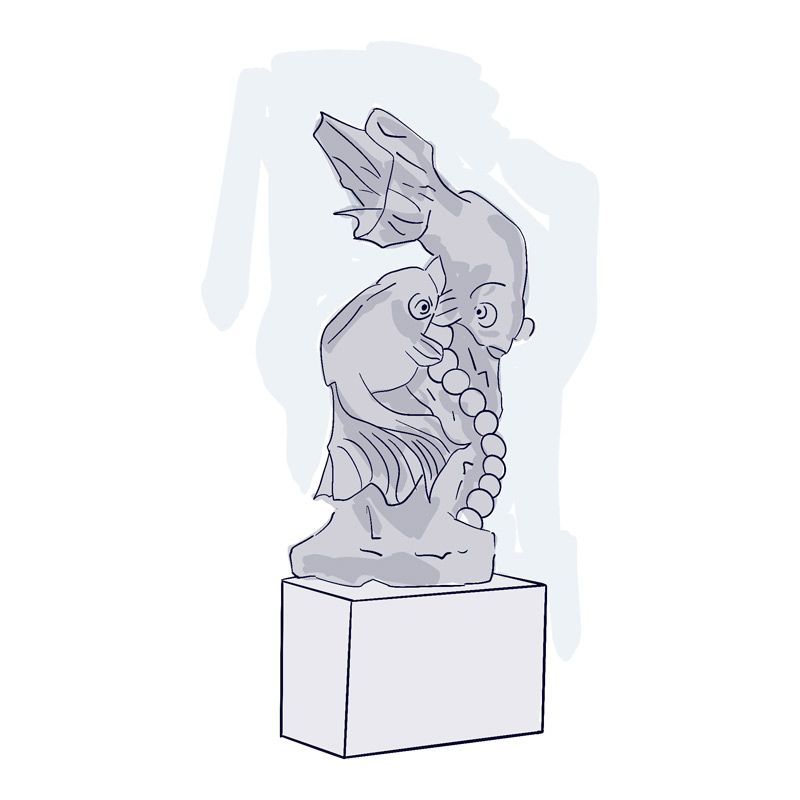
In Muscat, several fish sculptures adorn the urban space, notably along the Muttrah corniche. The Muscat audio-guided tour stops here to evoke these works, which recall the ancient and vital link between the town and the sea.
In Muscat, you notice several fish sculptures scattered in the urban space, notably along the Muttrah corniche, near the sea, as well as in certain parks and on certain roundabouts. These works, sometimes monumental, sometimes more discreet, recall the ancient and vital link between the town and the sea, which shaped the history and the identity of Muscat. Forever, fishing, maritime trade and navigation have made the town live and fed its inhabitants; the waters of the Gulf of Oman, rich in fish, are an essential resource. By representing fish in the public space, these sculptures celebrate this maritime heritage and the attachment of the Omanis to the sea. They also bring a touch of art and poetry to the promenade along the corniche. Emblematic works and symbols of the maritime soul of the town, the sculptures of the corniche are a pleasant stop of the discovery of Muscat.
You admire the fish sculptures scattered along the Muttrah corniche, in the parks and on the roundabouts, sometimes monumental, sometimes discreet, which celebrate the ancient and vital link between Muscat and the sea, fishing and maritime trade, and bring a touch of art to the promenade of the seafront. The sculptures of the corniche symbolise the maritime soul of Muscat. It is a pleasant stop, to be explored on foot.
The sculptures of the corniche are discovered along the Muttrah corniche and in the urban space of Muscat, reachable on foot. They are open-air works, freely visible, that you come across during the walk along the sea. The walk is particularly pleasant at sunset.
Fish, scattered along the Muttrah corniche, in the parks and on the roundabouts; these works recall the ancient and vital link between Muscat and the sea, fishing and maritime trade that shaped the history of the town.
Along the Muttrah corniche and in the urban space of Muscat, in Oman.
Aucun avis pour le moment
