





Walk
A humble Arabia
Muscat, Oman
Walk
A humble Arabia
Muscat, Oman
10.4 km
Distance
4h00
Durée
29
Audios
Loop
Parcours
Shutterstock
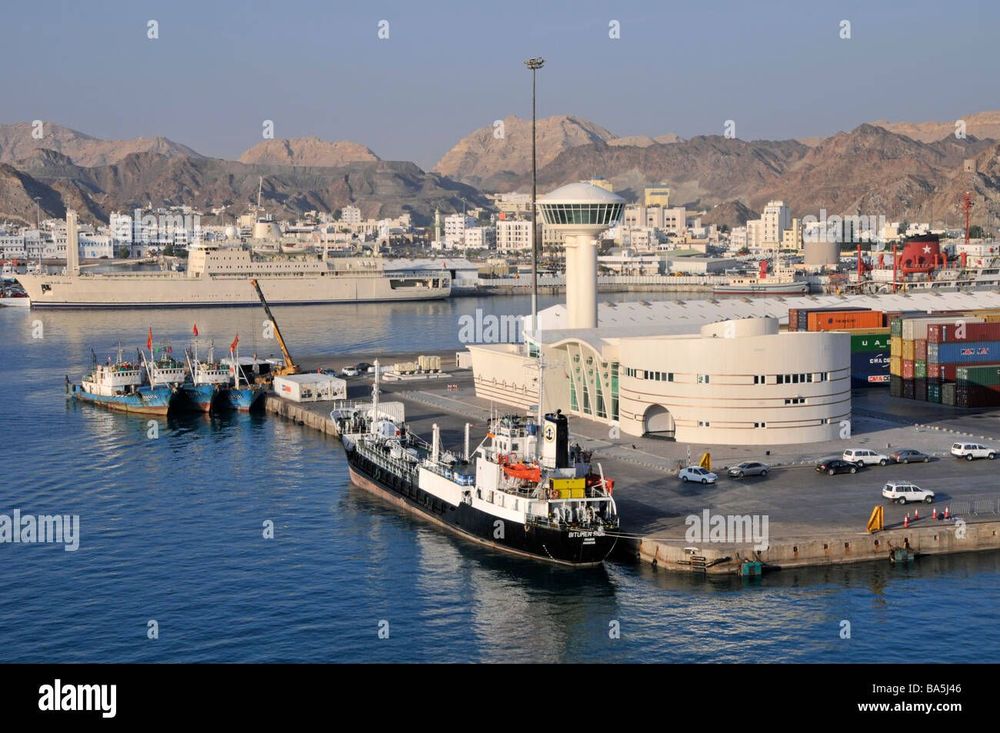
The Port of Muttrah is one of the oldest maritime refuges of the Arabian Peninsula, which made the fortune of Muscat. The Muscat audio-guided tour stops here to evoke this exceptional panorama, a witness of the millennial maritime vocation of the town.
The Port of Muttrah is not a simple port: it is one of the oldest maritime refuges of the Arabian Peninsula. Thanks to its natural shelters, formed by the bay and the mountains that plunge into the sea, this port made the fortune of Muscat for centuries. A strategic position on the routes of the Indian Ocean, it was a major crossroads of trade between Arabia, Persia, India and East Africa, where incense, spices, textiles and many other goods were exchanged. Still today, the port remains a lively place, lined by the Muttrah corniche, its promenade running along the sea, and dominated by the fort and the traditional houses. The panorama, with the sparkling waters, the boats and the rocky reliefs, is one of the finest of the capital. A witness of the great maritime history of Oman, the Port of Muttrah is an essential stop of Muscat.
Here you enjoy the exceptional panorama over one of the oldest maritime refuges of the Arabian Peninsula, whose natural shelters made the fortune of Muscat, a crossroads of trade between Arabia, Persia, India and Africa, lined by the corniche and dominated by the fort, with its sparkling waters and its rocky reliefs. The Port of Muttrah is essential to the history of Muscat. It is a must-see stop, to be explored on foot.
The Port of Muttrah lies along the Muttrah corniche, in Muscat, reachable on foot and by public transport. You admire it from the corniche, an open-air public space freely accessible and conducive to the promenade. The view is particularly beautiful at sunset.
It is one of the oldest maritime refuges of the Arabian Peninsula, whose natural shelters made the fortune of Muscat for centuries; a crossroads of the trade of the Indian Ocean, it linked Arabia, Persia, India and East Africa.
Along the Muttrah corniche, in Muscat, in Oman.
Aucun avis pour le moment
