





Walk
The Navel of the World
Cusco, Pérou
Walk
The Navel of the World
Cusco, Pérou
5.1 km
Distance
2h20
Durée
23
Audios
Loop
Parcours
Shutterstock
Take a look at the large stylized map on your left… Got it? Well, despite what you might think, that’s not what I’m going to tell you about.
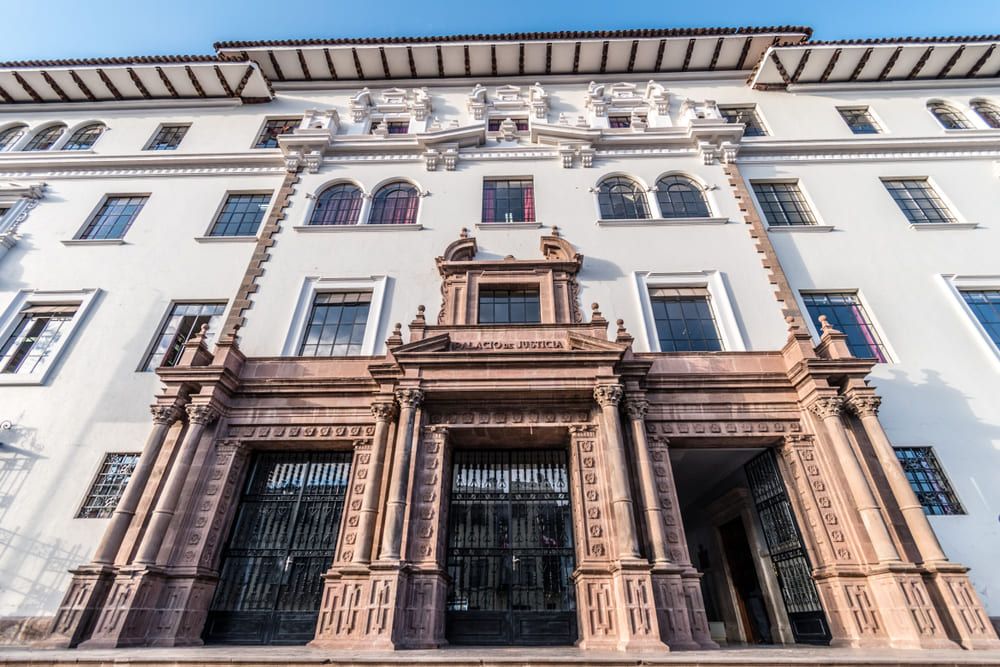
Instead, turn your attention to the hulking stone giant right beside it: the Palace of Justice. With its imposing bulk, it looms over Avenida del Sol—but to understand what once stood here, we need to travel much further back in time. Imagine yourself in the Inca era.
Right now, you’re standing on the site of the former Amaru Kancha. In Quechua, amaru means “serpent” and kancha means “large enclosure”—so welcome to the “House of the Serpent.” This was an enormous royal estate belonging to the family of the ruler Wayna Qhapaq. Its main façade once faced directly onto the Plaza de Armas, which was about as prestigious an address as you could have in imperial Cusco.
But when the conquistadors arrived, that Inca luxury came to an abrupt end. The estate passed to Hernando Pizarro, brother of the famous Francisco Pizarro, and the transformation was dramatic: the Spanish turned a glittering royal residence into… a prison.
In the 18th century, it was within these walls that the famous rebel Túpac Amaru II, along with his formidable wife Micaela Bastidas and their companions, awaited their fate before being executed in the square—but we’ll come back to that story in due course. The prison eventually collapsed during the earthquake of 1950, and in 1952, the modern concrete building you see today took its place. Kings, a serpent, a prison, and legendary rebels—not bad for what now looks like a simple courthouse, is it?
Aucun avis pour le moment
