





Walk
The Navel of the World
Cusco, Pérou
Walk
The Navel of the World
Cusco, Pérou
5.1 km
Distance
2h20
Durée
23
Audios
Loop
Parcours
Générée par Intelligence Artificielle
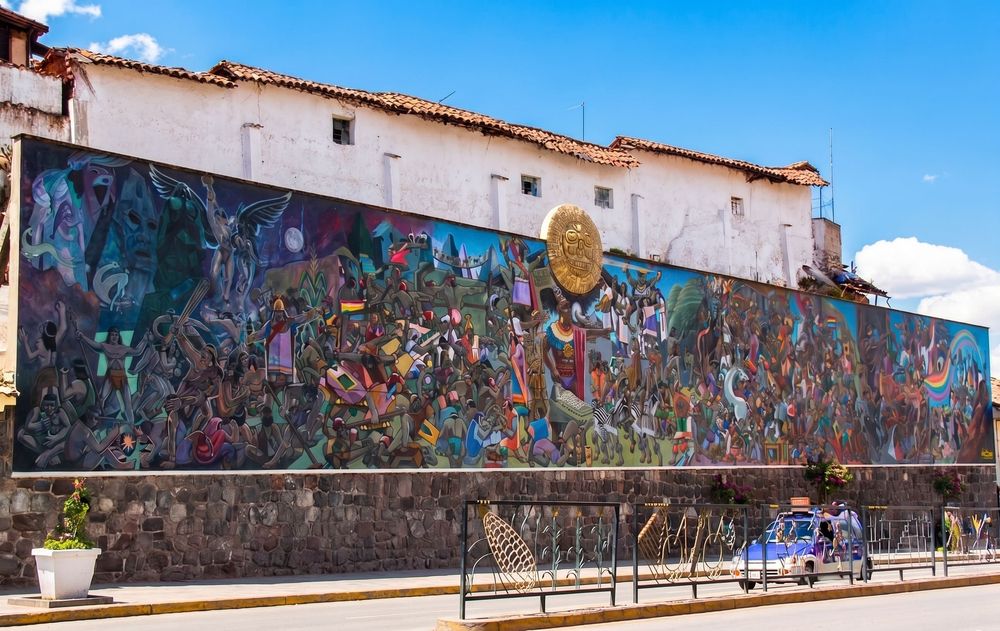
Artist Juan Bravo Vizcarra spent nine months bringing this monumental 50-meter (164-foot) mural to life, telling more than 3,000 years of history across a single wall. To follow the story, simply let your eyes travel from left to right. It begins with the origins of Cusco, its earliest Andean peoples, and the legends surrounding the city’s foundation.
Then the mural seems to glow beneath an enormous golden sun disk. This is the realm of Inti, the sun god, watching over the golden age of the Inca Empire. At the center stands the commanding figure of Emperor Pachacútec, surrounded by some of his greatest achievements, from precisely cut stonework to agricultural terraces.
Then, suddenly, the mural fractures. This is the shock of the Spanish conquest. Chaos takes over as armored horsemen burst onto the scene and violent clashes unfold at Sacsayhuamán.
To convey the terror that cavalry inspired among local populations, notice how some of the conquistadors are depicted as hybrid creatures—half man, half horse. The end of this storm brings us to one of the mural’s most harrowing scenes: the execution of Túpac Amaru II. He is shown being pulled apart by four horses, each straining in a different direction.
Look closely, because the horses are painted in different colors. The artist uses them to symbolize four forces of colonial oppression: the Church, the Spanish Crown, the army, and the powerful landowners. Túpac Amaru is then crowned for posterity by a female figure whose hair transforms into a rainbow, a symbol of Cusco identity.
In fact, as you’ve been walking through the streets of Cusco, you may already have noticed the rainbow-colored flag. Be careful not to confuse it with the LGBT+ Pride flag. The colors may look similar, but Cusco’s flag has seven horizontal stripes, compared with six on the Pride flag.
It is the city’s official emblem, celebrating unity and Inca heritage. And speaking of heritage… at the far right, a male figure with distinctly Inca features seems to emerge from the mural and step toward the future.
He represents the legend of Inkarri, which keeps alive the belief in a future return of Inca culture.
Aucun avis pour le moment
