





Walk
The Navel of the World
Cusco, Pérou
Walk
The Navel of the World
Cusco, Pérou
5.1 km
Distance
2h20
Durée
23
Audios
Loop
Parcours
Shutterstock
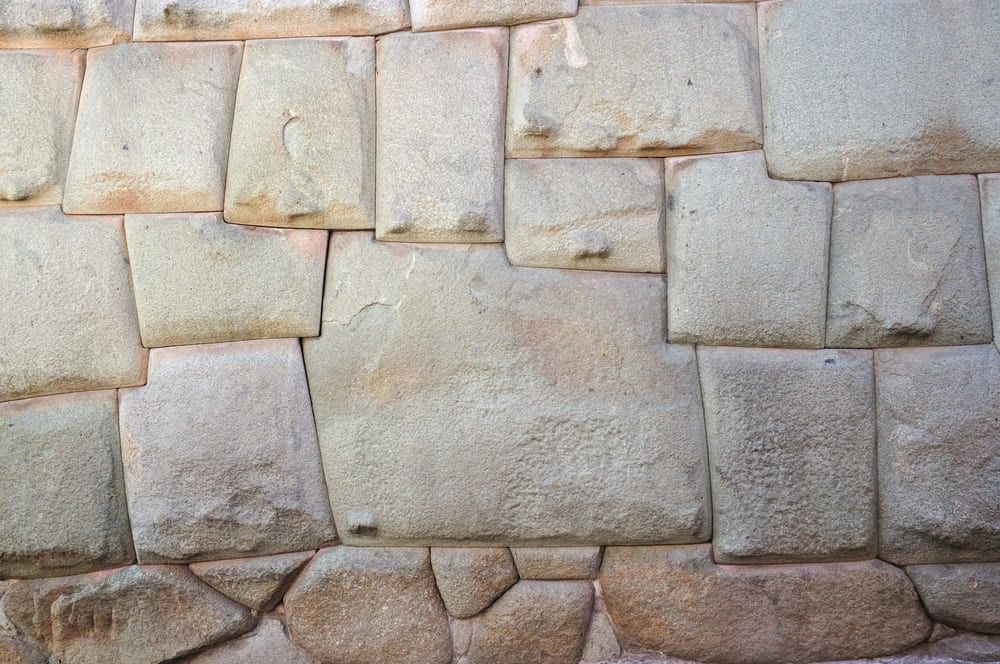
This narrow cobblestone street seems to make everyone walking through it look smaller. It’s called Hatunrumiyoc, a Quechua name that literally means “the place of the great stone.” Along the walls, you can see the almost surgical precision with which the blocks fit together—without a trace of mortar or cement. And this technique wasn’t just about appearance.
It was also an extraordinary form of earthquake-resistant engineering. When the ground shook, the stones could move together and then settle back into their original positions. Now look for the most famous block in the wall: the legendary Twelve-Angled Stone.
Weighing around 6 metric tons (6.6 US tons), this colossal block has become an international symbol of Inca architectural genius. Can’t spot it? Here’s a hint: it’s on your right.
And this powerful wall wasn’t built for just anyone. It once bordered the palace of Inca Roca, an important 14th-century ruler, and was home to his royal lineage, the panaca Waqa Kirau. When the Spanish conquest came, the wall was too remarkable to simply tear down.
Instead, the Spaniards reused it as a foundation for the Archbishop’s Palace built above it, which today houses the Museum of Religious Art. You’re standing right in the middle of a surviving page of Inca history, so I’ll leave you to enjoy the feeling of stepping back in time.
Aucun avis pour le moment
