




Walk
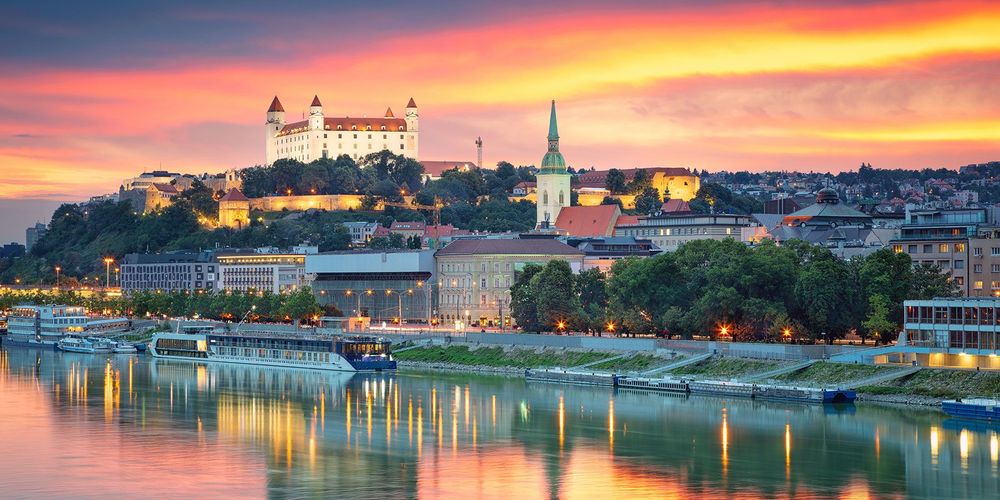
The City of a Thousand Palaces
Bratislava, Slovakia
Walk
The City of a Thousand Palaces
Bratislava, Slovakia
6.5 km
Distance
3h40
Durée
20
Audios
Loop
Parcours
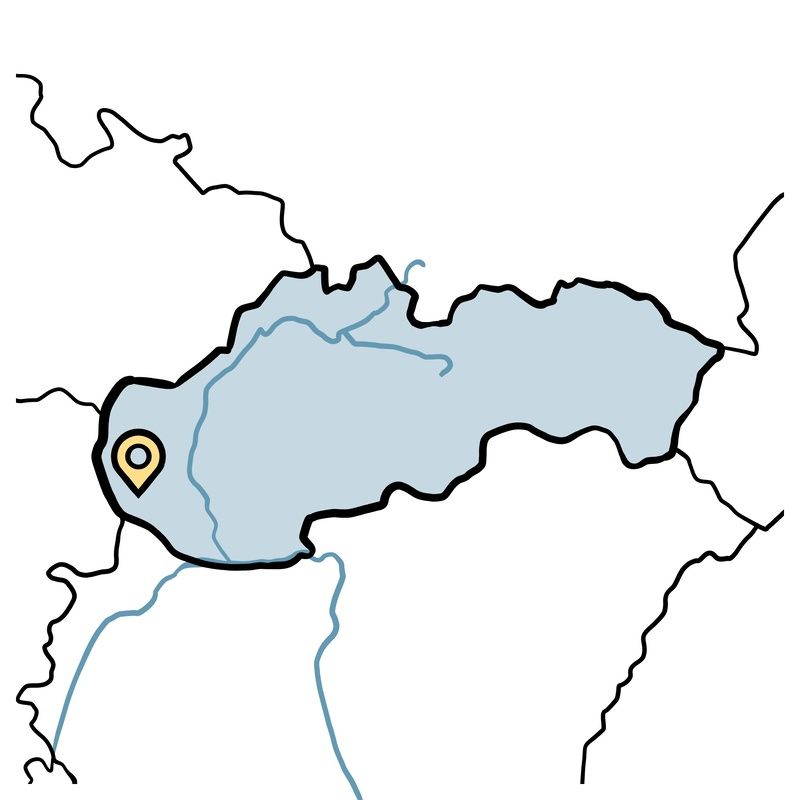
Slovakia may be a small country tucked between Austria, Hungary, and the Czech Republic, but its history is anything but small. The first signs of human presence here date back to the Paleolithic era, around 200,000 years before our time. In the 2nd century BC, Celtic tribes arrived from the Alps and central Germany, only to be pushed out a century later by Germanic tribes and the Romans.
From the 5th century onward, the region was settled by Western Slavs and later Christianized by monks from Bavaria over the course of several centuries. In the 9th century, the Prince of Moravia established Great Moravia, which included present-day Slovakia. Prior to that, Moravia already existed, covering part of what is now the Czech Republic.
The prince expanded that territory to form Great Moravia, which at its height included parts of today’s Czech Republic, Slovakia, Germany, Poland, and Hungary. By the 11th century, Slovakia had become part of the Kingdom of Hungary, ruled for over 200 years by the powerful Habsburg dynasty, including the famous Maria Theresa of Austria. Back then, Bratislava was known as Pressburg and was one of the kingdom’s most important cities, it’s here that Maria Theresa herself was crowned.
Slovakia remained under Hungarian rule until 1919, when it joined with the Czech lands to form Czechoslovakia. That union lasted until 1939, when the outbreak of World War II led Hitler to force Slovakia into independence and into alliance with the Nazi regime, a move the country had little choice in. After the war, Czechoslovakia was reestablished, and like much of Eastern Europe, it became a communist state and part of the Soviet bloc until the fall of the USSR in 1989.
Slovakia eventually became an independent country in 1993, joined the European Union and NATO in 2004, and adopted the euro in 2009. Today, it’s a fully integrated member of Europe, maintaining close ties with its neighbors: Austria, Hungary, Poland, the Czech Republic, and Ukraine. The Slovak language still carries echoes of its past and is very similar to Czech, so much so that the two populations can easily understand each other, and even manage with Polish, though with a bit more effort.
It’s a country and a culture deeply shaped by a long and complex history.
Aucun avis pour le moment
