





Walk
The Land of the Morning Calm
Seoul, South Korea
Walk
The Land of the Morning Calm
Seoul, South Korea
7.2 km
Distance
3h00
Durée
20
Audios
Loop
Parcours
Shutterstock
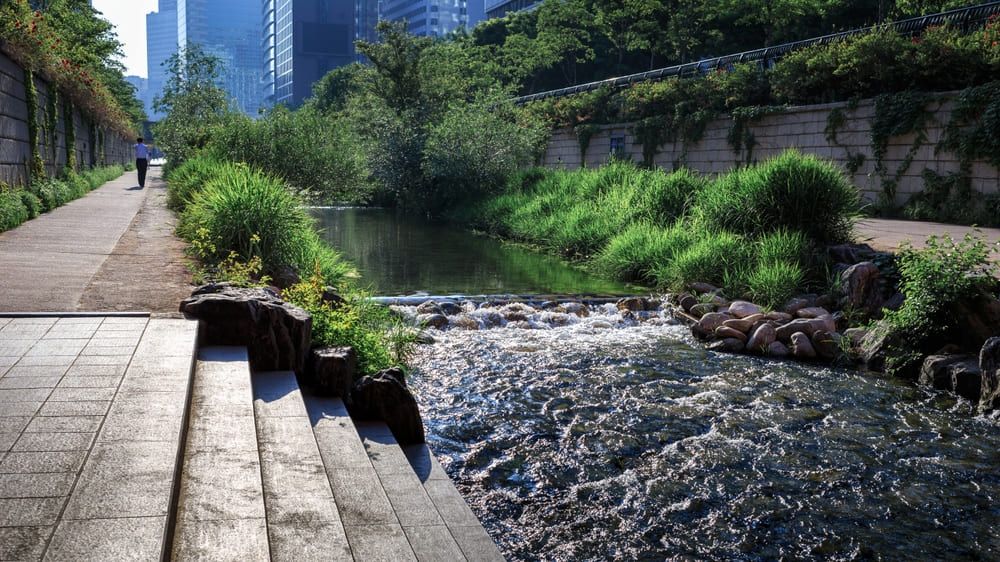
The Seoul audio-guided tour offers you one of its most pleasant walks, along the Cheonggyecheon, a watercourse that has shaped the history of the city. Laid out as a promenade of nearly six kilometres in the heart of the capital, the stream is today a haven of freshness much prized by the people of Seoul.
It was partly thanks to the presence of this stream, reputed capable of circulating good energies, that Seoul was chosen as the capital at the advent of the Joseon dynasty. The king had bridges built there and the banks laid out. In the twentieth century, having become unhealthy after the Korean War, the stream was covered by a motorway. It was only in 2005 that the city's mayor, Lee Myung-bak, decided to uncover it to make it a promenade in the heart of the capital.
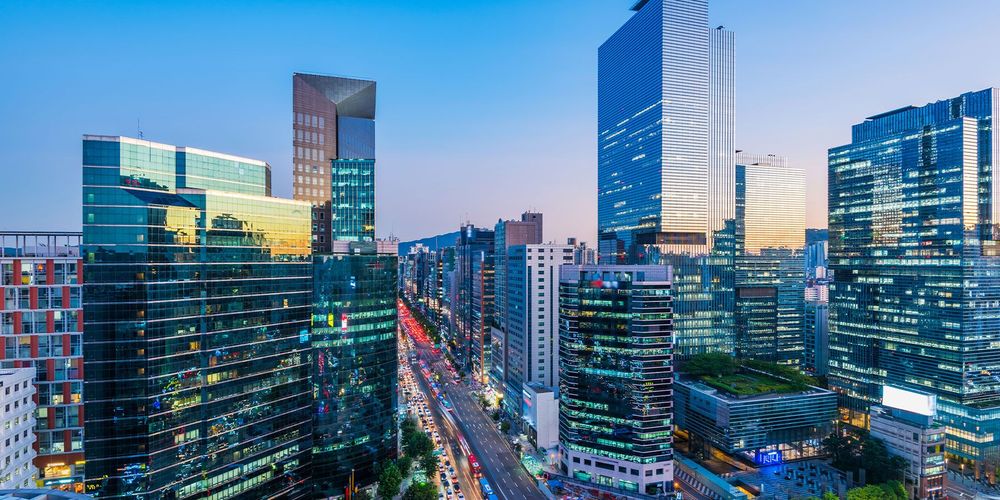
The promenade laid out along the stream offers an interlude of calm and greenery between the skyscrapers. You follow the course of the water, punctuated by waterfalls, footbridges and artistic installations, setting off from Cheonggye Square, near the Gwanghwamun district. Much appreciated in the evening, when the banks light up, it is one of the finest successes of the modernisation of Seoul.
The Cheonggyecheon crosses the centre of Seoul over nearly six kilometres, from Cheonggye Square, near Gwanghwamun. The promenade along the banks is freely accessible at all hours; you go down by stairs and ramps spread all along the route.
Having become unhealthy after the Korean War, it had been covered by a motorway in the twentieth century, before being uncovered in 2005.
The promenade laid out along the Cheonggyecheon extends over nearly six kilometres through the centre of Seoul.
Aucun avis pour le moment
