





RyoCity
The Hidden Jewel of the Spanish Renaissance
Úbeda, Spain
RyoCity
The Hidden Jewel of the Spanish Renaissance
Úbeda, Spain
3 km
Distance
1h30
Durée
23
Audios
Boucle
Parcours
Shutterstock
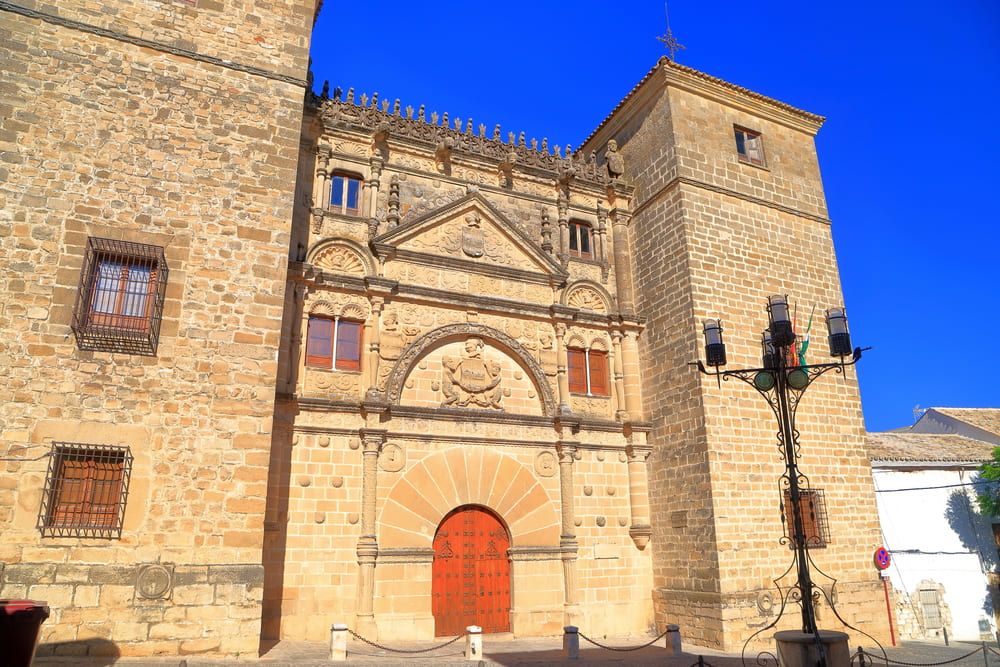
You are now on Plaza de San Lorenzo, and rising before you is the Casa de las Torres, the first great noble palace built here in the sixteenth century. With its two massive towers, it resembles a small urban alcázar, a descendant of fortified medieval residences. The richly decorated façade, in the plateresque style, displays the emblems of the Dávalos family: scallop shells of the Order of Santiago, eagles, cornucopias and two men supporting the coats of arms. Everything here proclaims power, lineage and prestige. Beneath this same palace lies one of Úbeda’s most famous legends, that of “the walled-in woman.” According to the tale, in the early twentieth century, labourers working in the cellars discovered the remains of a young woman sealed inside a forgotten cavity. Popular tradition claims she was Ana de Orozco, the wife of Andrés Dávalos, the palace’s sixteenth-century master. As the story goes, the nobleman—older and reputedly jealous—punished her for an alleged infidelity by having her walled up alive in the depths of the house. Other versions speak of an attempted escape or even a decision imposed by her own family. These are oral traditions without historical proof, but they have long fuelled the city’s imagination. Even today, some students of the School of Art, which now occupies the building, speak of strange noises or sudden chills in the corridors, as if the legend still clung to the walls. Unfortunately, the interior cannot be visited, but the palace remains fully visible from the outside in all its majesty.
