





RyoCity
The city of sea and freedom
Cadiz, Spain
RyoCity
The city of sea and freedom
Cadiz, Spain
5.4 km
Distance
2h30
Durée
25
Audios
Boucle
Parcours
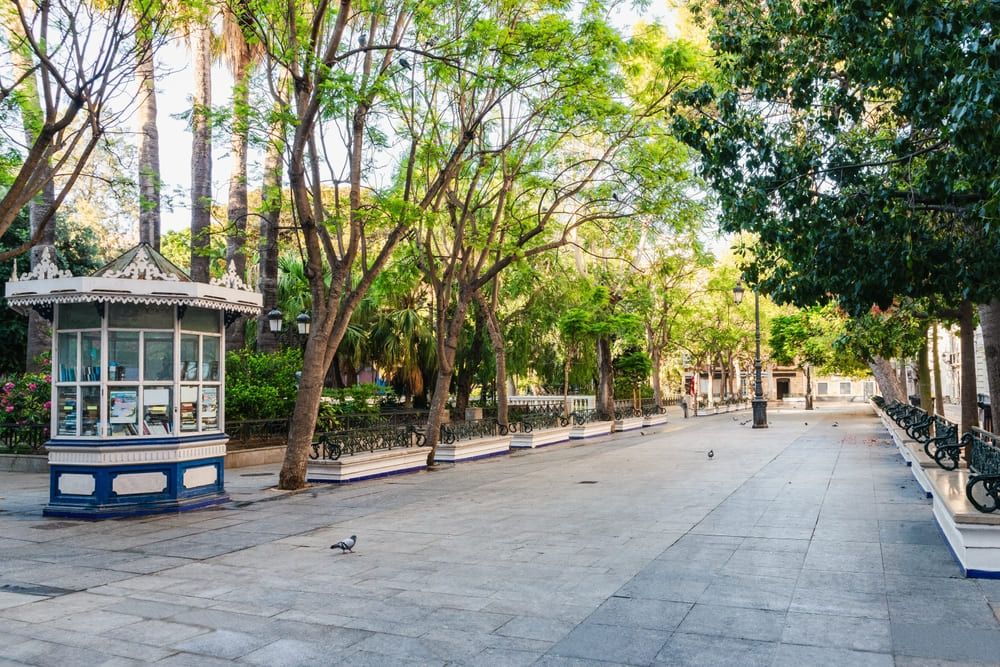
Plaza de Mina is one of the most pleasant squares in Cádiz, with its shaded walkways, yet it also hides a number of remarkable stories. Hard as it is to imagine, this was once not a garden at all but the vegetable plot of the San Francisco convent, where monks grew fruit, vegetables and medicinal plants until the nineteenth century. After the major ecclesiastical confiscations of 1836, the land was taken over by the city and completely redesigned. The square takes its name from a true adventure hero: a statue of General Espoz y Mina, who fought against Napoleonic troops, once stood at its centre. It became so iconic that locals kept calling the place “Plaza de Mina”… even after the statue mysteriously disappeared. To this day, no one knows what became of it. As you wander around the square, you’ll also spot façades full of personal history. At number 3 is the birthplace of Manuel de Falla, Cádiz’s most famous composer, born here in 1876, and every 23 November—a nod to his birthday—a small musical tribute is performed in front of the house. Over the years Plaza de Mina has carried many official names, including “Plaza del Generalísimo Franco” during the dictatorship, yet despite all the changes, locals have almost always called it simply… “Mina.”
