





RyoCity
The city of sea and freedom
Cadiz, Spain
RyoCity
The city of sea and freedom
Cadiz, Spain
5.4 km
Distance
2h30
Durée
25
Audios
Boucle
Parcours
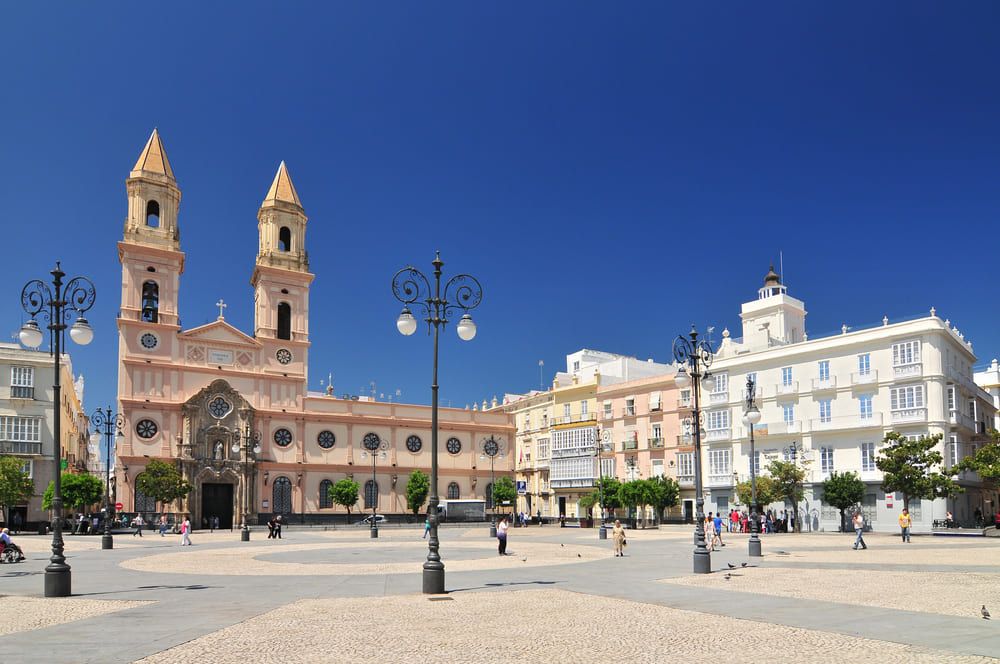
Welcome to Plaza de San Antonio, one of Cádiz’s most important squares. Originally this area was nothing more than an open space on the edge of the city known as the Campo de la Jara, named after the well that once supplied water to local residents. Everything changed in the seventeenth century when a small hermitage dedicated to Saint Anthony of Padua was built here. The church you see today dates from 1669, and its eighteenth-century baroque portal is one of the finest examples of the Cádiz style, with Corinthian columns and a sculpted figure of Saint Anthony presiding over the façade. Around the square you’ll notice large nineteenth-century residential buildings that reflect the area’s bourgeois past. The most striking is the Casino Gaditano just behind you; behind its discreet pink façade lies a spectacular neo-Mudejar patio inspired by the Alhambra, considered one of the most beautiful civic interiors in Cádiz. To its right, the Casa Palacio Arámburu stands out with its dignified nineteenth-century façade accented with touches of blue; it isn’t open to visitors, but it remains a fine example of the elegant architecture of bourgeois Cádiz. The square is also bordered by the Provincial Library and the buildings of the Diputación, reminders of its administrative and cultural role. But San Antonio is above all a place of memory: on 19 March 1812, the first Spanish Constitution, “La Pepa,” was publicly proclaimed here while Cádiz was resisting the Napoleonic army. It was a defining moment in Spanish liberalism, and for a century the square even bore the name Plaza de la Constitución. As you walk across it today, you’re moving through a space that blends everyday life with one of the great symbols of Cádiz’s constitutional—and festive—history.
