



Walk
A city of ideas, art and memory
Philadelphia, United States
Walk
A city of ideas, art and memory
Philadelphia, United States
Distance
7 kmDurée
3h00Audios
26Parcours
Loop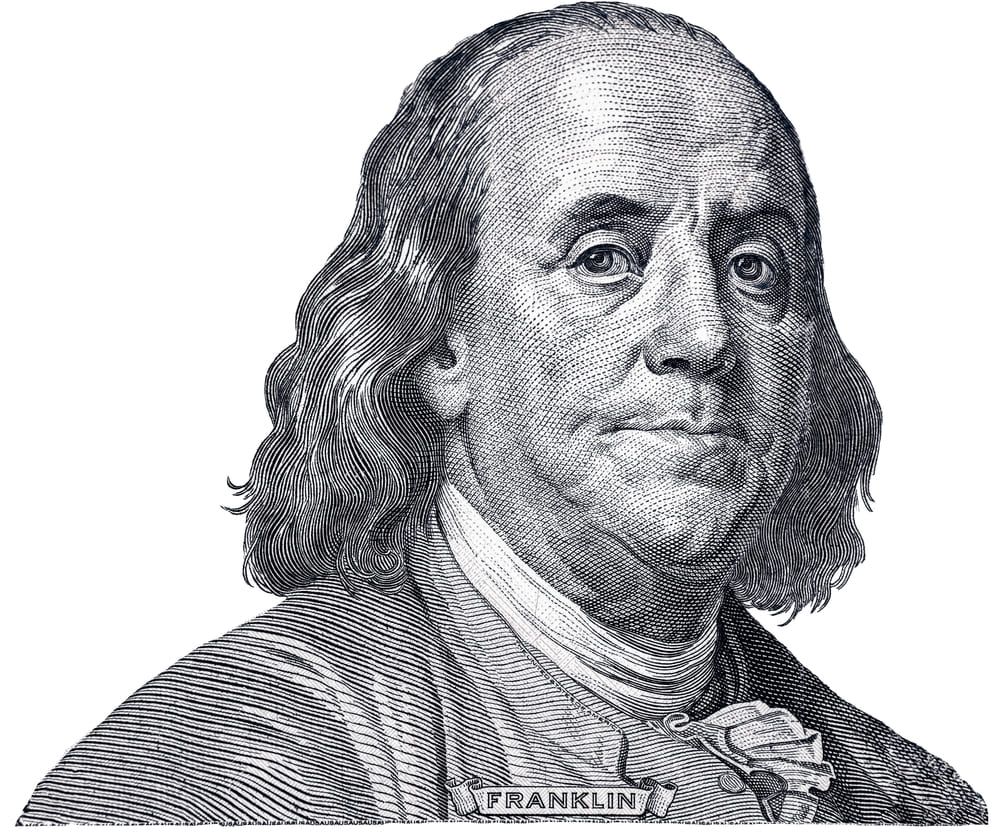
Shutterstock
In front of you, this sculpture on the bridge depicts Benjamin Franklin, one of Philadelphia’s most important figures, but his face isn’t solid, it’s made of metal strips, so depending on your angle, it appears or almost disappears. Around him, you can see lightning bolts, a kite, and keys, all clear references to his life and work. Let’s recall his story: born in 1706 in Boston, Franklin moved to Philadelphia while still young, and it was here that he built the core of his career and reputation. He’s often described as one of the brightest minds of his time, a true polymath, printer, writer, inventor, scientist, diplomat, and politician, able to engage in almost every field. In Philadelphia, he first became known as a printer, publishing The Pennsylvania Gazette and the famous Poor Richard’s Almanack, which were widely successful and spread his ideas throughout the colonies. But Franklin didn’t stop at writing. He actively contributed to city life, helping create institutions such as a volunteer fire company, a discussion club called the Junto, and various educational and scientific projects, shaping the city’s civic and intellectual life. Scientifically, Franklin is best known for his work on electricity. The image of the kite in a storm became iconic: by flying a kite attached to a metal key, he gained a better understanding of lightning, leading to the development of the lightning rod, an invention that had a real impact on building safety. He is also associated with other innovations, including bifocal glasses and the Franklin stove, a cast-iron heating stove. Franklin also played a key role in the founding of the United States. He helped draft the Declaration of Independence and was deeply involved in diplomacy. Sent to France, he convinced King Louis XVI and his government to support the colonies, first secretly, then officially after 1778. This support, both financial and military, greatly weakened the British and was crucial to the American victory. He later helped establish the country’s first structures, notably participating in the Constitutional Convention. Benjamin Franklin died in 1790, but his influence remains immense, embodying a powerful idea: the life of a man guided by curiosity, knowledge, and public engagement.
Aucun avis pour le moment
