




Walk
A city of ideas, art and memory
Philadelphia, United States
Walk
A city of ideas, art and memory
Philadelphia, United States
Distance
7 kmDurée
3h00Audios
26Parcours
Loop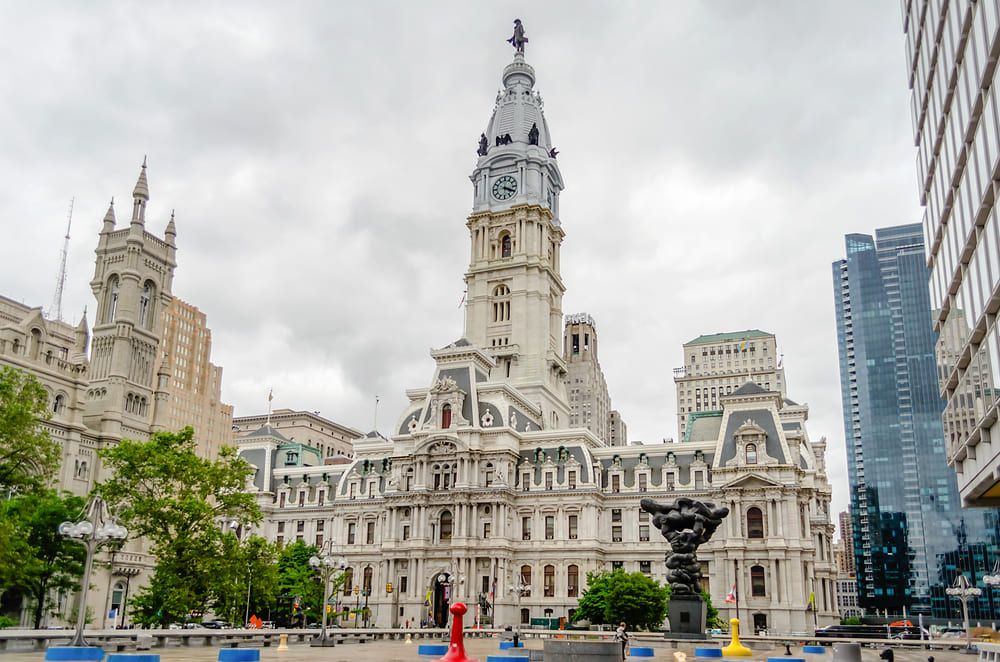
Shutterstock
You’re standing in the heart of Philadelphia, on Penn Square, exactly where William Penn imagined the city’s civic center as early as 1682. Penn, a 17th-century English Quaker, wanted to create a colony based on religious tolerance, a fairer social structure, and peaceful relations with Indigenous peoples. To reflect this vision, he named the city Philadelphia, meaning “brotherly love”. The name Pennsylvania also comes from him, combining “Penn” with the Latin word sylva, meaning forest. It would take nearly two centuries for that vision to fully take shape in the building in front of you. Construction of Philadelphia City Hall began in 1871 and lasted almost 30 years. When it was completed in 1901, it was one of the most ambitious projects in the United States. Massive and at times controversial, it reflected a city determined to assert its importance on a national level. Architecturally, the building is inspired by the French Second Empire style. Take a moment to look at the façades: columns, arches, sculptures… everything is designed to impress. And it’s not just for show, some sections of the walls are more than 6 meters thick, making it one of the largest load-bearing masonry buildings in the world. The scale is just as striking. City Hall rises to about 167 meters at the top of the statue and contains more than 700 rooms. For a time, it was even considered the tallest occupied building in the world. Now, look up. At the very top stands a statue of William Penn, about 11 meters tall and weighing over 20 tons. It has dominated the skyline since the late 19th century and remains one of the city’s most recognizable symbols. Interestingly, the sculptor originally wanted the statue to face south to catch the sunlight, but in the end, Penn was positioned facing northeast, often in the shade. For many years, an unofficial rule meant that no building could rise higher than the top of his hat. This lasted until 1987, and when it was finally broken, some locals joked about a “curse of William Penn” affecting the city’s sports teams, a local legend that still circulates today. City Hall itself nearly disappeared. In the 1950s, its style was seen as outdated and its maintenance too expensive, and demolition was seriously considered before the idea was abandoned. Today, it’s recognized as one of the city’s architectural landmarks. What makes this place unique is that it’s not just a monument, it’s still the seat of the city’s government. History, politics, and everyday life all come together here. And if you have the chance, you can take the elevator up to the observation deck just below the statue. It’s a bit old-fashioned and part of the experience, but the panoramic view over Philadelphia is well worth it.
Aucun avis pour le moment
