





Walk
A town built on legends
Cody, United States
Walk
A town built on legends
Cody, United States
3.2 km
Distance
1h20
Durée
16
Audios
Loop
Parcours
Shutterstock
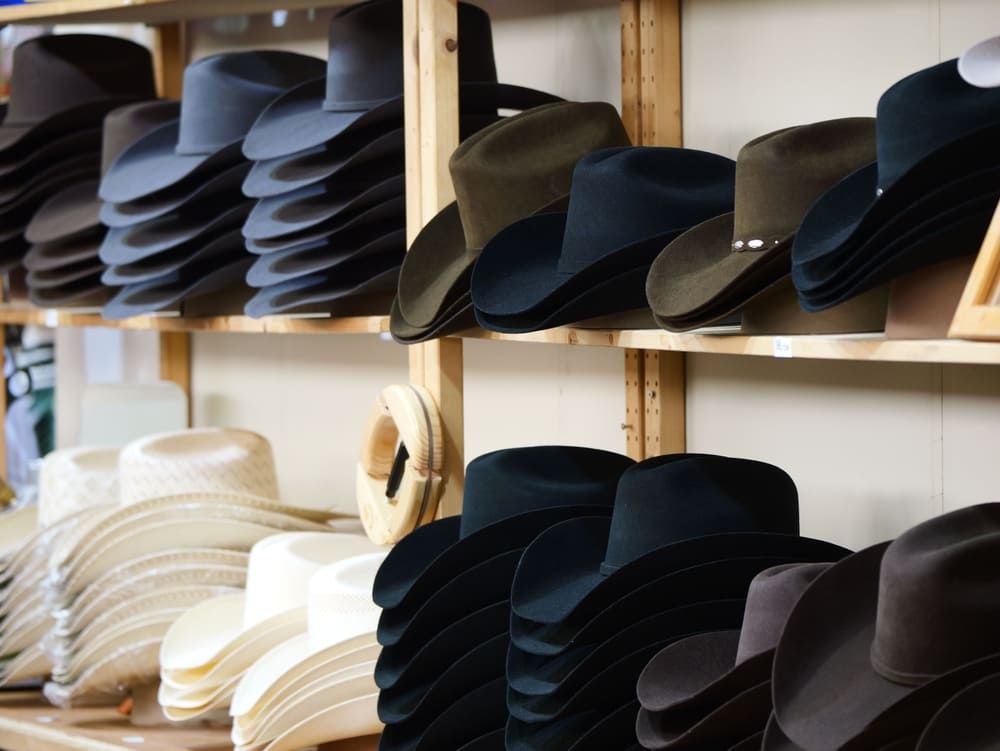
Feel free to step inside the shop on the corner to your right. The Custom Cowboy Shop, opened in 1976 and still run by the same family, has become a real local institution. This isn’t just a souvenir store, it’s a place where traditional craftsmanship, deeply rooted in the culture of the Wild West, is still very much alive.
Inside, you’ll find handmade Stetson hats, custom cowboy boots, tooled leather belts, spurs, made-to-measure saddles, and jewelry inspired by Western traditions. Each piece reflects skills passed down from a time when this gear was part of everyday life for cowboys. The clothing we now associate with the cowboy image actually developed in the 19th century to meet the demands of working on horseback.
The wide-brimmed hat offered protection from the sun, rain, and wind. Boots, with their slightly raised heel, helped keep the foot secure in the stirrup and protected the leg with their high shaft. Chaps, worn over trousers, shielded riders from thorns, brush, and even snake bites.
Even the bandana had a practical use, protecting against dust or covering the face in windy conditions. Over time, these functional items became some of the most recognizable symbols of the Wild West, and it was in this same context that blue jeans, as we know them today, first appeared. But Western clothing traditions don’t come from cowboys alone.
Indigenous peoples also have rich craft traditions, often connected to cultural and spiritual meanings. Leatherwork, for example, existed long before, with bison or deer hides carefully tanned and decorated, sometimes with fringes that also helped water run off and garments dry more quickly. Beadwork is another important art form.
The geometric patterns seen on moccasins, bags, or clothing vary from one nation to another and often reflect family or tribal identity. Jewelry also plays a central role, especially in the southwestern United States, where the Navajo, Zuni, and Hopi developed distinctive styles using silver and turquoise. This blue-green stone, found in several parts of the West, is often seen as protective and linked to the sky and water.
Over time, cowboy and Indigenous cultures influenced one another. Fringes, silver conchos, and certain decorative patterns you see on belts and saddles are directly inspired by these traditions. The Custom Cowboy Shop is a great example of this blend of influences that defines Western craftsmanship today.
Now, turn around to discover the Sheridan Building. Built in the early 20th century for a local bank, this brick building reflects a time when Cody was gradually shifting from a frontier settlement into a more established commercial town. In American history, a frontier town refers to a place on the edge of an expanding settlement, where pioneers arrived before institutions, banks, and permanent infrastructure were fully in place.
Cody, founded in 1896 along the road to Yellowstone, is one of those towns that grew right at the boundary between the structured world of the East and the vast open spaces of the West.
Aucun avis pour le moment
