





Créé par Camille, le 17 nov. 2026
Votre guide Ryo
Cody, United States
A town built on legends
Parcours audioguidé pour visiter Cody en 1 jour
This visit to Cody invites you to discover an iconic town of the American West, at the gateway to Yellowstone. As you follow the route, explore its lively streets, its heritage tied to Buffalo Bill, and its classic frontier-town atmosphere, blending western culture with the surrounding wilderness. A simple and engaging way to experience the spirit of the Far West at your own pace.
Quand partir à Cody ?
Jan.
-7°
4
Feb.
-4°
4
March
3°
6
April
8°
8
May
13°
10
June
19°
9
July
23°
6
Aug.
22°
5
Sept.
17°
6
Oct.
9°
6
Nov.
1°
5
Dec.
-6°
4
In Cody, the climate is continental and fairly dry, with cold winters where temperatures typically range from about 14 to 32 degrees Fahrenheit between December and February, sometimes with snowfall, while summers are warm and sunny, usually between 68 and 86 degrees from June through August; spring and early fall often bring the most pleasant conditions, with milder temperatures, clear light over the Rocky Mountain landscapes, and fewer crowds, making May, June, and September especially good times to visit Cody and the surrounding area; summer is also a great season to come, especially if you want to enjoy rodeos, outdoor activities, and easy access to Yellowstone National Park, even though it’s the busiest time of year.
Départ conseillé
All our tours are designed as loops, so you can easily begin from the point closest to you, with navigation adjusting automatically as you go. If you’re nearby, a great place to start is the Buffalo Bill Center of the West.
Parking à proximité
Public parking – 9th Ave, Cody, WY 82414. Public parking – 920 Beck Ave, Cody, WY 82414.
It’s generally easy to find a spot near downtown, and both of these lots make it simple to reach Sheridan Avenue and the main attractions on foot. Most parking in the area is free and easy to access, but it’s always a good idea to check local signs and any time limits to avoid fines.
À savoir
In the United States, a few everyday habits can catch travelers off guard. Prices in shops and restaurants are usually listed before tax, so the final total will be a bit higher at checkout. Tipping is also part of the culture, and in restaurants it’s customary to leave about 18 to 20 percent of the bill for service. Out here in the American West, distances can be large and drive times longer than you might expect, so it’s worth planning ahead for fuel and travel time. Around Cody and Yellowstone, nature is always close by, so be sure to stay on marked trails and keep a safe distance from wildlife. And if you’re heading into the parks, starting early in the morning is often the best way to make the most of your day.
Découvrez 16 lieux d'intérêt pour visiter Cody






What to see in Cody on your 1h20 tour?
This 3.2 km loop takes about 1 hour 20 minutes and links 15 sights. It starts at the large museum complex devoted to Buffalo Bill Cody, crosses downtown past the Irma Hotel and its reenacted street scenes, climbs to a viewpoint over the surrounding mountains, then follows the avenue toward the rodeo grounds and the town's high school. With the app in your ears, every statue, storefront and mural tells a piece of the American West's story.
Information checked in October 2026 and subject to change.
1 - The Buffalo Bill Center of the West
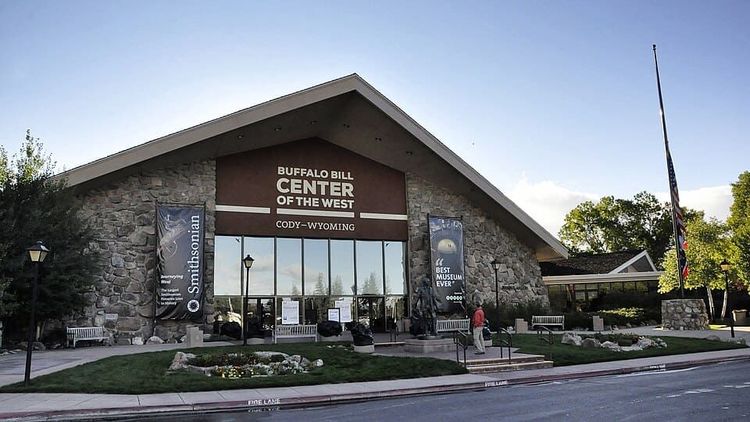
Plan on a half-day at least: this museum complex, opened in 1917, is actually five museums under one roof, covering Buffalo Bill's own story, the Indigenous nations of the Great Plains, the wildlife of the Yellowstone area, Western art and an extensive firearms collection. Your ticket stays valid for two days, plenty of time to take it all in. Outside the entrance, a 1977 bronze greets visitors: Cody dressed for his touring show, hat raised as if welcoming each guest.
Paid entry (about $24)
2 - Buffalo Bill the Scout
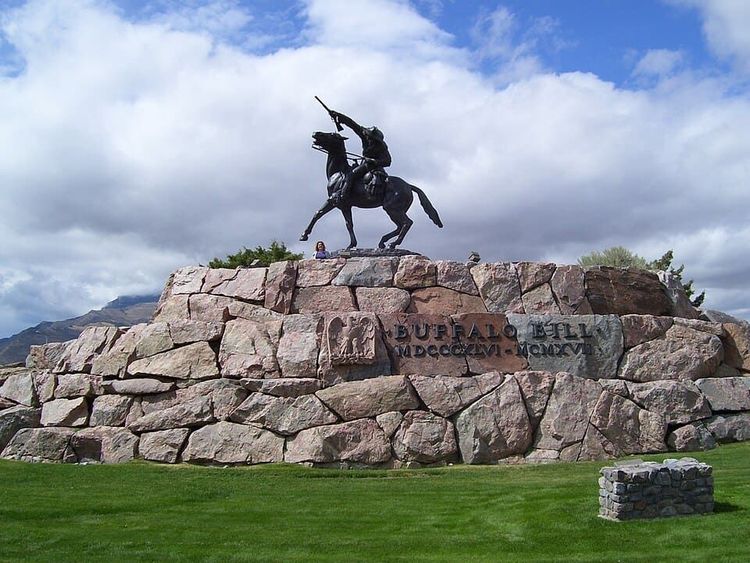
Perched to your left, this nearly 4-meter bronze casts Buffalo Bill as a military scout, surveying the land and waving troops onward, a role he truly played, tracking trails and water sources across the 19th-century Plains. Sculpted by New York patron Gertrude Vanderbilt Whitney and unveiled in 1924, the piece owes its authenticity to a real Wyoming horse brought all the way to her studio. Its stone base nods to the mountain where Cody had hoped to be buried.
Free entry
3 - Buffalo statue
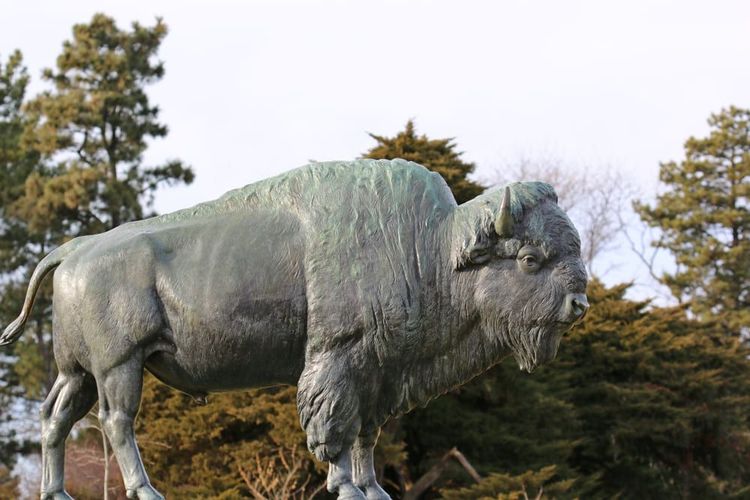
Bison statues turn up all over Cody, honoring an animal once central to Plains life, supplying food, clothing and tools. Commercial hunting nearly wiped out the species in the 19th century, and it survived only through later conservation efforts centered near Yellowstone. The irony: Cody takes its name from its founder's own career as a buffalo hunter. Hence this public art project, roughly thirty fiberglass bison decorated by local artists, originally created to raise funds for the town's hospital.
Free entry
4 - Cody park
This lively park, home to summer concerts and Fourth of July festivities, holds a tender sculpture by local artist Jeff Rudolph: Buffalo Bill carrying his daughter on his shoulders, cast in 1999. Rather than the hunter or showman, it shows him simply as a father. Behind it, a bald eagle, the national emblem, rounds out the piece and nods to the wide Wyoming landscapes and nearby Yellowstone.
Free entry
5 - Halfway House Stage Stop
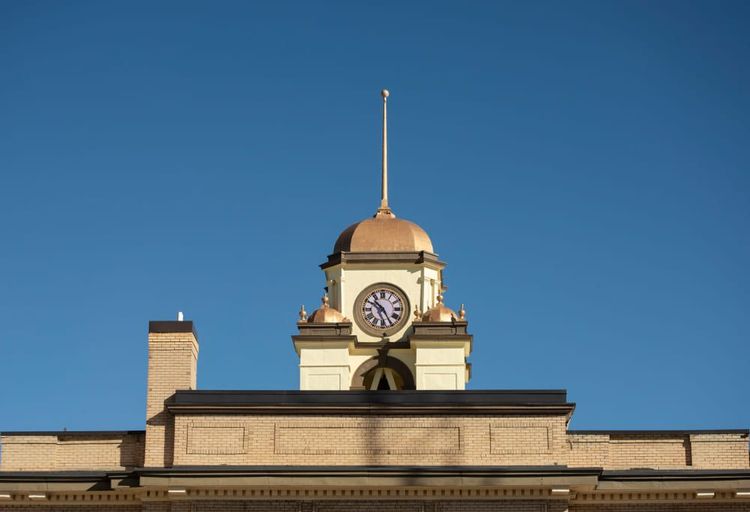
This brick, clock-towered building is the county courthouse, raised in the 1910s once cramped temporary offices no longer sufficed. Next door, a small heritage museum traces the town's founding by Buffalo Bill and his partners. Its garden holds a 2022 bronze of pioneer settlers alongside a plaque honoring a stagecoach stop once south of town, a changeover point for horses and travelers, wired with a public telephone as early as 1904, before cars made it obsolete.
Free entry
6 - The Irma Hotel
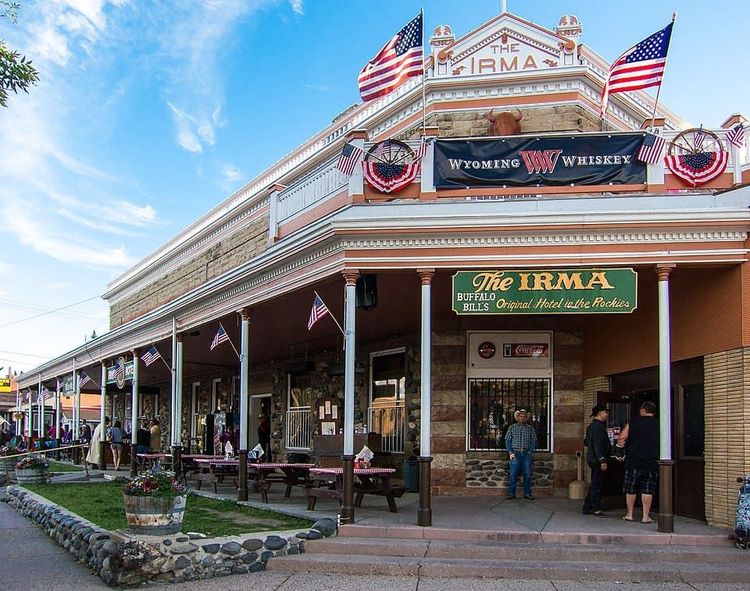
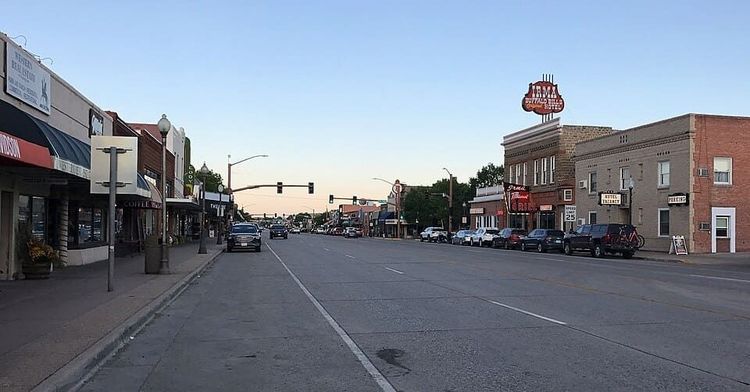
Buffalo Bill built this hotel in 1902 and named it for his youngest daughter Irma, the only one of his four children still living when it opened. She later ran it with her husband before dying young, during the 1918 flu pandemic. Its motto still sums up the mood: elegant enough for nobility, unpretentious enough for ranch hands. The solid cherry-wood bar carries its own legend, supposedly a royal gift, though it more likely came from a purchase in France. Debts forced Cody to give it up in 1913.
Free entry
7 - Cody Gunfighters
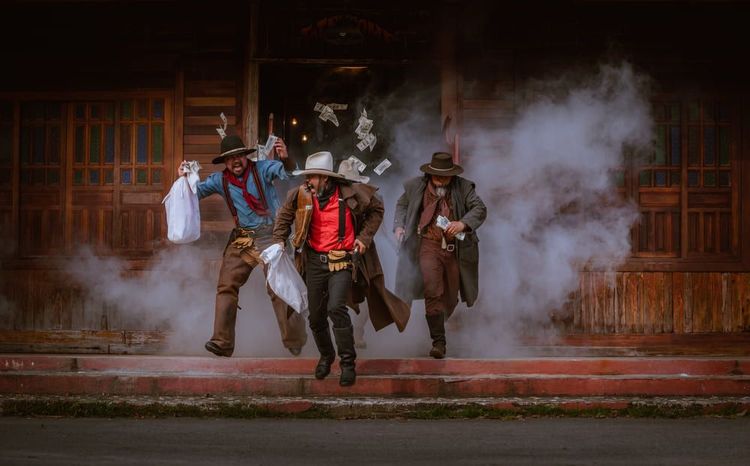
A mural of a roping cowboy sets the scene before the real show: from June through September, a volunteer cast reenacts nightly Wild West scenes on the porch of the Irma Hotel, building to a blank-fire shootout that can draw crowds in the hundreds, free of charge. The tradition echoes Buffalo Bill's own 1883 Wild West Show, which toured with sharpshooter Annie Oakley and Lakota leader Sitting Bull all the way to London and the Paris World's Fair, shaping the Western imagery we still picture today.
Free entry · Best in the evening
8 - Craftsmanship and Traditions of the Wild West
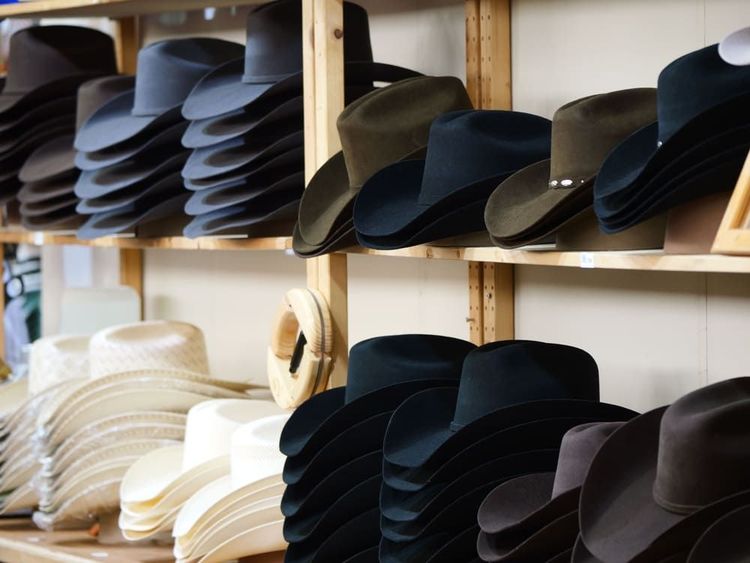
Family-run since 1976, this shop keeps alive the leatherwork and handmade hats, boots and saddles that cowboys once relied on daily, a craft that also borrowed heavily from Indigenous beadwork and silver-and-turquoise jewelry. Across the way, a brick former bank building marks the moment Cody, founded in 1896, grew out of frontier-town status into an established commercial center.
Free entry
9 - High ’n’ Dry
This sculpture of a cowboy watering his horse from his own hat is the work of T. D. Kelsey, an artist raised on Montana ranches before turning full-time to sculpture at his wife's urging, he donated his collection to the town in 2012 in her memory. Behind it, a mural advertises a local beer launched in 2011 to honor the town's founder, painted in the faded style of old American wall advertisements.
Free entry
10 - The state of Wyoming
Local menus keep things hearty and straightforward: lean bison, elk, barbecue ribs, chili and cornbread, best enjoyed in a saloon with country music playing. Wyoming carries a progressive footnote too: it was the first American territory to let women vote, back in 1869. Yet the state today remains rural and conservative, with debates over reproductive rights still very much alive.
Free entry
11 - Viewpoint
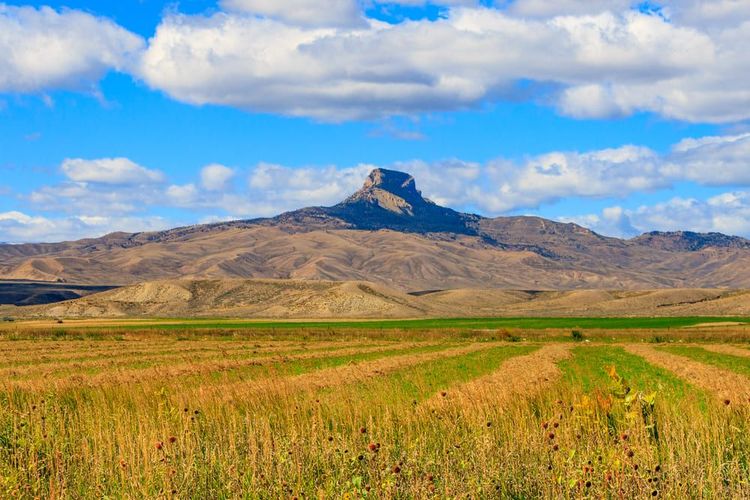
From this overlook, the whole landscape unfolds. Heart Mountain rises to the northwest, sacred to the Crow and later the site of a WWII internment camp holding thousands of Japanese Americans. West lies the canyon toward Buffalo Bill Dam, the world's tallest when finished in 1910, on the route trapper John Colter once described in terms so strange locals doubted him. East, the rugged McCullough Peaks still shelter wild mustangs.
Free entry
12 - The Conquest of the West
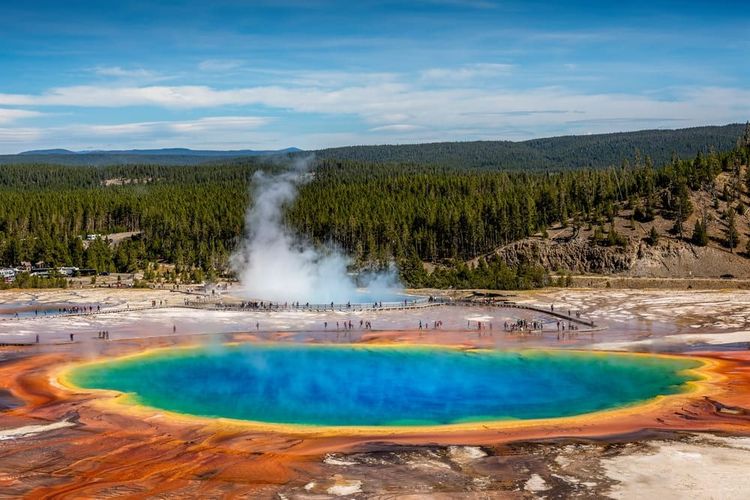
Before settlers arrived, this broad avenue would have crossed land shared by the Shoshone, Crow, Arapaho, Cheyenne and Lakota, moving with the seasons and the bison. The Tukudika, a horseless branch of the Mountain Shoshone, worked obsidian into tools in what became Yellowstone. The 1868 creation of the Wind River Reservation, followed by the world's first national park in 1872, gradually pushed these peoples from ancestral land now built around tourism, with Cody as one of its historic gateways.
Free entry
13 - On the way to the rodeo
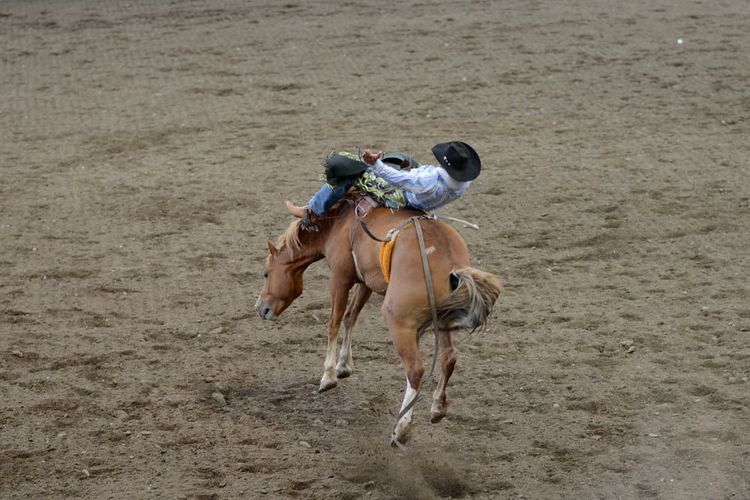
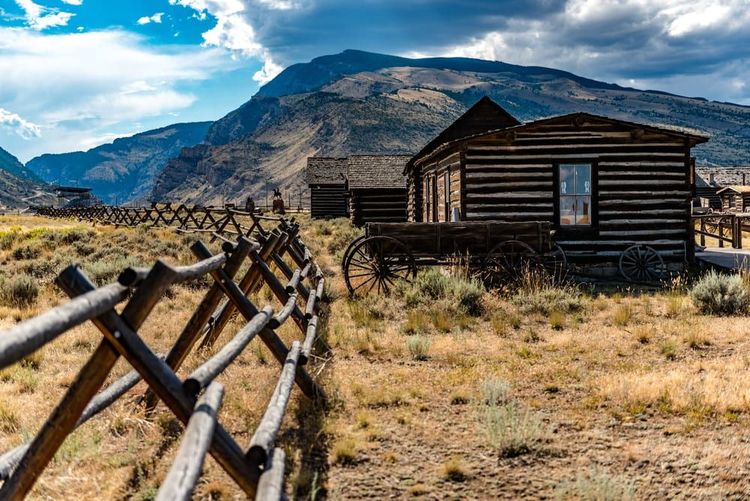
Cody bills itself as the world's rodeo capital, the only town with a professional show every single summer evening. The tradition traces back to informal tryouts Buffalo Bill himself staged near his hotel, formalized under his name in 1919 and turned into a nightly event for Yellowstone-bound travelers in 1938. Among past champions, future country star Chris LeDoux took a world bareback title here in 1976. En route to the arena, Old Trail Town rebuilds a frontier settlement from genuine relocated buildings.
Free entry
14 - Statue of Sacagawea
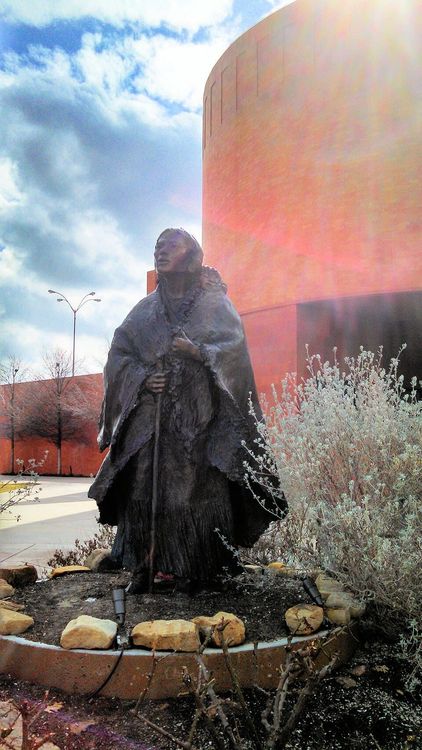
This statue honors Sacagawea, a young Shoshone woman taken from her homeland as a child and married to a French-Canadian trapper, who in 1804 joined the Lewis and Clark expedition west, her infant son on her back. Acting as guide and interpreter, she unexpectedly reunited with her own brother along the way, helping secure horses for the mountain crossing. Her later life remains uncertain, though her face now appears on a U.S. coin. Beside her, young Buffalo Bill recalls riding for the Pony Express, linking Missouri and California.
Free entry
15 - The Champions Board
This sign at the entrance to Cody High School, founded in 1909, tallies every state championship its teams have won since the 1940s, from wrestling to skiing. With roughly 600 students, the school carries its own flavor: boys' teams go by the Broncs, after the region's wild horses, girls' by the Fillies, a nod to the horse culture and rodeo spirit running through the whole town.
Free entry
Which neighbourhoods does the tour cross?
Looping for about 3.2 km, the route links several sides of Cody, from the big museum devoted to its founder to the edges of the high school and the rodeo grounds.
It opens in front of the large museum complex devoted to Buffalo Bill, then passes the sculptures honoring the town's founder and the wildlife of the Great Plains (stops 1 to 4).
It then crosses Cody's historic core, between the county courthouse, the Irma Hotel that Buffalo Bill had built in 1902, and the western craft shops lining Sheridan Avenue (stops 5 to 10).
The last stretch climbs to a viewpoint over Heart Mountain and the Shoshone Canyon, before reaching, along the avenue that tells the history of Native peoples, the road toward the rodeo grounds and the edges of the town's high school (stops 11 to 15).
How much does it cost to visit Cody?
Of the 15 stops on the route, only one requires a ticket, at $24, the Buffalo Bill Center of the West.
The other fourteen are free to visit, throughout Cody's streets and parks, with no pass needed to enjoy the rest of the walk.
Information checked in October 2026 and subject to change.
Where to stop for a bite along the tour?
Cody's food scene is best enjoyed in one of the saloons and steakhouses lining the route, in the spirit of the ranches of the American West.
Bison, leaner than beef, comes as a steak or a burger, and so does elk, served in several restaurants nearby; barbecue ribs, chili, and cornbread round out the menu. To go with the meal, the town brews its own beer, created in 2011 in tribute to its founder, and whiskey remains the classic choice.
What should you know before visiting Cody?
A few American habits are worth knowing before setting off on this route.
Prices in shops and restaurants are usually listed before tax, and it's customary to leave about 18 to 20 percent of the bill at a restaurant. Out in the American West, distances often turn out longer than expected, so it's worth planning for fuel and drive time, especially when heading to Yellowstone early in the morning.
Around Cody, as near Yellowstone National Park, nature is never far away: stay on marked trails and keep a safe distance from wildlife.
On the route, stop 7 only comes alive in the evening, from June to September: the Cody Gunfighters show in front of the Irma Hotel doesn't run the rest of the year.
What to see around Cody?
Cody is also a gateway to the wide-open spaces around it, between a national park and longer road trip routes.
About 1 hour's drive through the Shoshone Canyon brings you to the East entrance of Yellowstone National Park, one of the best-known natural sites in the United States.
For a longer journey, the Yellowstone and Rocky Mountains road trip carries on from the park towards the Rocky Mountains.
Le plein d'inspirations
Explorez le monde en totale liberté, à pied au cœur des villes ou au fil des routes. Nos guides audios transforment chaque destination en une découverte culturelle immersive et unique.
FAQ for visiting Cody
When is the best time to visit Cody?
Cody is best visited from late spring to early autumn. Summer is the liveliest season: the days are long, the rodeo runs every evening and the road over the pass to Yellowstone's east entrance is open, which is not the case for much of the winter. June and September strike a nice balance, with fewer people, pleasant temperatures and superb light on the canyons, even if nights stay cool at altitude. Winter is harsh and snowy: the town carries on and the museums stay open, but some outdoor activities and park access shut down. Check road conditions before you set off, as the weather changes fast in Wyoming.
How much time should you set aside for Cody?
A full day covers the essentials: a morning at the Buffalo Bill Center of the West, whose collections easily take several hours, an afternoon at Old Trail Town and along the main street, then the rodeo in the evening during the summer season. Two nights give you room to breathe and to add the Buffalo Bill dam and reservoir, a walk in the canyon or a horseback outing. Many travellers treat Cody as a stop on the way to Yellowstone: if so, spending the night here before entering the park is comfortable, as the drive is long and the scenery invites frequent stops.
What are the must-sees in Cody?
The Buffalo Bill Center of the West is the obvious starting point: this cluster of museums brings together the history of the West, western art, firearms, Yellowstone natural history and Plains cultures under one roof. Old Trail Town then gathers genuine nineteenth-century cabins and buildings, dismantled and rebuilt here, some of them linked to the region's outlaws. On Sheridan Avenue, the Irma Hotel, built by Buffalo Bill and named after his daughter, keeps its carved wooden bar and its gunfight scene staged on summer evenings. Add the Buffalo Bill dam, spectacular at the bottom of its canyon. The Ryo audio guide offers a dedicated Cody route that links these places and tells the story of the town's birth.
Who was Buffalo Bill and why does the town bear his name?
Cody is named after William Frederick Cody, known as Buffalo Bill, a hunter and army scout who became the creator of the Wild West Show, a spectacle that toured America and Europe. In the late nineteenth century he invested in this Bighorn valley and helped found the town, with the idea of drawing travellers towards Yellowstone: Cody was therefore designed from the outset around a story, the West as he staged it. He had the Irma Hotel built here, along with a hunting lodge in the nearby mountains. The town's museums now work at separating the public figure from the man, and also give space to Native American nations' perspectives on that period.
How do you get to Yellowstone from Cody?
Cody is Yellowstone's east gateway. You reach the entrance on a road that follows the North Fork Shoshone valley, between eroded cliffs and forest, before crossing a high pass; allow a good part of the morning to reach the first geysers, more if you stop often. That road and its pass close in winter and reopen in spring depending on snow, so check conditions before setting off. There is no regular public transport to the park: you need a car, with a full tank from Cody, as services are scarce between the town and the entrance. Bring water, warm clothes and a little patience for the slowdowns caused by wildlife.
Can you attend a rodeo in Cody?
Yes, and it is one of the town's signatures, since Cody happily bills itself as a rodeo capital. Through the summer season a rodeo is held every evening in the local arena: bull and bronc riding, roping and barrel racing, in a family atmosphere where younger children are invited into the ring at the start of the programme. The open stands fill up fast, especially at weekends, and evenings cool down sharply once the sun goes: take a jacket. Early in the summer the town also hosts a larger edition, with a parade through the streets. Out of season the arena is quiet, but the museums tell the story of the tradition.
How do you get to Cody and get around once there?
Most visitors arrive by car, from Billings to the north, Sheridan to the east or Jackson to the south-west, each drive taking several hours across mountains and wide plains. A small regional airport serves the town, with flights from a few western hubs, mainly in season, and car rental desks on site. Once there, the centre is very walkable: Sheridan Avenue concentrates the shops, restaurants and historic hotels. As soon as you head further out, though, a vehicle becomes essential, because distances are long and there is no public transport network. Remember to fill up regularly, as petrol stations can be far apart.
What can you do in nature around Cody?
The immediate surroundings easily deserve half a day. To the west, the Buffalo Bill dam holds back a turquoise reservoir framed by rock walls, with a visitor centre perched above the canyon and areas for swimming, fishing and boating. Further on, the Shoshone national forest unrolls hiking trails, campgrounds and strangely shaped rock formations along the valley. To the north, the road towards Red Lodge climbs in switchbacks to high plateaus and huge panoramas, open only in the warmer months. Wildlife watchers look out for elk, bighorn sheep and birds of prey at first light. Carry water: the dry heat and the altitude are quickly felt on the trails.
Which area should you stay in when visiting Cody?
The centre, around Sheridan Avenue, is the most practical: you will find historic hotels, motels and guest houses within walking distance of the museums, restaurants and the rodeo arena. To the west, along the Yellowstone road, lodges and guest ranches are scattered through the valley, more isolated but well placed for an early start into the park. Campgrounds and RV sites are also plentiful in the area. In summer demand is high and availability goes a long way in advance, especially during the big early-season festivities, so it is worth booking as soon as your dates are fixed.
Vos commentaires, idées et suggestions
Aucun avis pour le moment
