




Walk
The Story of a Promised Land
Salt Lake City, United States
Walk
The Story of a Promised Land
Salt Lake City, United States
Distance
4.8 kmDurée
2h00Audios
23Parcours
Loop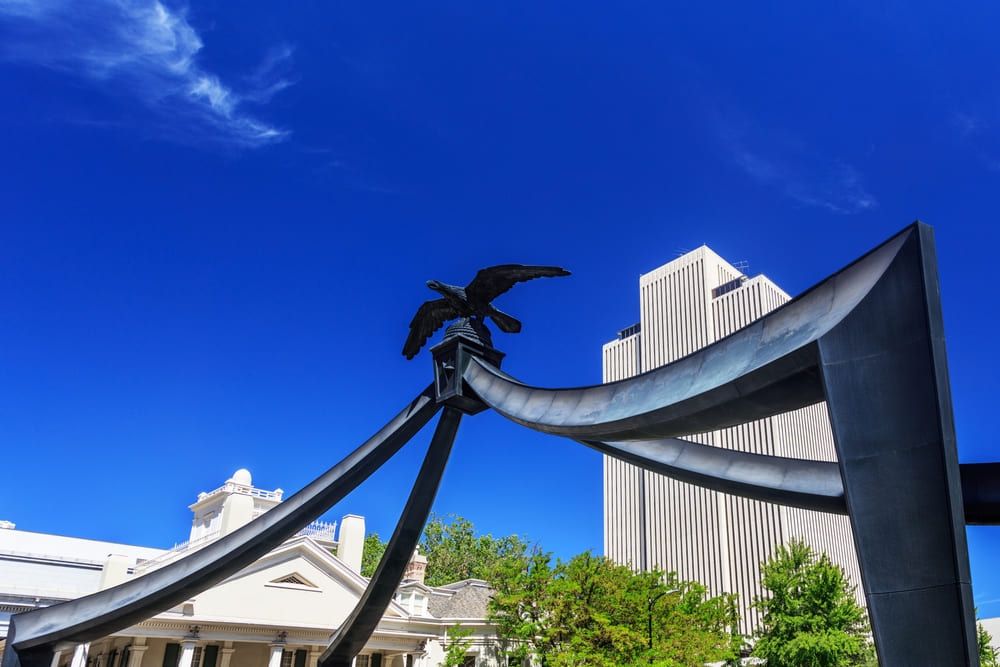
Shutterstock
You're about to pass beneath Eagle Gate, one of Salt Lake City's most recognizable landmarks and the historic entrance to Brigham Young's estate. When it was first built in 1859, this arch wasn't simply decorative. It served as a gateway to Young's private property and also controlled access to City Creek Canyon, an important source of timber and water for the city's early settlers. In fact, anyone wanting to pass through had to pay a toll! Of course, the arch you see today has changed quite a bit since those early days. It was rebuilt in 1963, with a wider opening to accommodate the growing flow of traffic, but its original symbolism was carefully preserved. Look up, and you'll see a bronze eagle perched on a beehive. The eagle represents strength and protection, while the beehive symbolizes the hard work and cooperation that helped the pioneer community take root in the valley. Over time, what began as a private gateway became a public monument, and today, Eagle Gate offers a glimpse into the early days of Salt Lake City, when access to the surrounding land and resources was closely managed under Brigham Young's leadership.
Aucun avis pour le moment
