





Créé par Romane, le 16 nov. 2026
Votre guide Ryo
Salt Lake City, United States
The Story of a Promised Land
Parcours audioguidé pour visiter Salt Lake City en 1 jour
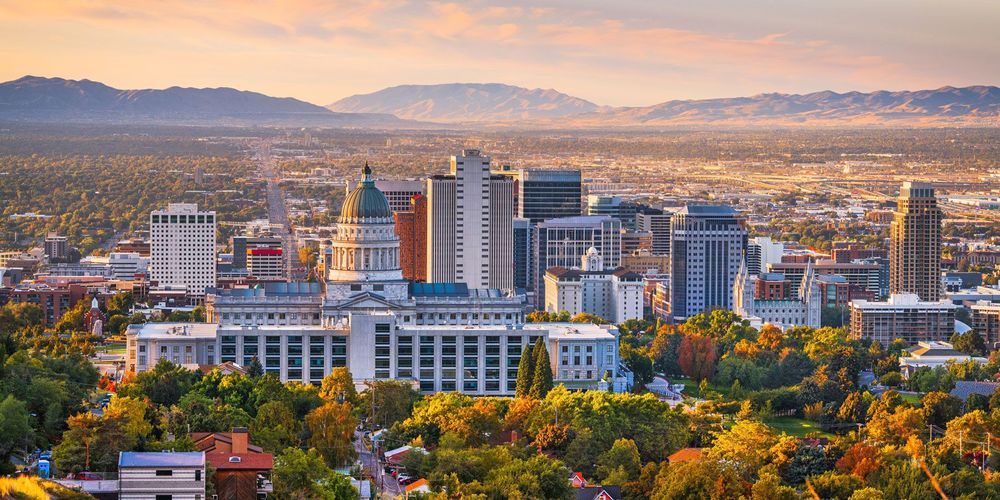
Picture a city nestled between the rugged beauty of the Wasatch Mountains and the mysterious vastness of the Great Salt Lake. Salt Lake City feels like an oasis of calm and order, where its pioneer past meets a bold, modern spirit. This walk takes you from the neo-Gothic spires of Temple Square, the spiritual heart of the city, to broad, open boulevards lined with contemporary architecture and framed by snow-capped peaks. Along the way, you will discover a unique blend of solemn Mormon history and the fresh, energetic atmosphere of a city shaped by the great outdoors.
Quand partir à Salt Lake City ?
Jan.
3°
10
Feb.
6°
9
March
12°
10
April
16°
10
May
22°
9
June
28°
6
July
34°
4
Aug.
33°
5
Sept.
27°
5
Oct.
19°
7
Nov.
10°
9
Dec.
4°
10
Salt Lake City has a semi-arid continental climate, with four very distinct seasons. Summers are hot and dry, with temperatures reaching around 33 degrees Celsius, while winters are cold and snowy, usually ranging from minus 6 to 3 degrees. The best time to visit is between June and September, when the weather is ideal for high-altitude hiking and exploring the surrounding desert landscapes. September is especially popular, thanks to its mild temperatures and beautiful autumn colours. Winter, on the other hand, is perfect for skiing and snowboarding, as the region is famous for having some of the best powder snow in the world.
Départ conseillé
No need to worry about where to begin! Our tours are designed as a loop, so you can jump in wherever you are. The navigation system and audio-guide will automatically adjust to your location. However, if you happen to be nearby, we do have a preferred starting point: in front of the Capitol Building.
Parking à proximité
City Creek Parking: 50 East South Temple Street, Salt Lake City
For parking in Salt Lake City, City Creek Center is one of the most convenient options. Ideally located right in the city centre, it usually offers the first two hours free, which is a rare luxury in a major city. Elsewhere, you will find plenty of parking meters, which are paid from Monday to Saturday and free on Sundays, as well as private car parks such as the one on Regent Street. Most parking can be easily managed through the Park SLC mobile app.
Découvrez 23 lieux d'intérêt pour visiter Salt Lake City

What to see in Salt Lake City on your 2h tour?
This 4.8 km loop takes about 2 hours and links 22 sights. It starts from the heights of Capitol Hill, drops down to Temple Square and its religious complex, crosses the shopping downtown around Main Street and City Creek Center, climbs back past Brigham Young's former properties on South Temple, then ends among the quiet parks of Memory Grove. With the Ryo app in your ears, every stop tells of the city's pioneer founding, its architecture and everyday life.
Information checked in October 2026 and subject to change.
1 - Utah State Capitol
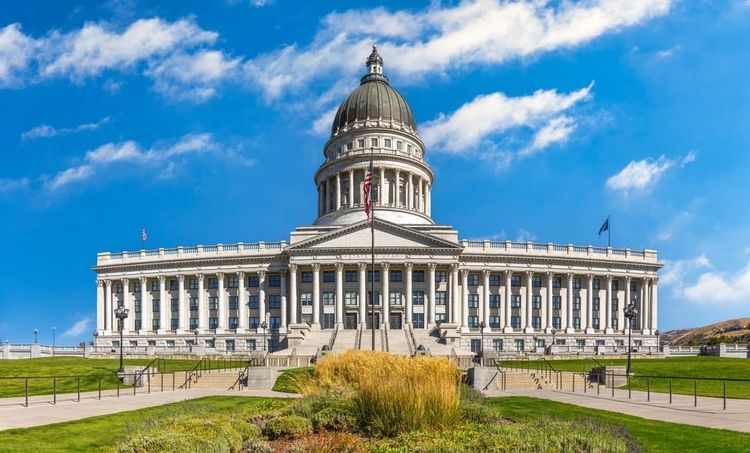
On these heights renamed Capitol Hill, a former military ground gave way to this neoclassical building finished in 1916, funded through the fortune of railroad magnate Edward H. Harriman and designed by architect Richard Kletting. Its Corinthian columns, local granite and copper dome stand out across the valley. Under the dome, the marble rotunda still houses Utah's legislature today, quietly reinforced against earthquakes during a later renovation. Before moving on, enjoy the view from the surrounding gardens.
Free entry
2 - Council Hall
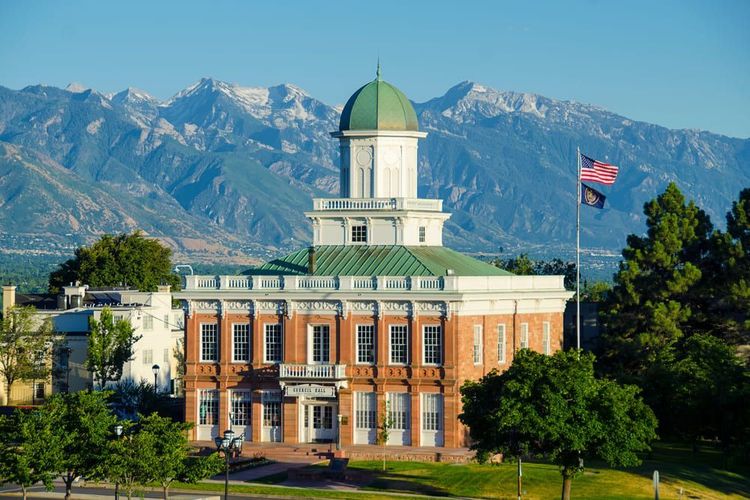
Right across from the Capitol, this modest Greek Revival building was the first seat of local government, built in 1866. Founding measures were passed here, such as the creation of public schools, and Utah granted women the vote remarkably early. Its red sandstone front and small copper dome have survived the decades: taken apart stone by stone in 1961, the building was rebuilt on this site. It now houses the visitor centre and an exhibit on the city's early days.
Free entry
3 - The History of Salt Lake City
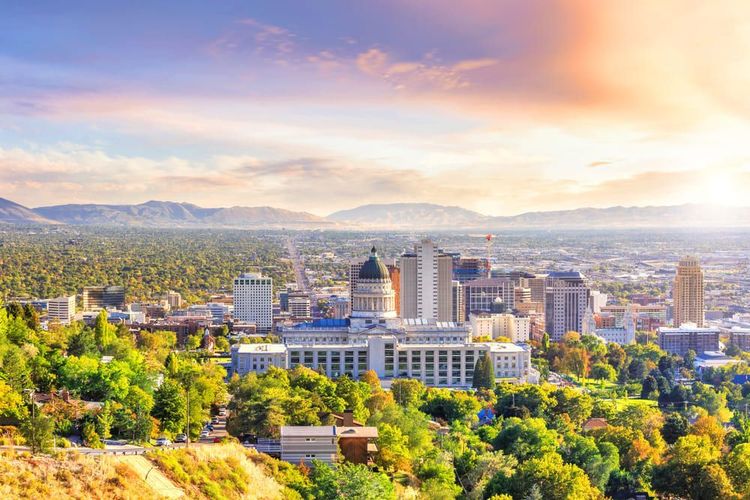
This stop traces the city's birth: in 1847, Mormon pioneers led by Brigham Young settled in this valley, then Mexican, dry and empty. To survive, they laid out wide grid streets and diverted City Creek's water to irrigate their crops. The region later became American, and the city grew up around Temple Square. The railroad's arrival at century's end opened it to the rest of the country, without erasing the founders' imprint, still visible in its street plan.
Free entry
4 - McCune Mansion
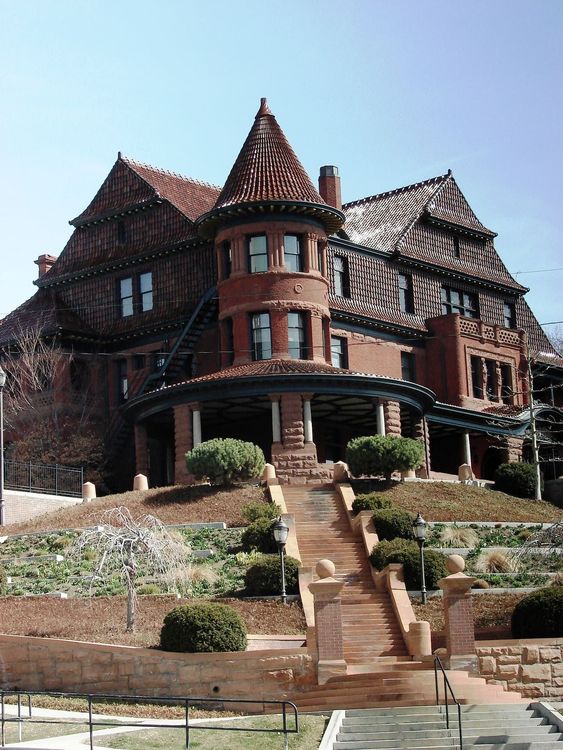
With its turrets and red brick, this mansion looks as though it stepped straight out of Europe. It was built at the turn of the 20th century for a railroad businessman eager to showcase his success through materials gathered from around the world. The equally lavish interior later served as a music school, then a university centre, before being restored to host weddings and receptions. A few ghost stories have circulated since the 1990s. Visits are by guided group only, booking ahead.
Free to see from outside
5 - Conference Center
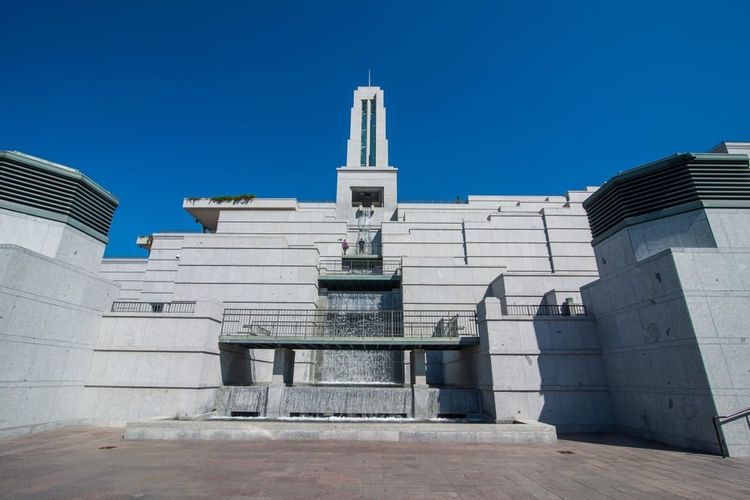
This huge auditorium, opened in 2000 after decades of planning, can seat more than 21,000 people for major religious gatherings, a volume comparable to a long-haul jet. Despite its scale, the roof design guarantees a clear view from every seat, and a monumental organ shapes the hall's acoustics. The most surprising feature: the rooftop is entirely planted, with gardens, trees and a small stream extending the landscape of Temple Square. Free tours let visitors explore the inside.
Free entry
6 - Church History Museum
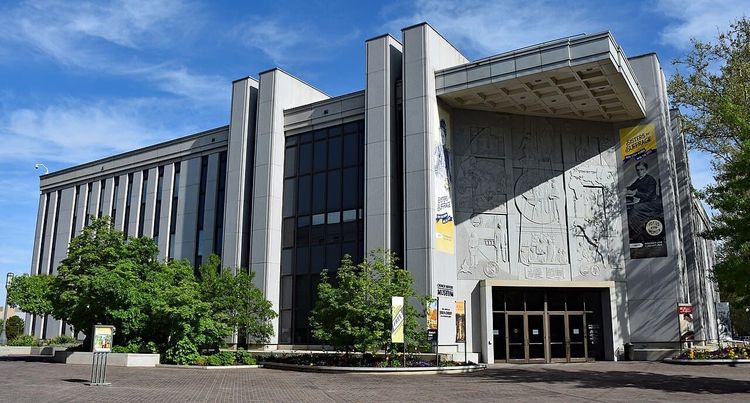
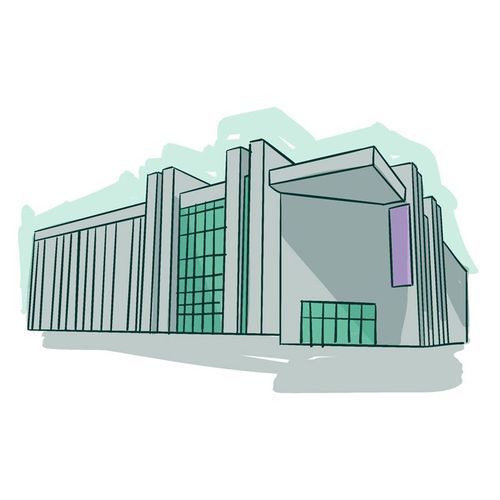
Devoted to the history of the religious movement that Joseph Smith founded in the 19th century, this museum, opened in 1984, keeps nearly two hundred years of objects and documents tied to the region's pioneers. Visitors can see a press that printed a founding text as early as 1830, or a wagon fitted out to measure distances travelled westward. Modernised in the 2010s, the space now offers interactive displays and an immersive theatre. Free entry helps visitors understand a community deeply woven into local life.
Free entry
7 - Salt Lake Tabernacle
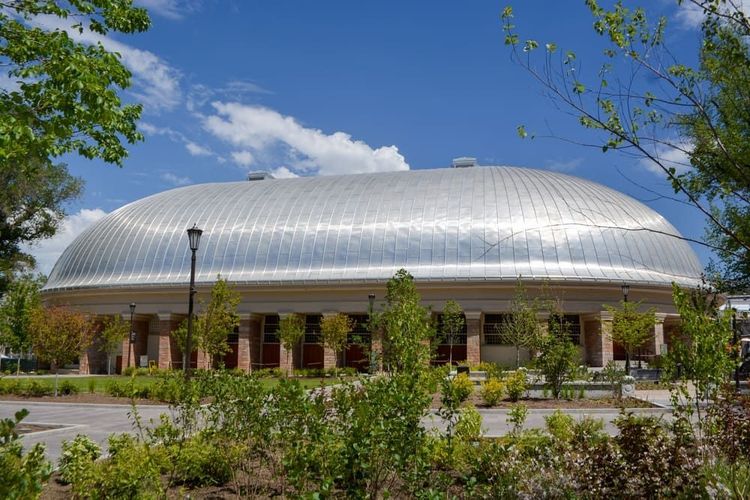
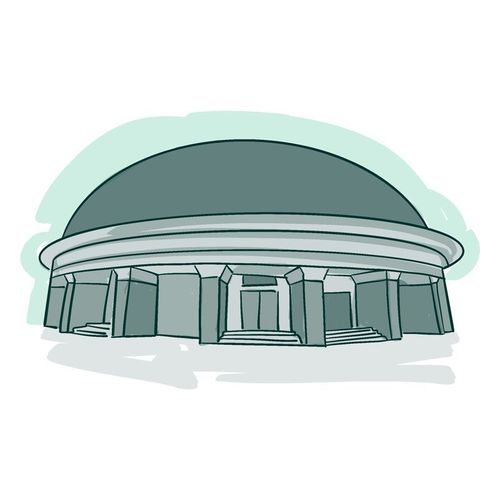
This turtle-shell-shaped dome is a feat built with almost no metal at all, using a timber lattice frame completed in 1875. The acoustics are so refined that a dropped pin is said to be heard at the back of the hall. An impressive organ, with more than 11,000 pipes, accompanies the renowned choir that has performed here since the 19th century. Long reserved for major religious conferences, the venue now hosts concerts, public rehearsals and free recitals.
Free entry
8 - Family Search Library
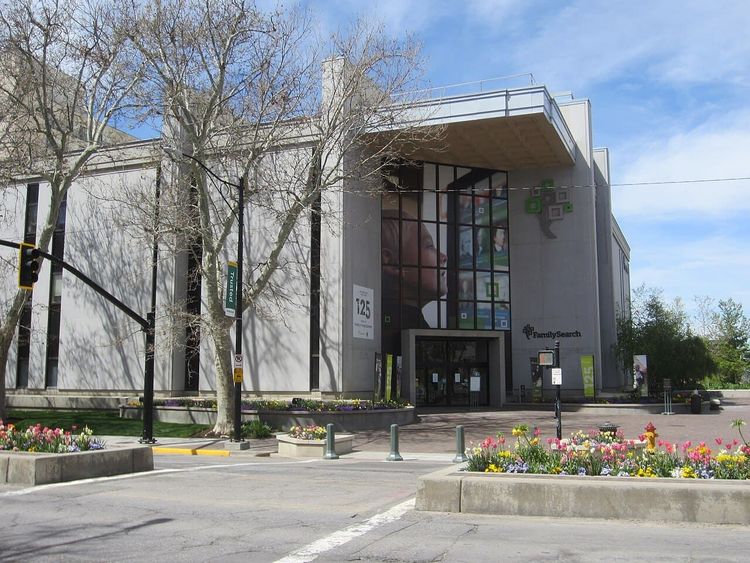
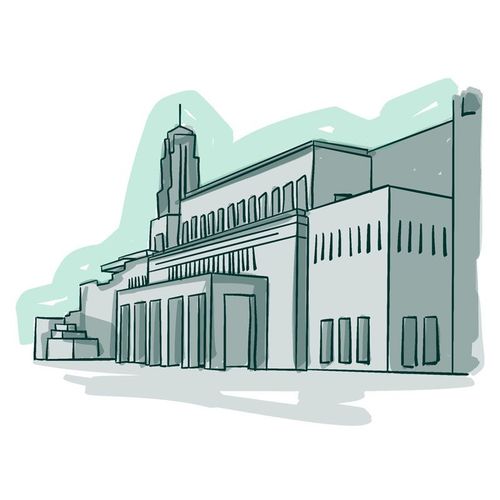
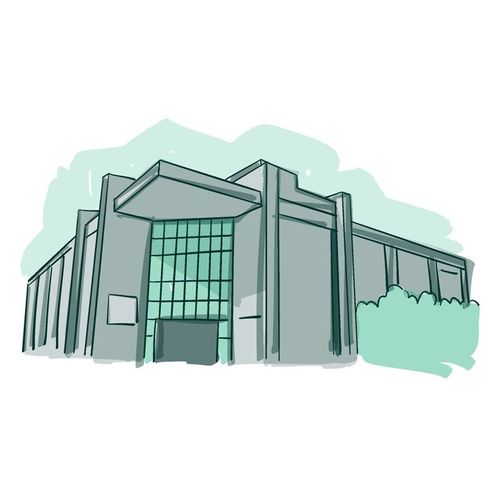
Nothing from the street gives away that this building houses the world's largest genealogical library. The current building dates from 1985, yet its collections already gather millions of documents and billions of names, allowing visitors to trace back generations and continents. Volunteers welcome guests free of charge, whether they simply want to look around or start researching their own family history. A peaceful place, open to everyone, that draws curious visitors from around the world keen to reconnect with their roots.
Free entry
9 - Brigham Young Monument
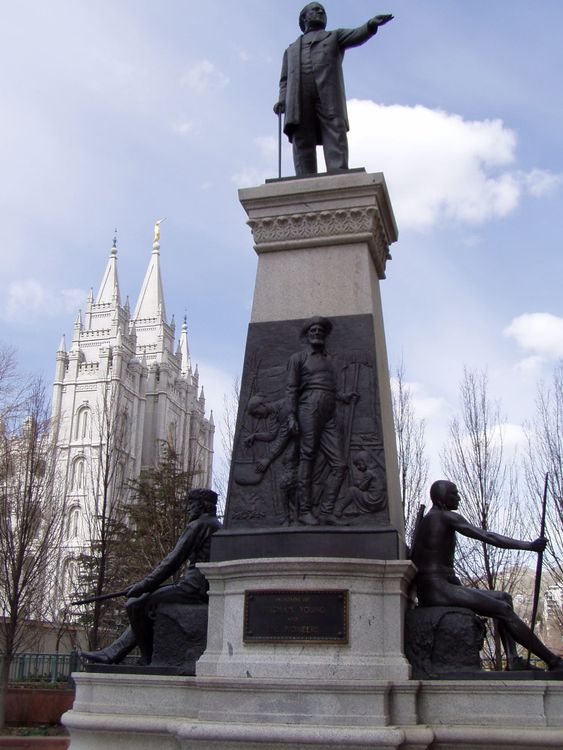
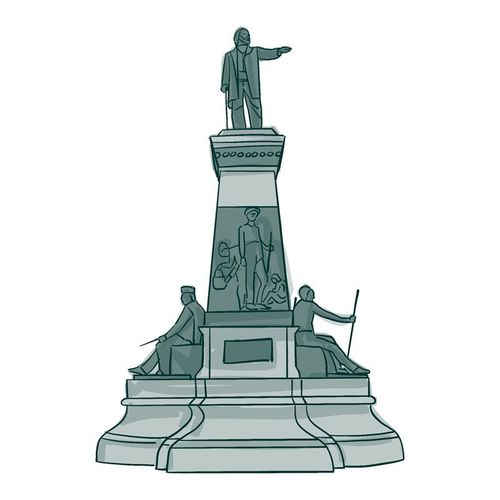
This statue honours the leader who succeeded Joseph Smith at the head of the movement and guided his followers westward into this valley, where they settled. Having become the territory's first governor, he oversaw the region's farming and urban growth. His outstretched arm symbolises the direction he gave to newcomers. A trapper and a Native American figure recall the area's earlier populations. Unveiled for an anniversary and later relocated in the 1990s, the monument marks the city's zero point for street addresses.
Free entry
10 - Salt Lake Temple
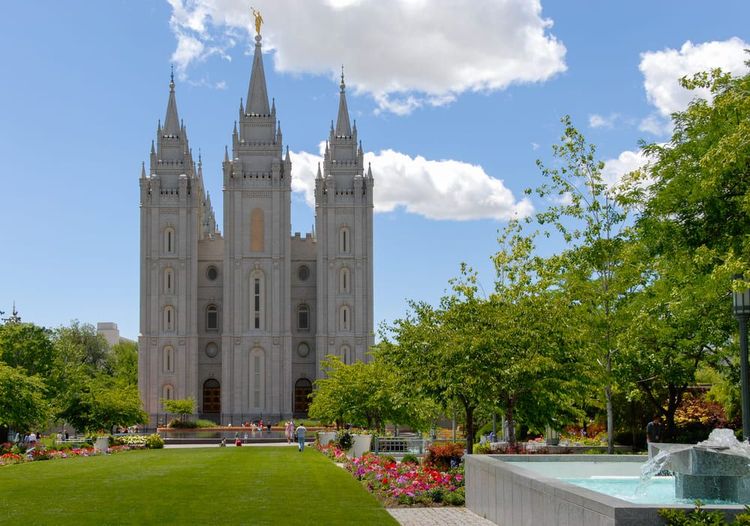
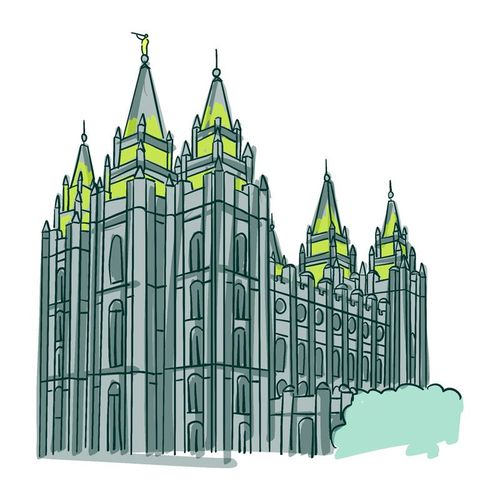
Chosen as soon as the pioneers arrived, this spot took 40 years to produce the community's most sacred temple, completed at the end of the 19th century. Stone walls, slender spires, a gilded statue at the top: the whole structure feels almost defensive in style, while star and moon motifs decorate the façades. Reserved for internal ceremonies, it cannot be visited inside, but the surrounding grounds, planted with gardens and fountains, are freely open and shine under winter lights.
Free to see from outside
11 - Joseph Smith Memorial Building
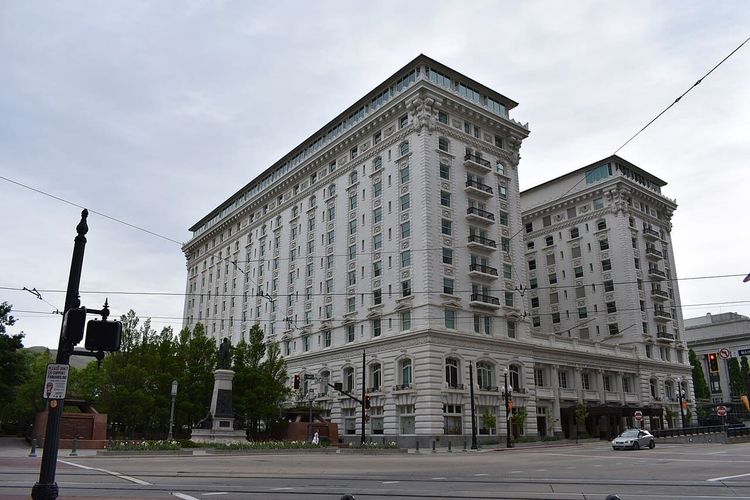
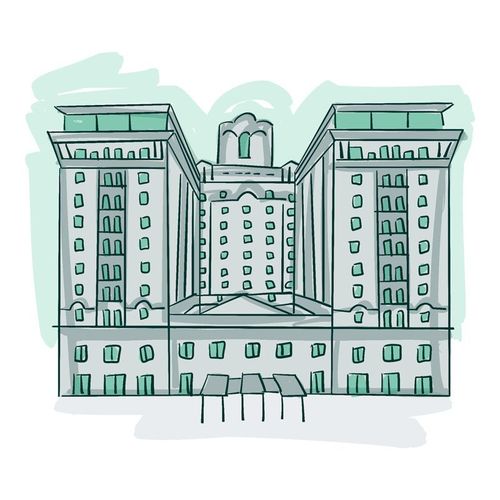
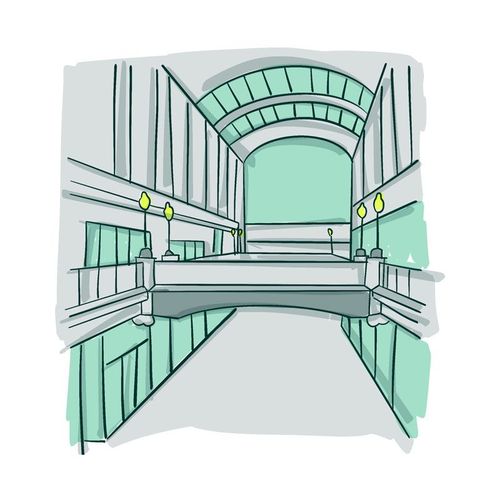
Before becoming this public space, the building was one of the city's most prestigious hotels from the early 20th century, hosting travellers and notable guests for decades. Closed and then fully renovated later in the century, it kept its sumptuous lobby, its columns and its stained-glass ceiling. Today it houses a panoramic restaurant overlooking the temple, as well as a cinema with free screenings, elegant remnants of an establishment turned into a cultural venue open to all.
Free entry
12 - Main Street
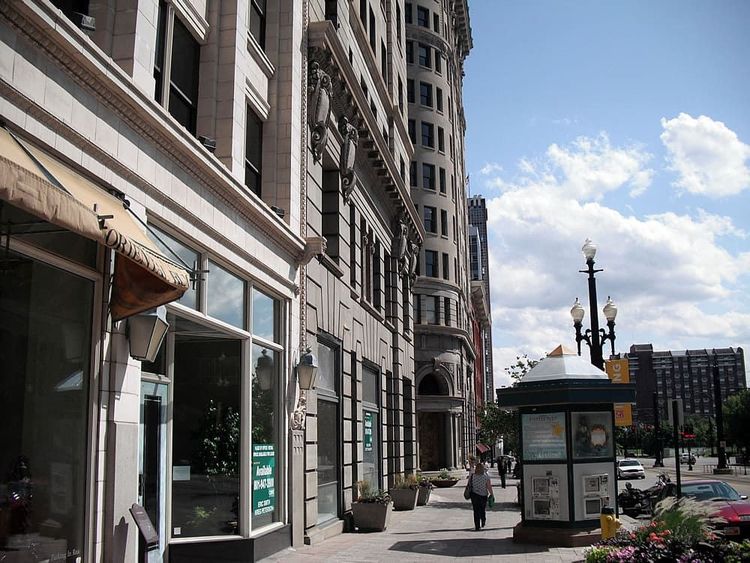
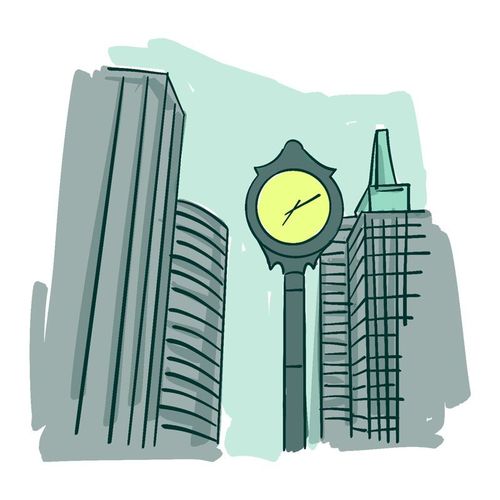
This street, which once ran along the eastern edge of Temple Square, became the city's main shopping avenue, long lined with stores and hotels. As elsewhere in the United States, it went through a decline before a genuine revival driven by entertainment and dining. Lined today with modern towers and older buildings, and crossed by the tram, it remains a key axis: it is the street that symbolically divides Salt Lake City's east and west sides.
Free entry
13 - Eccles Theater
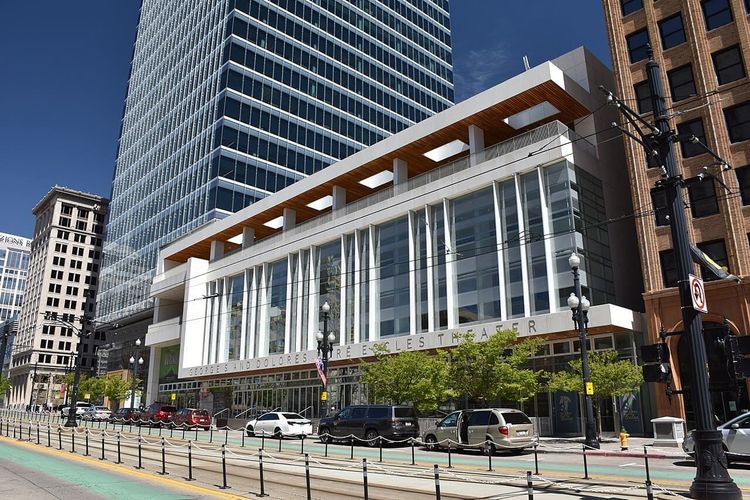
Opened after decades of planning, this theatre has offered an international-level stage for musicals, concerts and dance performances since 2016. Its glazed façade opens onto a bright atrium, while the main hall, which can seat more than 2,500 people, evokes Utah's mountain relief and a starry sky through a ceiling lighting effect. Built into a cluster of squares and terraces, it plays a full part in downtown's revival.
14 - Gallivan Center
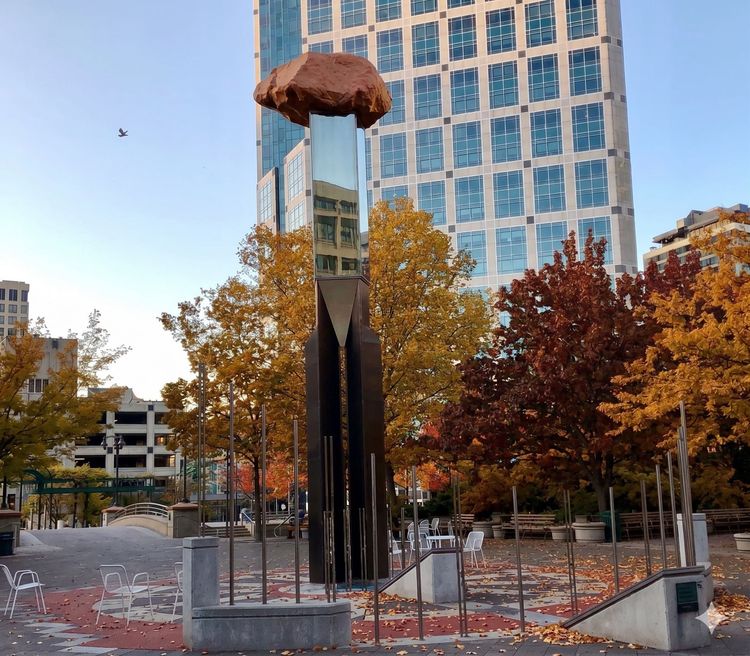
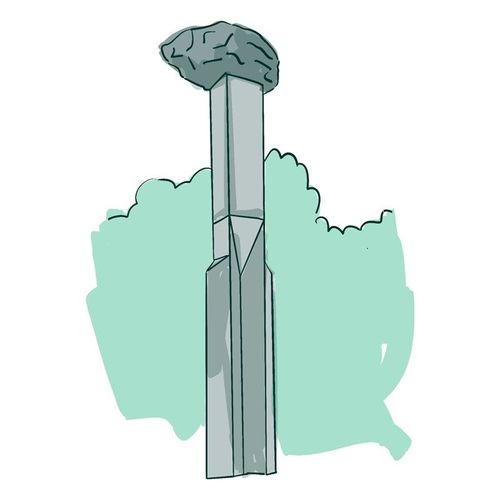
This large public square, created in the 1990s on the site of a former city block, now hosts summer concerts, food trucks and, in winter, a busy ice rink. A striking artwork stands at its centre: a balanced block of local sandstone that also works as a sundial, with a beam of light marking the time on the ground. Around it, motifs drawn from several cultures, from the zodiac to yin and yang, invite reflection on our relationship with time, between ancient markers and modern clocks.
Free entry
15 - Food and Local Specialties

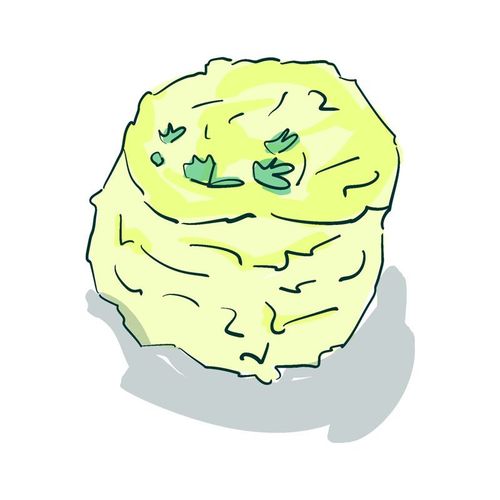
Salt Lake City surprises with its food. The pioneer legacy of simple dishes built on grains and vegetables lives on in local recipes such as a potato casserole served at big gatherings, or fried dough treats locally called scones. The city has since opened up considerably, with a lively Mexican, Asian and vegetarian food scene. Alcohol was long tightly regulated here, which explains the popularity of soft drinks and cafés, now numerous and varied across town.
Free entry
16 - City Creek Center
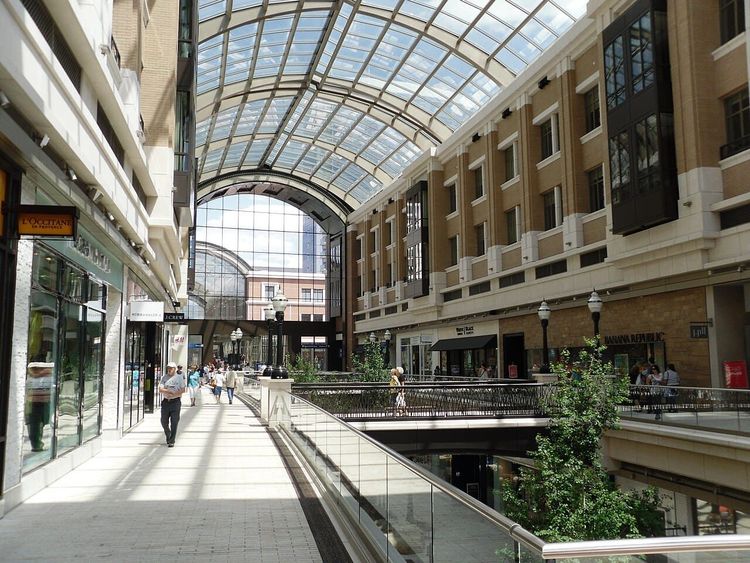
This open-air shopping centre feels like an urban stroll, between boutiques, restaurants and a stream running through the site, a legacy of an old waterway where a few trout still swim right in the heart of downtown. Some of the walkways are covered by a retractable roof, which opens whenever the weather allows. Opened in 2012, the whole development has reshaped downtown's look, turning it into a place for shopping as much as for outdoor relaxation.
Free entry
17 - Brigham Young Complex
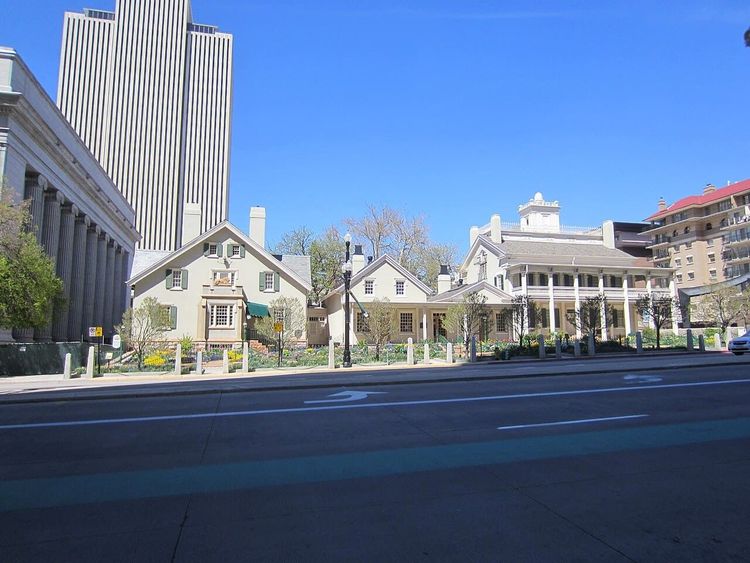
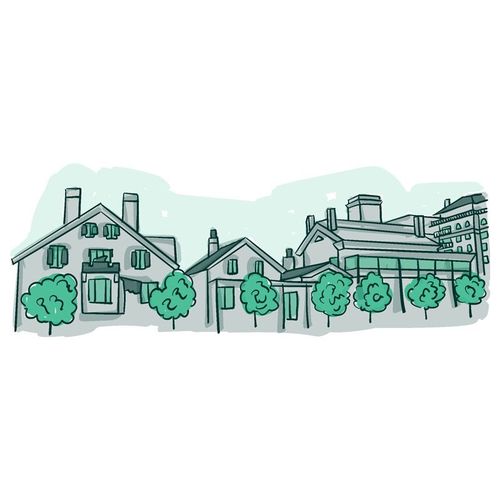
Two neighbouring buildings form the former residence of the leader who brought the pioneers into the valley. The corner house, recognisable by the beehive perched on its roof, served as his main home and reception venue, before becoming a museum. Next door, a plainer building, named for the lion carved above its door, housed several members of his family. Further along this street stands an early 20th-century Catholic cathedral, with twin towers and finely crafted stained glass.
18 - Eagle Gate Monument
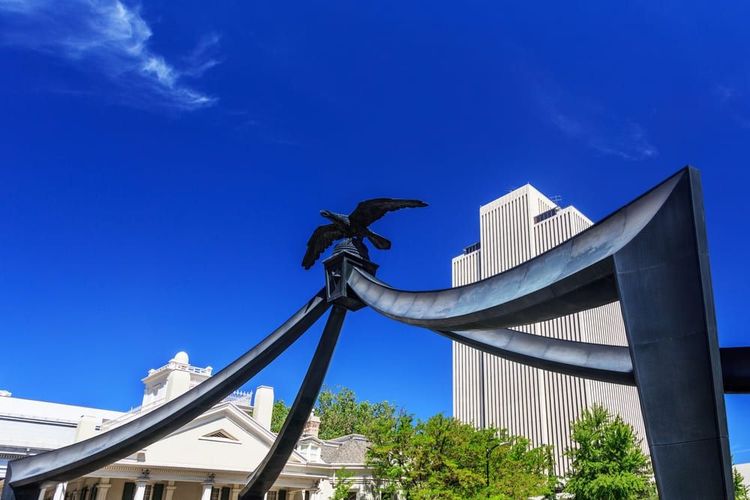
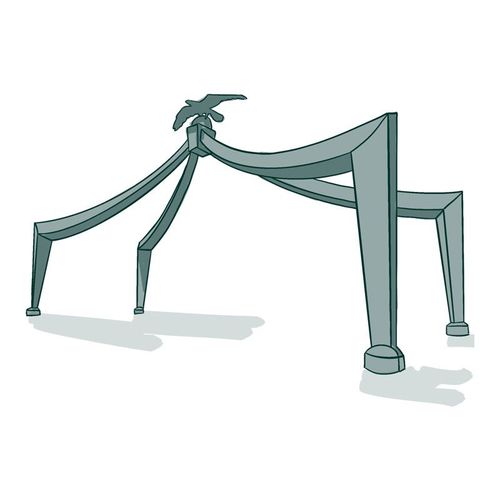
This arch originally marked, as early as 1859, the private entrance to the Mormon leader's estate and controlled access to the resources of the nearby canyon, wood and water essential to the early settlers, even charging a toll. The structure seen today was rebuilt in the 1960s and widened for modern traffic, but it still carries the bronze eagle perched on a beehive, symbols of power and collective work. From a simple private gateway, it has become a commemorative landmark of the city's early days.
Free entry
19 - Church Office Building
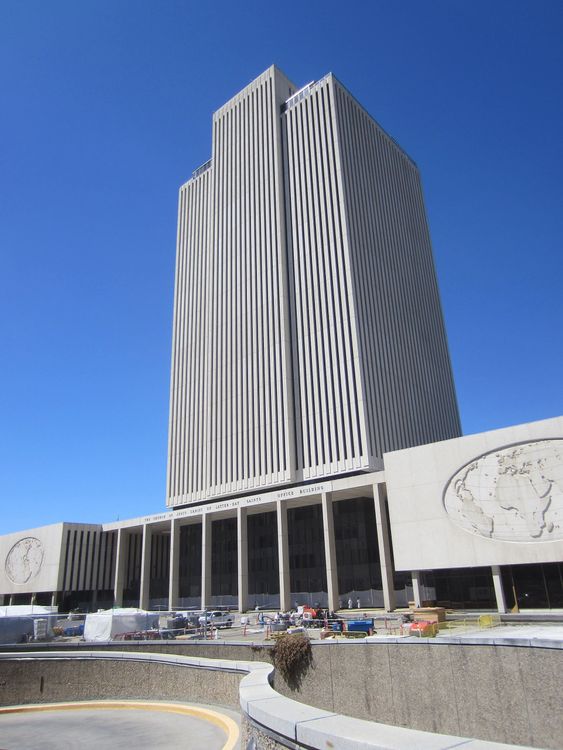
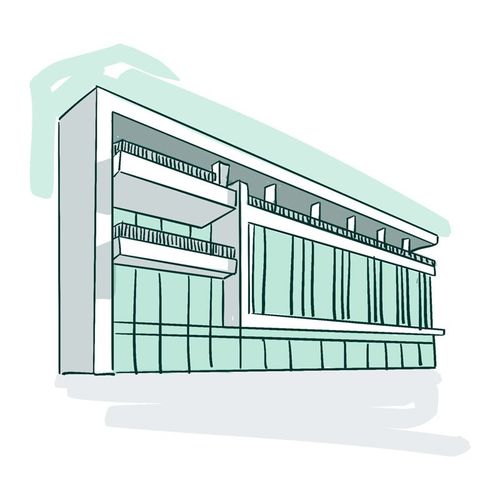
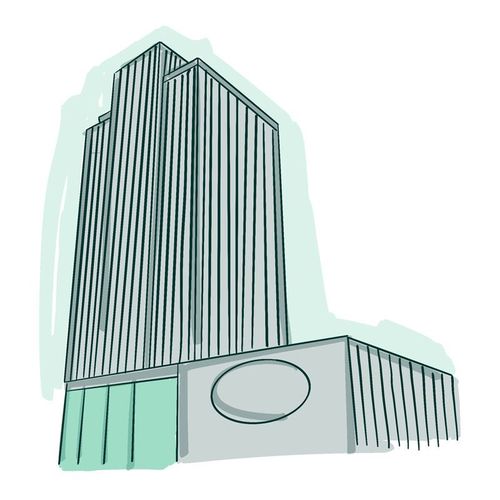
This administrative tower has 28 floors and stands over 120 metres tall, a height record long held in the state. Opened in the mid-1970s, it brings together a church's administrative services that had previously been scattered across the city, from humanitarian aid to genealogy work. Its strongly vertical lines give it a sober, almost austere look. If you step inside, a high observation point offers a panoramic view over the city, Temple Square and the surrounding mountains.
20 - Brigham Young Historic Park
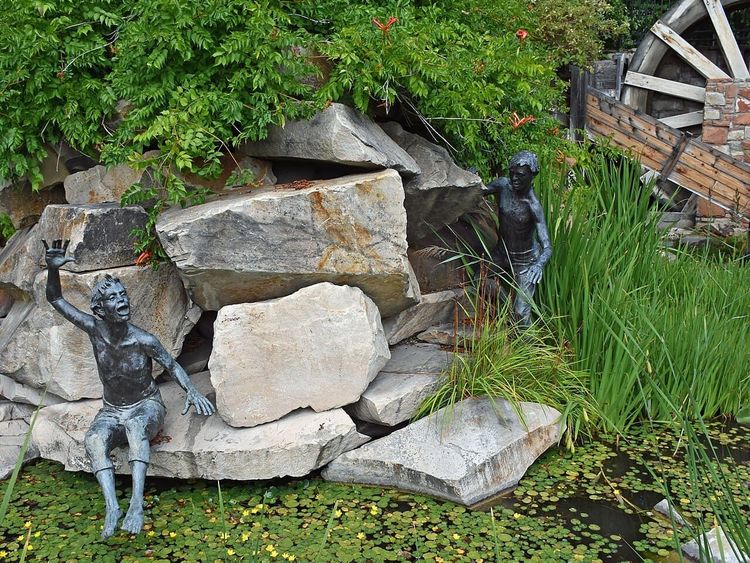
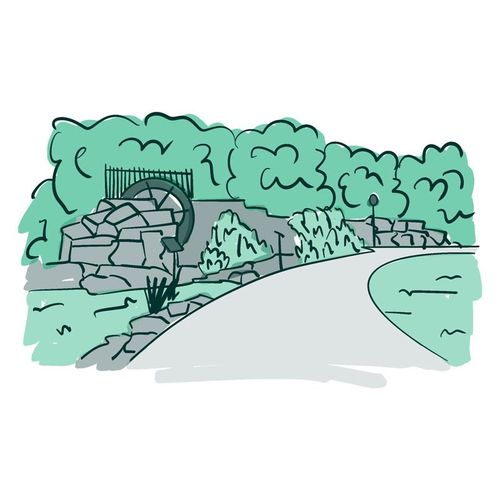
This small, understated park occupies part of the Mormon leader's former farm estate, once planted with orchards and home to livestock, behind a partly preserved stone wall. Laid out in the 1990s to evoke this pioneer farm, it lets a thin open stream run through, turning a wheel and feeding small channels that recall the original irrigation methods. Life-size bronze sculptures of workers and children give a vivid picture of everyday life back then, far removed from today's city.
Free entry
21 - Memory Grove Park
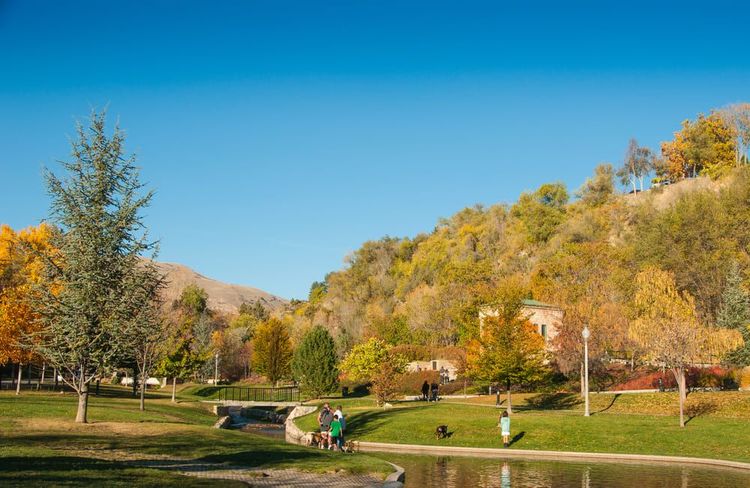
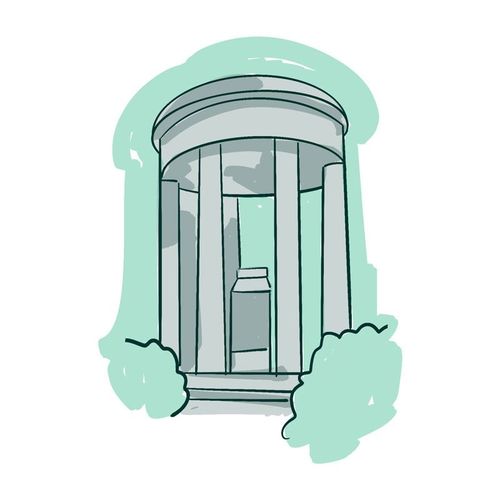
Before becoming this memorial park, the site held quarries and mills. Its transformation began after the First World War, driven by families of fallen soldiers, and the memorial was dedicated in the early 1920s. Visitors find a pagoda dedicated to that conflict, a quiet chapel, and other monuments recalling Pearl Harbor or the Korean War. Crossed by the stream of the same name, the park marks the gateway to the protected canyon that reaches deep into the mountains.
Free entry
22 - Mormon Battalion Monument
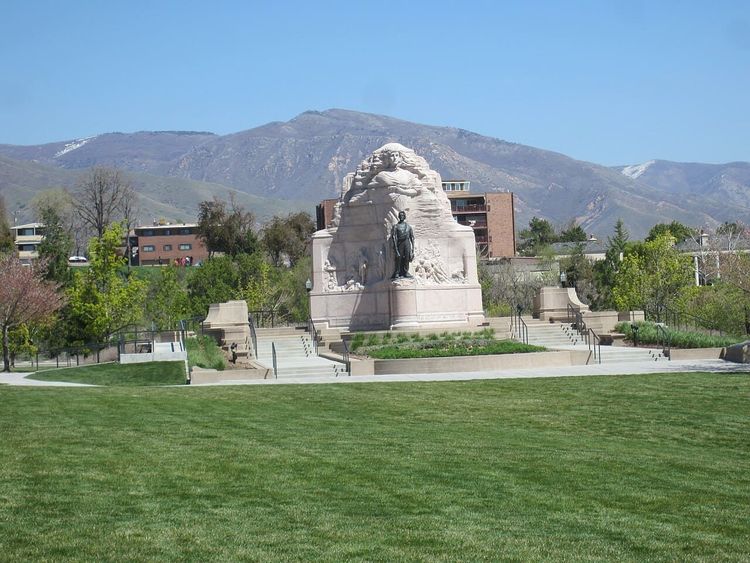
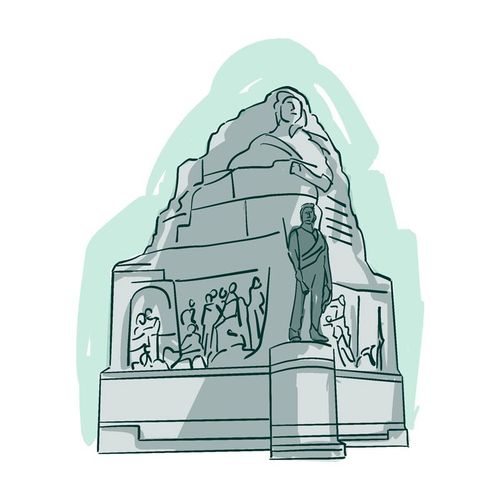
This monument honours volunteers enlisted in the American army during a conflict with Mexico, who set out on foot towards California on a march of unusual scale. Without fighting any major battle, they opened up a westward route later used by settlers. Dedicated in the 1920s, the sculpted ensemble retraces their enlistment and their journey. Opposite stands a neo-Gothic chapel that, threatened with demolition in the 1970s, was dismantled and rebuilt with its original stained glass; it now hosts weddings and ceremonies.
Free entry
Which neighbourhoods does the tour cross?
In a loop, the route links the many faces of Salt Lake City, from the hill of power to its pioneer remnants, by way of its religious and commercial heart.
It starts on the heights of Capitol Hill, in front of the Capitol and its Corinthian columns, then reaches Council Hall, the first city hall, taken apart and rebuilt here in 1961, before retracing the pioneer origins of 1847 (stops 1 to 3).
The descent towards South Temple runs past the McCune Mansion before entering Temple Square: the Conference Center and its organ of more than 7,000 pipes, the Tabernacle finished in 1875, the genealogical library, then the six-spired temple, built over 40 years between 1853 and 1893 (stops 4 to 11).
The route then swings towards the shopping downtown: Main Street and its tram, the Eccles Theater and its hall seating more than 2,500, the Gallivan Center and its winter ice rink, then the stream running through the shops of City Creek Center (stops 12 to 16).
After a detour past Brigham Young's properties, between his beehive residence, the nearby Lion House and the Eagle Gate rebuilt in 1963, the Church Office Building comes before the quiet parks of Brigham Young Historic Park and Memory Grove, before the loop closes near the Capitol (stops 17 to 22).
How much does it cost to visit Salt Lake City?
Of the route's 22 stops, 19 can be visited without a ticket, 17 of them freely accessible and 2 only viewable from the outside, such as the temple or the McCune Mansion.
To visit the city's more classic attractions, the Salt Lake Explorer Pass grants entry to 14 attractions across 13 sites, including museums, the zoo, the planetarium and the botanical garden, valid for 365 days from purchase. A lighter version, the Salt Lake Attractions Pass, lets you pick 3 attractions from a list of partner sites, valid for 9 days from first use.
Information checked in October 2026 and subject to change.
Where to stop for a bite along the tour?
A food break is best taken downtown, between the restaurants of City Creek Center and the food trucks that liven up the Gallivan Center in summer, without stepping off the route.
Try the funeral potatoes, a baked potato casserole often served at big family gatherings, or Utah scones, closer to fried dough than to an English scone. The food scene has since diversified considerably, with good Mexican and Asian restaurants, and several vegetarian spots that round out the pioneer legacy.
What should you know before visiting Salt Lake City?
Two stops on the route are currently under works that limit the visit, without fully closing their doors.
At the Church History Museum, the second floor, home to the children's exhibit A Firm Foundation, is closed from 3 August to 18 November 2026, with the rest of the museum staying open. At the FamilySearch Library, the works run from October 2025 to February 2027: the main floor is closed to the public, except for the lifts, restrooms and break room, and occasional full closures may be announced with only 1 to 2 weeks' notice.
Another local quirk worth knowing before sitting down to eat: the pioneer legacy long shaped strict rules around alcohol sales in Utah, which explains the strong presence of sodas and non-alcoholic drinks at downtown spots.
What to see around Salt Lake City?
The peaks surrounding Salt Lake City offer a good excuse to extend the stay beyond the walking route.
About 30 minutes' drive from downtown, the ski resorts of Big and Little Cottonwood Canyon, Alta, Snowbird, Solitude and Brighton, bring the high mountains within easy reach.
Le plein d'inspirations
Explorez le monde en totale liberté, à pied au cœur des villes ou au fil des routes. Nos guides audios transforment chaque destination en une découverte culturelle immersive et unique.
Vos commentaires, idées et suggestions
Aucun avis pour le moment
