




Walk
A city of ideas, art and memory
Philadelphia, United States
Walk
A city of ideas, art and memory
Philadelphia, United States
Distance
7 kmDurée
3h00Audios
26Parcours
Loop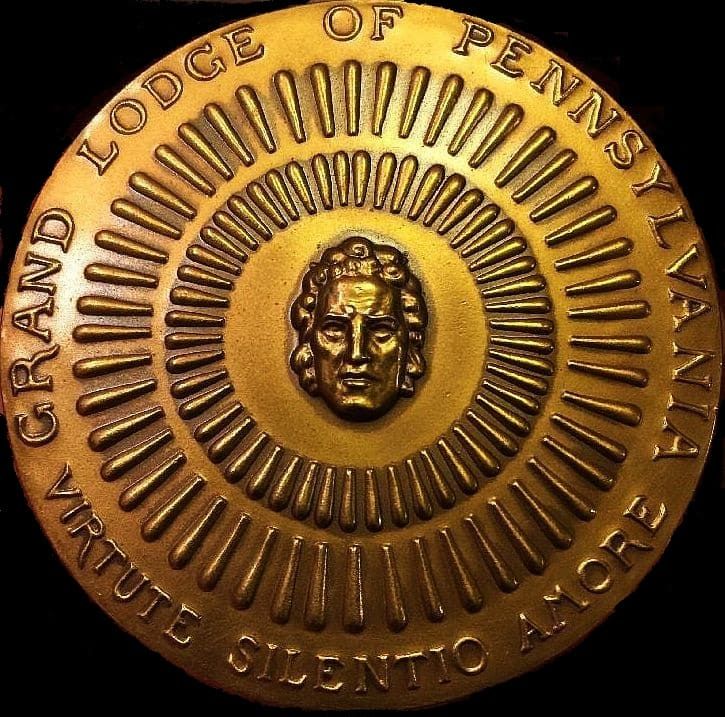
©Pennsylvania13, CC BY-SA 4.0 <https://creativecommons.org/licenses/by-sa/4.0/deed.fr>via Wikipedia Commons
To better understand the history of the Masonic Temple behind you, it helps to take a moment to look at what Freemasonry represents in Philadelphia. Freemasonry is an old fraternal society. Originally tied to the trades of builders, it gradually evolved into an organization built around brotherhood, symbolic thinking, mutual support, and charity. In Philadelphia, this tradition runs especially deep. As early as the early 18th century, the city became one of the first Masonic centers in North America, quickly attracting influential members in a place already at the heart of the colonies’ political and intellectual life. Among them was Benjamin Franklin, one of the most well-known Freemasons in American history. Alongside figures like George Washington, he helped connect Freemasonry with ideas of freedom, civic involvement, and the building of a new society. Over time, the main institution became the Grand Lodge of Pennsylvania. This building is not just a meeting place, it also reflects the importance and prestige of Freemasonry in Philadelphia. At the same time, Freemasonry here is not limited to a single tradition. By the late 18th century, a separate branch known as Prince Hall Freemasonry developed. Closely linked to African American history, it emerged because Black members were excluded from white lodges, and it played a key role in the social and cultural life of the Black community. The history of Freemasonry is not always straightforward. It has gone through periods of strong influence, but also moments of rejection, often due to the secrecy surrounding it and the perception of its influence in positions of power. The 19th century, in particular, saw the rise of anti-Masonic movements. Despite this, it has remained a lasting and structured institution. One of its core elements is charity. In Philadelphia, Freemasons have supported many initiatives over time, including hospitals, social aid, educational programs, and relief efforts during major crises. Even today, Freemasonry remains part of the city’s landscape. It is discreet, but still present through its institutions, its buildings, and its lasting legacy.
Aucun avis pour le moment
