

Walk
From a Historic Pueblo to Contemporary Art
Los Angeles, United States
Walk
From a Historic Pueblo to Contemporary Art
Los Angeles, United States
4.5 km
Distance
2h00
Durée
29
Audios
Loop
Parcours
Imagine Los Angeles before the skyscrapers, before Hollywood, before the traffic jams and crowded beaches. Long before Europeans arrived, this region had been home for thousands of years to the Tongva people, also known as the Gabrielino. They lived in organized villages, such as Yaanga, by the Los Angeles River, where they fished, farmed, traded, and gained an intimate knowledge of the land and its gentle climate.
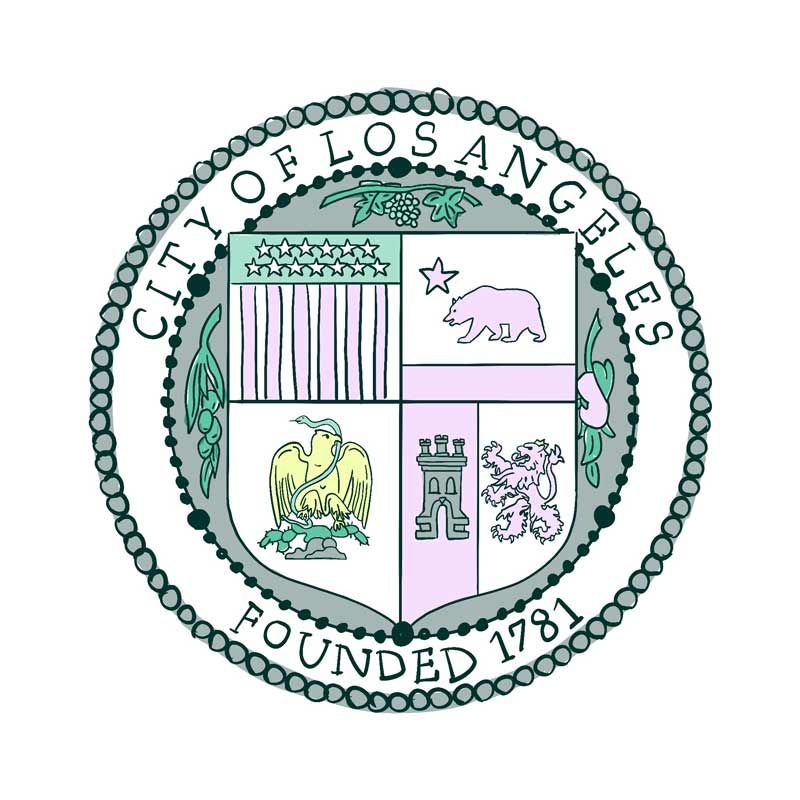
In the late eighteenth century, Spain wanted to strengthen its hold on California to keep other powers out, establishing religious missions and civilian villages. In 1781, eleven families—the pobladores—arrived from northern Mexico after a long journey on foot and horseback, tasked with founding an agricultural village to supply the soldiers and missionaries in the region. Life was modest: they cultivated grapes and grains, raised livestock, and the pueblo remained a small, isolated rural village for decades.
In 1821, California became part of Mexico after its independence. Los Angeles grew slowly, largely through ranching and cattle operations. Then, in 1848, after a war, California became American territory.
From that point, everything accelerated: the Gold Rush, the arrival of railroads, and connections to the East Coast brought thousands of new settlers. The small pueblo transformed into a city. By the late nineteenth century, Los Angeles became a sought-after destination for its climate, sunlight, and open spaces—people came seeking health, wealth, or a fresh start.
At the start of the twentieth century, a new industry changed everything: film. Studios moved here to take advantage of the sunshine and varied landscapes. Hollywood was born, along with the myth of the City of Dreams.
After World War II, Los Angeles grew explosively. Highways replaced railroads, suburbs spread endlessly, and the car became king. The city attracted people from all over the world—from Latin America, Asia, Europe, and Africa—each leaving a mark on its culture, food, music, and architecture.
Today, Los Angeles is a vast mosaic: a city without a single center, made up of very different neighborhoods where beaches, mountains, movie studios, working-class districts, and tech hubs coexist. Behind the glamorous image, the city remains true to its history: born of migration, cultural mixing, and dreams, built by those hoping to find a better life.
Aucun avis pour le moment