
Créé par Romane, le 17 nov. 2026
Votre guide Ryo
Los Angeles, United States
From a Historic Pueblo to Contemporary Art
Parcours audioguidé pour visiter Los Angeles en 1 jour
Explore the roots of LA with this tour of the historic district. Wander through bustling squares and storied backstreets as you uncover the Spanish and Mexican influences that shaped the city. From the earliest settlements to the birth of the modern mega-city, it’s a simple, immersive way to experience the heart of Los Angeles at your own speed.
Quand partir à Los Angeles ?
Jan.
14°
6
Feb.
15°
6
March
16°
5
April
18°
3
May
19°
2
June
21°
1
July
24°
0
Aug.
25°
0
Sept.
25°
1
Oct.
22°
2
Nov.
18°
3
Dec.
15°
5
Los Angeles enjoys a mild, sunny Mediterranean climate almost year-round, with hot, dry summers and pleasant winters that are rarely cold. Temperatures generally range between 15 and 25°C, with variations depending on proximity to the ocean or the hills, and a few rainy periods mainly between January and March. The best times to visit Los Angeles are spring, from April to June, and fall, from September to November, when the weather is ideal, days are bright, and tourist crowds are more moderate. Summer is very popular but busier and sometimes stifling inland, while winter remains a good option to enjoy the city with fewer visitors.
Départ conseillé
No need to worry about where to begin! Our tours are designed as a loop, so you can jump in wherever you are. The navigation system and audio-guide will automatically adjust to your location. However, if you happen to be nearby, we do have a preferred starting point: Plaza de Los Angeles.
Parking à proximité
El Pueblo - Parking Lot 1 : 419 N Main St, Los Angeles
Several paid parking lots are located very close by, especially around Olvera Street and Union Station, which are convenient for a short visit but can be expensive. It is also possible to park in public parking garages a bit farther away in downtown, which are often cheaper, and then walk a few minutes to reach the Plaza.
À savoir
Los Angeles varies greatly from one neighborhood to another. A lively street can be right next to a more run-down area. It is recommended to research the neighborhoods where you plan to stay in advance and to avoid wandering aimlessly at night in certain parts of downtown.
Tipping is an integral part of American culture. In restaurants, bars, and taxis, it is customary to leave between 15 and 20% of the bill. Staff wages are often calculated with these tips in mind.
Découvrez 29 lieux d'intérêt pour visiter Los Angeles





What to see in Los Angeles on your 2h tour?
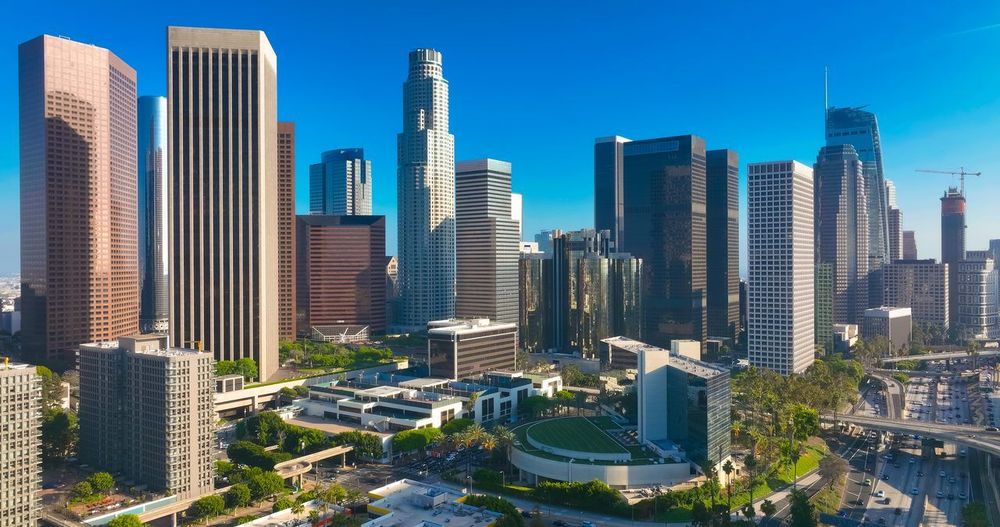
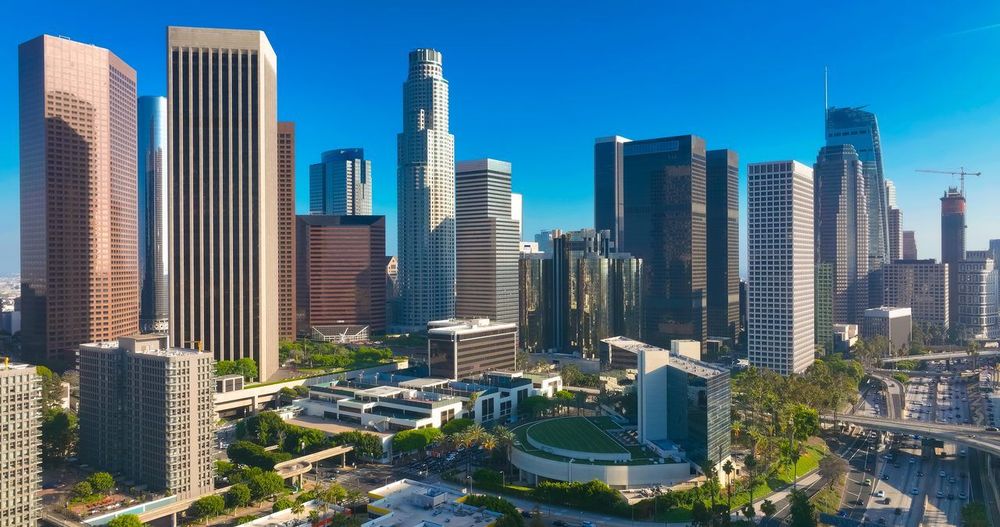
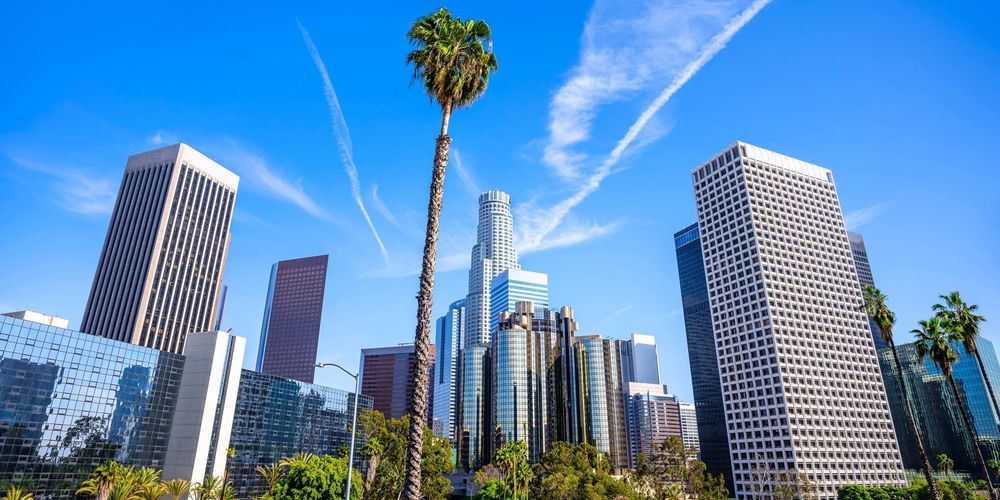
This 4.5 km loop takes about 2 hours and links 27 sights in the heart of Downtown Los Angeles. From the founding Plaza of El Pueblo and Olvera Street, it reaches Little Tokyo and the Arts District, climbs through Historic Broadway to the Civic Center and Bunker Hill, past the cathedral, the Music Center and City Hall, before heading back to the Plaza. With the Ryo app in your ears, every façade and sculpture tells a layer of the city's Hispanic, Japanese or civic history.
Information checked in October 2026 and subject to change.
1 - Plaza of Los Angeles
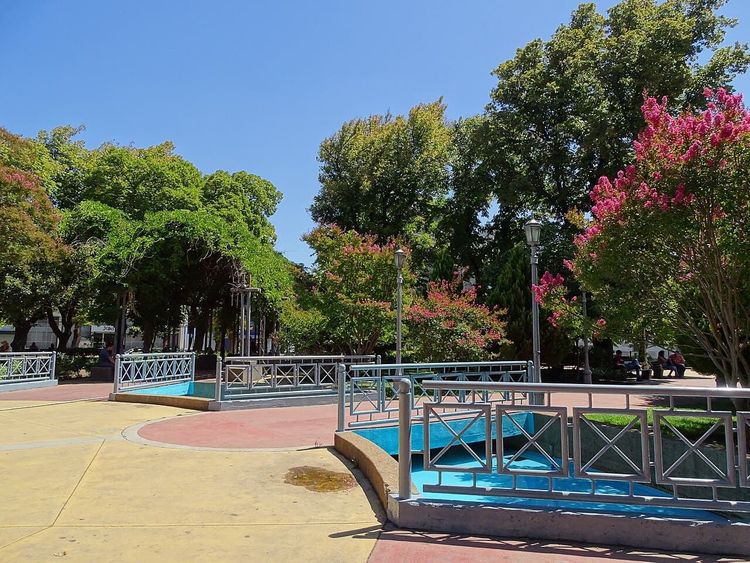
The loop begins exactly where the city was born: in 1781, eleven households laid out a Spanish-style village here, civic, religious and trade life sharing one square, as was common across the Hispanic world. Once Los Angeles outgrew it, the square kept a strong symbolic weight. A 1930s tourist makeover of Olvera Street revived its profile, later sealed by official landmark status. Round trees, bandstands and old façades still mark the true starting point of the city.
Free entry
2 - Olvera Street
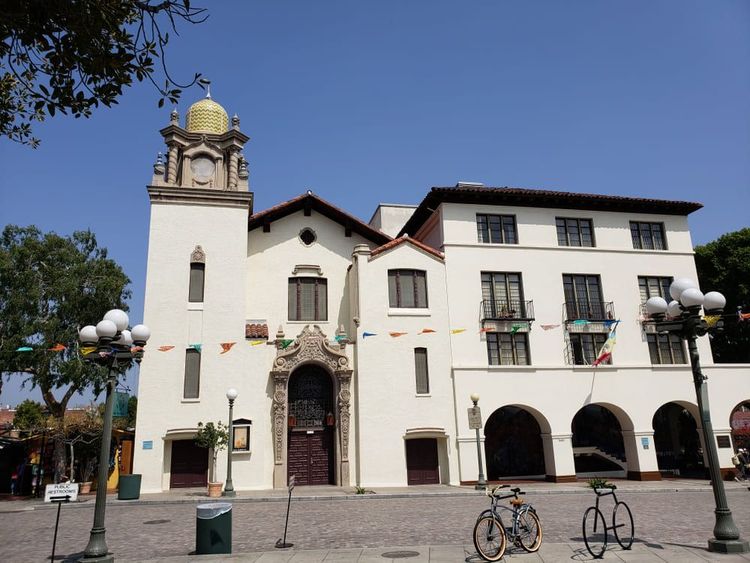
This pedestrian lane was once Wine Street, named for the vineyards that once thrived nearby, before being renamed in 1877 for Agustín Olvera, an influential figure in the handover from Mexican to American rule. Neglected and nearly lost, it survived thanks to resident Christine Sterling, who saved the nearby Avila Adobe and turned the lane, in 1930, into a Mexican marketplace that opened on an Easter Sunday. Craft stalls, food and festivals such as Día de los Muertos keep its spirit alive today.
Free entry
3 - Avila Adobe
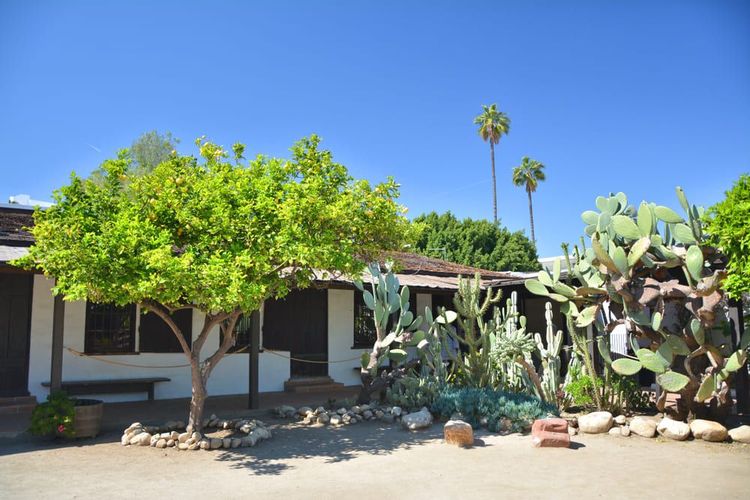
Raised around 1818 by Francisco José Ávila, then the town's mayor, this house with thick sun-dried earthen walls suited to the local climate is counted as the oldest standing home in Los Angeles. In 1847, American troops briefly occupied it during the war with Mexico, marking the region's political turning point. Threatened with demolition in the early 1900s, it was rescued in the 20s, sparking the revival of Olvera Street. Visitors now explore rooms furnished as in the mid-1800s.
Free entry
4 - Sepulveda House
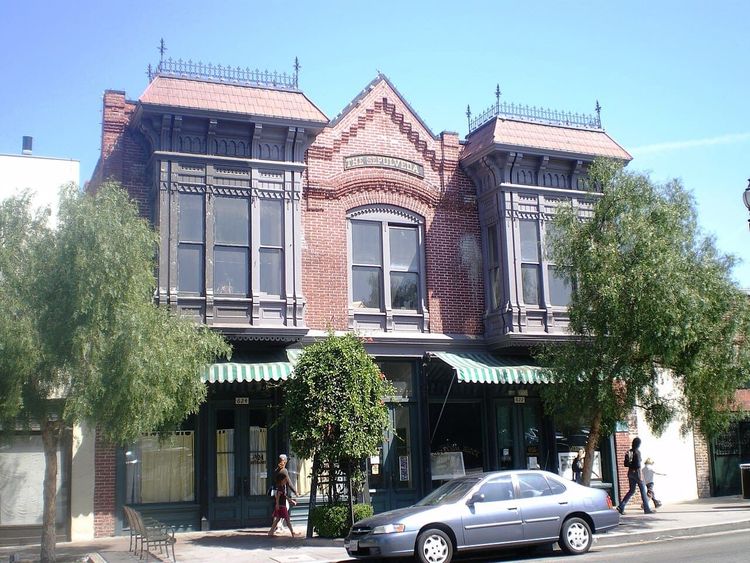
This Eastlake-style Victorian building, raised in 1887, was commissioned by businesswoman Eloisa Martinez de Sepulveda, from an influential Hispanic family. Its twenty rooms originally mixed ground-floor shops with upstairs lodging, reflecting a booming urban lifestyle. It now houses a visitor centre and exhibitions. Just steps away, the entrance to América Tropical leads to a 1932 mural by Siqueiros, judged too subversive and painted over in white before being rediscovered decades later.
Free to see from outside
5 - Pelanconi House
Often cited as the city's oldest fired-brick building, this 1850s structure was raised by Italian vintner Giuseppe Covaccichi, with a cellar below and living quarters above. Later bought by Antonio Pelanconi, who gave it his name, it recalls a onetime Italian enclave near the Plaza, from an era when the region ranked among the country's major wine producers. Prohibition, from 1920, dealt that trade a fatal blow, now almost gone except for a few symbolic hillside vineyard projects.
Free to see from outside
6 - Union Station
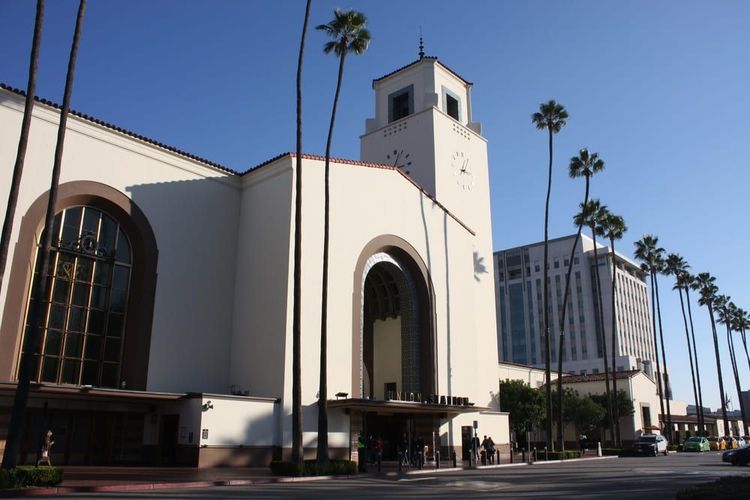
Opened in 1939, this station remains the largest in the western United States, nicknamed the last of the great American railway stations. Designed by the Parkinsons, its architecture blends Hispanic influences with Art Deco in a hall dominated by marble and travertine. Yet building it wiped out the old Chinatown, whose residents were displaced with nowhere to go. Now a familiar film backdrop, from Blade Runner onward, it faces the bronze equestrian statue of Mexican singer Antonio Aguilar, unveiled in 2012 to honour the city's Mexican-American community.
Free entry
7 - Wall of Honor
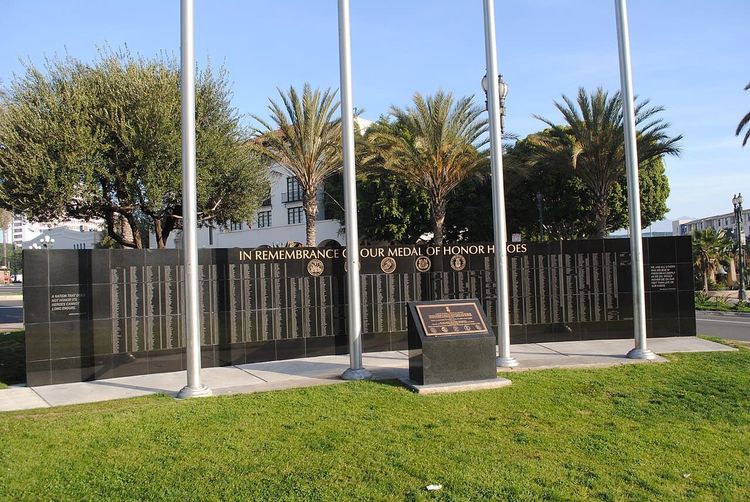
This curved wall of polished granite, topped with flags, is part of a memorial to the country's highest military award. Nearly 3,500 names are engraved on it, honouring every recipient since the decoration was created during the Civil War. It is named for Eugene A. Obregon: raised in Los Angeles, this Marine died at only 19 in 1950 trying to save a wounded comrade under fire, honoured posthumously. Begun by veterans in 1993, it was unveiled in 2011.
Free entry
8 - Plaza United Methodist Church

This small brick church, recognisable by its tiled tower, stands on the site of Agustín Olvera's old home. A Methodist mission had already settled here in the early 1900s, before the present building rose in the 1920s, serving as chapel, social centre and regional headquarters all at once. Bought by the State of California in 1956 when the El Pueblo historic district was created, it remains active today, with services held in both English and Spanish.
Free to see from outside
9 - Plaza Fire House
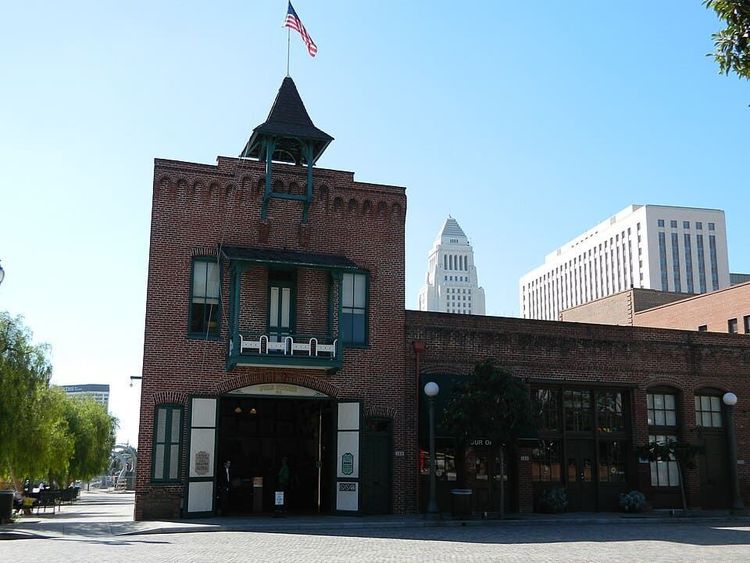
The first building designed specifically for the city's firefighters, this red-brick structure dates from 1884 and once held stables, a turntable for the horses, and living quarters above. By 1885 it housed the city's first professional firefighters, before closing in 1897 and serving various later uses, from bar to market. Saved by a citizen campaign in the 50s, it reopened ten years on as a museum showing antique helmets and steam pumps.
Free entry
10 - Garnier Building
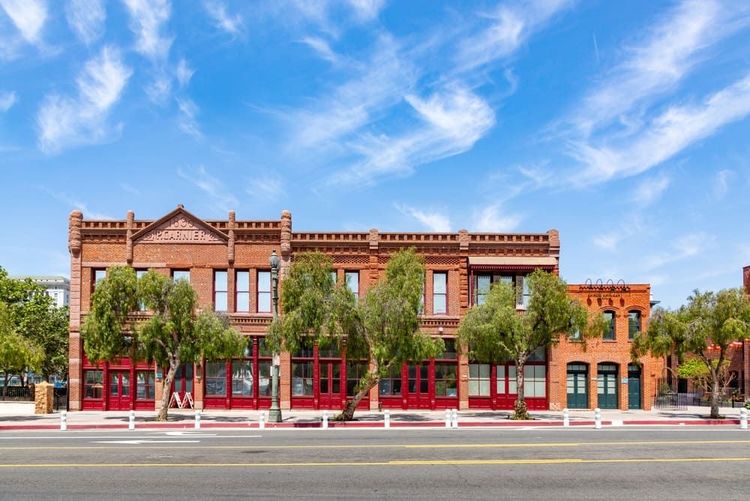
Built in 1890 by French entrepreneur Philippe Garnier, this brick building served for half a century as the living centre of the city's first Chinatown: shops, a school, temples, political debate and major festivals all took place here. Known as Chinatown's city hall, it hosted numerous community associations. Spared almost by chance when the district gave way, in the 1930s, to the construction of Union Station, it has housed the Chinese American Museum since 2003, one of the few direct witnesses of that vanished neighbourhood.
Paid entry (about $3)
11 - Los Angeles Mall
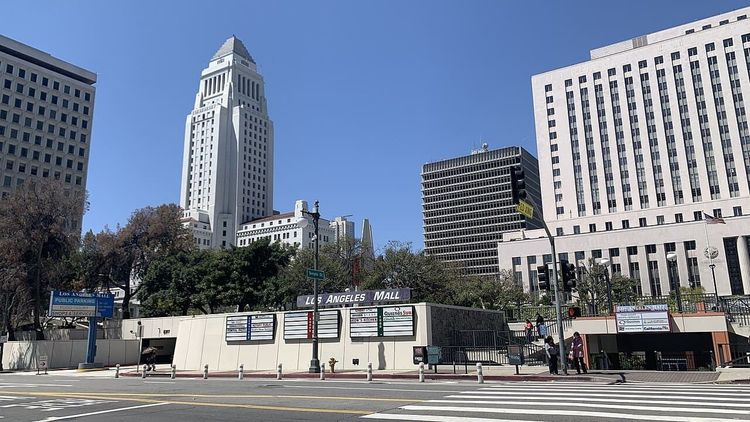
Conceived in the early 70s as a sprawling modern town square next to City Hall, this complex blends terraces, fountains, palm trees and pedestrian walkways, with artworks built directly into the architecture. A bridge spanning Temple Street links its two halves, the North Mall and South Mall, itself designed as a work of art. Meant for city workers as much as residents, it has gradually lost its shops and crowds. It still carries a strong symbolic charge, almost frozen in its original optimism.
Free entry
12 - Go For Broke Monument
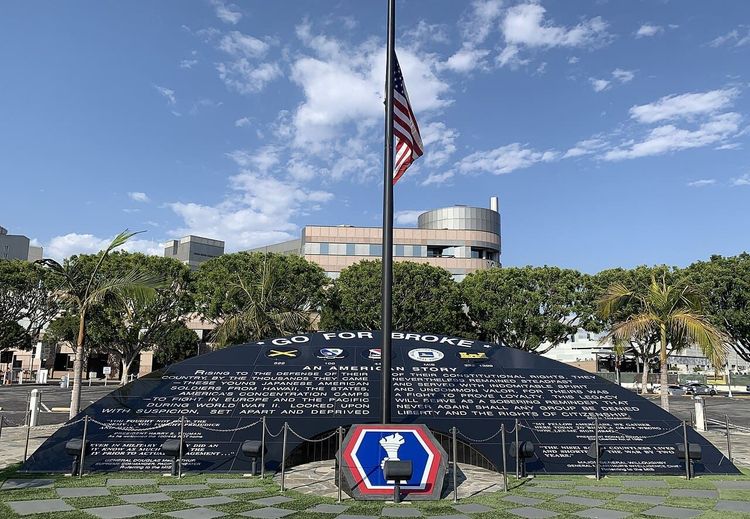
Unveiled in 1999 after a competition won by architect Roger M. Yanagita, this curved wall of polished black granite wraps around a flagpole and carries the names of more than 16,000 soldiers of Japanese descent. Their motto, Go for broke, summed up their total commitment even as their own families were interned on American soil after Pearl Harbor. A quote from Truman salutes their courage. Right beside it, Nancy Rubins' sculpture Airplane Parts suspends nearly a ton of recycled aircraft debris.
Free entry
13 - Little Tokyo
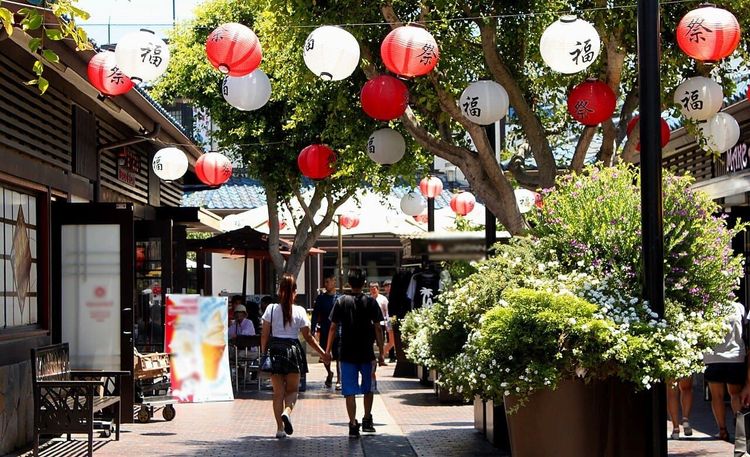
Born in 1885 around a restaurant opened by a Japanese sailor, this district became within decades the cultural and religious heart of the Japanese American community, reaching nearly 30,000 residents by 1941. The evacuation order of February 1942, after Pearl Harbor, suddenly emptied it as residents were interned, while other communities moved in during the war. The postwar return stayed partial, and the Civic Center's expansion ate further into its land in the 50s.
Free entry
14 - Aoyama Tree
This giant fig tree, planted in 1920 by a Buddhist reverend in front of a temple long since gone, stands over 18 metres tall and spans more than 20 metres wide. It lived through the Great Depression, the war and the internment of Japanese Americans without ever moving. The city made it, in 2008, the first-ever living organism granted protection as a monument. Weakened by poor irrigation and roots trapped under asphalt, this century-old tree remains a living landmark for the whole neighbourhood.
Free entry
15 - Japanese American National Museum
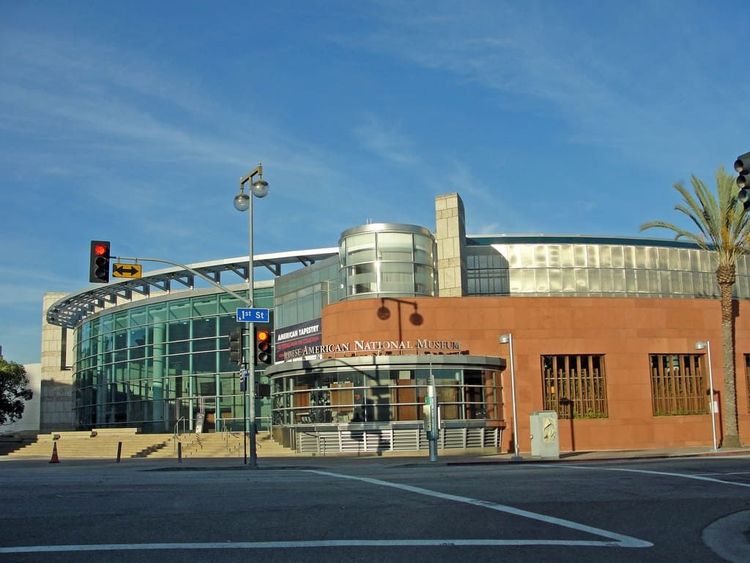
Established by a group of Japanese American ex-servicemen and local community leaders, this museum occupies a former Buddhist temple that served, during the war, as a registration centre before internment, and later as shelter for those returning with nothing. A modern pavilion by Gyo Obata has since expanded it, alongside a centre devoted to civic engagement. It holds more than 150,000 items tracing 130 years of Japanese presence, including a recreated camp barrack within its permanent exhibition, Common Ground.
Free to see from outside
16 - Arts District
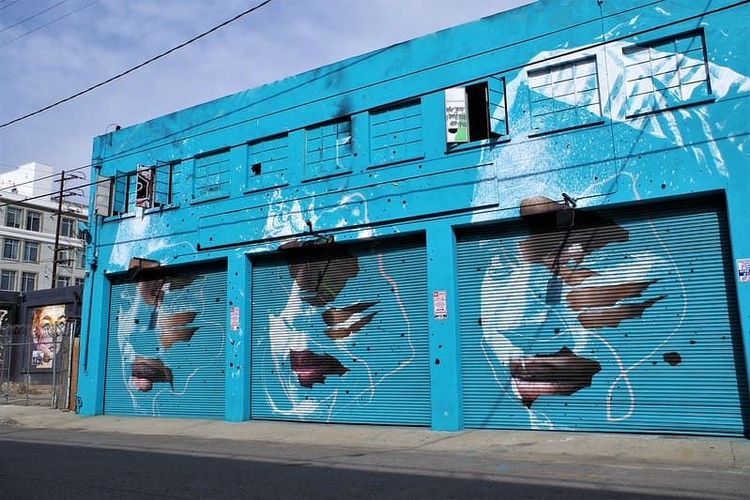
Farmland in the 19th century, then a district of railway warehouses by the turn of the next, this area emptied out from the 50s onward, leaving huge spaces at low rents. Artists moved in starting in the late 60s, informally at first, until a dedicated ordinance legalised the live/work lifestyle. An underground scene then took off. Today people come for the monumental murals, galleries set inside former factories, and a dense dining scene.
Free entry
17 - Japanese Village Plaza Mall
Designed during the postwar revival of the district to give Japanese American businesses a new anchor, this pedestrian square evokes a small shotengai, the typical shopping streets of Japan. Its scarlet watchtower, echoing the fire lookouts of old Japan, together with imported blue roof tiles, has become the site's visual emblem. Here you can try ramen, udon or taiyaki among sweet shops and souvenir stores. Free to enter, it comes alive above all during Nisei Week and often starts a walk through the rest of the district.
Free entry
18 - Historic Broadway
In the early 1900s, this street packed in the heaviest concentration of grand movie palaces the country has ever seen, a dozen venues holding more than 15,000 seats between them each night. The postwar decline, driven by suburbs and multiplexes, shut many of these halls, kept alive instead by the Latino community and its Spanish-language cinema. Since the 80s, a preservation programme has revived summer screenings, and the former Tower Theatre has become an Apple Store.
Free entry
19 - The Broad Museum
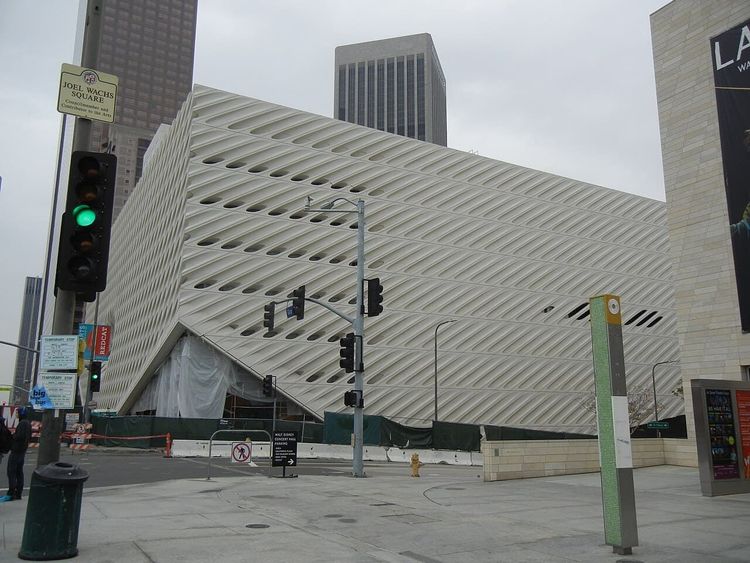
Recognisable by its perforated white façade, nicknamed the veil, this contemporary art museum, opened thanks to collectors Eli and Edythe Broad, offers free admission to make art accessible to all. It holds more than 2,000 postwar works, from Warhol to Basquiat, and houses Yayoi Kusama's celebrated mirror rooms. Right next door, Frank Gehry's Walt Disney Concert Hall, with its rippling metal waves, is home to the Los Angeles Philharmonic in a wood-lined hall famed for its exceptional acoustics.
Free entry
20 - Stanley Mosk Courthouse
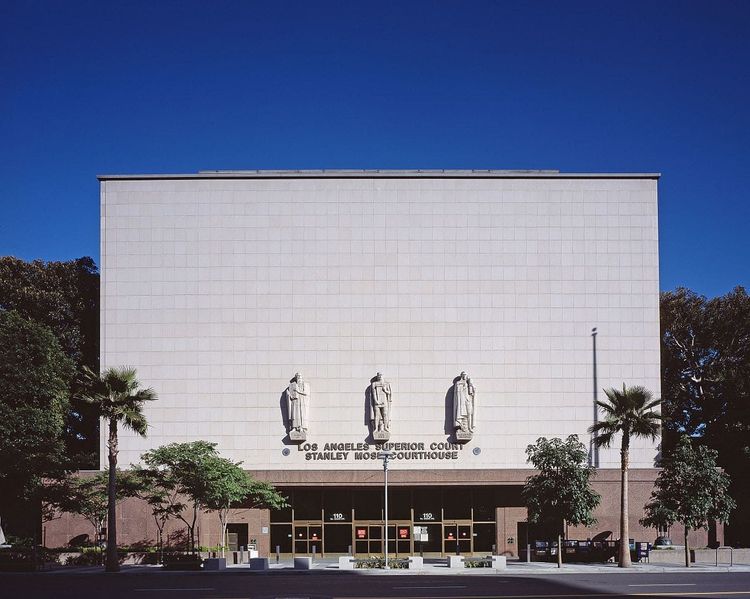
This 1950s modernist courthouse, with its H-shaped plan and marble-and-granite lines, was directed by architect Paul Revere Williams, one of the biggest names in the city's architecture. It replaced an earlier sandstone building that had grown too fragile, after a period when the city had no single courthouse at all. Among the trees out front stands a 1961 bronze bust of a beardless Abraham Lincoln, from his lawyer years, the work of sculptor Robert Merrell Gage.
Free to see from outside
21 - Jerry Moss Plaza
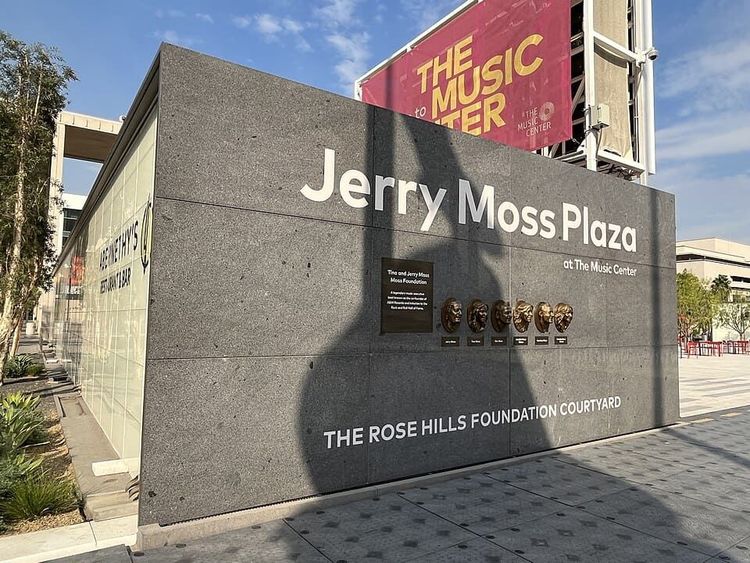
This esplanade anchors the Los Angeles Music Center, framed by the Dorothy Chandler Pavilion, the Mark Taper Forum and the Ahmanson Theatre, right next to the Walt Disney Concert Hall. Completely redesigned in 2020, it has since borne the name of Jerry Moss, who co-founded A&M Records, a label whose roster included Sting and Janet Jackson. His $25 million gift, made with his wife Tina, now funds concerts, festivals and the free Dance DTLA nights under the stars.
Free entry
22 - Cathedral of Our Lady of the Angels
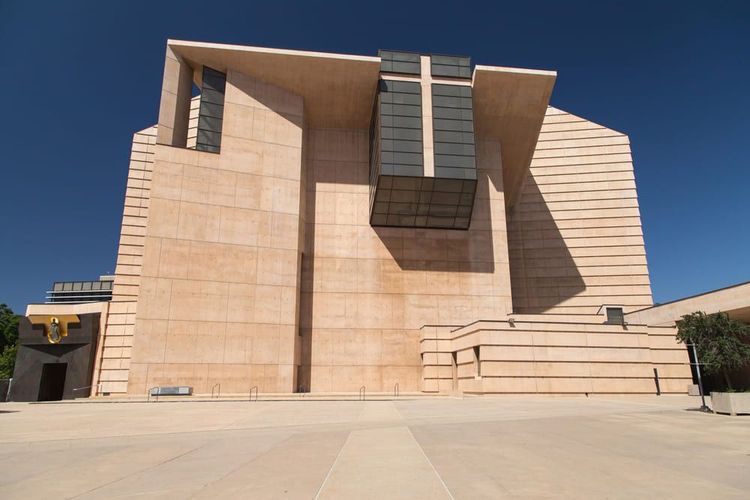
The work of Spanish architect Rafael Moneo, this mother church of local Catholicism breaks every usual rule: slanted concrete walls with no right angle, light filtered not through stained glass but through translucent alabaster panels. Beneath the building, nearly 200 giant shock absorbers let it sway rather than collapse in an earthquake. Bronze doors sculpted by Robert Graham and a cross lit up at night complete the feat, as does the vast modern mausoleum built directly under the structure.
Free entry
23 - Gloria Molina Grand Park
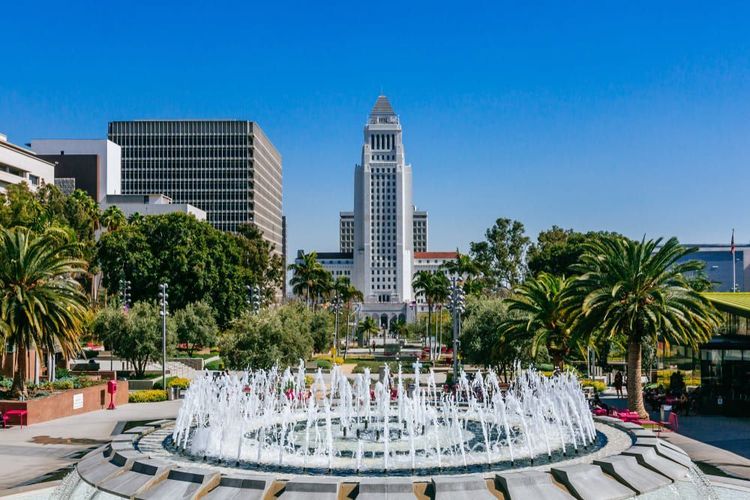
This twelve-hectare civic park stretches across the whole Civic Center, running from the Music Center up to the steps of City Hall, on the site of underused 60s concrete terraces. Reopened in 2012 as a park for everyone, it stands out for its curving paths, multicultural gardens and now-iconic pink furnishings. The Arthur J. Will Fountain, turned into an interactive splash pad, makes it a lively spot, which has carried the name of Gloria Molina, the first Latina elected to the city council, since 2023.
Free entry
24 - City Hall of Los Angeles
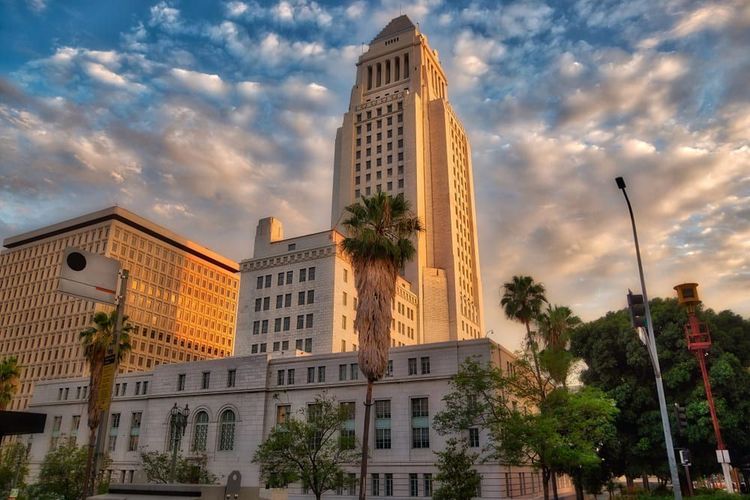
Opened in 1928, City Hall rises in a 138-metre tower inspired by the Mausoleum at Halicarnassus, blending neoclassical design with Art Deco touches. A law capping private buildings at thirteen storeys made it, for nearly forty years, the city's tallest structure. Atop it, the Lindbergh Beacon once guided night flights, honouring the aviator. In an unseen feat of engineering, the whole building was lifted in the late 90s and set on more than 400 seismic isolators.
Free to see from outside
25 - Triforium
Designed in 1975 by artist Joseph Young, this trio of white concrete arches rising 18 metres was meant to turn passersby into music and light through 1,500 coloured glass prisms and a bell carillon. Young's ambition even stretched to beaming light signals into space. The era's technology, forever glitching, earned it the mocking nickname of the million-dollar jukebox and decades of neglect. Restored since the 2000s, it now hosts the occasional concert and remains a kitsch, endearing symbol of 1970s public art.
Free entry
26 - Brunswig Building
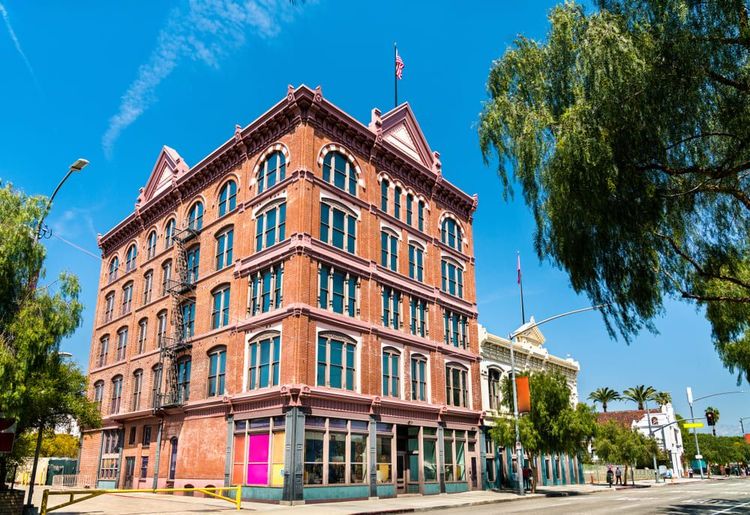
Raised in 1888, this brick building ranks among the city's first five-storey structures, with cast-iron columns and ground-floor shops. It later became headquarters of the Brunswig Drug Company, led by Lucien Brunswig, a leading name in western pharmaceutical trade, which also produced soda fountains here. Bought after the war by the county for offices, then left empty, it was restored in the 2000s and folded into LA Plaza de Cultura y Artes, dedicated to the city's Mexican heritage.
Free entry
27 - La Plaza Church
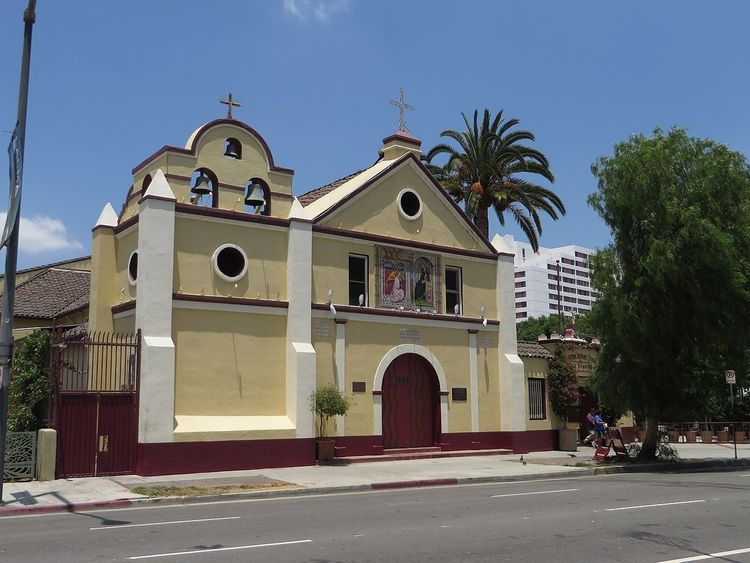
A first chapel rose here in 1784, a modest offshoot of the San Gabriel mission, later replaced by a proper church in 1822 and rebuilt once more in 1861; it has stayed in continuous use for more than two centuries, rare in this city. Consecrated to the Virgin as queen of the angels, patron of the town, it takes its name from the village founded here in 1781 under a far longer title. A refuge for outcasts in the 19th century, it remains tied to movements for immigrant rights.
Free entry
What to do in Los Angeles in 2 or 3 days?
This downtown loop takes about half a day: with two or three days in town, the rest of the trip is better spent along the coast and up in the hills.
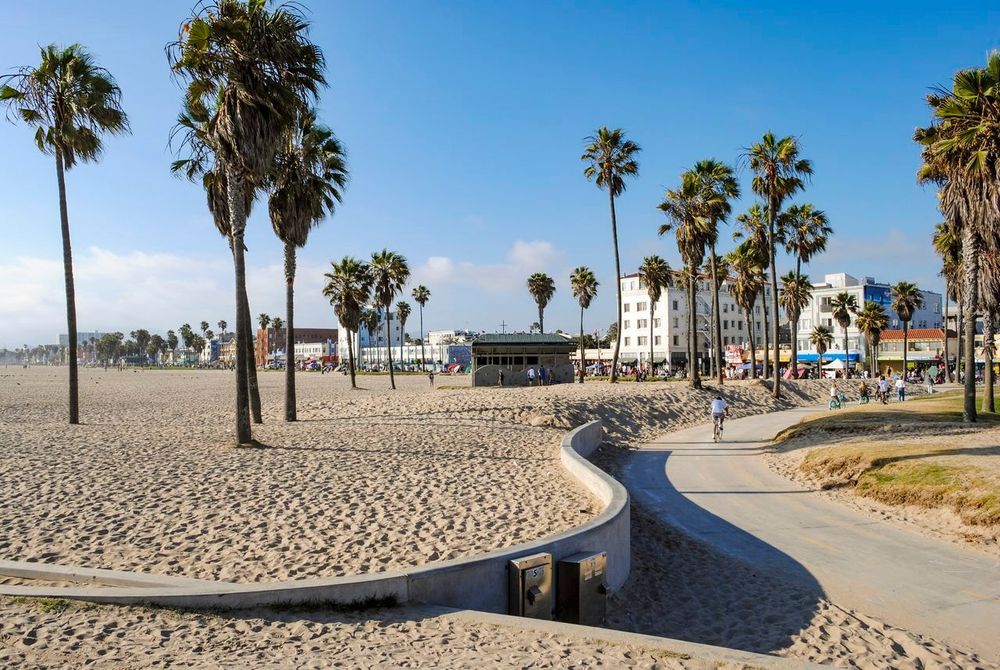
The next day, head to the Getty Center on its hilltop above Santa Monica: the collection spans medieval manuscripts to Van Gogh's Irises, and admission is free. The afternoon continues at Santa Monica Pier, dating to 1909, then along the Venice Boardwalk to the quiet canals that developer Abbot Kinney laid out in 1905.
The third day can stay in town, around nearby Chinatown and up in the Los Feliz and Silver Lake hills, without disrupting the first two days' loop. The full itinerary, including where to stay, is detailed in our complete Los Angeles weekend guide.
Which neighbourhoods does the tour cross?
This loop links several layers of Los Angeles history in one circuit, from the downtown core's Hispanic origins to its modern civic machinery.
It starts at the founding Plaza of El Pueblo, among Mexican lanes, adobe houses and a grand train station, then reaches the edge of the Civic Center at the Los Angeles Mall (stops 1 to 11).
Next come Little Tokyo, a Japanese American neighbourhood that took shape in the late 19th century, and the warehouses turned mural canvases of the Arts District (stops 12 to 17).
The final stretch climbs Historic Broadway into the Civic Center, past a contemporary cathedral, a large civic park and City Hall, before heading back down to the Plaza and its founding church (stops 18 to 27).
How much does it cost to visit Los Angeles?
Of the 27 stops on the route, only one requires a ticket: the Chinese American Museum, inside the Garnier Building, costs $3.
The other 26 cost nothing: twenty are open to walk into freely, and six are simply viewed from the street, like the private front of the Brunswig Building or that of the Plaza United Methodist Church, whose service times vary.
Information checked in October 2026 and subject to change.
Where to stop for a bite along the tour?
The route crosses two very different food scenes, from old Mexico's plaza to the Japanese stalls of Little Tokyo.
On Olvera Street (stop 2), small Mexican stalls and restaurants line up under the string lights, in a festive, music-filled atmosphere.
At Japanese Village Plaza (stop 17), ramen, udon, okonomiyaki and sushi sit side by side, before a detour past taiyaki stands, those fish-shaped waffle cakes, or the sweets of the Mikawaya shop.
What to do in Los Angeles with children?
The route holds two stops that especially delight children, between Little Tokyo and the Civic Center.
At Japanese Village Plaza (stop 17), the Japanese pedestrian square is easy to wander, with taiyaki and ice cream stalls that are sure to delight the youngest visitors.
At Gloria Molina Grand Park (stop 23), the Arthur J. Will Fountain turns into a giant splash pad in summer, and its flat paths make for an easy family stroll.
What should you know before visiting Los Angeles?
A few practical points are worth knowing before exploring historic Los Angeles.
The Japanese American National Museum (stop 15) currently has its main building closed for renovation: digital exhibits stand in for now, with reopening planned for 23 January 2027.
Downtown's mood shifts quickly from block to block, so it is worth checking a neighbourhood before wandering it aimlessly at night. Around Hollywood, Venice Beach and amusement parks, pickpocketing is a regularly reported risk, so keep valuables close.
Tipping is also part of local custom: in restaurants, bars and taxis, 15 to 20% of the bill is usual, a practice that often rounds out staff pay.
What to see around Los Angeles?
Los Angeles is also a good base to range further, toward an island offshore or other routes in the region.
About an hour by ferry from the port of San Pedro or Long Beach, Catalina Island (Avalon) offers a total change of scenery, far from Downtown's bustle.
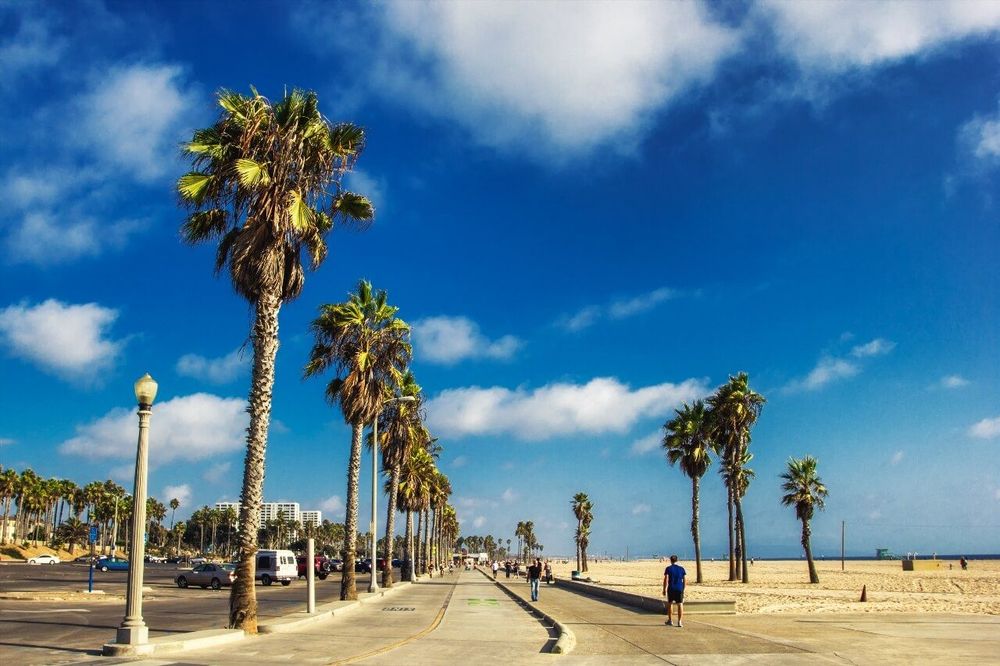
Along the coast, Santa Monica, 24 km away, combines a lively beach, a historic pier and long palm-lined avenues, to discover on another audio-guided route.
What's on in Los Angeles right now?
As the year winds down, the El Pueblo neighbourhood hosts one traditional event.
From 16 to 24 December, Las Posadas brings nightly candlelight processions to Olvera Street from 18 h, reenacting Mary and Joseph's journey to Bethlehem, with music, piñatas for children and sweet bread handed out to visitors.
Information checked in October 2026 and subject to change.
Le plein d'inspirations
Explorez le monde en totale liberté, à pied au cœur des villes ou au fil des routes. Nos guides audios transforment chaque destination en une découverte culturelle immersive et unique.
FAQ for visiting Los Angeles
When is the best time to visit Los Angeles?
Los Angeles welcomes you under the sun practically all year round thanks to its privileged Mediterranean climate. Spring, from April to June, and autumn, from September to November, are particularly pleasant, with ideal temperatures ranging between 15 and 25 degrees and perfect light for exploring the city. Summer can be very hot, especially inland, and attracts many visitors, while winter stays mild despite a little rain between January and March. If you are looking for fewer crowds and better rates, winter is an excellent alternative for enjoying the Californian city.
How many days do you need to visit Los Angeles?
For a first discovery of Los Angeles, ideally allow between three and five days. This time lets you explore the iconic neighbourhoods such as Downtown, Hollywood, Beverly Hills and Santa Monica, all at a pleasant pace. In three days, you can cover the main must-sees, while a week gives you the chance to deepen your visit and include excursions to Malibu, the film studios or the museums. Since Los Angeles is a very sprawling metropolis, it is important to organise your days well by geographic areas to avoid wasting too much time travelling.
How do you get around Los Angeles?
Los Angeles is a city designed for the car, but several options are available to you. The LA Metro subway and buses serve the main tourist attractions and are an economical alternative, even though the network remains limited compared with other major cities. Ride-hailing services such as Uber and Lyft are very popular and convenient for occasional trips. Renting a car offers the greatest flexibility for exploring the sprawling metropolis, but be prepared for the legendary traffic jams and parking fees. For short distances, notably in Venice Beach or Santa Monica, the bicycle and the electric scooter are pleasant options.
Where should you stay in Los Angeles?
The choice of your accommodation in Los Angeles depends on your interests and your budget. Hollywood and West Hollywood are ideal for lovers of cinema and nightlife, with numerous hotels and apartments. Santa Monica and Venice offer the proximity of the beach and a more laid-back atmosphere. Downtown is perfect if you want to explore the historic district and take advantage of public transport. Beverly Hills offers high-end establishments in a luxurious setting. For better value for money, consider the neighbourhoods of Los Feliz or Silver Lake, more residential but well connected to the main attractions.
What can you visit for free in Los Angeles?
Los Angeles is full of free activities that will let you discover the city without breaking the bank. The legendary beaches of Venice, Santa Monica and Malibu are freely accessible, as is the stroll along the Walk of Fame in Hollywood. The Griffith Observatory offers spectacular views over the city and fascinating exhibitions, with free admission. The many markets such as the Grand Central Market downtown are perfect for soaking up the local atmosphere. For an in-depth discovery of the historic centre, the Ryo audioguide accompanies you on a commented walk through the history-filled lanes and lively squares of old Los Angeles.
Is Los Angeles a safe city?
Los Angeles is generally a safe destination for tourists who take common-sense precautions. The tourist neighbourhoods such as Beverly Hills, Santa Monica, West Hollywood and most of Hollywood are well monitored and busy. As in any big metropolis, stay alert with your personal belongings and avoid walking alone at night in poorly lit areas. Some downtown and South LA neighbourhoods are best avoided, especially after nightfall. Favour official transport or ride-hailing rather than walking in areas you do not know, and keep your valuables out of sight in your vehicle.
Do you need a car to visit Los Angeles?
Although Los Angeles is a city designed for the car, it is possible to visit it without one, even if that takes more organisation. Public transport serves the main tourist attractions and ride-hailing services easily fill the gaps in the network. Without a car, focus on specific areas each day to minimise travel. Many neighbourhoods such as Santa Monica, Venice Beach or Hollywood are pleasant to explore on foot. However, a car undeniably offers more freedom to discover the expanse of the metropolis and to easily reach the Hollywood Hills, the distant beaches or the outlying attractions.
How do you get from LAX airport to downtown?
Several options are available to reach downtown from Los Angeles International Airport. The FlyAway shuttle is an economical and convenient solution that connects LAX directly to Union Station downtown in about forty-five minutes. Ride-hailing services such as Uber and Lyft are very popular, with dedicated pick-up zones at each terminal. Taxis are still available but generally more expensive. For the most budget-conscious, the public LAX FlyAway bus or the combination of subway and free shuttle is possible, though less convenient with luggage. Renting a car directly at the airport is an interesting option if you plan to explore the region widely during your stay.
Which neighbourhoods should you explore in Los Angeles?
Los Angeles is less a city than a mosaic of very different neighbourhoods, which you discover one area at a time. Hollywood lines up the Walk of Fame, the historic studios and the landmark movie palaces, with the Hollywood sign as a backdrop from the heights of Griffith Park. Downtown, the oldest part, mixes the founding pueblo of Olvera Street, the skyscrapers, the stalls of Grand Central Market and the contemporary art museums.
Beverly Hills and Rodeo Drive play the card of mansions and shop windows, while Venice Beach and Santa Monica deliver seaside California, with their boardwalk, their canals and their pier. Silver Lake and Los Feliz, quieter, win you over with their cafés and bookshops. The Ryo audio guide offers a dedicated Los Angeles route to link these neighbourhoods together.
Which museums are worth visiting in Los Angeles?
Los Angeles has a dense art scene, often housed in spectacular buildings. The Getty Center, perched on the Brentwood hills and served by a small tram, brings together European painting, photography and gardens with a sweeping view over the city; its Getty Villa, by the ocean, is devoted to Greek and Roman antiquities. LACMA, on Wilshire Boulevard, is the largest art museum in the American West and its forest of street lamps has become a symbol of the city. Downtown, the Broad shows contemporary art behind a honeycomb façade, and the Academy Museum retraces the history of cinema. Allow generous travel time, as these institutions are widely scattered.
What are the essential experiences in Los Angeles, from the Hollywood Sign to Venice Beach?
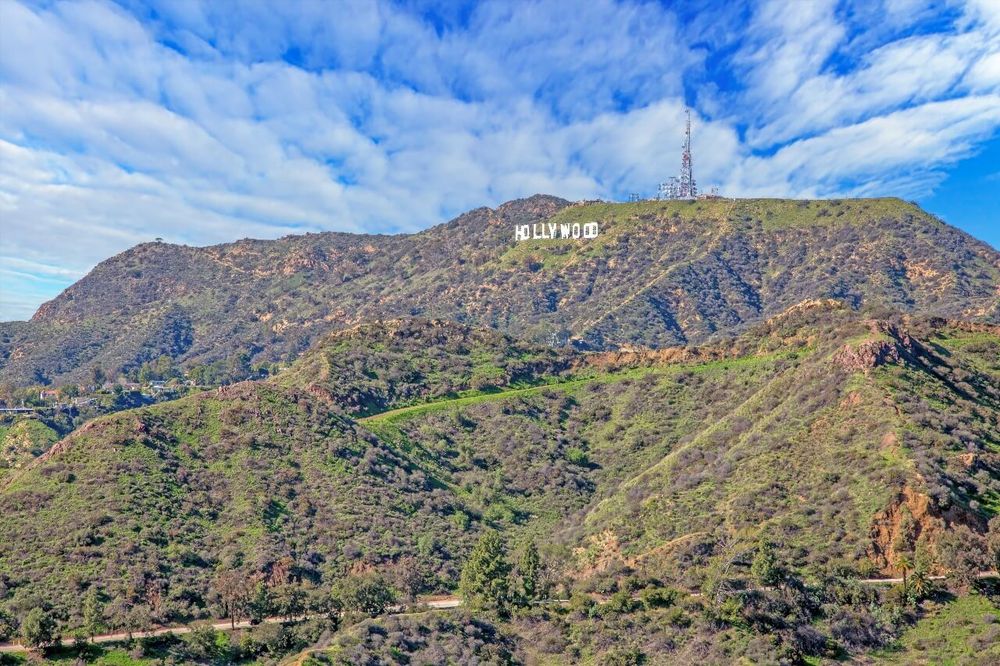
Griffith Observatory, a 1935 Art Deco landmark, is still free to enter as its donor required, with rooftop telescopes and views out to the Pacific. The 13.7-metre Hollywood Sign is reached on foot via the Brush Canyon Trail: set off before 9 a.m. and carry water.
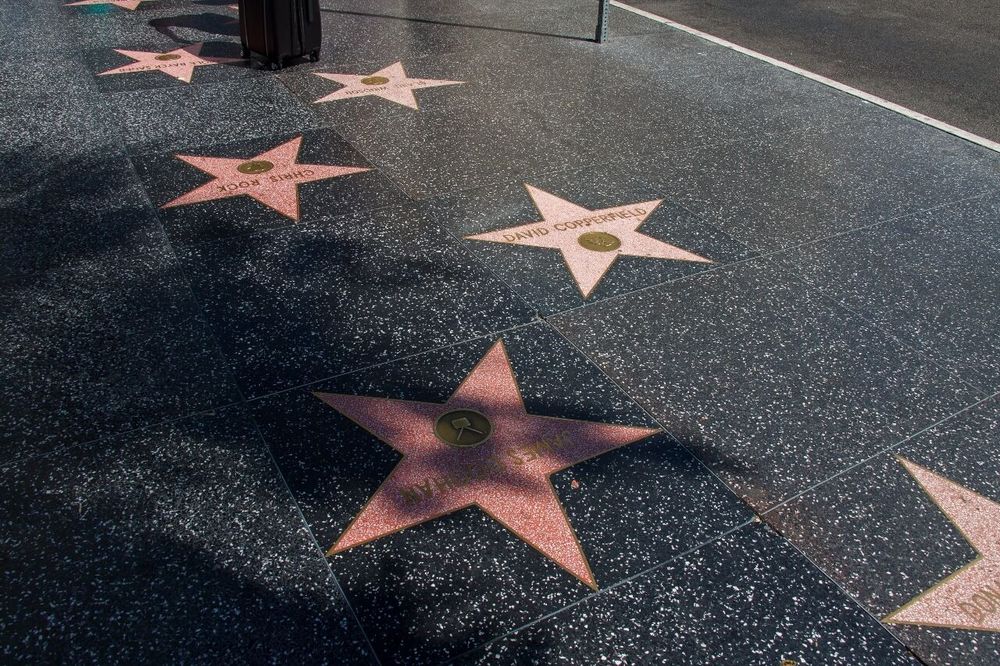
On Hollywood Boulevard, walk the Walk of Fame early in the morning to beat the crowds. The Getty Center, also free, rounds things off along with the Venice Beach boardwalk, Santa Monica Pier and the fossils of the La Brea Tar Pits.
Pick your stops from our three lists: 25 incredible things to do, 30 fun things to do and the 27 best things to do in Los Angeles.
How should you plan a two-day weekend in Los Angeles?
The trick is to group stops by area and limit each day to two or three major visits, since traffic can turn a 20-minute drive into 50. Day one stays on the Westside: the free Getty Center at opening time, with Van Gogh's Irises and Robert Irwin's Central Garden, then Santa Monica, the Venice boardwalk and its canals.
Day two climbs into Griffith Park for its Hollywood Sign views before ending in West Hollywood. To sleep, pick Santa Monica and Venice for the beach, or Downtown and Hollywood for nightlife.
Follow the full loop in our weekend in Los Angeles itinerary.
Which Metro lines and shuttles should you use to explore Los Angeles without a car?
From LAX, the FlyAway Bus reaches Union Station in 30 to 45 minutes for just under $10. A Metro ride costs $1.75 with transfers for two hours, capped at $5 a day on a TAP card. The B Line links Downtown to Hollywood, the E Line runs to Santa Monica and the A Line serves Pasadena.
DASH shuttles, at $0.50 to $0.75, fill the gaps, including the climb to Griffith Observatory. Malibu and the San Fernando Valley remain hard to reach without a car.
Every route is covered in our guide to Los Angeles without a car.
Vos commentaires, idées et suggestions
Aucun avis pour le moment