





Walk
From a Historic Pueblo to Contemporary Art
Los Angeles, United States
Walk
From a Historic Pueblo to Contemporary Art
Los Angeles, United States
4.5 km
Distance
2h00
Durée
29
Audios
Loop
Parcours
Shutterstock
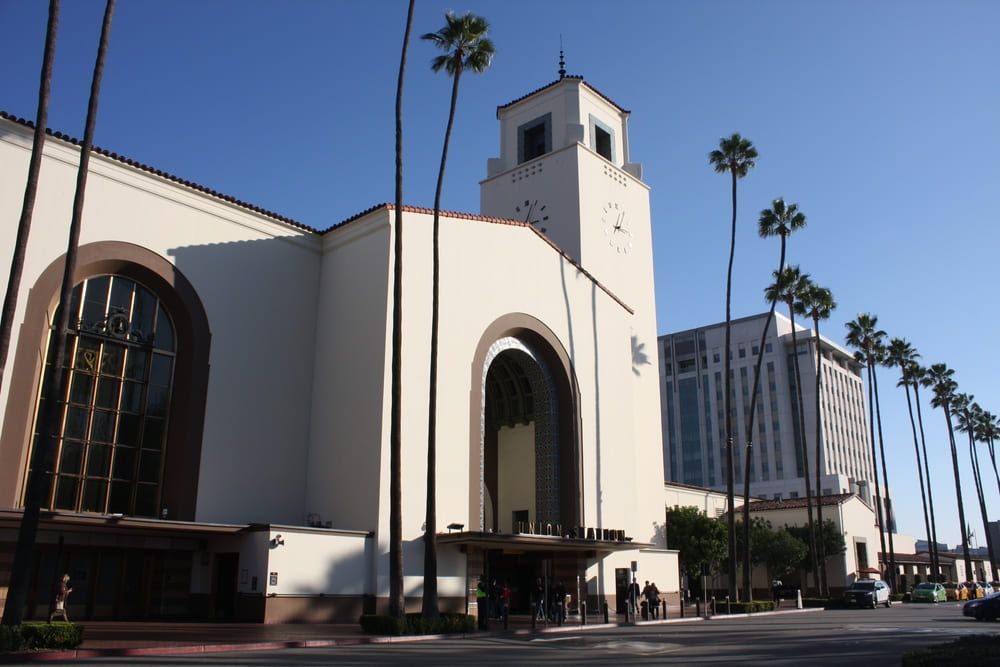
On the edge of El Pueblo stands the great historic station of Los Angeles, Union Station. Inaugurated at the end of the 1930s, it is the largest railway station in the western United States and a superb monument. The Los Angeles audio-guided tour stops here to admire this masterpiece blending Art Deco and Hispanic influences.
Inaugurated in 1939, Union Station marks the culmination of the railway history of Los Angeles, the city having been served by train since the nineteenth century. It is the largest railway station in the western United States, famous for its architecture blending Art Deco, Spanish mission and modern influences. Even today, it remains the city's main station and a high place of heritage.
The great hall, its ceilings, its chandeliers and its patios evoke the golden age of rail in the United States. The architecture, at the crossroads of Art Deco and the mission style, makes it one of the finest buildings in Los Angeles. A thoroughfare that is always lively, Union Station can be freely visited and is an essential stop, a stone's throw from the city's founding district.
Union Station lies on the edge of the El Pueblo district, in the centre of Los Angeles, reachable on foot and a major transport hub of the city. A working station, its public spaces are freely accessible; you can admire its architecture at any hour. To make the most of the great hall, it is best to avoid rush hours.
In 1939; it is the largest railway station in the western United States, famous for its architecture blending Art Deco and Spanish mission style.
Yes, its public spaces, including the great hall, are freely accessible and can be admired at any hour, as a monument in its own right.
Aucun avis pour le moment
