



Walk
From Pacific Royalty to the Aloha Spirit
Honolulu, United States
Walk
From Pacific Royalty to the Aloha Spirit
Honolulu, United States
Distance
4.8 kmDurée
2h00Audios
25Parcours
Loop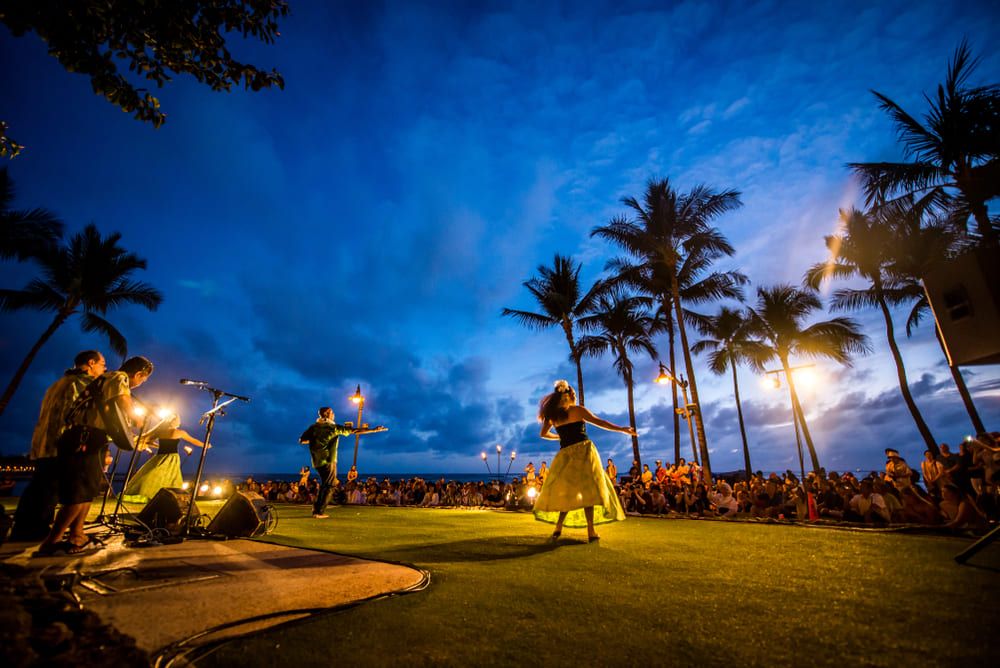
Shutterstock
When you think of Hawaii, you might picture hula dancers performing for tourists. But there's much more to this traditional dance than the performances you see on postcards or at resorts. In Hawaiian culture, hula isn't simply entertainment. It's a way of keeping history, beliefs, and traditions alive. Long before the Hawaiian language had a writing system, hula served as a kind of living library, passing stories and knowledge from one generation to the next. It's a sacred form of storytelling, where dancers bring the words of an oli, or sacred chant, to life through movement. Every turn of the wrist, every movement of the hips, and every step has meaning, almost like the words in a sentence. The hands can tell stories of falling rain, flowing lava, or trees growing toward the sky, while the feet follow the rhythm of the Earth. And this knowledge is still passed down in hālau hula, the traditional schools where students learn far more than just dance steps. Their teachers introduce them to Hawaiian history, religion, and the language itself. To understand just how deeply these traditions are connected, let's look at one of the greatest treasures of Hawaiian poetry: the Kumulipo. This sacred genealogical chant stretches over more than 2,000 lines, and its name means "Source of Deep Darkness." It isn't a dance, but a vast account of creation, describing how life gradually emerged from the darkness, beginning with one of the smallest creatures in the ocean: the coral polyp, the world's first builder. And what makes the Kumulipo so fascinating is the way it describes humanity's place in the universe. According to the chant, human beings aren't the masters of nature. We're its younger siblings, sharing the same ancestral roots as sharks, grasses, and even the stars. This is where hula comes back into the story. Through dance, performers can bring that vision of creation to life. Some kumu hula, or hula masters, choreograph the opening verses of the Kumulipo, using movement to evoke the darkness before creation and the first signs of life stirring beneath the ocean. Whether these sacred words are chanted, listened to, or expressed through dance, they remind Hawaiians that the land, or ʻāina, isn't something separate from them. It's part of their family. And this deep sense of connection brings us to another Hawaiian word you've almost certainly heard: Aloha. It's often used to say "hello" or "goodbye," but its meaning goes much further. Aloha is also a way of life, rooted in the belief that every person matters and that the relationships we build deserve care and respect. To show someone Aloha is to offer them warmth, kindness, and genuine respect, without expecting anything in return.
Aucun avis pour le moment
