





Walk
Heading to the Santa Monica Pier
Santa Monica, United States
Walk
Heading to the Santa Monica Pier
Santa Monica, United States
4 km
Distance
1h30
Durée
14
Audios
Loop
Parcours
Shutterstock
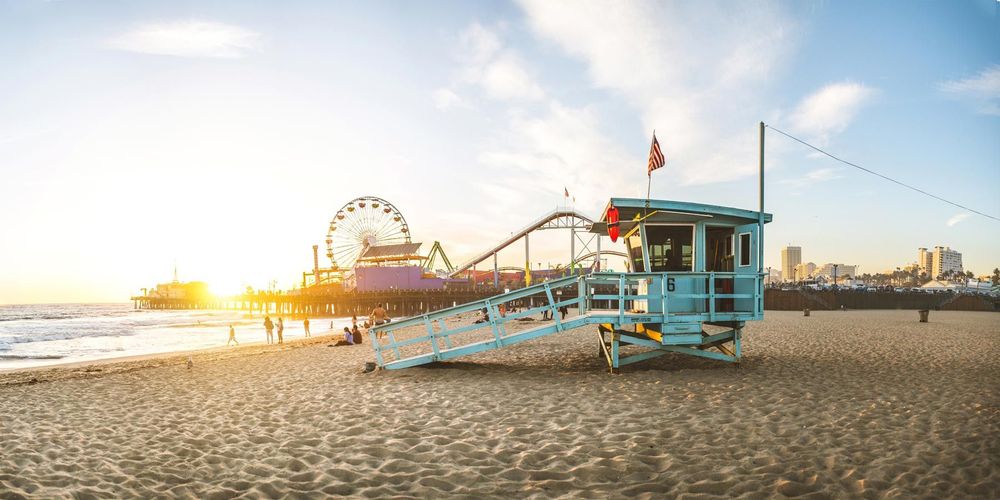
The Santa Monica audio-guided tour takes you along Ocean Avenue, the avenue that runs along the seafront. Overlooking the beach on one side and lined with hotels and restaurants on the other, it offers superb views over the Californian coast.
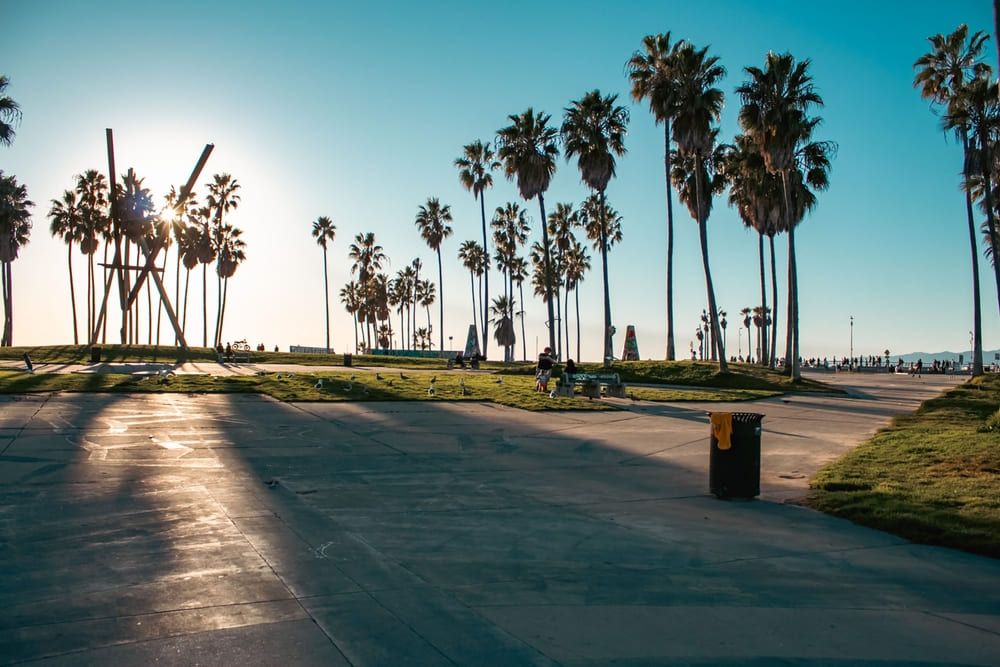
Continuing Ocean Avenue southwards, for about three kilometres, the atmosphere changes as you reach Venice Beach, another emblematic place of Los Angeles. You go from the quieter atmosphere of Santa Monica to a very lively seafront, known for its free, artistic and sporty spirit. The Venice boardwalk is renowned for its musicians, its artists and its skaters.
Ocean Avenue offers fine perspectives over the Pacific Ocean, bordered by the lawns of Palisades Park on its upper part. It is a pleasant walk, ideal for enjoying the sea breeze, the sunsets and the seaside atmosphere. The avenue links the main sites of Santa Monica and leads, further south, towards Venice.
Ocean Avenue runs along the Santa Monica seafront, above the beach, alongside Palisades Park. It can be walked freely at all hours and on the level; the hotels and restaurants keep their own hours. It leads towards Venice Beach, about three kilometres to the south.
There are hotels, restaurants, the lawns of Palisades Park and fine views over the Pacific Ocean, along the Santa Monica seafront.
Continuing south for about three kilometres, Ocean Avenue leads towards Venice Beach, known for its free, artistic and sporty atmosphere.
Aucun avis pour le moment
