





Walk
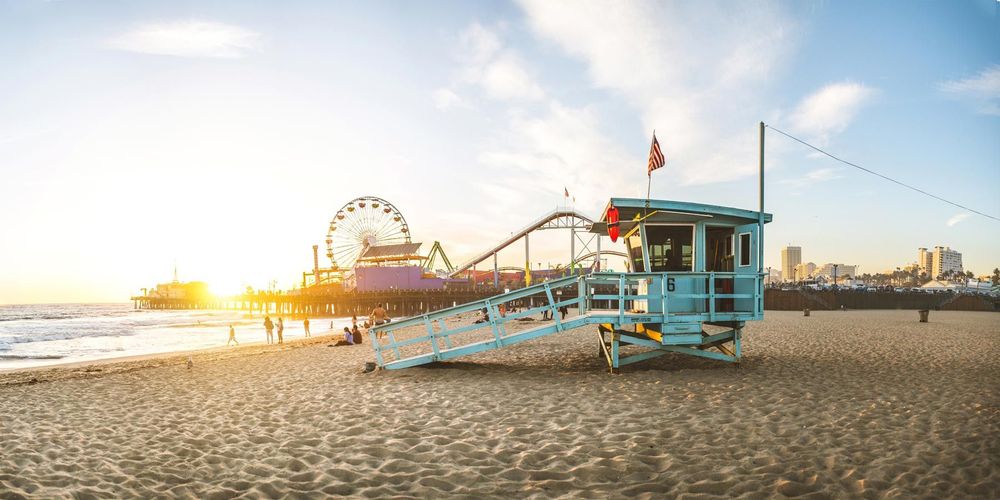
Heading to the Santa Monica Pier
Santa Monica, United States
Walk
Heading to the Santa Monica Pier
Santa Monica, United States
4 km
Distance
1h30
Durée
14
Audios
Loop
Parcours
Shutterstock
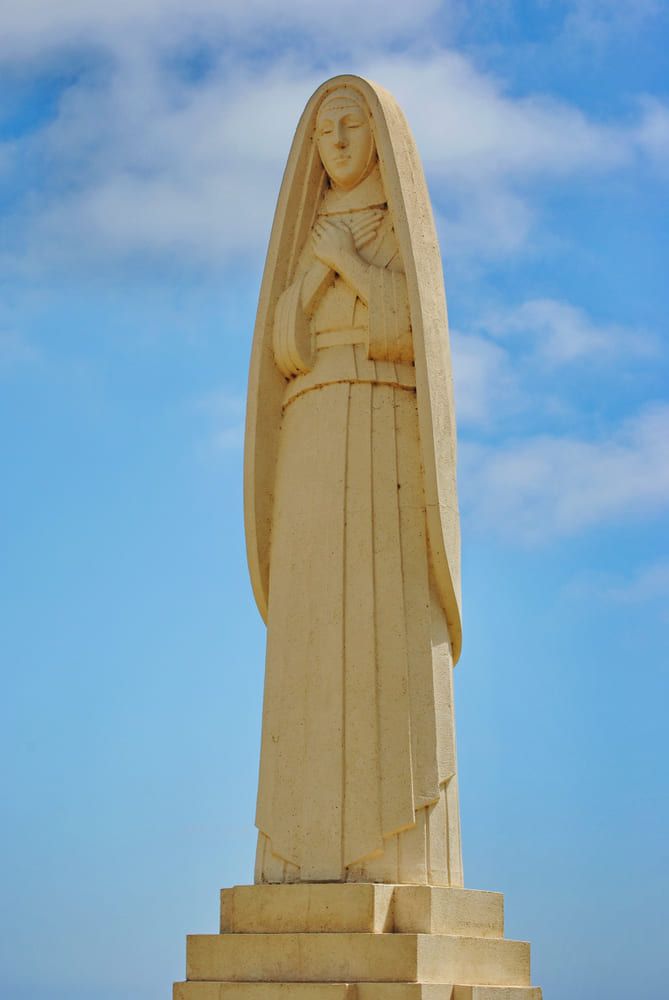
The Santa Monica audio-guided tour leads you, at the end of Wilshire Boulevard, facing the ocean, before one of the most recognisable silhouettes of Palisades Park: the statue of Saint Monica, who gave her name to the city. It is contemplated with respect, as a marker of identity.
The statue, a work by the sculptor Eugene Morahan, stands out for its very geometric, almost cinematic lines, typical of the Art Deco of the 1930s. Made of pale concrete and set on a massive base, it represents Saint Monica, a Christian figure after whom the city is named. The grassy promontory on which it stands has been shaped like a heart.
The statue stands facing the ocean, in the green setting of Palisades Park, on the cliffs overlooking the bay. With its clean lines and its panoramic location, it is one of the most photographed landmarks of Santa Monica. The park also offers superb views over the Pacific and the jetty.
The Santa Monica statue is in Palisades Park, at the end of Wilshire Boulevard, on the cliffs overlooking the ocean. It can be discovered freely at all hours and on the level. The park offers fine views, best discovered by day or at sunset.
The statue represents Saint Monica, a Christian figure who gave her name to the city. It is the work of the sculptor Eugene Morahan, in an Art Deco style.
It stands in Palisades Park, at the end of Wilshire Boulevard, on the cliffs overlooking the Pacific Ocean.
Aucun avis pour le moment
