





Walk
From Pioneers to Casinos: The Story of Downtown
Las Vegas, United States
Walk
From Pioneers to Casinos: The Story of Downtown
Las Vegas, United States
2.2 km
Distance
1h00
Durée
14
Audios
Loop
Parcours
Shutterstock
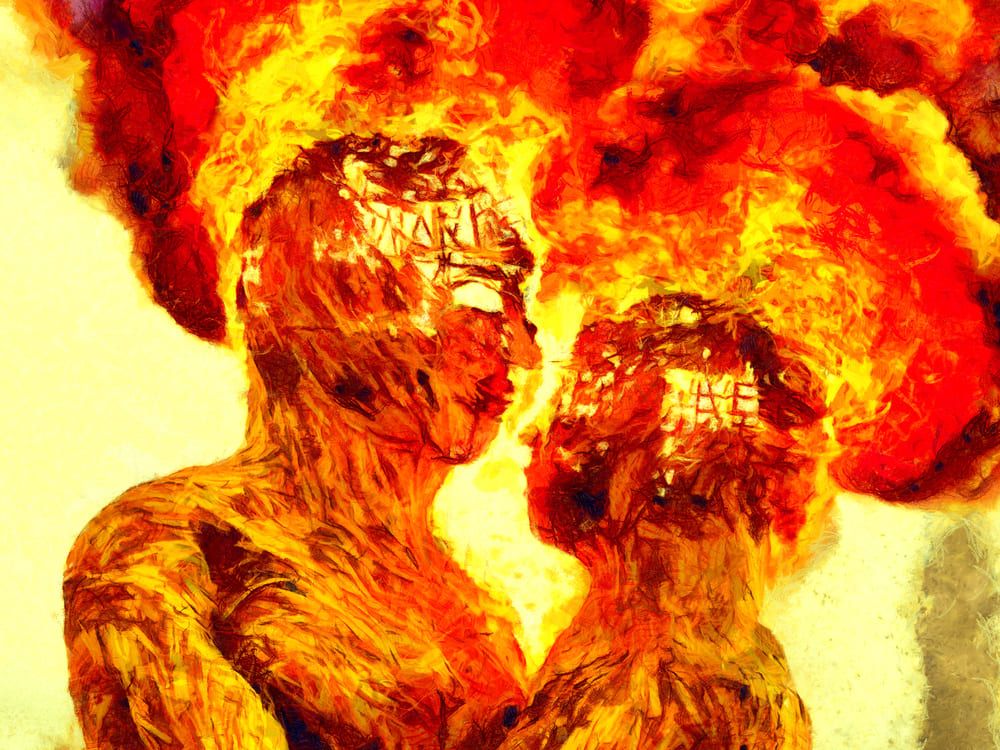
The Burning Man is a mythical festival that gathers each summer more than seventy thousand people in the Black Rock desert, to the north of Las Vegas, to build an ephemeral city. The Las Vegas audio-guided tour stops here to evoke this extraordinary cultural event, founded on participation, creativity and art, that appears and disappears in a few days.
Imagine a city emerging from the desert, then disappearing totally a week later. Each year, at the end of summer, about two and a half hours' drive to the north of Las Vegas, in the Black Rock desert, more than seventy thousand people gather to create an ephemeral city, named Black Rock City. This extraordinary event is called the Burning Man. Here, there are no spectators: everyone participates. Some build thematic camps, others create monumental works of art, others still organise performances, concerts or workshops. The city, traced in an arc of a circle, is organised around a great wooden statue, the Man, that is burned during a spectacular ceremony at the end of the festival, giving its name to the event. The Burning Man rests on strong principles: radical inclusion, gift, the absence of commercial transaction, autonomy and respect for the environment, the participants having to take everything away and leave no trace behind them. Born in the 1980s on a beach of San Francisco, the festival has become a worldwide cultural phenomenon, symbol of creative freedom and ephemeral art, that attracts artists and the curious from the whole world. Although it takes place far from the town, in Nevada, it is part of the imaginary of the region and has inspired numerous works, including some sculptures today visible in Las Vegas. An art festival and a city of the desert, the Burning Man is a singular stop of the discovery of the region of Las Vegas.
Here you evoke the Burning Man, a mythical festival that gathers each summer more than seventy thousand people about two and a half hours to the north of Las Vegas, in the Black Rock desert, to build the ephemeral city of Black Rock City; founded on participation, gift and art, organised around the Man, a wooden statue burned at the end, it has become a worldwide cultural phenomenon that has inspired sculptures visible in Las Vegas. The Burning Man is a singular stop of the region. It is an extraordinary discovery.
The Burning Man takes place each year at the end of summer in the Black Rock desert, in Nevada, about two and a half hours' drive to the north of Las Vegas. It is a temporary event that exists only a few days a year; access and participation follow the conditions and principles proper to the festival, which vary. It is best to enquire well in advance.
A mythical festival that gathers each summer more than seventy thousand people in the Black Rock desert, about two and a half hours to the north of Las Vegas, to build the ephemeral city of Black Rock City; founded on participation, gift and art, organised around the Man, a wooden statue burned at the end, it has become a worldwide cultural phenomenon.
In the Black Rock desert, in Nevada, about two and a half hours' drive to the north of Las Vegas, in the United States.
Aucun avis pour le moment
