



Walk
From Pacific Royalty to the Aloha Spirit
Honolulu, United States
Walk
From Pacific Royalty to the Aloha Spirit
Honolulu, United States
Distance
4.8 kmDurée
2h00Audios
25Parcours
Loop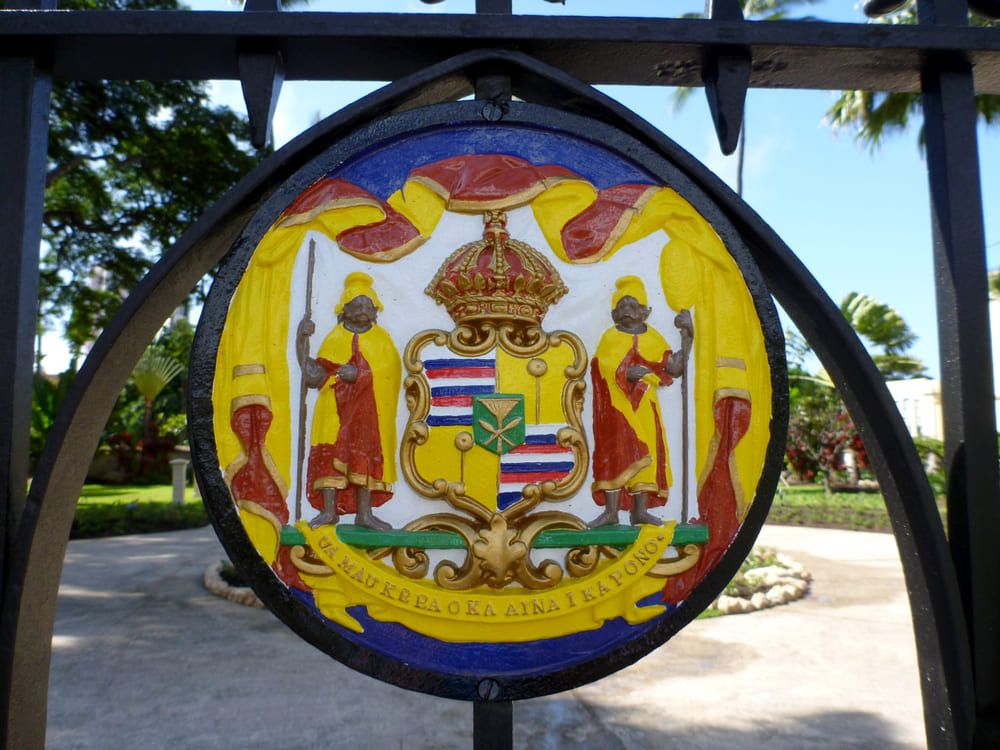
Shutterstock
To understand Honolulu's history, it helps to get to know the kings and queens who once ruled Hawaii. You might imagine that the kingdom was passed down through one long, unbroken royal family, but that's not quite how it happened. Hawaii actually had two major dynasties, with a brief transitional reign between them. The story begins with the House of Kamehameha, which gave the kingdom five successive kings, from Kamehameha I to Kamehameha V. The first, Kamehameha the Great, was the man who united the islands. Thanks to his military skill and his clever use of the first Western firearms, he succeeded in bringing all the Hawaiian Islands under a single crown by 1810. Now, no woman ever ruled as queen in her own right during the Kamehameha dynasty, but that certainly doesn't mean women were excluded from power. Quite the opposite! One of the most influential figures was Queen Kaʻahumanu, Kamehameha I's favorite wife. When the king died in May 1819, she became co-regent and, together with Queen Mother Keōpūolani, helped set in motion a political and spiritual revolution that would change Hawaiian society forever. To understand just how extraordinary their actions were, you need to know a little about life in Hawaii at the time. Society was governed by a strict system known as kapu, a set of sacred laws that regulated everything from religion and politics to everyday behavior. These weren't simply rules of etiquette. Breaking certain kapu could be punishable by death. One of the most deeply rooted restrictions was the ʻai kapu, which forbade men and women from eating together. Women were also prohibited from eating certain foods considered sacred, including pork, bananas, coconuts, and taro. Then, in November 1819, as Hawaii was coming under growing Western influence, the young King Kamehameha II did something almost unimaginable. Encouraged by Kaʻahumanu and Keōpūolani, he sat down with the women and openly shared a meal with them. It might sound like a simple gesture today, but in Hawaiian society at the time, it was revolutionary. This act became known as ʻai noa, meaning "free eating," and it challenged the religious and social order that had governed the islands for centuries. After all, if the king could break such a sacred taboo without suffering divine punishment, what did that mean for the authority of the old gods? With a single meal, centuries of belief were called into question. The consequences were far-reaching. Ancient Hawaiian temples, known as heiau, were destroyed, and religious idols were burned. But these changes were far from universally accepted. Civil war broke out almost immediately, culminating in the bloody Battle of Kuamoʻo, where the last defenders of the traditional faith were defeated. The collapse of the old religious system left an enormous spiritual vacuum, creating the conditions for Christian missionaries to arrive just a few months later and for a new legal system shaped by religious influence to emerge. Now, before we continue with the royal family, here's a little unexpected connection. Does the name Kamehameha ring a bell? You might recognize it from the famous Japanese animated series Dragon Ball Z! Of course, there's no historical or political connection between the Hawaiian king and the cartoon. The series' creator, Akira Toriyama, was simply looking for a memorable name for one of his characters' fighting techniques. His wife suggested Kamehameha because she liked the sound of it. Not quite the legacy you'd expect for a Hawaiian monarch! But back to the kingdom. When Kamehameha V, the last king of the dynasty, died in 1872 without leaving an heir, the royal succession took a different turn. Under Hawaii's Constitution, a new monarch could be elected, and King Lunalilo was chosen to take the throne. Sadly, his reign lasted barely a year. He died of tuberculosis without naming a successor, leaving the people to elect another ruler. This brought Hawaii into its second and final royal dynasty, the House of Kalākaua. Only two monarchs would reign during this period. The first was King David Kalākaua, affectionately known as the "Merrie Monarch," who commissioned the magnificent ʻIolani Palace. He was succeeded by his sister, Queen Liliʻuokalani, who became Hawaii's last reigning monarch. Her reign ended in 1893, bringing the era of the Hawaiian monarchy to a close.
Aucun avis pour le moment
