




Walk
A city of ideas, art and memory
Philadelphia, United States
Walk
A city of ideas, art and memory
Philadelphia, United States
Distance
7 kmDurée
3h00Audios
26Parcours
Loop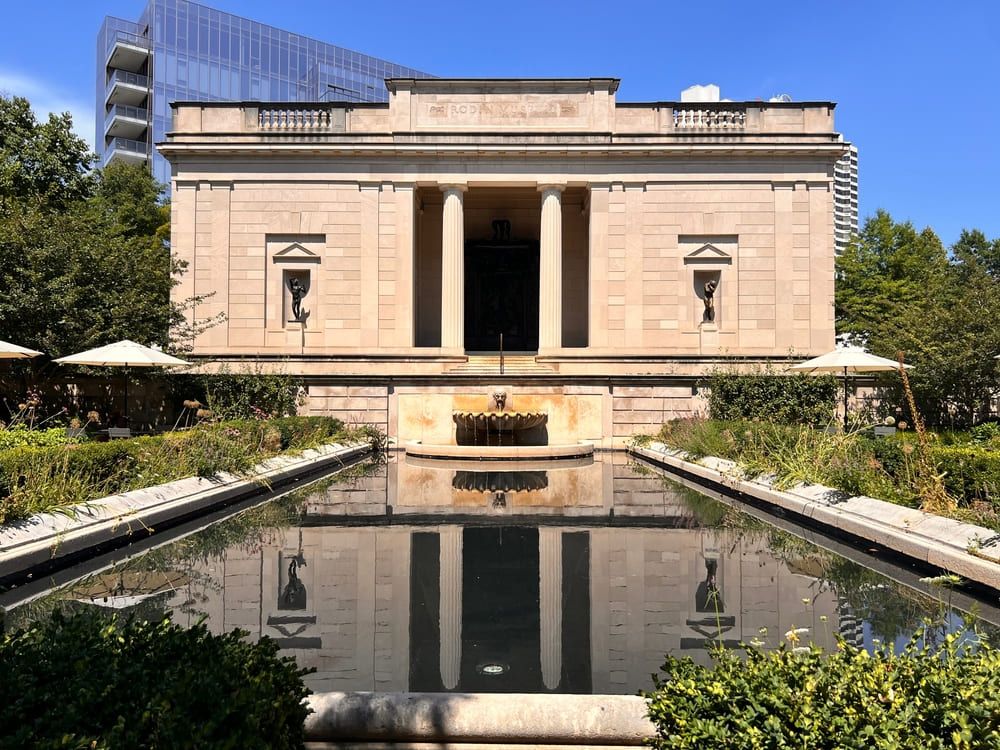
Shutterstock
Have you recognized this famous sculpture on your right? It’s The Thinker by Auguste Rodin. You’re now stepping into the world of the Rodin Museum, a space entirely dedicated to his work. But to fully understand this figure, it helps to look a bit further ahead, toward the museum entrance, where a monumental piece unfolds: The Gates of Hell. Take a moment to observe this large bronze door. Rodin worked on it for nearly forty years, beginning in 1880, drawing inspiration from The Divine Comedy. Rather than telling a single story, he created a dense and dynamic world, filled with bodies in motion, in tension, falling, or deep in thought. More than 180 figures appear, expressing suffering, desire, love, and despair. The version you see here is especially significant, as it is the first major bronze cast made after Rodin’s death, installed when the museum opened in 1929. Now look at the top of the door. Three identical figures lean forward: these are The Three Shades. In the original composition, they seem to point toward the abyss below, as if announcing what awaits. Here at the museum, a monumental version of these figures can also be seen in the garden, to the left of the building. Displayed on their own, they become a work in their own right, where Rodin explores repetition of the human body to intensify its expressive force. On the right side of the building, you’ll find another major work: The Burghers of Calais. Here, the tone shifts. The sculpture shows six men walking toward what they believe will be their death, hoping to save their city. Rodin doesn’t present them as heroic figures, but as deeply human, full of doubt, fear, and courage. Each one seems absorbed in their own thoughts, giving the scene a strong emotional intensity. In just a few steps, you move from a chaotic and overwhelming vision to something more restrained, focused on sacrifice and the human condition. That’s the strength of Rodin’s work, revealing emotion, tension, and contradiction through the human body. Here, art extends naturally outdoors, in a space designed to be explored, where each sculpture interacts with the others.
Aucun avis pour le moment
