Walk
Land of the Ancient Dragon
Hanoi, Vietnam
Walk
Land of the Ancient Dragon
Hanoi, Vietnam
7 km
Distance
3h00
Durée
29
Audios
Loop
Parcours
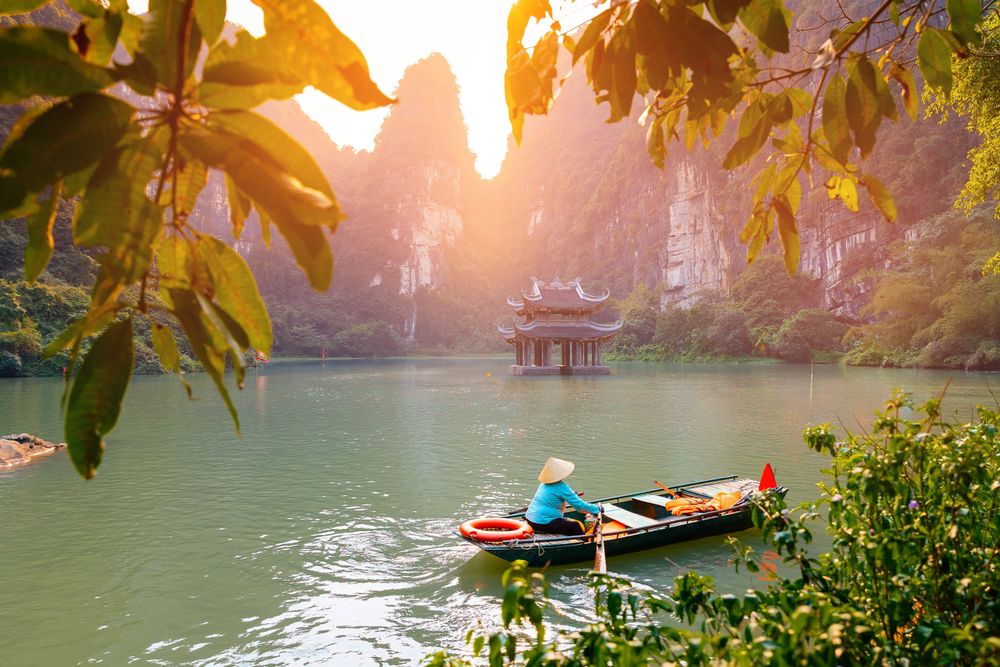
From the misty highlands of the north to the emerald waters of the south, Vietnam reveals itself like a long poem in motion, where every province carries within it centuries of history and breathtaking nature. Travelling here means accepting a slower pace, lending an ear to the voices of the alleyways and the stories carved in stone. For those who wish to visit Vietnam and go beyond the surface, Ryo audio-guided tours are available in Hanoi, offering an intimate and independent way to connect with the soul of the capital. The entire country can be explored this way, at your own pace, with all your senses awakened.
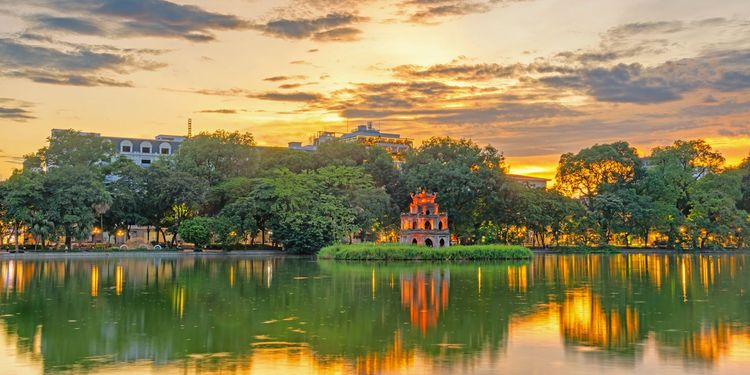
Hanoi is one of the oldest capitals in Asia, and it knows it: it wears its layers of history with quiet elegance. Across its two Ryo audio-guided tours, the traveller winds through the interwoven alleyways of the ancient guild quarter, where the façades tell the story of centuries-old trades, and along broad avenues lined with French colonial architecture. The Temple of Literature, Hoan Kiem Lake and its legends, Hoa Lo Prison and the Museum of Ethnology together form a mosaic city that one never tires of revisiting. Hanoi is best lived slowly, a cup of coffee in hand, perched on a stool at the edge of the pavement.
Beyond the capital, Vietnam unfolds a geography of rare generosity. In the north, the rice terraces of Sapa carve stepped landscapes that the mist transforms each morning into a living watercolour; the villages of ethnic minorities preserve vestimentary and artisanal traditions of extraordinary richness. To the east, Ha Long Bay, a UNESCO World Heritage Site and recognised as one of the natural wonders of the world, offers a setting of limestone pillars rising from the green waters of the Gulf of Tonkin, dotted with islets that junks glide past in silence.
Further towards the centre, Phong Nha is home to an exceptional underground network, including Son Doong Cave, considered the largest cave in the world, drawing travellers in search of authentic adventure. Towards the south, the beaches of Phu Quoc Island and the canals of the Mekong Delta open yet further horizons, between turquoise sea and mangroves teeming with abundant life. Vietnam never exhausts curiosity.
Vietnam stretches over more than a thousand kilometres from north to south, making each region subject to its own climatic logic. Generally speaking, the north experiences a cool and misty winter and a hot and humid summer, while the centre alternates between a bright dry season and an occasionally intense rainy season. The south benefits from a more stable tropical climate, with a dry season well suited to coastal getaways. Travelling outside the main holiday periods often allows you to journey through the country in a more serene atmosphere.
The country's backbone is served by a rail network that follows the coastline and connects the major cities, offering spectacular panoramas along the way. Long-distance buses and domestic airlines complement the options depending on the stages chosen. In cities, two-wheelers remain the king of local transport, and local taxi apps make short journeys easy. To explore Hanoi in depth, Ryo audio-guided tours allow you to travel on foot, entirely independently, without ever losing the thread of the story.
There is no universally ideal time, as the country is long and microclimates are numerous. Generally, spring and autumn offer pleasant conditions across the whole territory, with moderate temperatures and less pronounced rainfall. It is strongly recommended to research the specific climate of each region on your itinerary before you depart.
To travel the country from north to south without rushing, several weeks are ideal. A shorter stay of one to two weeks calls for focusing the itinerary on one or two regions in order to truly explore them rather than merely skim the surface. Hanoi alone deserves several days to fully appreciate its nuances.
The scenic coastal train remains one of the most enjoyable ways to connect the major stops, particularly the stretch between Hanoi and the centre of the country. Domestic flights help save time on longer distances. Once there, a motorbike rented by the day or a local taxi remain the most flexible means of exploring a city at your own pace.
Among the sites that leave a lasting impression on travellers are Ha Long Bay and its limestone cliffs, the ancient alleyways of Hanoi, the terraced rice fields of the north, the caves of Phong Nha, and the beaches of the south. Each of these places carries a distinct atmosphere and deserves to be savoured without haste.
Vietnamese cuisine is one of the most subtle and diverse in Southeast Asia. Pho, a broth fragrant with herbs and spices, is a morning ritual in Hanoi. Bun cha, banh mi and fresh spring rolls bear witness to a culinary tradition that constantly plays on the balance between freshness, umami and aromatic intensity. Every region lays claim to its own specialities, and exploring a local market remains one of the best ways to understand the soul of a place.