© Shutterstock
 Votre guide Ryo
Cézanne's Studio in Aix-en-Provence: Everything You Need to Know Before You Visit (2026)
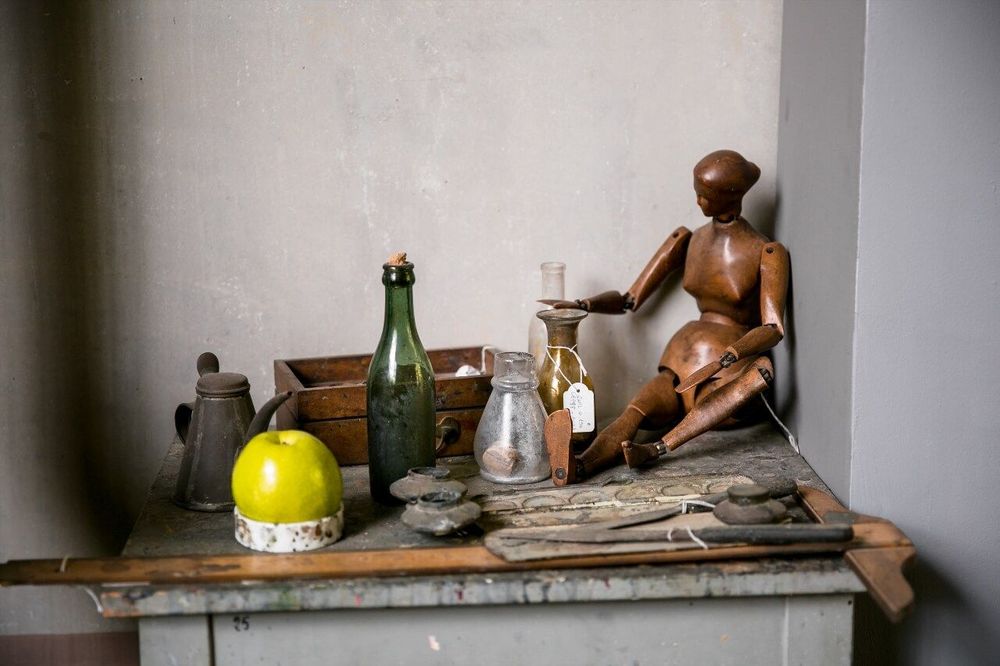
Visiting Cézanne's studio in Aix-en-Provence is an almost uncanny experience: the grey walls, the scattered objects, the northern light filtered through that tall window — everything is there, intact, as though the painter had just set down his brushes. And yet not a single original painting hangs on the walls. It is precisely this paradox that makes the place so fascinating, well beyond what a conventional museum can offer. Cézanne's studio is one of the few places in the world where you can touch an artist's daily life without the mediation of his finished works: the skulls that served as models for his still lifes are still there, the working smock is draped over a stool, the papier-mâché apples sit beside bottles of genever that are a century old. Reopened in summer 2025 after an extensive restoration, this listed site can now only be visited on a guided tour and by advance reservation. This guide brings together everything you need to know to plan your visit: the history of the place, the contents of the collection, practical advice, updated opening hours and admission prices, as well as the other essential stops on the Cézanne trail through the city.
Cézanne's Studio: the History of a Founding Place
Paul Cézanne was born in Aix-en-Provence in 1839, into a bourgeois family that looked unfavourably on his artistic calling. His father, a prosperous banker, would eventually provide him with an allowance large enough to paint freely, but the painter remained deeply attached to his home city, returning regularly even during his years in Paris. When his mother died in 1897, the family sold the Jas de Bouffan, the family estate where Cézanne had painted for thirty years. He needed a new place to work.
In 1901, he bought a plot of land on the Chemin des Lauves, on the northern edge of Aix, and had a two-storey studio built. The design was conceived entirely around work: on the ground floor, a storage area; on the first floor, a studio with 7.5-metre-high ceilings, with a north-facing picture window to capture a cold, steady light, free from cast shadows or sun glare. A vertical slot in the wall, still visible today, allowed large canvases to be brought in without rolling them.
Cézanne worked here from 1902 until his death in October 1906, caught in a storm outdoors while painting the Sainte-Victoire. He was carried home unconscious by passers-by and died the following day. The studio, left just as it was, was first used by other artists, then purchased in 1954 by an American preservation committee led by art historian John Rewald and writer James Lord, who rallied more than a hundred patrons to prevent the site from being demolished. Opened to the public in 1954, the site was subsequently transferred to the city of Aix-en-Provence. Today managed as part of the city's Cézanne trail, it ranks among the unmissable monuments of Provence.
What strikes you upon entering is the complete absence of museum artifice. No velvet ropes, no gleaming display cases. The objects are arranged as they were during the artist's lifetime, faithfully reconstructed from period photographs. For art lovers, it is a rare experience: seeing not the result, but the very conditions in which a body of work so decisive for the history of art could come into being.
What You Will Discover Inside
The visit to Cézanne's Studio (9 avenue Paul Cézanne, 13090 Aix-en-Provence) focuses almost entirely on the first floor, the working space proper. The surface area is modest — around 50 square metres — but the ceiling height creates a sense of spaciousness that few artists' studios can match. Here is what awaits you.
The still-life objects. This is probably what moves visitors who know Cézanne's work most deeply. On shelves, tables and windowsills: the skulls, the genever bottles, the faience pots, the papier-mâché fruit, the draped fabrics. These props appear in dozens of canvases held in the world's greatest museums — the Musée d'Orsay, MoMA, the Courtauld Gallery. Seeing them in person, in the organised disorder that was theirs for years, creates an almost dizzying sense of recognition.
The easel and the palette. The large wooden easel is positioned facing the north window, just as Cézanne placed it. The palette, brushes and paint tubes are laid out on a low table. Some of the tubes are half-empty. A number of black-and-white photographs of the studio taken during the painter's lifetime are displayed on the wall, allowing visitors to verify the faithfulness of the reconstruction.
The library and documents. Along one wall, a bookcase evokes Cézanne's reading habits — from the novels of Zola, his childhood friend, to treatises on colour and perspective. The correspondence between Cézanne and Zola, who fell out irrevocably in 1886 following the publication of 'L'Œuvre' (a novel in which Zola is said to have caricatured his friend as a failed painter), is one of the great stories of French art history.
The working smock. Draped over a wooden stool, Cézanne's smock is often the object that produces the greatest effect. Worn and stained with paint, it calls to mind the same garment visible in several photographs of the artist taken at the studio.
Access is exclusively through a guided tour (in French and English), lasting approximately one hour. As places in each time slot are limited, advance booking is essential. The garden, however, can be explored freely on site without a reservation.
The Absent Paintings: Understanding the Studio Without the Works
Many visitors arrive expecting to see paintings by Cézanne, and leave surprised — sometimes disappointed — if the visit has not been properly prepared. The reality is straightforward: no original canvas is displayed in the studio. Cézanne sold his paintings, gave them away, and sometimes left them at his other residences. After his death, the works were dispersed among private collections and museums the world over.
It is a deliberate choice by the site's managers not to reproduce or borrow canvases: the studio remains a reconstructed workspace, not a gallery. The question is a legitimate one: is it worth coming if you cannot see the paintings? The answer depends on what you are looking for.
If you are coming to see Cézanne's work in the strict sense, round out your visit at the Musée Granet, which holds one of the most significant collections of Cézanne paintings accessible in France, with around ten canvases and several dozen watercolours. It is a ten-minute walk from the studio.
But if you are coming to understand how Cézanne worked — his method, his legendary slowness (he could spend two years on a single canvas), his obsessive relationship with light and volume — then the studio is irreplaceable. High-quality reproductions and explanatory panels show how the objects in the room appear in the paintings. This dialogue between the real object and its painted representation is at the heart of the experience offered here.
A practical tip: before you come, look up a dozen of Cézanne's still lifes online — the apple series, the Grandes Baigneuses, the portraits of Madame Cézanne. You will recognise specific objects and fabrics as soon as you walk into the studio, and the visit will take on an entirely different dimension.
The Montagne Sainte-Victoire: a Lifelong Obsession
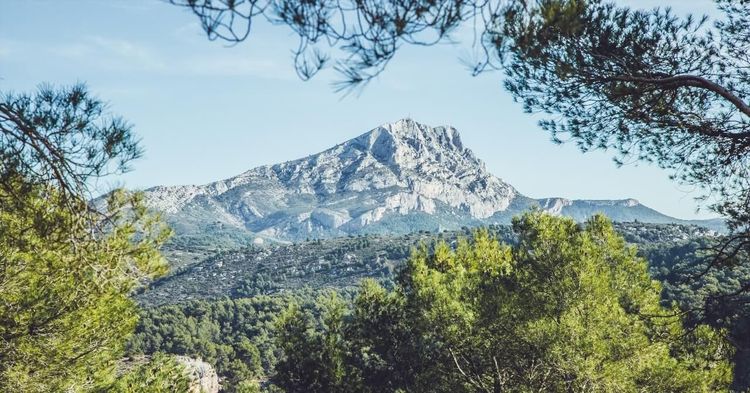
You cannot visit Cézanne's studio without understanding his relationship with the Montagne Sainte-Victoire. Les Lauves is the natural high ground from which Cézanne could take in the plain stretching eastward, with the Sainte-Victoire as his backdrop: this location was not chosen by chance.
Cézanne painted the Sainte-Victoire more than eighty times, in oils and watercolours combined. That figure alone speaks to his relationship with this motif: an almost monastic repetition of the same subject, with a discipline comparable to that of a musician who plays the same sonata for decades in order to extract something new each time. The earliest versions, painted in the 1880s, still lean towards Impressionism: soft light, fragmented brushwork, vaporous atmosphere. The last ones, made from the Lauves studio between 1902 and 1906, are almost abstract — flattened blocks of colour, a geometry that directly anticipates Cubism.
The mountain can be visited in its own right. The walking route from the village of Saint-Antonin-sur-Bayon, reachable by car from Aix in about twenty minutes, is one of the most popular in Provence. It climbs to the Croix de Provence at 945 metres altitude, and on the descent offers the viewpoints that Cézanne painted from the roadside or the foot of the pine trees. Art lovers with time to spare can combine both: the studio in the morning, the Sainte-Victoire in the afternoon.
For those who prefer to see the mountain from the spots where Cézanne painted without actually hiking, the Route Cézanne (D17 towards Puyloubier) winds through pine forests and scrubland that look strikingly like the backgrounds of his paintings. Several signs mark the exact viewpoints from which certain canvases were made. It is a simple and effective way to extend the studio experience into the open air.
On your return, if you have access to a Ryo audio guide, the city itself reveals other traces of the painter's life — the houses where he lived, the cafés on the Place des Cardeurs where he met his friends, the fountains on the Cours Mirabeau that he sketched as a teenager.
The Studio Garden
Behind the building lies a garden that Cézanne himself planted and tended. He grew olive trees, fig trees, stone pines and the Mediterranean plants that served as settings for some of his outdoor compositions. The garden has been restored in keeping with its original spirit, even though the vegetation has naturally evolved over a century. Good news for visitors: it can be explored freely, without a reservation, unlike the studio.
This outdoor space is often overlooked by visitors in a hurry, who leave the studio without lingering. That is a mistake. The garden is calm, shaded even in the height of summer, and provides a natural counterpoint to the density of the interior space. Benches allow you to sit and browse the catalogue or visitor notebooks bought in the shop.
From the garden, you can see the façade of the studio from an angle that recalls Cézanne's watercolours of country houses surrounded by vegetation. Panels are placed at certain points with reproductions of watercolours corresponding to the exact viewpoint from which you are looking — a simple but particularly effective device for visitors discovering his work for the first time.
The garden and the neighbouring bastide also host, throughout the year, public readings, concerts and cultural events connected to Cézanne's legacy. Dates vary; check with the Aix-en-Provence tourist office for the 2026 programme.
Other Cézanne Sites in Aix-en-Provence
The Lauves studio is just one stop on the Cézanne trail the city has to offer. Aix-en-Provence has mapped around forty sites linked to the painter, all reachable on foot in the historic centre. Here are the most significant.
The Musée Granet. This is where you will see the paintings. The museum holds around ten original Cézanne canvases, including several portraits and a view of the Sainte-Victoire, as well as numerous watercolours. The permanent collection also includes works by Rembrandt, Rubens and Ingres, but the Cézanne section is clearly the main draw for visitors on an artistic pilgrimage. The museum is located on the Place Saint-Jean-de-Malte, in a former priory.
The Terrain des Peintres. Laid out on a hillside to the west of Aix, this public garden occupies precisely the spot from which Cézanne painted the Sainte-Victoire in his later years. Reproductions of his canvases are displayed in the open air, with the mountain as a backdrop. The correspondence between the paintings and the actual landscape is striking. Entry is free, the site is open every day, and it is far less crowded than the studio.
Cézanne's birthplace. The painter was born on 19 January 1839 at 28 rue de l'Opéra, in a bourgeois townhouse in the city centre. The commemorative plaque is visible, but the building is privately owned and not open to the public.
The Jas de Bouffan. The former Cézanne family estate, sold in 1897, is now part of the city's Cézanne trail and, following restoration, welcomes visits and events. The room where Cézanne painted large compositions directly onto the walls can be seen on guided tours; check the schedule with the tourist office before making the trip.
The studio and café circuit. In the historic centre, bronze plaques set into the pavements mark the places frequented by Cézanne: the Place des Cardeurs, the cafés where he met his friends from Aix. This walking route is signposted and documented in a booklet available free of charge from the tourist office. It takes around two hours and can be done independently of the studio visit.
The Cathédrale Saint-Sauveur. (34 place des Martyrs de la Résistance, 13100 Aix-en-Provence) Cézanne attended this cathedral throughout his life. The building blends Romanesque, Gothic and Baroque styles, and houses the celebrated Triptych of the Burning Bush by Nicolas Froment (15th century). The cathedral is a ten-minute walk from the studio.
How to Get to Cézanne's Studio
The studio is located at 9 avenue Paul Cézanne (13090), approximately 1.5 kilometres from the centre of Aix-en-Provence — about twenty minutes on foot from the Cours Mirabeau, heading north.
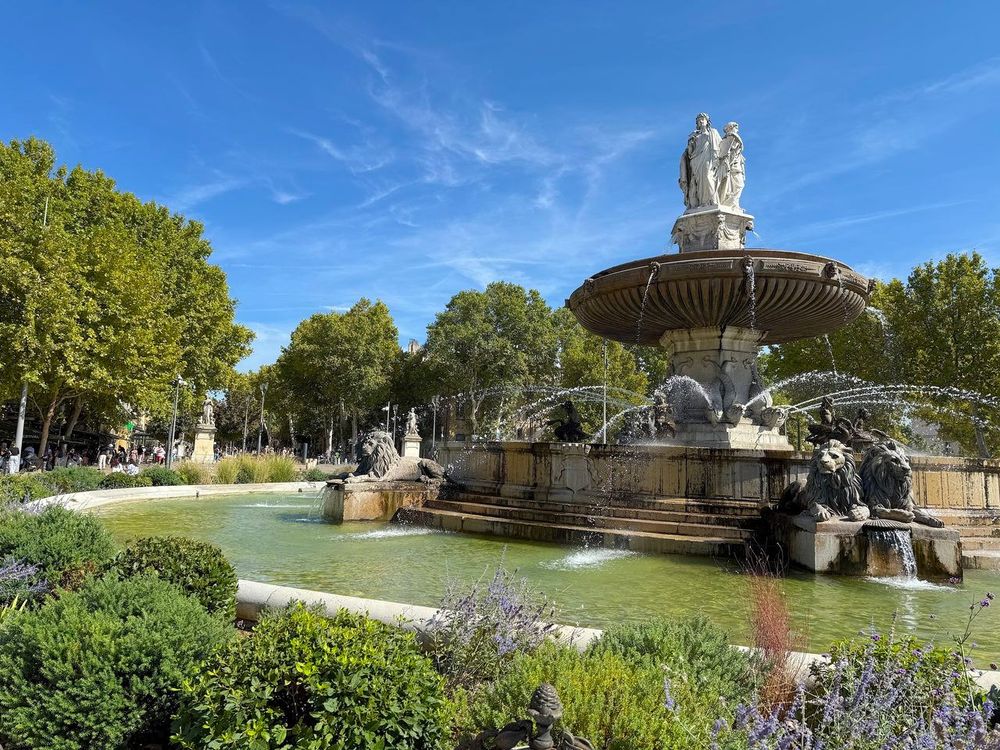
On foot: the most pleasant way to get there. From the Fontaine de la Rotonde, head north through the shopping streets, cross the Boulevard de la République, and continue towards Les Lauves. The route passes several grand old private mansions.
By bus: several lines of the Aix en Bus network serve the area around the studio from the city centre (Rotonde stop). Allow around ten minutes depending on traffic, with frequencies varying by season. Check the nearest stop on the network's website. From the Rotonde stop, our audio-guided tour of Aix also makes an easy way back into the old town on foot.
By car: a small car park is available nearby, with limited spaces. In high season, it is better to use a covered car park in the centre and walk to the studio.
By taxi / ride-hailing: from Aix-en-Provence TGV station, allow around 20 minutes and €25–30 to reach the studio directly.
Opening Hours, Admission Prices and Booking in 2026
Since its reopening in 2025, Cézanne's Studio can only be visited on a guided tour, by reservation. Opening hours vary by season and reservations are made through the Aix-en-Provence tourist office at reservation.aixenprovencetourism.com.
2026 seasons and hours (to be confirmed at the time of booking):
- High season (summer): continuous opening, first tours in the morning, last departure in the late afternoon
- Off-season: reduced hours, generally 10am to 5pm, last departure approximately one hour before closing
- Occasional annual closures: refer to the official calendar
Guided tour admission prices:
- Full price: €9.50
- Reduced price (ages 13–25, students): €7.50
- Themed or audio-guided packages are available at different prices (up to €15 depending on the option)
- The garden can be visited freely on site, with no ticket or reservation required
Prices and visit packages have changed following the renovation: confirm the exact price, the package and your time slot when booking at reservation.aixenprovencetourism.com. Reservation is now required year-round to access the studio.
Practical Tips for Making the Most of Your Visit
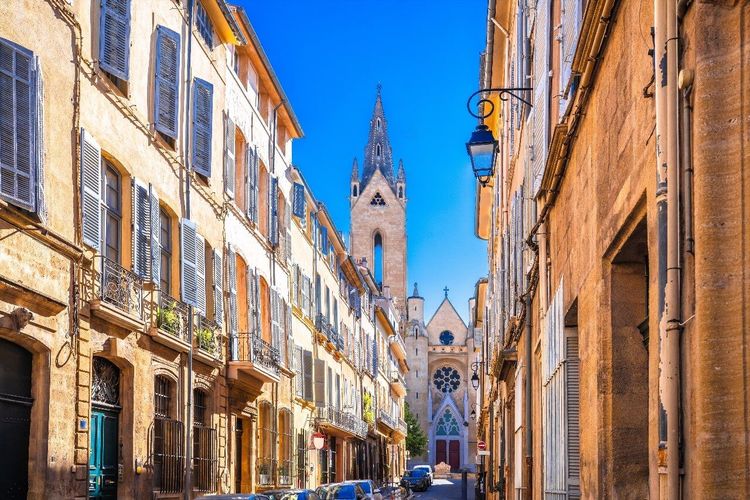
A few concrete points to ensure a smooth visit, especially if you are coming with family or venturing off the usual tourist trail.
Choosing the right time slot. Since access is only possible through timed guided tours, opt for an early morning or late afternoon slot in high season: the light is softer and the general footfall around the site is lower. In April, May or September, almost any time slot will be comfortable.
Preparing in advance. The studio is far more meaningful if you have at least a basic familiarity with Cézanne's work. Spending half an hour browsing the online collections of the Musée d'Orsay or MoMA (both have digitised their Cézanne holdings) before coming radically changes the experience. You will recognise studio objects in famous paintings — the skulls from the 'skull series', the apples from the still lifes, the draped fabrics from the portraits.
With children. The studio is not always the most suitable site for very young children (under 8), who quickly grow bored without direct visual stimulation. Older children (aged 10–14), on the other hand, are often intrigued by the objects — the skulls in particular — and by the idea of seeing 'how a painter really worked'. The garden is a good space to let off some energy before or after.
The shop. Well stocked, with quality reproductions, watercolour notebooks, books for adults and children, and stationery inspired by Cézanne's motifs. Postcards reproducing the still lifes alongside the studio objects make a good souvenir to take home.
Accessibility. The ground floor is accessible to visitors with reduced mobility. The first floor, where the main studio is located, can only be reached by stairs. High-definition photographs of the studio are available on request at the reception desk for visitors who are unable to go up.
Photography. Check with your guide at the start of the tour regarding photography conditions inside. Flash should not be used: it damages the objects and disturbs other visitors. The reflections from the large north-facing window also make photography difficult at certain times of day.
Combining the Visit With Aix-en-Provence
Aix-en-Provence deserves at least a full day, and ideally two if you want to explore both the Cézanne trail and the city itself. Here is how to organise your stay in a coherent way.
A Cézanne day. Book your studio time slot for the morning, garden included. Then make your way back down to the historic centre along the avenue Paul Cézanne, passing the Cathédrale Saint-Sauveur. Have lunch at one of the restaurants in the Quartier Mazarin, the aristocratic 17th-century neighbourhood south of the Cours Mirabeau, where several good Provençal restaurants offer affordable set lunches. Spend the afternoon — around two hours — at the Musée Granet to see the paintings, then finish at the Terrain des Peintres at sunset, when the Sainte-Victoire takes on its pink hues.
Two days for a full exploration. If you have two days, devote the first to the itinerary above and the second to the mountain itself. The hike to the Croix de Provence from Saint-Antonin-sur-Bayon takes approximately 4 hours return for an average walker. Low to moderate technical level, well marked. Bring water and food: there is no refreshment point along the route. On the way back, the Route Cézanne (D17) lets you return to Aix through pine forests and red-ochre landscapes that served as the backdrop for dozens of his canvases.
Where to stay. The historic centre of Aix, around the Cours Mirabeau and the Quartier Mazarin, is the ideal base for exploring on foot. Hotels are plentiful across all price ranges, from bed and breakfast in Provençal bastides to grand hotels along the Cours. For visitors travelling by car, several hotels on the outskirts offer quick access to both the studio and the Sainte-Victoire.
Local food and drink. Aix is a city for food lovers. The Cours Mirabeau market (Tuesday, Thursday and Saturday mornings) offers cheeses, olives, Provençal herbs and local fruit. Calissons, the city's signature sweet, made since the 15th century from almond paste and candied melon, are found in every confectionery shop in the centre, but the house of Léonard Parli (founded in 1874) remains the benchmark. If you are lucky enough to be there on a Friday evening, the restaurants on the Place des Cardeurs serve on their terraces well into the night, in a setting that has barely changed since the days when Cézanne would sit there with his pastis.
To complete your exploration of the city with a Ryo audio guide, discover how the history of Aix unfolds from fountain to fountain, from Baroque private mansions to plane-tree-shaded squares.
FAQ
How Much Time Should I Allow to Visit Cézanne's Studio?
The guided tour of the studio (in French or English) lasts approximately one hour. If you add the garden and the shop, allow 1.5 to 2 hours in total. It is a compact site, but the wealth of information shared by the guide makes each time slot particularly rewarding.
Can You See Original Paintings by Cézanne at the Studio?
No. The studio has been restored to its 1902–1906 state, with the authentic objects that served as models (skulls, bottles, draped fabrics), but no original canvas is on display. To see the paintings, head to the Musée Granet in Aix-en-Provence, which holds around ten paintings and numerous watercolours. Combined tickets covering several Cézanne sites are sometimes offered by the tourist office: check current deals when booking.
Is Cézanne's Studio Suitable for Children?
Yes, from around ten years of age. Younger children may find the visit long without direct visual stimulation (no colourful paintings). For children aged 10–14, the 'working artist's studio' atmosphere — with the skulls, the paint-stained smock and the mysterious objects — tends to work well. The garden provides a pleasant outdoor space for a break.
Do I Need to Book in Advance?
Yes. Since the 2025 reopening, access to the studio is exclusively by guided tour and advance reservation, year-round, at reservation.aixenprovencetourism.com. Time slots have a limited number of places and fill up quickly in high season: book as early as possible. The garden, however, can be visited freely without a reservation.
How Can I Combine Cézanne's Studio With the Montagne Sainte-Victoire?
The two sites complement each other perfectly for understanding Cézanne's work. Book your studio time slot in the morning, then head to the Sainte-Victoire in the afternoon. The usual starting point for the hike is the village of Saint-Antonin-sur-Bayon, a 20-minute drive from Aix. Allow 4 hours for the round trip to the Croix de Provence. You can also simply drive along the D17 road (the Route Cézanne) to take in the painted landscapes without hiking.
Where Can I Find More Information About the Cézanne Trail in Aix?
The Aix-en-Provence tourist office distributes a free booklet mapping around forty sites linked to the painter throughout the city, and manages reservations for the Cézanne sites at reservation.aixenprovencetourism.com. To explore Aix at your own pace with contextual commentary at each stop, the Ryo audio guide for the city is a valuable resource: it covers the Cours Mirabeau, the Quartier Mazarin, the Cathédrale Saint-Sauveur and several sites connected to Aix's artistic history.
Conclusion
Cézanne's studio is a rare place — not a museum in the conventional sense, but a preserved workspace that says something essential about how one of the most important bodies of work in art history came into being. The objects, the light, the silence: everything conspires to make the visit memorable, provided you arrive with a minimum of preparation and have booked your time slot. Combine it with the Musée Granet for the paintings, the Terrain des Peintres for the views, and the Sainte-Victoire for the open air. For everything the city itself has to offer — its fountains, its grand private mansions, its Baroque history — the Ryo audio guide for Aix-en-Provence will accompany you at every step. Cézanne's Provence is still there, within sight.
À lire également