© Shutterstock
 Votre guide Ryo
Activities in Aix-en-Provence and Surroundings: the Complete Guide 2026
Looking for the best activities in Aix-en-Provence and its surroundings for a weekend or a full week? Aix-en-Provence is a city that reveals itself slowly. The first impression — the Cours Mirabeau, the café terraces beneath the plane trees, the late-afternoon light on ochre façades — is already beautiful. But that is merely the entrance hall. Start by discovering the city with the Ryo audio guide tour of Aix-en-Provence, which covers 24 sites in 2h20 through the fountains, the grand townhouses and the medieval lanes that classic itineraries overlook.
Once that first contact is made, the surroundings open up into a rare diversity for a single département. Within an 80-kilometre radius, you have the limestone silhouette of Sainte-Victoire immortalised by Cézanne, the ochre villages of the Luberon, the turquoise calanques of Cassis, the medieval cliffs of les Baux-de-Provence and the 700-metre depths of the gorges du Verdon. This guide brings together the best activities in Aix-en-Provence and its surroundings, with real distances and the addresses that make the difference.
Cours Mirabeau and the Heart of Aix
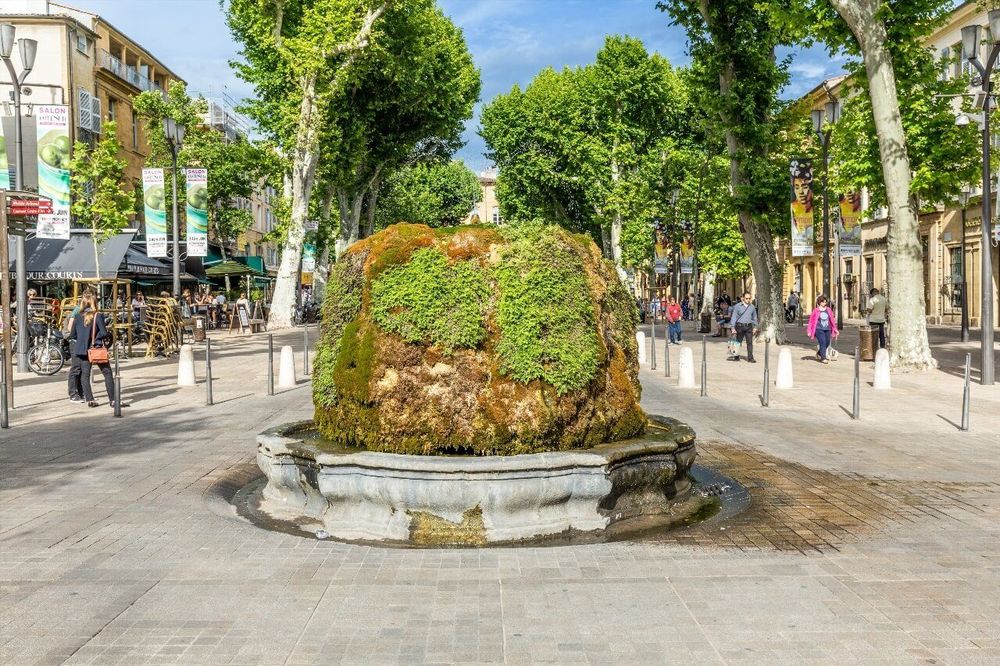
The Cours Mirabeau is the central axis of Aix-en-Provence, laid out in 1651 on the site of the old ramparts to separate the medieval city from the new bourgeois district. Its 440 metres are lined with plane trees, some over 200 years old, forming a leafy canopy that filters the Provençal light in every season. The boulevard can be walked at any hour, but it is at its most authentic early in the morning, when the terraces are set up in the cool air.
The fontaine de la Rotonde marks the western entrance. This monumental 12-metre fountain, built in 1860, is the city's visual landmark with its three allegorical figures: Justice, Agriculture and the Fine Arts. It is the natural meeting point, busy from morning as locals begin their day. Halfway along the boulevard, the façade of the café Les Deux Garçons, founded in 1792, remains one of Aix's most history-laden addresses: Zola, Cézanne, Picasso and Churchill all sat here. Devastated by a fire in November 2019, the brasserie has been under reconstruction to its original design and had still not reopened its doors by early 2026; for now, you can only admire the frontage of the hôtel de Gantès.
At the eastern end, the fontaine du Roi René depicts the Provençal count who is said to have introduced muscat grapes to the region in the 15th century. The musée Granet (Place Saint-Jean de Malte, 13100 Aix-en-Provence, rated 4.4/5 on Google with 4,822 reviews), a two-minute walk away in the Mazarin quarter, holds one of the richest provincial collections in France. Its rooms span European painting from the Middle Ages to the 20th century, with a section dedicated to Cézanne's watercolours and oils that alone justifies a visit. The audio-guided tour of Aix-en-Provence incorporates the boulevard and the museum into its 3.8 km route, placing the works in their real geographic context.
Vieil Aix: Lanes, Markets and Cathedral
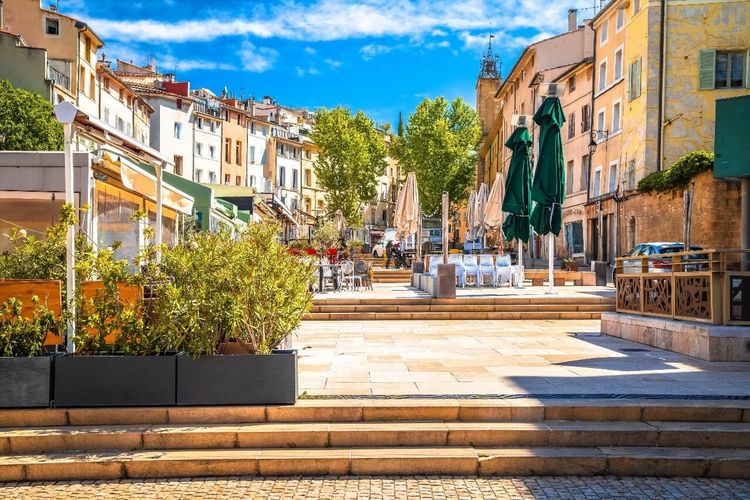
The medieval quarter of Aix rewards those who wander. Its streets follow no grid logic: they turn, climb, open onto unexpected squares, then head off in another direction. It is in this labyrinth that the city reveals its character.
The Place Richelme market is the most authentic of Aix's markets. It is held every morning except Monday: Provençal fruit and vegetables, goat's cheese from the hills of Vauvenargues, dried herbs, local honey. Arrive before 9am to have your pick of producers. The Place de l'Hôtel de Ville hosts a flower market on Tuesday, Thursday and Saturday mornings. Saturday is the busiest, with producers coming from across the Pays d'Aix.
The Cathédrale Saint-Sauveur is a fascinatingly composite monument. Its 12th-century Romanesque nave adjoins Gothic chapels and a 5th-century Merovingian baptistery, one of the oldest still in place in France. Inside, the Burning Bush triptych by Nicolas Froment (1476), commissioned by René d'Anjou, is of exceptional refinement. A practical detail: the triptych's shutters are only opened on the first Friday of each month. Check the date before visiting if you want to see the complete work.
The cloître Saint-Sauveur (12th century), freely accessible from the cathedral, is one of the best-preserved Romanesque cloisters in Provence. Its white marble columns and carved capitals form a space of complete calm just steps from the bustle of the street. In the adjacent lanes, the fontaine des Quatre-Dauphins is the most photographed of Aix's fountains: four stone dolphins spouting water towards a central pine cone, in a small square that residents use as an outdoor sitting room from spring to autumn.
In the Footsteps of Cézanne
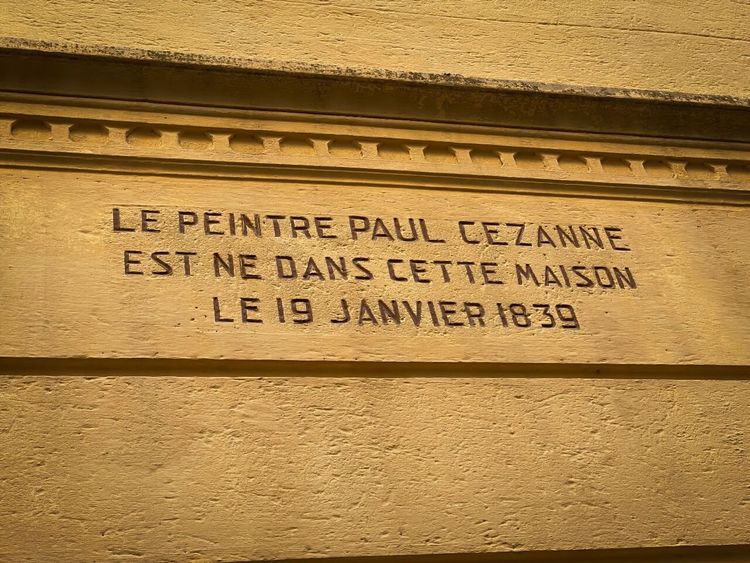
Paul Cézanne was born in Aix in 1839 and died there in 1906. Throughout his life, he refused to leave Provence, unlike his Impressionist contemporaries drawn to Paris. This deliberate choice made Aix the mental landscape of his work, and you can still recognise his motifs in the hills surrounding the city.
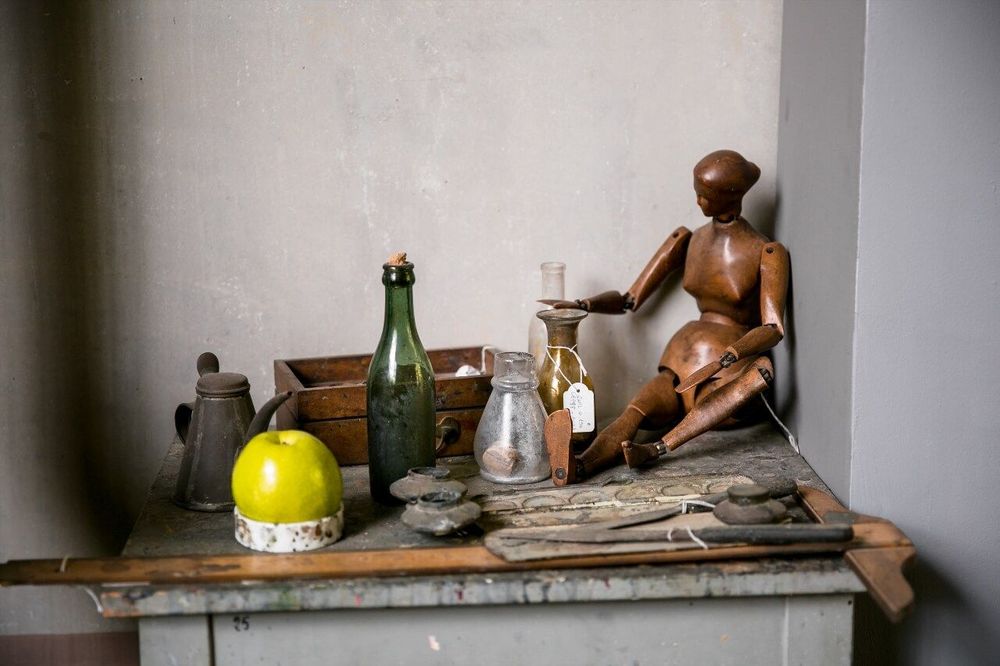
The Atelier de Cézanne, on the Lauves hill, has remained intact since his death. The painter had it built in 1902 to have enough ceiling height for his large Bathers compositions. His work smock, his apples, his skulls and his drapes are still there, exactly where he left them. You visit the space in which he produced his final works between 1902 and 1906. After a major restoration campaign undertaken for the 120th anniversary of the painter's death, the atelier des Lauves reopens to the public for the 2026 season, from 4 July to 31 October, with its ground floor fully accessible for the first time: full price €9.50 (reduced €7.50). Our dedicated article on Cézanne's studio details the opening times, prices and context of each series.
The Jas de Bouffan (17 Route du Jas de Bouffan, 13100 Aix-en-Provence, rated 4.3/5 on Google with 350 reviews), the family estate to the west of Aix, is less well known but deserves attention. It is here that Cézanne produced his first large mural compositions between 1866 and 1870, painted directly onto the walls of the drawing room. Long closed, the bastide also reopens for the 2026 season (4 July to 31 October) after restoration, by reservation and in limited time slots. A signposted city trail connects all the Cézanne sites on foot in 2 hours: the Mazarin quarter where he was born, the musée Granet, Les Deux Garçons and the climb to the studio. The Ryo audio guide covers several of these stops with anecdotes about his turbulent relationship with Émile Zola, his childhood friend who became his most famous critic after the publication of 'L'Œuvre' in 1886.
The Sainte-Victoire Mountain
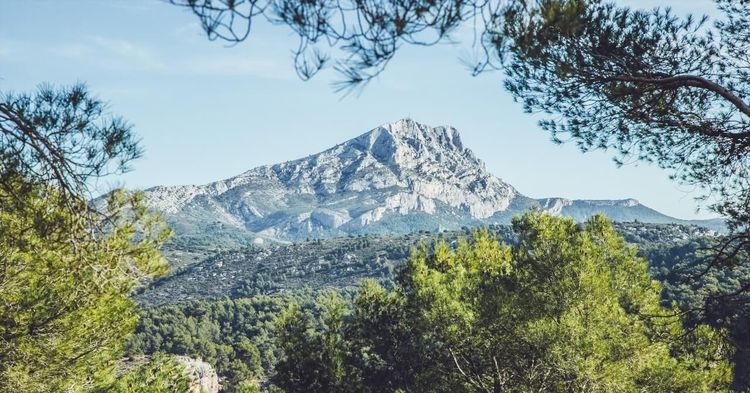
This is the landscape that Cézanne painted more than 80 times between 1882 and 1906. Sainte-Victoire is not simply a limestone massif 15 km east of Aix: it is a ridge that changes colour with every hour of the day and makes you understand physically why a painter kept returning to it.
The iconic hike climbs from the Parking du Tholonet up to the Croix de Provence (945 m). The elevation gain is 650 metres over 5 kilometres: allow 2h30 to 3h for the ascent. From the summit, the view on a clear day stretches to the sea, taking in Aix, the Sainte-Baume and the Alpilles. The trail is exposed to the sun along its entire upper section: set off early and bring at least 1.5 litres of water per person.
For a more accessible option, the sentier du Cengle (8 km loop, 200 m elevation gain) runs along the southern flank through white oak forests. This circuit suits families with children able to walk for 2h30 without difficulty. The mountain is also a well-established climbing destination with more than 2,000 marked routes from grade 3 to 8b on the limestone cliffs of Bibémus and the northern face. Local clubs organise introductory sessions for beginners from May to October.
Important restriction: the massif is closed from 1 July to the second Monday of September between 1pm and 11pm due to fire risk. Check conditions before setting out. Our complete guide to the Sainte-Victoire mountain lists all routes with their difficulty levels and water points.
Les Baux-de-Provence and the Carrières de Lumières
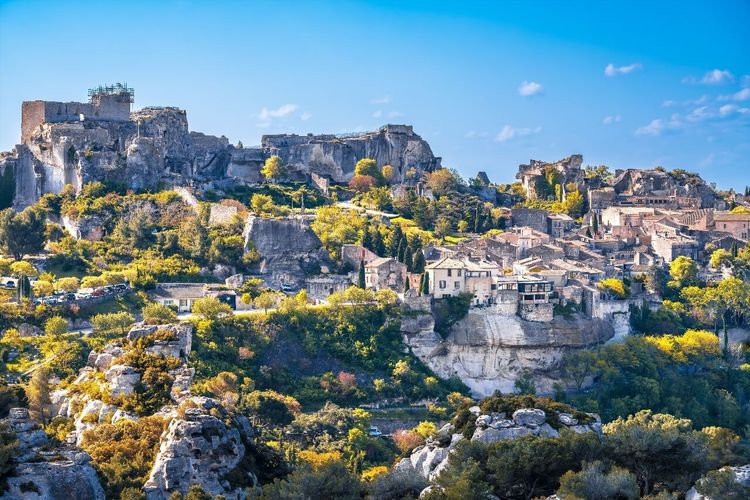
30 km west of Aix, les Baux-de-Provence rank among the most visited villages in France. The rocky Alpilles spur on which the village perches, the cobbled lanes and the medieval château are undeniably beautiful. Visit on a weekday or before 10am to avoid the saturation of July and August weekends.
The château des Baux (11th century) is one of the best-preserved medieval fortresses in Provence. Its ramparts offer a panoramic view over the Alpilles and the Crau plain. Demonstrations of medieval siege weapons (catapults, trebuchets) are organised in season. Allow 1h30 for the full visit.
500 metres from the village, the Carrières de Lumières (Route de Maillane, 13520 Les Baux-de-Provence, rated 4.7/5 on Google with 29,638 reviews) have transformed former limestone quarries into a unique immersive projection space. Each year, the works of one or more great painters are projected in large format onto the stone walls, with a sound creation designed for the venue. In 2026, two productions follow one another: 'Picasso, Art in Motion' and 'Frida Kahlo, Heart and Soul'. You walk through the paintings: images move across the floor, the rocky columns and the ceiling at 14 metres high. The show runs in a continuous loop of approximately 40 minutes. The Carrières open every day from 9:30am to 7pm (extended evening sessions in July–August). Adult ticket: from €16.50. Book online in summer, especially for evening sessions.
Cassis and the Calanques
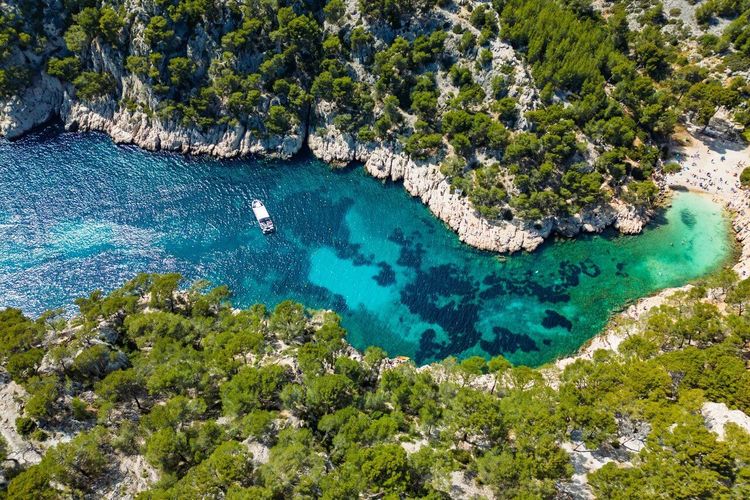
40 km south of Aix, Cassis is a Provençal fishing port that has preserved the essence of its character. The harbour, the colourful house fronts and the seafood terraces make for a pleasant scene. But it is to the east of the village that the real subject begins: the Calanques.
The Parc National des Calanques stretches over 20 km between Marseille and Cassis. These limestone fjords plunging into turquoise water make up one of the most spectacular coastal landscapes in Europe. From Cassis, three calanques are accessible on foot: Port-Miou (20 min one way, the most accessible), Port-Pin (45 min, wilder) and En-Vau (Calanque d'En-Vau, 13260 Cassis, rated 4.8/5 on Google with 29 reviews) (1h30 one way, the most beautiful, with its sheer walls and deep green water).
Boats offer tours of 45 minutes to 1h30 departing from the harbour (€18–26 depending on duration), ideal for those who do not want to hike. The view from the sea onto the cliffs gives visual access to calanques impossible to reach on foot.
An important point: between 1 July and 31 August, access to the calanques requires online booking through the Parc National website. Places are limited per calanque per day. Book several weeks in advance for En-Vau. Cassis also produces its own AOC white wine (one of the oldest in Provence): a tasting in the village rounds off the day nicely.
The Gorges du Verdon
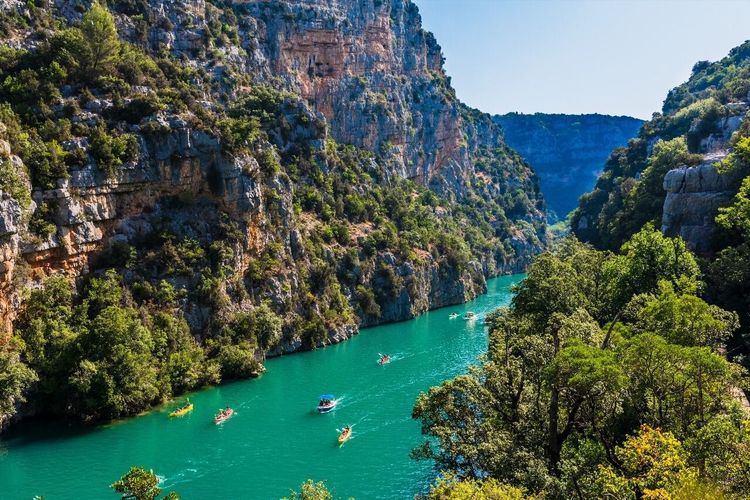
The Verdon must be earned: it takes about 1h30 by road from Aix to reach the gorges. But no other excursion in the region provides such a sense of isolation and natural grandeur.
The gorges form Europe's largest canyon: 25 km long, up to 700 metres deep, with limestone walls that shift from white to red depending on the time of day and season. The Route des Crêtes (D952, left bank) offers the best viewpoints: at Point Sublime, the Balcons de la Mescla and the belvédère de l'Artuby. Allow half a day to drive the full route, stopping at the viewpoints without rushing.
Below, the lac de Sainte-Croix (2,200 hectares) takes on a very particular turquoise colour due to its limestone bed. Pedalo and kayak rental from the village of les Salles-sur-Verdon: this is the gentlest way to paddle up into the entrance of the gorges towards the first walls. Moustiers-Sainte-Marie (Place de l'Église, 04360 Moustiers-Sainte-Marie, rated 4.4/5 on Google with 693 reviews), at the western entrance to the gorges, is listed among the most beautiful villages in France. Its faience pottery has been renowned since the 17th century, with around ten studios open to visitors. Aix-en-Provence remains the natural base for the drive, and our audio walking tour of the city makes a good warm-up the day before.
The Luberon and Its Perched Villages
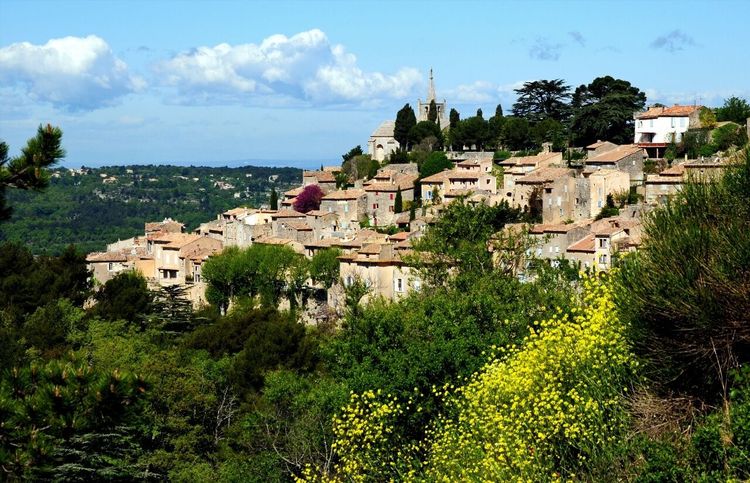
45 to 70 km north-east of Aix, the Luberon is a destination in its own right. Its villages are easily visited in a day from Aix by car.
Gordes is often described as the most photogenic village in Provence, which is hard to dispute when you see its ochre stone houses tumbling down the rock face. The Abbaye de Sénanque (Route de Sénanque, 84220 Gordes, rated 4.5/5 on Google with 8,782 reviews), 4 km from the village, provides the region's iconic lavender scene (in bloom from mid-June to late July). Arrive early: tour groups begin arriving from 9:30am.
Roussillon is built from ochre: its houses, cliffs and paths come in shades of red, orange and yellow found nowhere else in France. The sentier des Ocres (1-hour loop) winds through the old quarries and plunges into the heart of the natural pigment. Wear shoes you do not mind getting dirty: ochre permanently stains light-coloured fabric. Entrance: €3.
Lourmarin, in the southern Luberon, is livelier and less touristy. Its Friday morning market is well attended by locals: hill honey, goat's cheese, artisan soaps. Albert Camus is buried in the village cemetery, without a prominent plaque or signage. A discreet pilgrimage for those who know the author.
Family Activities and Outdoor Sports
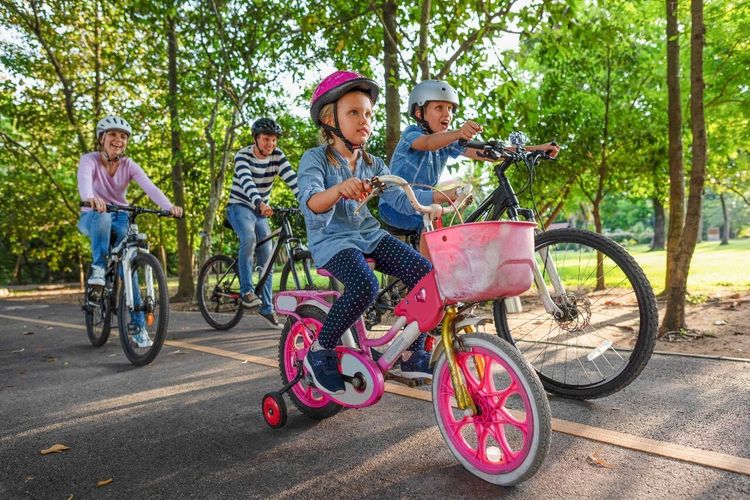
The surroundings of Aix-en-Provence offer a wide range of activities for families and outdoor enthusiasts.
The Carrières de Lumières are suitable from age 4–5. The projection illusions inside the giant paintings captivate children even more than adults, making them an excellent option for days when you need to please everyone. For water parks, the Aqualand at Saint-Cyr-sur-Mer (50 km south) is the closest to Aix, open from mid-June to early September with 25 attractions. Canoe descents on the Durance departing from Pertuis or Manosque are suitable for families with children aged 6 and over on the calm sections in summer.
For cyclists, the massif de l'Étoile between Aix and Marseille offers 120 km of marked trails for mountain bikes. Rental shops in Aix offer electric bikes to reach the first slopes of Sainte-Victoire without effort. Climbing is well represented on Sainte-Victoire, with routes open year-round for all levels from grade 3 to 8b.
In the evenings in Aix itself, Parc Jourdan (Boulevard du Roi René, 13100 Aix-en-Provence, rated 4.1/5 on Google with 3,320 reviews) (children's play areas, lawns, pétanque) is the meeting place of local families. Combine it with an ice cream from an artisan glacier on Cours Mirabeau.
Gastronomy and the Flavours of Aix
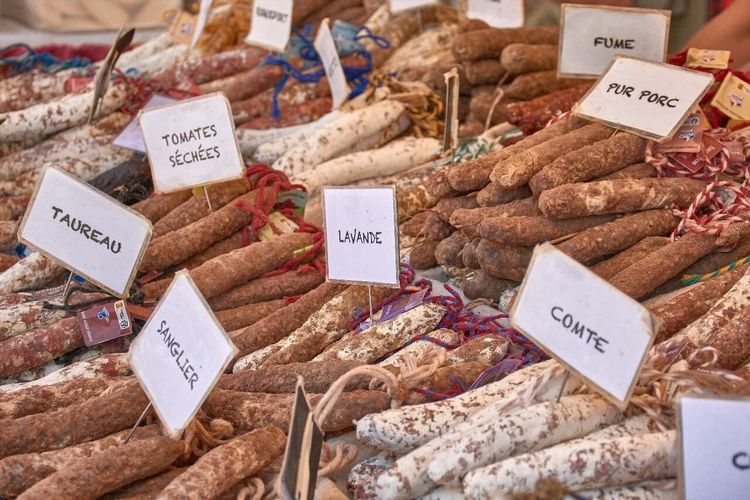
Aix has a strong culinary identity, built around a few emblematic products.
Calissons are Aix's worldwide ambassador. These oval confections made from almond paste and candied melon, glazed with royal icing, have been made in the city since the 15th century. The house of Léonard Parli (35 Avenue Victor Hugo, 13100 Aix-en-Provence, rated 4.5/5 on Google with 229 reviews) (founded in 1874, Avenue Victor Hugo) and Roy René (Cours Mirabeau) are the two historic addresses. Expect to pay €40–55 per kilo depending on size. Buy one box to give away and another to keep for the journey.
The Saturday morning market at the Place de l'Hôtel de Ville is the most comprehensive: fresh Provençal herbs, Alpilles sheep's cheese, olive oil from the Vallée des Baux, tapenade, anchoïade. Arrive before 9:30am: by 1pm the producers have packed up and the best items have long since sold out.
For restaurants, Cours Mirabeau is touristy with cooking that is often unremarkable. The best local addresses are concentrated in the lanes around the place des Cardeurs and the rue de la Couronne. Our article on the culinary specialities of Aix-en-Provence details the addresses and seasonal products.
Practical Information
When to visit. April–May and September–October are the best windows: mild temperatures (20–25°C), beautiful light, manageable crowds. July–August is hot (35–40°C regularly) and very busy, but it is also the season of the Festival International d'Art Lyrique d'Aix, one of Europe's finest opera festivals with performances in historic courtyards. Winter is quiet and considerably cheaper. Check our events calendar for Aix-en-Provence for the programme during your stay.
Getting there. Aix has no TGV station in the city centre. The TGV stops at Aix-TGV station, 15 km from the centre, connected by shuttle in 20 minutes. From Paris Gare de Lyon: 3h10. By car from Marseille: 30 min on the A51. From Nice: 1h40 via the A8.
Getting around the area. A car remains almost essential for the surrounding area. The regional Zou! network serves Cassis, Marseille and les Baux-de-Provence with acceptable weekday frequencies. Seasonal shuttles link the centre of Aix to Sainte-Victoire in July–August.
Budget. Allow €80–120/night for decent city-centre accommodation, €25–35 per person for lunch. Entry to the main sites ranges from €6 to €17: Cézanne's studio €9.50, musée Granet €6, château des Baux €12, Carrières de Lumières €16.50.
FAQ
How Long Do You Need to Visit Aix-en-Provence?
Two days are enough to see the essentials of the city: Cours Mirabeau, Vieil Aix, the cathédrale Saint-Sauveur and Cézanne's studio. If you want to combine the city with the nearby surroundings — the Calanques de Cassis, les Baux-de-Provence and Sainte-Victoire — allow 3 to 4 days. A full week lets you explore the Luberon, the Verdon and Cassis without rushing, leaving time for markets and meals.
What Is the Best Time to Visit Aix-en-Provence and Its Surroundings?
To make the most of activities in Aix-en-Provence and its surroundings, April–May and September–October are the ideal periods to combine good weather, manageable crowds and off-season prices. The Provençal light is particularly beautiful in autumn over Sainte-Victoire and in the Luberon. July–August brings heat and tourists, but it is also the season of the Festival d'Art Lyrique in July. Winter is mild and offers a more authentic city experience, free from the summer crowds.
Are the Carrières de Lumières Suitable for Children?
Yes, from age 4–5 for most children. The darkness and projections can be overwhelming for very young children, but the majority find the experience fascinating. Youth ticket around €13, free for children under 7. The approximately 40-minute continuous loop format works well for families. Combine it with a visit to the château des Baux for a full day without having to return to the car between the two sites.
Can You Visit the Calanques from Aix-en-Provence in a Day?
Absolutely. Cassis is 40 minutes from Aix by car. Leave early (before 9am), park at the Bestouan car park and walk to Port-Miou (20 min on foot) or Port-Pin (45 min). The calanque d'En-Vau requires 3 hours round trip and mandatory booking in high season through the Parc National des Calanques website. Opt for a boat from the harbour if you are travelling with young children or people who do not walk much.
How Do You Get Around Aix-en-Provence without a Car?
To explore around Aix-en-Provence without a car, the Zou! line serves les Baux-de-Provence (1h15 from Aix bus station), Cassis and Marseille. Seasonal shuttles serve Sainte-Victoire from Aix city centre in July–August. For the Luberon and the Verdon, the best options remain organised minibus excursions departing from Aix (half-day or full day), allowing you to visit Gordes, Roussillon and the gorges without driving. An electric rental bike also lets you reach the first trails of Sainte-Victoire from the city.
What Are the Must-Dos for a 2-Day Stay in Aix-en-Provence?
For two well-structured days: Day one, market at Place Richelme in the morning (Tuesday, Thursday or Saturday), a stroll through Vieil Aix with the cathédrale Saint-Sauveur, lunch at place des Cardeurs, afternoon on Cours Mirabeau and at the musée Granet. Day two, Cézanne's studio from opening time, then an excursion to les Baux-de-Provence and the Carrières de Lumières in the afternoon. With a full third day, the Calanques de Cassis are an absolute must.
Conclusion
The best activities in Aix-en-Provence and its surroundings are best savoured by taking your time. The city rewards slowness: an hour watching the mossy fountains of Vieil Aix, a market morning, an afternoon following Cézanne's footsteps through the lanes. And once the city has taken hold of you, its surroundings take over with the white rock of Sainte-Victoire, the turquoise sea of the Calanques, the ochres of the Luberon and the depths of the Verdon.
To start exploring without missing a thing, the Ryo audio guide for Aix-en-Provence accompanies you across 24 points of interest in a 2h20 walk — a way to get a feel for the city before setting out to discover its surroundings.
À lire également