Créé par Romane, le 17 nov. 2026
Votre guide Ryo
Aix-en-Provence, France
The city of fountains
Parcours audioguidé pour visiter Aix-en-Provence en 1 jour
This visit to Aix-en-Provence invites you on a refined stroll along avenues lined with centuries-old plane trees, past golden-stone facades and the constant murmur of its fountains. It highlights the elegance of the private mansions in the Mazarin district, the pictorial legacy of Paul Cézanne, and the Mediterranean art de vivre that animates the sunny terraces of Cours Mirabeau. A simple and immersive way to explore the historic center at your own pace, between Baroque prestige and the light of Provence!
Quand partir à Aix-en-Provence ?
Jan.
6°
7
Feb.
7°
5
March
10°
6
April
13°
8
May
17°
8
June
21°
5
July
24°
3
Aug.
24°
4
Sept.
20°
7
Oct.
16°
9
Nov.
10°
9
Dec.
7°
7
Aix-en-Provence enjoys a privileged Mediterranean climate, characterized by hot, dry summers where the thermometer regularly reaches 30°C, and mild winters occasionally energized by the Mistral wind, with daytime averages around 12°C. To enjoy the charm of the fountains and the ochre facades of the Cours Mirabeau without the intensity of midsummer, the ideal periods are spring (May and June) and early autumn (September and October), offering golden light and exquisite mildness. However, July remains an unmissable event for music lovers with its famous International Festival of Lyrical Art, despite the high temperatures that invite a siesta in the shade of the plane trees.
Départ conseillé
No need to worry about where to begin! Our tours are designed as a loop, so you can jump in wherever you are. The navigation system and audio-guide will automatically adjust to your location. However, if you happen to be nearby, we do have a preferred starting point: General de Gaulle Square
Parking à proximité
Rotonde underground parking lot: 2 rue Lapierre
À savoir
During this tour, we'll pass through the gardens of the Vendôme Pavilion; admission is free, but be sure to check the opening hours. If the park happens to be closed, you can simply take Vendôme Street and then turn left onto Cours Sextius to our next point of interest.
Découvrez 25 lieux d'intérêt pour visiter Aix-en-Provence


5. Mazarin district




What to see in Aix-en-Provence on your 2h20 tour?
This 3.8 km loop takes about 2 h 20 and links 24 stops. From the Rotunda Fountain at the top of Cours Mirabeau, it crosses the Mazarin district, reaches the old town via Place Forbin and Place d'Albertas, then wanders through the lively squares of the historic centre up to Saint-Sauveur Cathedral, before heading back past the Vendôme Pavilion and the Sextius Thermal Baths. With the app in your ears, every fountain tells part of the story of the city of a thousand fountains.
Information checked in November 2026 and subject to change.
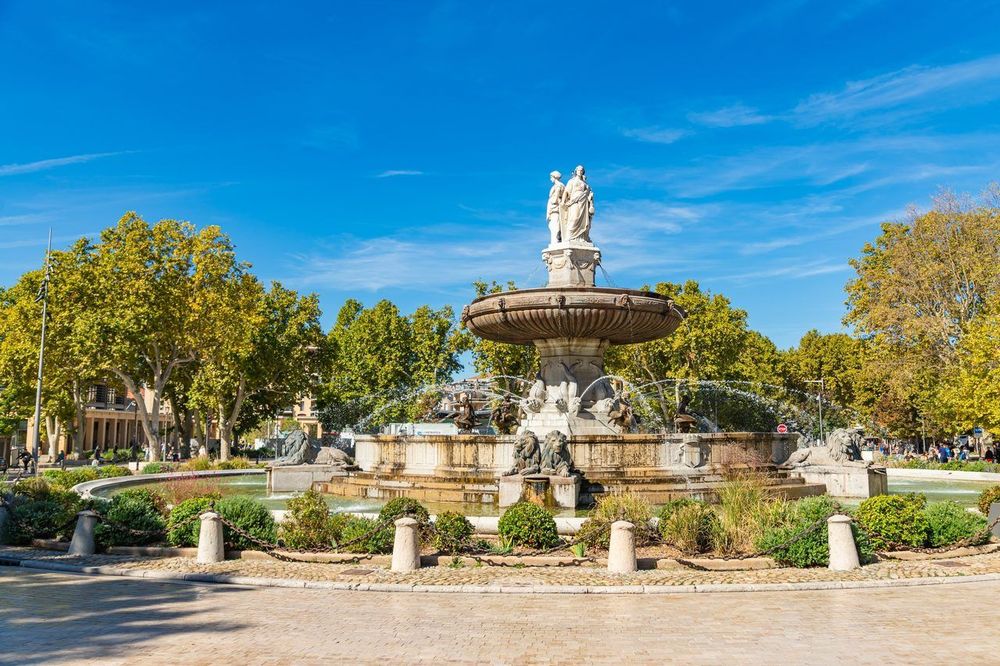
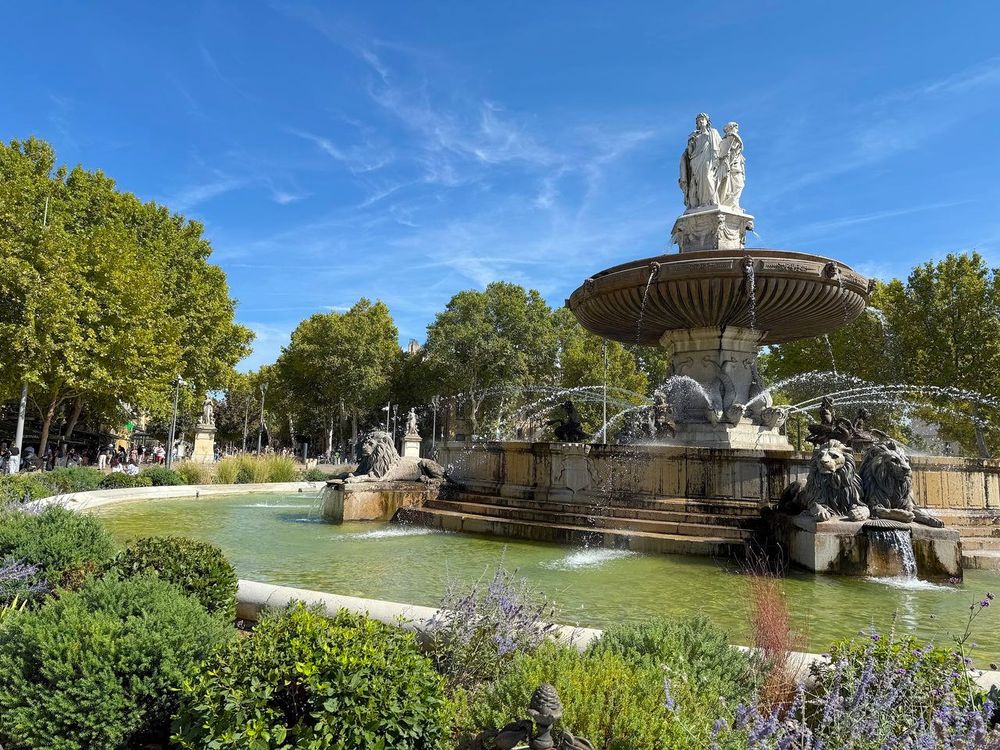
1 - Rotunda Fountain
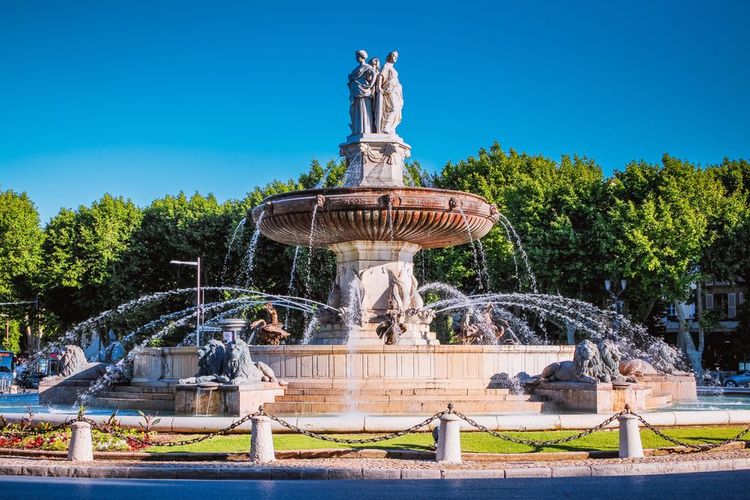
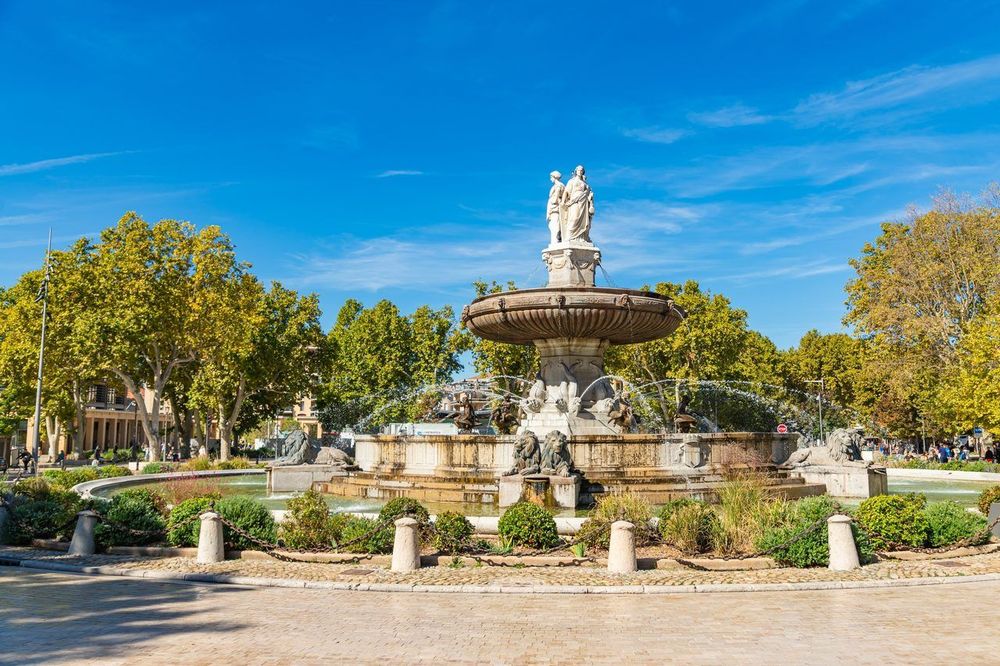
The walk begins on this vast roundabout marking the entrance to Cours Mirabeau. Its fountain, the grandest in the city, was designed in the 19th century and set flowing in 1860. Standing 12 metres tall, it bears three female figures facing Marseille, Avignon and the courthouse, representing trade, the arts and justice. Fed by the Verdon canal, it earned Aix its nickname of the city of a thousand fountains. A statue of Cézanne, born here, stands just behind you.
2 - Cours Mirabeau boulevard
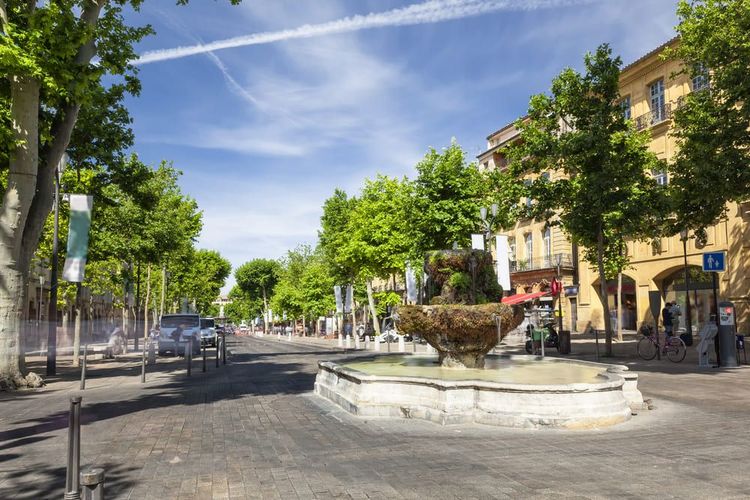
You now head up this famous avenue, laid out in the 17th century where the old ramparts once stood. Lined with grand mansions once home to the local nobility, it only took its present name in 1876, honouring the revolutionary figure Mirabeau. Running for 440 metres, it is dotted with several fountains and has drawn cafés, shops and markets since the 19th century. A tram line from Marseille even ran along it until 1947. It remains the favourite gathering place for locals in every season.
3 - Hôtel de Caumont
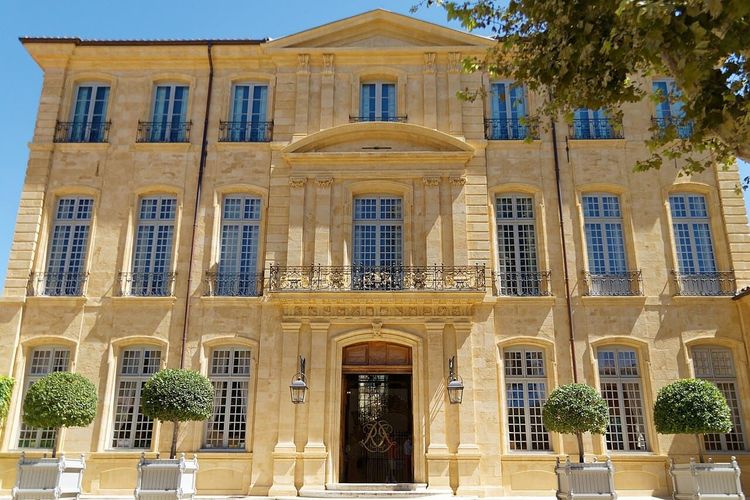
On your right stands one of the city's finest mansions, built in the 18th century for a president of the regional audit court. Listed as a historic monument, it has kept its classical façade and French-style gardens. Turned into a music conservatory in 1970, it became an art centre in 2013, hosting two temporary exhibitions a year in a beautifully restored setting. Wander through its courtyard and salons to picture the life of a wealthy Aix resident of the Enlightenment era.
Paid entry (about €19)
4 - Fountain of the Four Dolphins
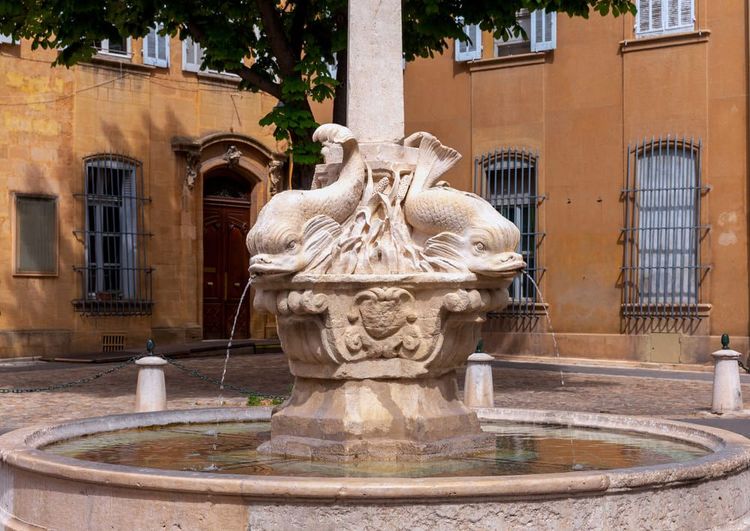
You are now standing in the middle of an elegant little square in the Mazarin district, graced by a 17th-century baroque fountain. Four carved dolphins hold up its column, topped with a pine cone that replaced, through the city's various political eras, first a fleur-de-lis and later a Maltese cross. The mansions surrounding it, including the one facing it, date from the same period. It is a peaceful setting, far from the bustle of Cours Mirabeau, well worth a quiet pause.
Everything you need to know about the Fountain of the Four Dolphins
5 - Mazarin district
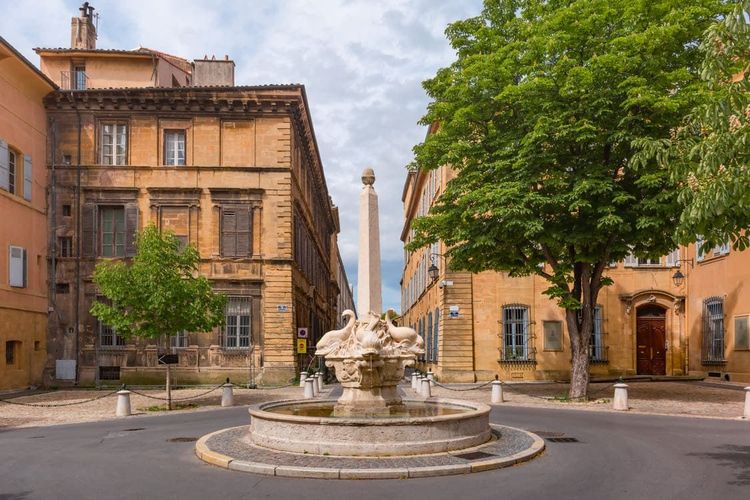
You now enter the Mazarin district, created in the 17th century by the archbishop of the same name, brother of the cardinal, to extend the city southward. Unlike the winding medieval lanes of the old centre, it follows a grid plan designed for the carriages of the nobility who settled there. Craftsmen and shopkeepers gradually mixed in alongside the great families. Museums, galleries and elegant façades now make it one of the most pleasant areas simply to wander through.
6 - Church of Saint-Jean-de-Malte and Granet Museum
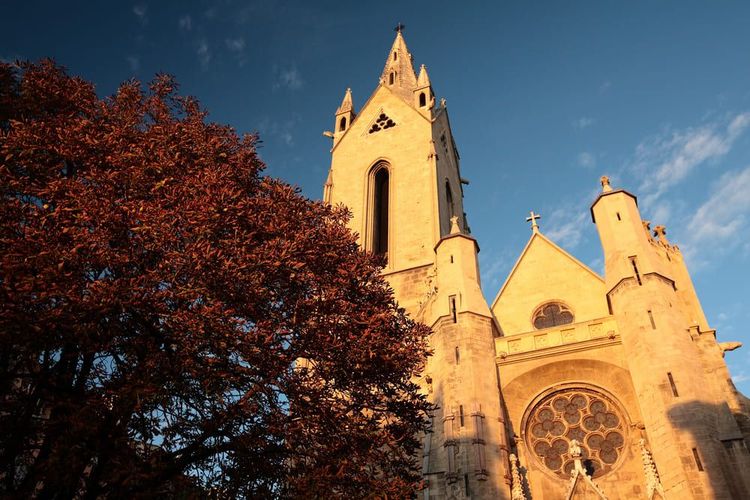
Here stands the first Gothic building in Provence, raised around 1270 as a burial place for the Counts of Provence. Its single nave and 67-metre bell tower make it the highest point in Aix. Right next door, the former palace of the Knights of Malta has housed the Granet Museum since 1838, named after the Aix-born painter who bequeathed his collection on his death. It displays over 750 works, from the Renaissance to contemporary art, including canvases by Cézanne, Picasso and Monet.
Paid entry (about €14)
Everything you need to know about the Church of Saint-Jean-de-Malte and the Granet Museum
7 - Forbin Square
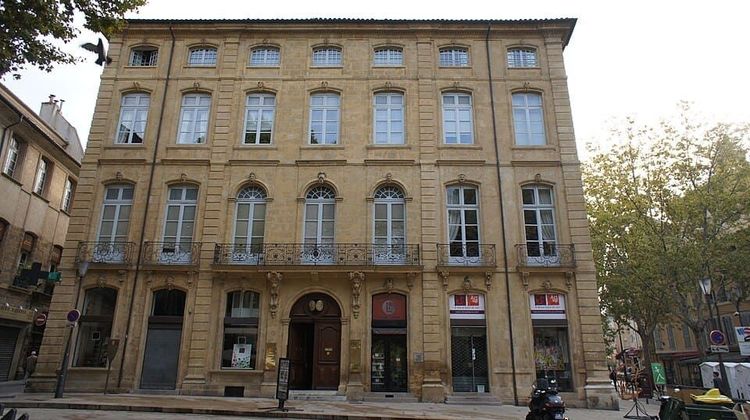
This square marks the upper end of Cours Mirabeau. Its fountain, carved by David d'Angers in 1819, portrays King René, warmly remembered as Anjou's duke and Provence's count, holding a sceptre and a bunch of muscat grapes he is said to have brought to the region. Beside it, the elegant café Les Deux Garçons, set in a 17th-century mansion, once welcomed Cézanne, Zola, Piaf and Cocteau before being rebuilt after a 2019 fire. A lively crossroads, a fine starting point for the old town beyond.
8 - Fontaine Moussue – The Mossy Fountain

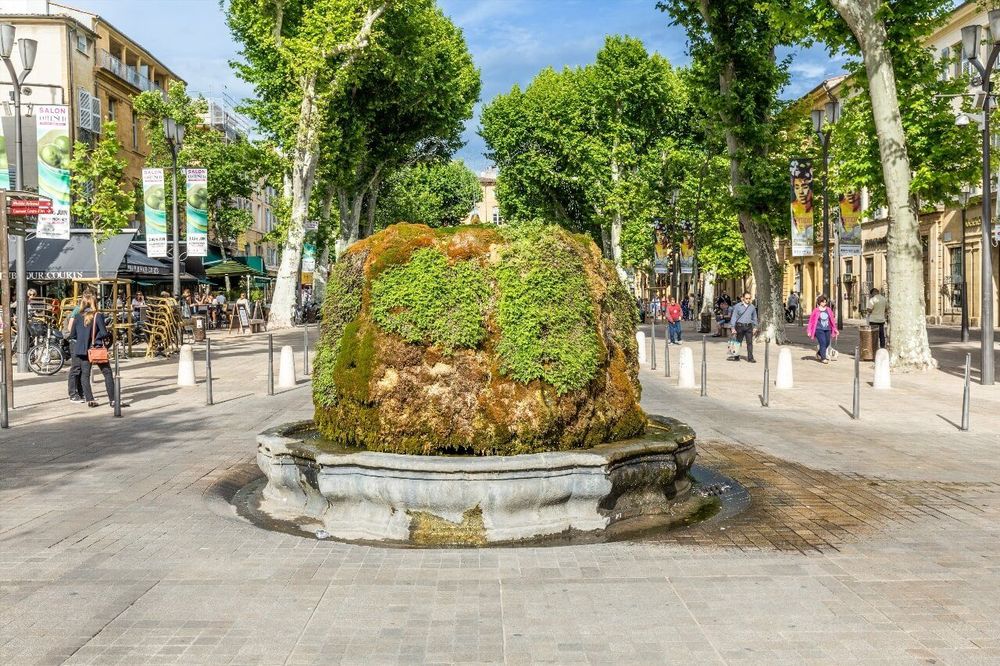
This unusual fountain owes its look to the thermal water feeding it, a constant 18 degrees all year round, which encourages various mosses to grow. Built in 1667, it was the first fountain installed on Cours Mirabeau and was long used by locals to do their laundry, since it never froze in winter. Just behind it, the Hôtel Maurel de Pontevès, built in 1648, remains the oldest mansion on the avenue, spotted by the two atlas figures holding up its balcony, and now houses the city's commercial court.
9 - Place d'Albertas - Albertas Square
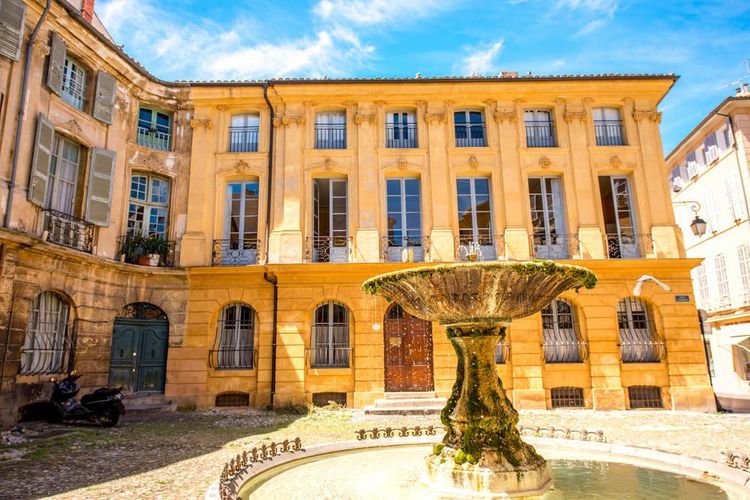
This horseshoe-shaped square, laid out from 1724 by the d'Albertas family, echoes the formal elegance of Parisian royal squares. Its fountain, added only in 1862, is now the most photographed in Aix, having appeared in several films including Cézanne et moi. The golden façades around it date from the 18th century and belonged to the d'Albertas mansion, whose family wanted an attractive open space in front of their home. Street musicians often perform here, adding a lively touch to this elegant setting.
10 - Hôtel Boyer d’Éguilles
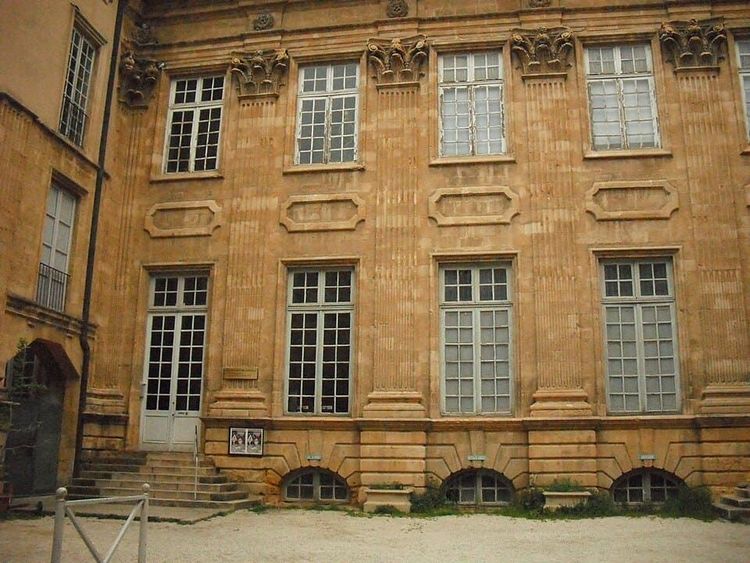
This mansion takes its name from a former advisor to the Aix parliament, whose widow began building it in 1659. Their son later enlarged it and gave it most of its interior decoration. Listed as a historic monument in 1936, it long housed the Natural History Museum before being converted into shops in 2014. Its baroque façade and carriage gateway, modelled on Parisian townhouses, reflect the splendour of the Aix nobility. Take a peek into the courtyard if the gate happens to be open.
11 - Courthouse
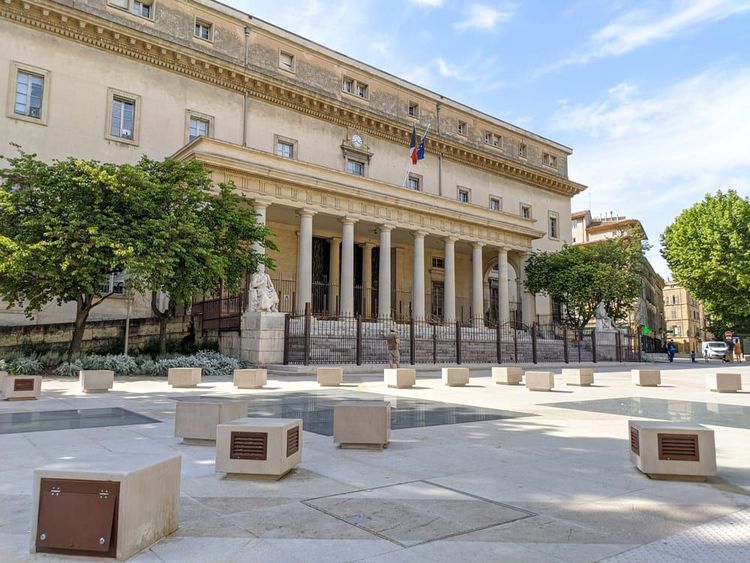
You now enter Place de Verdun, laid out as early as 1583 and today the largest square in the city. The courthouse that dominates it saw its construction interrupted by the Revolution: begun in 1787, it was only completed in 1831. Two marble statues, added in 1842, depict jurists who helped draft the 1804 Civil Code. Still in use today, the neoclassical building carries on Aix's role as the former parliamentary capital of Provence.
12 - Church of St. Mary Magdalene
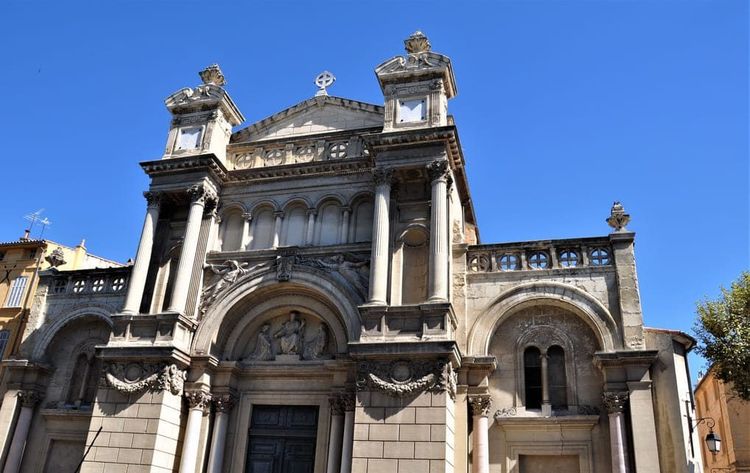
On Place des Prêcheurs, lined with 15th and 17th-century mansions, stands the Church of the Madeleine. Of Dominican origin, it was rebuilt at the end of the 17th century and only received its neoclassical façade in 1860. It was here that Cézanne was baptised in 1839. Opposite, a monumental fountain from 1757 is topped with an eagle holding a globe, while a jacquemart figure dressed as a Chinese character strikes the hours on a nearby house, a tradition dating back to the 19th century.
Everything you need to know about the Church of Saint-Mary Magdalene
13 - Richelme Square
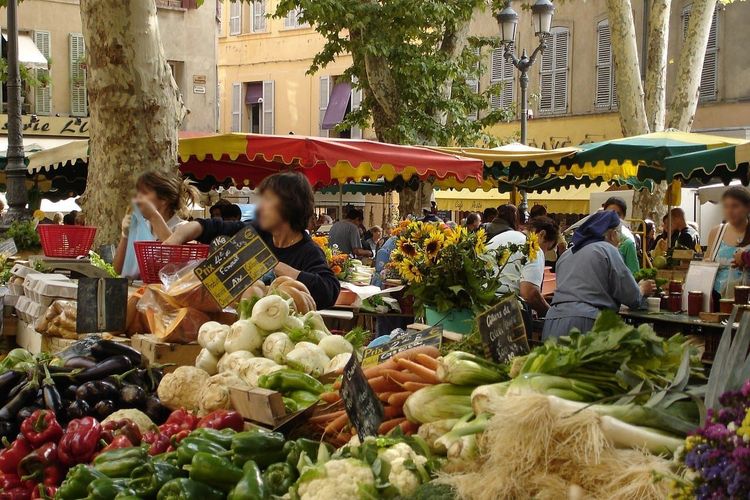
A market square par excellence, Place Richelme hosts Aix's Provençal market beneath its plane trees. It takes its name from the niece of a 19th-century local opera singer and actually results from the merging of two older squares. Unusually for Aix, it has no fountain at all, but holds a small shrine dedicated to Saint Roch, set up in 1849 on the corner of the old grain hall, now a library. Look up: the city counts about a hundred such shrines at its street corners.
14 - Town Hall square
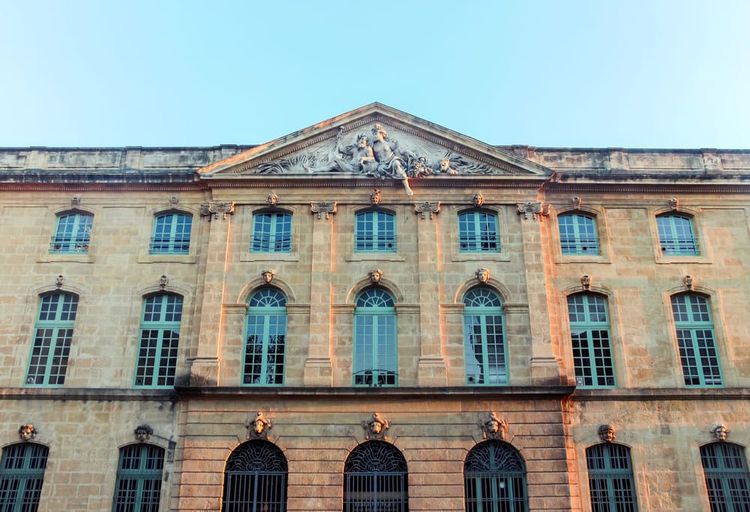
You are now on one of the finest squares in old Aix, overlooked by the Clock Tower, raised in 1510 on a Roman base. It replaced an earlier astronomical clock known as the Seven Planets clock, four of whose statues still survive. The Town Hall, rebuilt in the 17th century along the lines of Italian palaces, shows off a classical façade and a courtyard with ornate wrought-iron gates. At its centre, a flower-decked fountain from 1755 completes this listed ensemble, brought to life by its flower market.
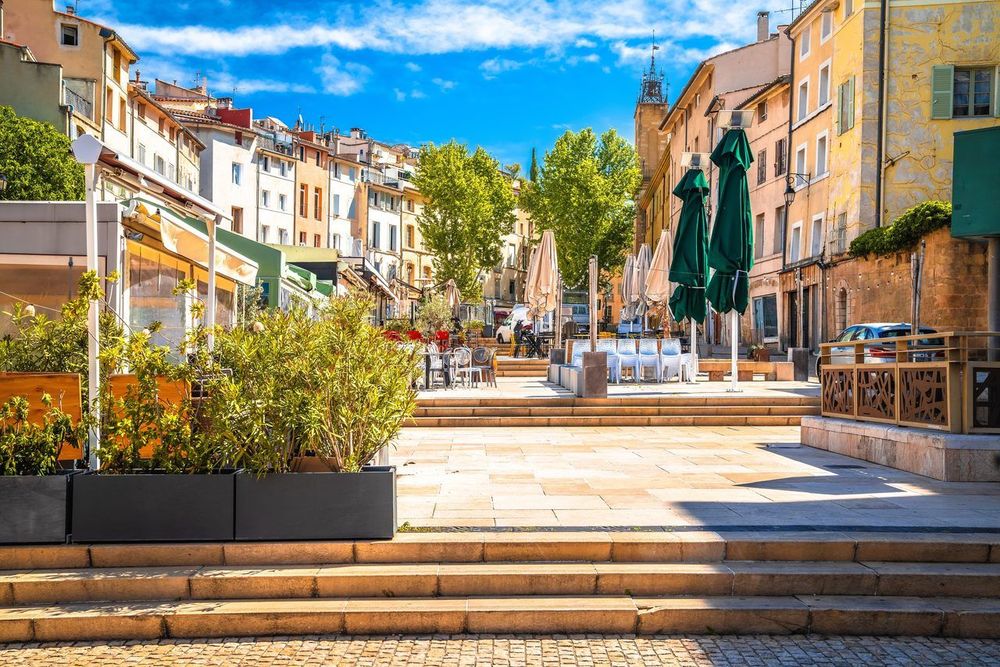
15 - Forum des Cardeurs - Carders' Forum
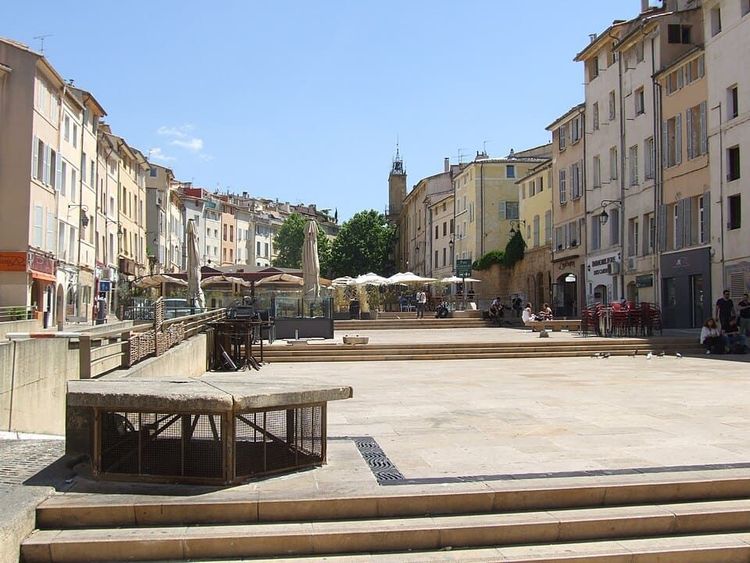
This large pedestrian square takes its name from an old textile trade, wool carding, once practised here in what was then the city's Jewish quarter in medieval times. It was created in 1963 on the site of run-down housing, then fully renovated in 2010, and is now lined with restaurants and terraces, making it one of the liveliest spots in old Aix, especially buzzing in the evening.
16 - Museum of Old Aix
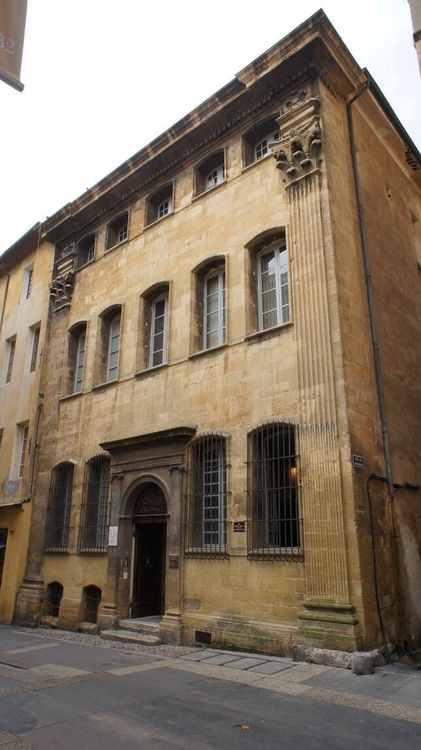
This museum occupies a 17th-century mansion, bequeathed to the city in 1922 by its last owner along with her entire collection. Opened in 1932, it traces the history and folk traditions of Aix and Provence through period furniture, faience, santon figurines, puppets and costumes. It offers an intimate pause in a refined setting, a good way to grasp the Provençal way of life before continuing through the old town.
Paid entry (about €5)
17 - Tapestry Museum
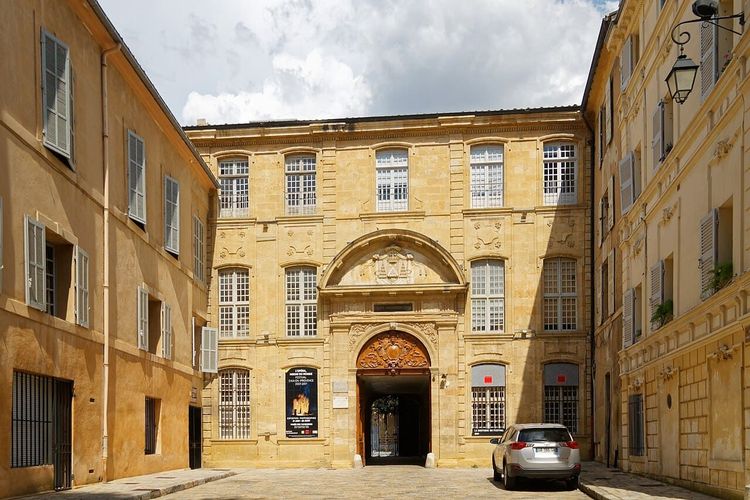
The former Archbishops' Palace, built between 1650 and 1780 on a site occupied since the early Middle Ages, became home to the Tapestry Museum in 1909. It holds precious 17th and 18th-century tapestries gathered by the archbishops, alongside temporary exhibitions of contemporary art. Every summer since 1948, its courtyard welcomes a major international opera festival, among the continent's most renowned, which also spills over into several other squares across the city.
Paid entry (about €5)
18 - Saint-Sauveur cathedral
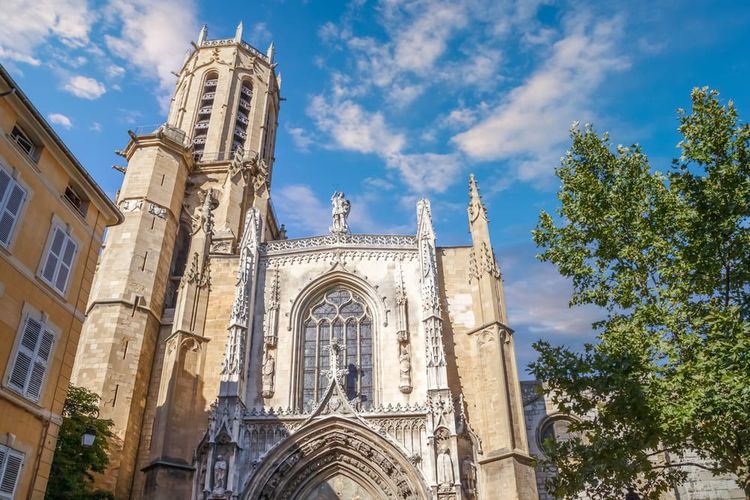
Saint-Sauveur Cathedral stands on the site of the old Roman forum of Aquae Sextiae, and its octagonal bell tower even reuses the foundations of a 5th-century baptistery. Rebuilt from the 11th century onward and reworked over the centuries that followed, it combines Romanesque, Gothic and Baroque styles across its three naves. Its 12th-century Romanesque cloister and the famous Burning Bush triptych, a 15th-century masterpiece, rank among its most treasured works, both listed as historic monuments.
Free entry
19 - Joseph Sec Monument
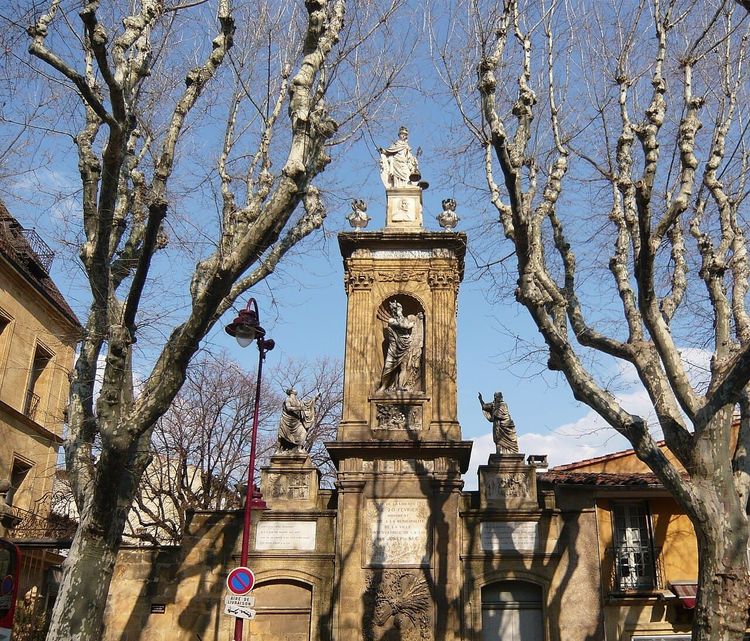
This curious funerary monument was erected in 1792 by Joseph Sec, a wealthy Aix timber merchant won over to revolutionary ideas, to celebrate the importance of the law. Its façade blends biblical and revolutionary symbols, crowned by a statue of Justice. Inside, a small garden holds seven statues of Old Testament figures carved by Pierre Pavillon. A rare survivor of the Revolution's destructions, it has been listed as a historic monument since 1966.
20 - Tourreluque

The only surviving remnant of the medieval ramparts that once encircled the city, this 14th-century tower owes its Provençal name to its original watchtower function. Aix kept its fortifications until 1848, but only this corner tower survived their demolition. Converted into a gunpowder store after the Revolution, it still bears the machicolations through which lookouts once watched over the surrounding area and could fend off attackers.
21 - Émile Zola
This quiet street recalls that young Émile Zola grew up in Aix, where his family settled in 1843 when he was only 3 years old. It was here that he struck up a friendship with Cézanne while still at school. Later a leading figure of naturalism, he owes his fame to his Rougon-Macquart series and to his involvement in the Dreyfus affair, which even earned him a prison sentence. A little-known but formative chapter in the childhood of one of France's great writers.
22 - Vendôme Pavilion
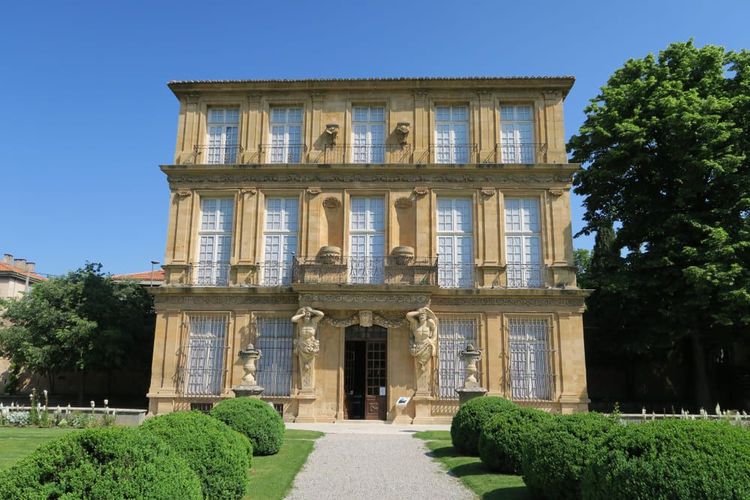
This elegant 17th-century folly was built for the Duke of Vendôme, who wanted to offer a discreet residence to Lucrèce de Forbin Solliès, the woman he loved. Passing through several owners, the building was restored in 1906 by Henri Dobler, who later bequeathed its artworks to the city. Turned into a museum in 1954, it displays art collections spanning the 17th to the 21st century, set within a lovely French-style garden, listed as a historic monument since 1914.
Paid entry (about €5)
23 - Sextius Thermal Baths
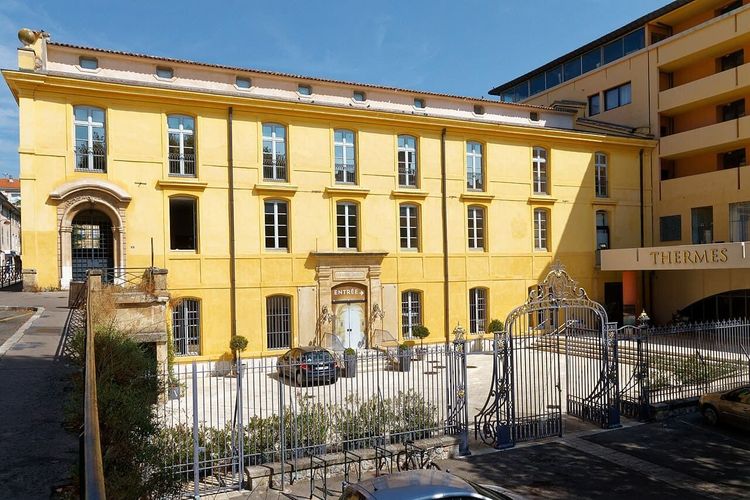
The Sextius Thermal Baths carry on Aix's spa tradition, a city founded in 122 BCE by the Roman general Caius Sextius after he discovered a hot water spring here. The city's name, Aix, actually comes from the Latin Aquae, meaning water. The first Roman baths, built in the 1st century, were destroyed and then forgotten for centuries, before being rediscovered by chance in the early 18th century. Today's building, devoted to wellness, keeps alive a tradition more than two thousand years old.
24 - Place des Tanneurs - Tanners' Square
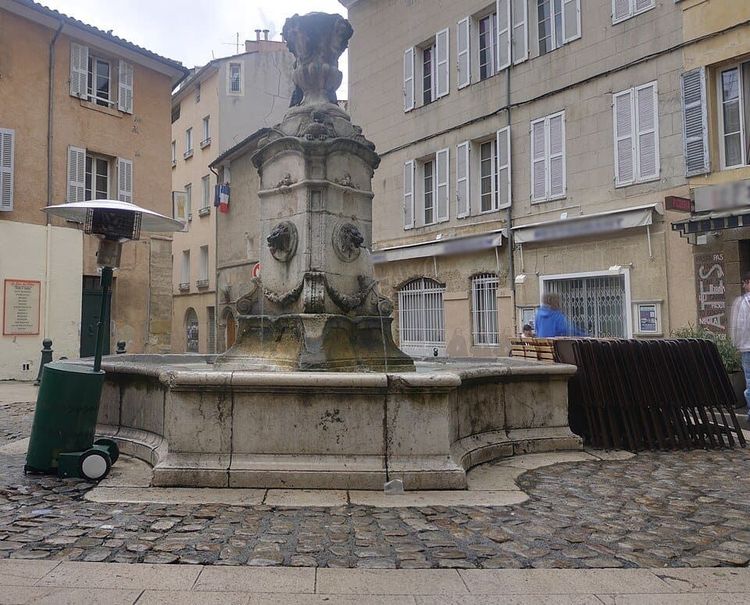
The final stop on this walk, Place des Tanneurs takes its name from the leather craftsmen who once worked here, making the most of the nearby water supply. Its fountain, first built in 1761 by Georges Vallon and rebuilt a century later, still graces its centre. The neighbouring street was sealed off in 1664 to contain an epidemic, which is how it kept its unusual name ever since. A peaceful, typical square on which to end your stroll through old Aix.
What to do in Aix-en-Provence in 2 or 3 days?
The audio-guided walk covers 3.8 km and 24 stops in about 2 h 20, looping from the Rotunda Fountain. With 2 or 3 days in town, Aix-en-Provence stretches on through Cézanne's footsteps and into the Provençal countryside beyond.
The next day, head up the Lauves hill to the studio where Cézanne worked until his death in 1906: his smock, his skulls and the props from his still lifes are still in place. The studio opens only part of the year, by guided tour and on booking only, so check the dates in our guide to visiting Cézanne's studio.
If you stay one more day, head for the turquoise inlets of Cassis, for a day in the open air away from the cobbled streets. Our guide to visiting Aix-en-Provence in 3 days sets aside the third day for the surroundings, from Cassis to Sainte-Victoire or the Luberon.
Which neighbourhoods does the tour cross?
Looped into one walk, the route starts on Cours Mirabeau, dips into the medieval old town, then loops back through the Vendôme Pavilion quarter.
It opens at Rotunda Fountain and runs the length of Cours Mirabeau (stops 1 and 2), before crossing south into the Mazarin district, laid out on a grid in the 17th century around the Hôtel de Caumont, the Fountain of the Four Dolphins and the Church of Saint-Jean-de-Malte, next to the Granet Museum (stops 3 to 6).
The walk crosses back over Cours Mirabeau into the medieval old town, through Forbin Square and Place d'Albertas, one of the finest squares in town (stops 7 to 10), then on past the Courthouse and the Church of St. Mary Magdalene. It finally crosses the lively squares of the old centre, from Richelme Square to Town Hall Square and the Forum des Cardeurs, up to Saint-Sauveur Cathedral and its neighbouring museums (stops 11 to 18).
The final stretch heads back west, from the Joseph Sec Monument to Tourreluque, before reaching the Vendôme Pavilion and its French-style garden, then the Sextius Thermal Baths and Place des Tanneurs, which closes the loop (stops 19 to 24).
How much does it cost to visit Aix-en-Provence?
Of the 24 stops on the route, five charge admission; among the others, Saint-Sauveur Cathedral and the fountain-lined squares cost nothing:
- Hôtel de Caumont, at €19 on site (€2 less when booked online), a fee that shifts with the current exhibition programme;
- the Granet Museum, next to the Church of Saint-Jean-de-Malte, whose own entry stays free, at €14;
- the Museum of Old Aix, at €5;
- the Tapestry Museum, at €5;
- the Vendôme Pavilion, at €5 for the interior, its gardens being free.
Beyond these five tickets, a morning among the fountains, the quiet streets of the Mazarin district and the Provençal market costs nothing.
Information checked in November 2026 and subject to change.
Where to stop for a bite along the tour?
A break comes naturally at Richelme Square (stop 13), where stalls at the Provençal market lay out fruit, vegetables, cheese and other local produce, facing the old grain hall turned library.
For a proper local treat, look for calissons, small boat-shaped sweets of almond paste and candied melon sold in the confectioners around Cours Mirabeau. Lined with cafés and restaurants, the Forum des Cardeurs (stop 15) then takes over for a drink or a meal on a terrace, especially in the evening and in fine weather.
What to do in Aix-en-Provence with children?
Old Aix and its dozens of fountains make for an easy family outing: a new jet of water to watch, or dip a hand into, waits at almost every corner.
At Fontaine Moussue (stop 8), the green moss covering the stone never fails to fascinate younger visitors, and nor do the four stone dolphins spouting water at the fountain of the same name, in the Mazarin district. Kids also enjoy hunting for the hidden animal among the carved capitals of Saint-Sauveur Cathedral's cloister.
Richelme Square market (stop 13) turns into a sensory game: crates of bright fruit, goat cheese and bunches of Provençal herbs, all at a child's eye level.
If little legs get tired, a tourist train that sets off from the foot of Cours Mirabeau loops around the historic centre in about forty minutes.
What should you know before visiting Aix-en-Provence?
Before setting off, two details help you avoid a closed door partway through the walk.
The route crosses the gardens of the Vendôme Pavilion, free to enter but open only at set hours. If they're closed when you pass, go round via Vendôme Street, then turn left onto Cours Sextius to pick the route back up.
On the museum side, the Granet Museum, attached to the Church of Saint-Jean-de-Malte, opens Tuesday to Sunday from midday to 6 pm, with the ticket desk closing at 5:30 pm, and stays shut on Mondays, 1 January, 1 May and 25 December.
The Museum of Old Aix, the Tapestry Museum and the Vendôme Pavilion follow a seasonal schedule instead: 10 am to 12:30 pm then 1:30 pm to 6 pm until 15 October, then 1:30 pm to 5 pm until 15 April. The first closes on Mondays, the other two on Tuesdays.
What to see around Aix-en-Provence?
Aix makes a good base for day trips, from the mountain that haunted Cézanne to the east to the Alpilles to the west.
Mont Sainte-Victoire, 15 km to the east, is the limestone massif Cézanne painted more than 80 times. The hike to the Croix de Provence (945 m) starts from the Tholonet car park: a 650 m climb over 5 km, and 2.5 to 3 hours on the way up. In summer, the massif may be closed in the afternoon because of the wildfire risk, so check conditions before setting off.
Some 30 km to the west, the village of Les Baux-de-Provence, perched on a rocky spur of the Alpilles, draws crowds, especially on summer weekends. These two outings and many more feature in our guide to activities in and around Aix-en-Provence.
Several neighbouring towns also have their own audio-guided walk, as the crow flies: Marseille, 27 km away, with its ancient port, Aubagne, 28 km away, in the footsteps of Marcel Pagnol, then Arles and its ancient arena, 68 km away, and Avignon, 69 km away, a Gothic city once a Christian capital.
What's on in Aix-en-Provence right now?
At this time of year, Cours Mirabeau, which the walk follows, puts on its festive dress.
From 13 November to 31 December, a Christmas market and a santon fair set up stalls and Provençal crafts on Cours Mirabeau. The streets and squares of the historic centre light up from 28 November to 3 January, and from 17 to 24 December, a seasonal market gathers the traditional thirteen Provençal Christmas desserts and local produce.
Information checked in November 2026 and subject to change.
Le plein d'inspirations
Explorez le monde en totale liberté, à pied au cœur des villes ou au fil des routes. Nos guides audios transforment chaque destination en une découverte culturelle immersive et unique.










FAQ for visiting Aix-en-Provence
When is the best time to visit Aix-en-Provence?
Spring and early autumn are the most pleasant times to discover Aix-en-Provence. Between May and June, then in September and October, you will enjoy mild weather with gentle temperatures and exceptional light that enhances the town's golden facades. Summer remains appealing despite the heat, especially in July with the prestigious International Festival of Lyric Art. Winter is mild, but the mistral can blow strongly. These in-between seasons let you stroll comfortably along the Cours Mirabeau and savour a coffee on a terrace without the summer crowds.
How many days do you need to visit Aix-en-Provence?
Two to three days is the ideal length to fully appreciate Aix-en-Provence. A full day lets you explore the historic centre, the Cours Mirabeau and the Mazarin quarter. With two days, you will have time to explore the sites connected to Cézanne and to soak up the atmosphere of the Provençal markets. A third day gives you the chance to discover the surrounding area or simply slow down and live at the Aix pace. The Ryo audioguide accompanies you for a streamlined tour of the town centre in just a few hours, leaving time for other discoveries.
How do you get to Aix-en-Provence?
Aix-en-Provence enjoys excellent accessibility. By train, the TGV station lies about fifteen kilometres from the centre, with regular shuttles providing the connection. The town-centre station welcomes regional trains from Marseille. By car, the A8 motorway serves the town directly. Marseille-Provence airport is around thirty minutes away by car or shuttle. From Marseille, express buses run frequently. Once there, the compact historic centre is easily explored on foot, making a car unnecessary for visiting the main tourist sites.
Where can you park in Aix-en-Provence?
Parking in the centre of Aix-en-Provence is organised mainly around several well-located underground car parks. The Rotonde and Mignet car parks, close to the Cours Mirabeau, are particularly handy for reaching the historic heart. The Cardeurs car park serves the Mazarin quarter effectively. Rates generally vary according to the length of stay and proximity to the centre. On the outskirts, you will find park-and-ride car parks that are often cheaper, connected to the centre by shuttles. On-street parking remains limited and regulated in the inner centre. Aim to arrive early in the morning to find a space more easily, especially in high season.
What are the must-sees in Aix-en-Provence?
The must-sees of Aix-en-Provence revolve around the majestic Cours Mirabeau, an iconic avenue lined with century-old plane trees and elegant facades. The Mazarin quarter reveals sumptuous private mansions, while Saint-Sauveur cathedral harmoniously blends architectural styles. The Rotonde fountain and the many other fountains punctuate your route delightfully. Cézanne's studio offers a moving immersion into the painter's world. Old Aix, with its picturesque lanes and lively squares, invites you to wander. The Ryo audioguide accompanies you so you miss none of these wonders on a narrated walk through the heart of the town.
What can you do in Aix-en-Provence with the family?
Aix-en-Provence lends itself wonderfully to family visits. Children generally love counting the fountains scattered throughout the town and spotting the cathedral's gargoyles. Parc Jourdan offers lovely green spaces to relax and play. The colourful markets, especially the one on Place Richelme, awaken the senses of the youngest visitors. Cézanne's studio often runs activities suited to children. The terraces along the Cours Mirabeau allow for welcome treat-filled breaks. The Ryo audioguide makes discovering the historic centre more fun thanks to its accessible commentary that holds the whole family's attention during the walk.
Where can you taste calissons in Aix-en-Provence?
Calissons, the emblematic sweets of Aix, can be savoured at several renowned addresses in the town centre. Traditional confectioners keep this ancestral craft alive with passion, offering these delicate diamond-shaped treats made from almonds and candied melon. You will find these historic shops mainly around the Cours Mirabeau and in the adjacent streets of the old centre. Some houses even let you watch the artisanal production. Beyond the specialist shops, many pâtisseries offer their own version of this Provençal delicacy. Do not hesitate to try different variations to appreciate the subtleties of each confectioner.
How can you follow in the footsteps of Paul Cézanne in Aix-en-Provence?
Cézanne's mark runs deep in Aix-en-Provence, his native town. His studio at Les Lauves, preserved in its original state, makes for a moving visit where the master's spirit still lingers. Golden studs set into the ground mark out a walking trail linking the significant places of his life, from his birthplace to the sites he immortalised. The Jas de Bouffan, the former family home, bears witness to his youthful years. The Bibémus quarries offer the ochre landscapes that inspired his canvases. The Ryo audioguide enriches this discovery with commentary on Cézanne's influence throughout the urban route on offer.
Why is Aix-en-Provence known as the city of a thousand fountains?
The city grew up around hot springs already exploited in Roman times, and that water has never stopped running through its streets. Over the centuries, every crossroads, every square and almost every private mansion was given its basin, so you come across them everywhere as soon as you leave the main avenues. The most spectacular is the Rotonde fountain, which closes off the Cours Mirabeau with its monumental tiered bowls.
On the Cours itself, a fountain entirely covered in moss hints at the warmth of its thermal water, while the Nine Cannons and the bust of King René punctuate the walk. In the Mazarin quarter, the Four Dolphins fountain sits at a quiet crossroads, and Place d'Albertas offers one of the loveliest settings in town. The Ryo audio guide offers a dedicated Aix-en-Provence route that links these fountains and tells their story.
Which museums are worth visiting in Aix-en-Provence?
The Granet Museum, housed in a former palace of the Order of Malta facing the Saint-Jean-de-Malte square, brings together old master painting, sculpture and a fine body of modern art, complemented in a nearby chapel by a collection dominated by the great names of the twentieth century. It is also where you can see several canvases by the city's most famous painter, in a display that places them among his contemporaries.
The Hôtel de Caumont, an eighteenth-century mansion restored with its drawing rooms and formal garden, hosts temporary exhibitions and a very pleasant tea room. The Pavillon de Vendôme, surrounded by clipped box hedges, and the collections housed in the former archbishop's palace around its tapestries round out the choice, while the Camp des Milles memorial, on the outskirts, offers a historical visit of an entirely different nature.
What can you do in Aix-en-Provence and the surrounding area?
In town, the Cours Mirabeau stretches 440 metres with its plane trees, the 1860 Rotonde fountain and the King René fountain, a short walk from the Musée Granet and its Cézanne section. In Old Aix, the Place Richelme market runs every morning except Monday, and Saint-Sauveur Cathedral houses a 5th-century baptistery and a Romanesque cloister.
Within 80 kilometres lie Mont Sainte-Victoire, the Luberon villages, the calanques of Cassis, Les Baux-de-Provence and the Verdon Gorge.
It is all in our guide to activities in and around Aix-en-Provence.
Which events should you not miss in Aix-en-Provence throughout the year?
From late March to mid-April, the Easter Festival brings big names in classical music to town for several weeks, with paid admission. In December, Aix lives to the rhythm of a Provençal Christmas.
During the last two weeks of the year, the free 13 Desserts market gathers around forty artisans, producers and farmers selling traditional treats. In the final week of December, the Santons Fair, born in 1934 when Mr Fouque and his son came to sell their handmade figurines, showcases the skills of Aix's santon makers, also free of charge.
Find the dates in our selection of the best events in Aix-en-Provence.
What can you see in Cézanne's studio and how do you plan your visit?
On the Chemin des Lauves, Cézanne worked from 1902 until his death in 1906 in a studio of about 50 m², with a 7.5-metre ceiling and a north-facing bay window. Skulls, gin bottles, papier-mâché fruit, his easel and paint-stained smock are still in place.
No original painting is on display, so pair it with the Musée Granet, ten minutes away on foot. Visits are by guided tour only, in French or English, lasting about an hour, and booking is essential; the garden is free to wander.
Plan your visit with our guide to Cézanne's studio in Aix-en-Provence.
Which itinerary should you follow to discover Aix-en-Provence in two or three days?
Day one is spent on foot: the Cours Mirabeau and its fountains, Place d'Albertas, Place Richelme and Place de l'Hôtel-de-Ville, Saint-Sauveur Cathedral and the Mazarin quarter. Day two follows in Paul Cézanne's footsteps, from his studio to Mont Sainte-Victoire, with the Musée Granet or the Pavillon de Vendôme depending on time.
A third day opens up the surroundings: Sainte-Victoire, the calanques of Cassis, the Luberon or a wine estate dotted with sculptures. From Marseille, Aix is only 35 to 45 minutes by regional train.
Pick your pace with our itineraries to visit Aix-en-Provence in 2 days and to visit Aix-en-Provence in 3 days.
How can you make the most of a romantic stay in Aix-en-Provence?
Aim for late afternoon on the Cours Mirabeau, when golden light washes over the façades, then wander through the Mazarin quarter to the peaceful Four Dolphins fountain. The Hôtel de Caumont with its formal garden and the Pavillon de Vendôme with its atlantes offer quiet breaks.
For shared experiences, create your own perfume in one to one and a half hours, visit a wine estate where vines and sculptures sit side by side, and finish with a hike to a viewpoint over Mont Sainte-Victoire.
Build your getaway with our guide to visiting Aix-en-Provence as a couple.
Vos commentaires, idées et suggestions
Aucun avis pour le moment