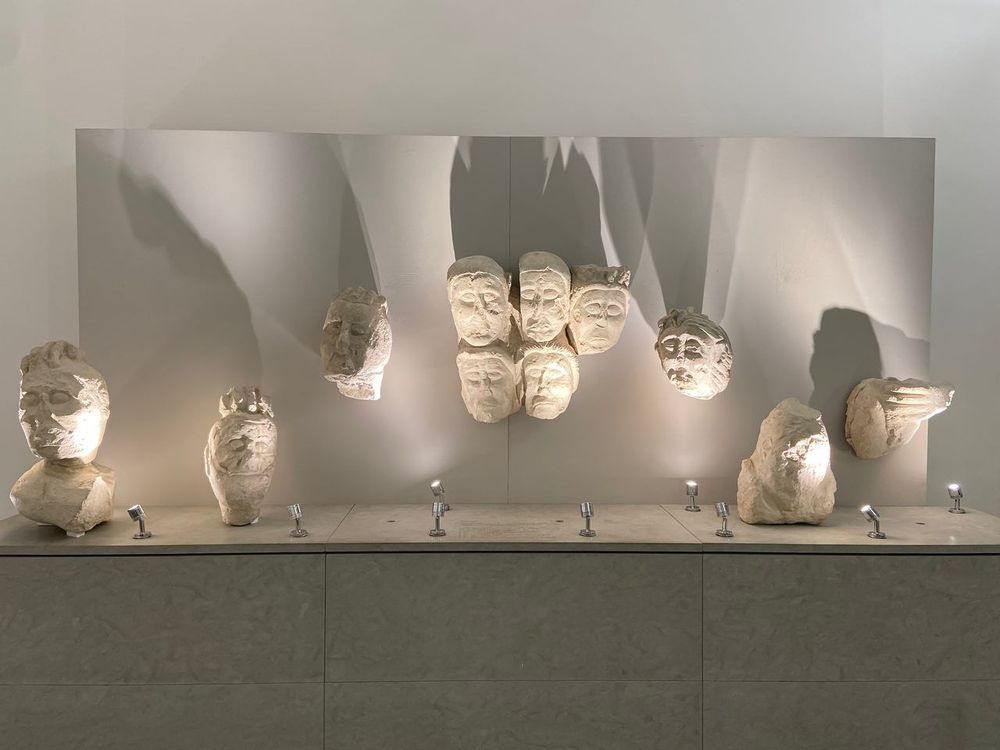
© Shutterstock
 Votre guide Ryo
Visiting Aix-en-Provence in 3 Days: Complete Itinerary 2026
Three days is all it takes to exhaust the mystery of the Cours Mirabeau without ever quite tiring of it. Visiting Aix-en-Provence in 3 days means accepting the need to slow down: this city of ochre and limestone is best savoured at a gentle pace, among century-old plane trees and 17th-century façades. Aix-en-Provence is one of the most water-rich cities in France, in the most literal sense: more than thirty fountains enliven its squares and streets, fed by springs that were already flowing in Roman times. Paul Cézanne was born here in 1839 and painted the Sainte-Victoire mountain dozens of times without ever tiring of its bluish outline. Ryo's audio-guided tour of Aix-en-Provence is designed precisely for this kind of unhurried pace, with commentary that pauses at every fountain without ever rushing you along.
In three days, you will have time to push open the door of a studio left almost exactly as it was since the painter's death in 1906, to come across a full-scale Calder sculpture among the rows of vines on a wine estate, to dip your feet in 34°C water drawn by the Romans two thousand years ago, and to leave with your arms full of calissons bought at a century-old confectionery. This guide sets out a day-by-day itinerary, from the Cours Mirabeau to the calanques of Cassis, with addresses, budget advice, and the best time of year to visit.
Why Visit Aix-en-Provence in 3 Days
Aix-en-Provence was founded by the Romans, who established Aquae Sextiae in 122 BC around a thermal spring already exploited by the Celto-Ligurians. The city later became the capital of the County of Provence, then the favourite residence of King René of Anjou in the 15th century — the very king who introduced muscat grapes and gave his name to one of the fountains on the Cours Mirabeau. In the 17th century, the Parliament of Provence was established here, and the local nobility built the townhouses that still shape the historic centre today.
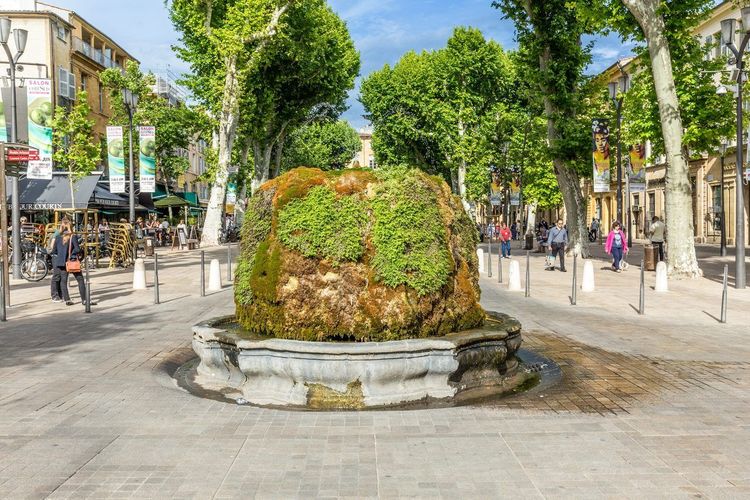
It is nicknamed the city of a hundred fountains, even if the tourist office counts closer to forty on public land. They punctuate almost every crossroads in the historic centre, some covered in moss for decades thanks to the warm water that flows through them continuously. This omnipresence of water gives the city a particular soundscape: you hear Aix-en-Provence before you see it.
Paul Cézanne was born here in 1839 and died here in 1906, never truly leaving his hometown despite his back-and-forth trips to Paris. His studio, his painting grounds at the foot of the Sainte-Victoire mountain, and nearly 130 bronze studs set into the pavements of the Vieux Aix — which the city has named the Cézanne trail — allow visitors to literally follow in his footsteps through the historic centre. Few French cities offer such a direct and unbroken link between a major painter and the urban landscape he depicted.
How long should you plan to spend? Three days is the ideal length: one day for the Vieux Aix and the Cours Mirabeau, one for the museums and Cézanne's legacy, and a final day for the surrounding area (Sainte-Victoire, Cassis, or the Luberon). If you only have a weekend, focus on the first two days and save the excursions for a future trip. The layout of Aix-en-Provence makes things easier: the historic centre fits within the oval traced by the old ramparts, entirely walkable in just under an hour from end to end.
Day 1: The Cours Mirabeau and the Vieux Aix
The Cours Mirabeau and Its Iconic Fountains
Start with the Cours Mirabeau, the 440-metre avenue that symbolically separates the Vieux Aix from the Mazarin quarter.
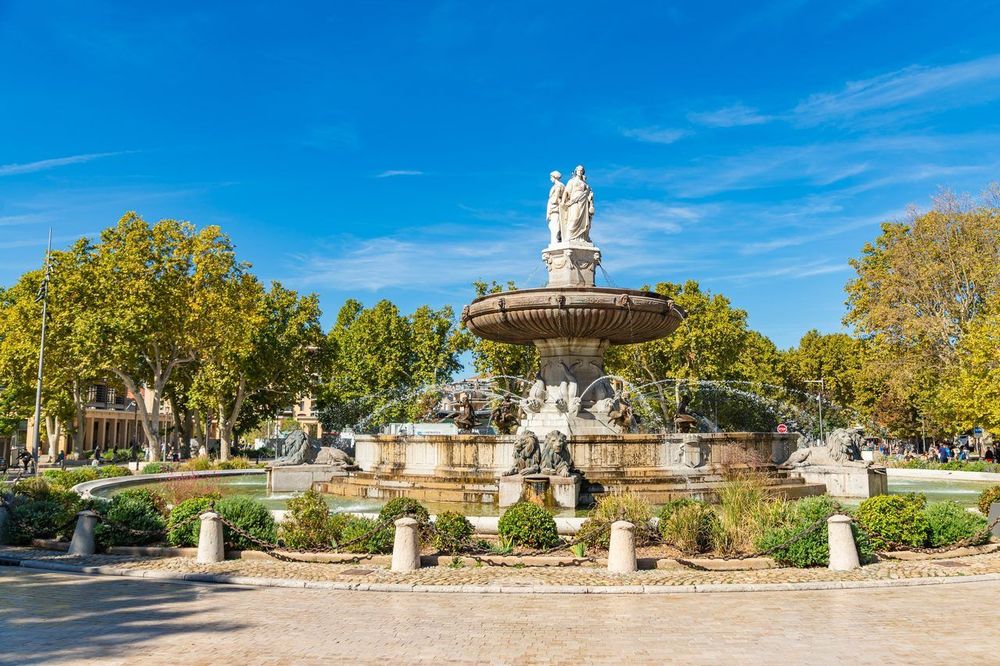
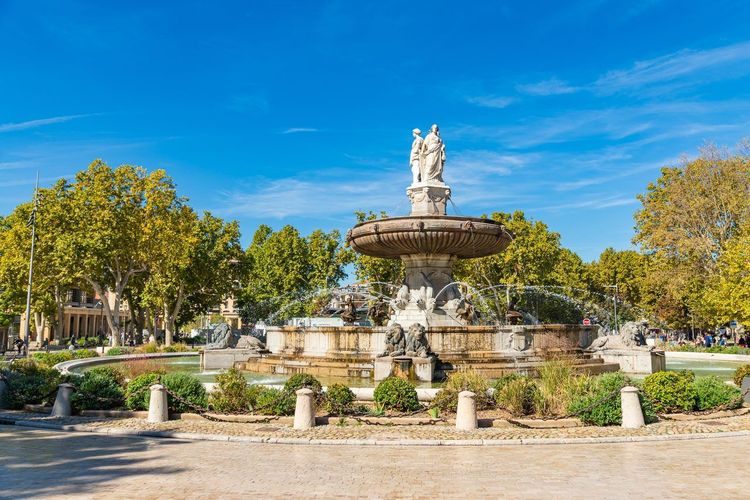
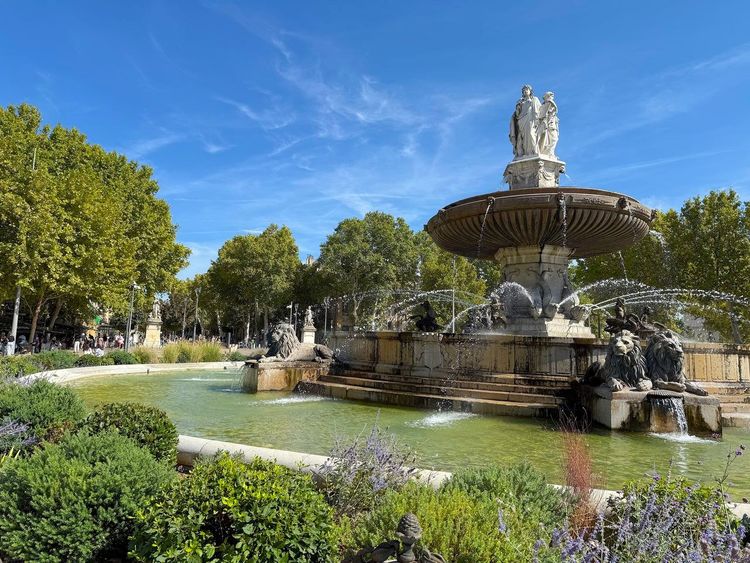
Four rows of century-old plane trees form an almost unbroken canopy of foliage, planted in the 17th century to shield the townhouses from the mistral and the sun. At the western end stands the fontaine de la Rotonde, a monumental 1860 basin topped by three statues representing Justice, Agriculture, and the Arts.
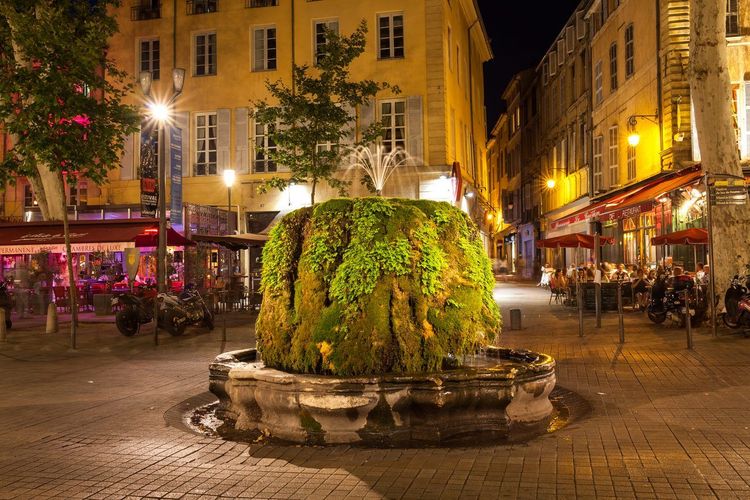
Walking up the avenue, three more fountains mark the promenade. The fontaine des Neuf Canons, a plain 17th-century basin, precedes the most surprising of the four: the hot-water fountain, which the people of Aix simply call "la moussue" (the mossy one). The water that flows from it emerges at 34°C — the very same thermal spring exploited by the Romans — and its thick green moss has covered the stone for so long that it has become part of the scenery.
The avenue ends on the eastern side with the fontaine du Roi René, erected in 1823 and depicting the sovereign holding a bunch of muscat grapes, the variety he is said to have introduced to Provence.
Take a break at one of the historic terraces, such as the café Les Deux Garçons, frequented since the 18th century by Cézanne, and later by Camus and Churchill, before a fire ravaged it in 2019. You are here at the heart of the route covered by Ryo's audio-guided tour of Aix-en-Provence, whose audio commentary describes each fountain in detail without requiring you to reach for your phone.
The Hidden Squares of the Vieux Aix (Albertas, Richelme, Prêcheurs, Trois-Ormeaux)
Just a few steps from the Cours Mirabeau, the Vieux Aix conceals a network of more intimate squares, invisible from the main avenue. Take the rue de l'Opéra, one of the few straight streets in the historic centre, to reach the place des Augustins, dominated by a 16th-century fountain and lined with façades that have kept their original shutters.
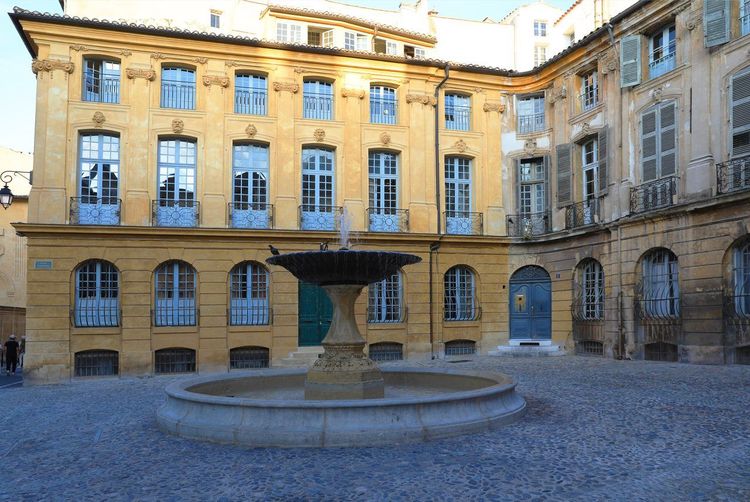
The place d'Albertas remains the most photogenic square in the Vieux Aix: a cobblestone hemicycle enclosed by three townhouses built in 1724 for the family of the same name, and brought to life in summer by open-air concerts. Its central fountain, added a century later, completes an urban composition that few Provençal towns can match.
Continuing north, the place Richelme hosts the Provençal market every morning (more on that later) and leads a double life: market at dawn, café terraces in the afternoon.
Just behind it, the place des Prêcheurs opens around the imposing église de la Madeleine and the convent of the Prêcheurs, with a flower market held there on certain weekday mornings.
End this loop at the place des Trois-Ormeaux (13100 Aix-en-Provence), a tiny shaded square whose name — meaning "three elm trees" — is something of a misnomer, as only a single tree survives today. It is a good spot to catch your breath before plunging back into the maze of lanes that make up the old town of Aix, a medieval labyrinth that has remained almost intact since the Middle Ages despite the classical façades that now clothe it.
The Mazarin Quarter and Its Side Streets: the Other Side of Aix
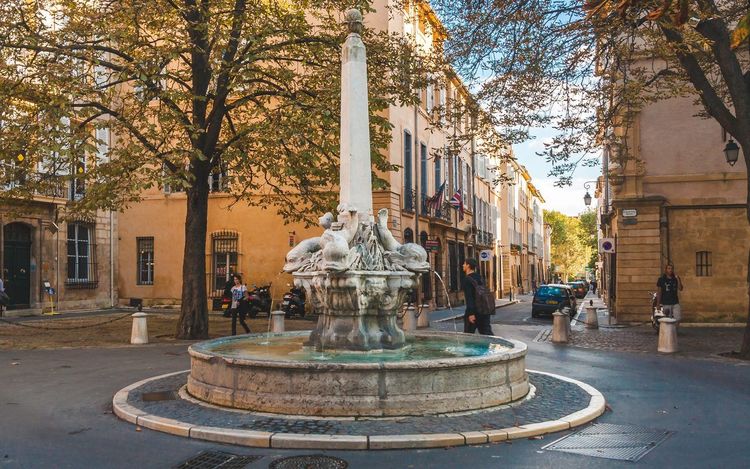
On the other side of the Cours Mirabeau lies the Mazarin quarter, developed from 1646 on a grid plan entirely different from the medieval labyrinth of the Vieux Aix. Archbishop Michel Mazarin, brother of the cardinal, had townhouses built along perpendicular streets — an urban planning approach that was rare in France at the time.
The heart of the quarter beats around the fontaine des Quatre Dauphins, installed in 1667 on the place des Quatre Dauphins, where four stone dolphins spout water at the centre of a quiet crossroads surrounded by townhouses with austere façades.
Unlike the Vieux Aix, Mazarin is best explored without a fixed itinerary. You can wander its side streets at random, with no particular plan, simply looking up at the sculpted doorways and wrought-iron balconies. It is also the quarter where the pleasure of strolling and window-shopping combines most naturally: independent craftsmen, decoration and fashion boutiques are more plentiful here than in the tourist-heavy centre, with fewer crowds during off-peak hours.
The église Saint-Jean-de-Malte, right next to the musée Granet — detailed in Day 2 — marks the eastern boundary of the quarter. Take time for a coffee on a terrace on the rue Cardinale, one of the quietest streets in the area, before heading back down towards the Cours Mirabeau.
Day 2: In Cézanne's Footsteps and the Great Museums of Aix
Following Cézanne: the Studio and Sites of Memory
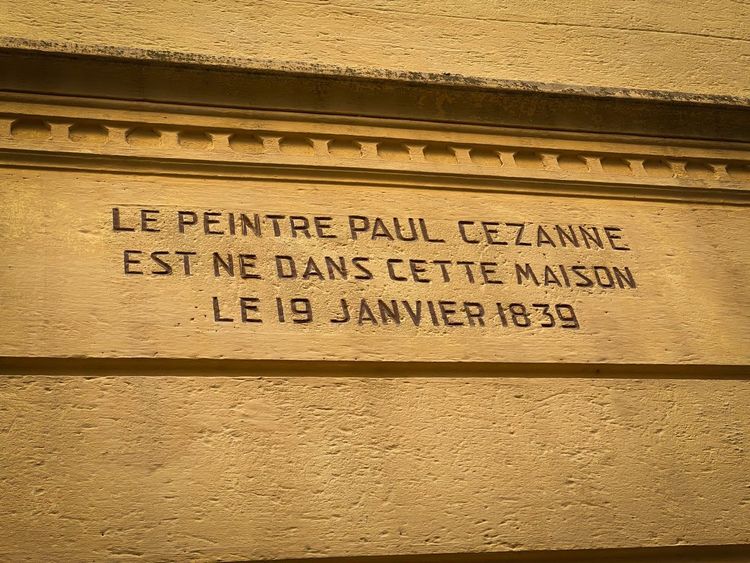
Paul Cézanne in Aix-en-Provence is, above all, a precise geography: a birthplace on the rue de l'Opéra, a secondary school (today the lycée Mignet) where he met Émile Zola, and above all an Atelier des Lauves preserved almost exactly as it was at the time of his death in 1906. Built in 1902 on a hill to the north of the city, this last studio of the painter has kept his smock, his easel, his ceramic still-life objects, and even the plaster fruits he used in his compositions — unable to let real fruit rot over weeks of posing.
The visit lasts around 45 minutes and should be booked in advance during high season. To make the most of the experience, the Ryo guide dedicated to Cézanne's studio details opening hours and provides context on the paintings produced here between 1902 and 1906.
Walking back down towards the centre, follow the 130 bronze studs set into the pavements of the Vieux Aix that trace a memorial route connecting the places associated with the painter: his birthplace, the Collège Bourbon, his father's studio at the Jas de Bouffan. Moving through these Cézanne-impregnated places requires little effort: simply follow the studs, free of charge and accessible at any hour, with no reservation or ticket required.
The most enthusiastic visitors will venture as far as the Bibémus quarries, three kilometres from the centre, where Cézanne set up his easel in the ochre rock to paint some of his most abstract canvases. Access is only possible on a guided tour booked through the tourist office, but the site is well worth the detour for understanding the direct influence of the Aix landscape on his late work.
Musée Granet, Hôtel de Caumont, and Fondation Vasarely
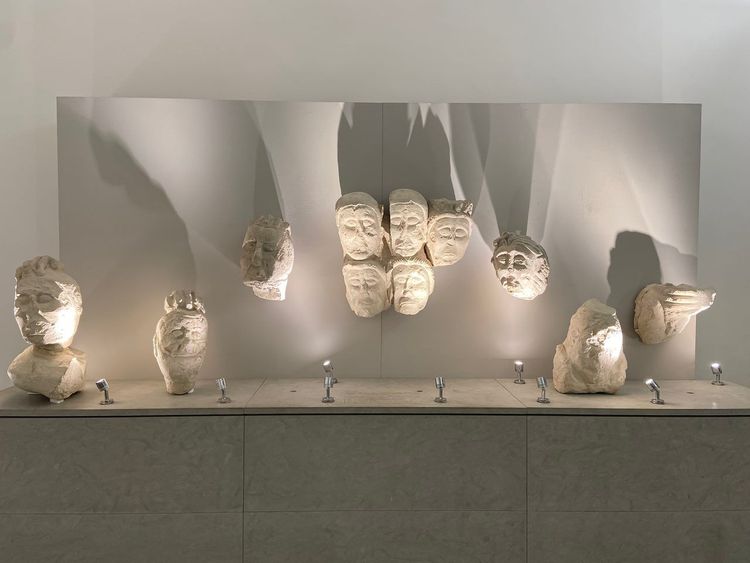
The musée Granet, housed in the former priory of the Order of Malta on the place Saint-Jean-de-Malte, holds eight paintings by Cézanne as well as an impressive collection of works by Giacometti, Picasso, and Rembrandt. Allow an hour and a half for the full visit, somewhat less if you focus on the Cézanne room on the first floor.
A ten-minute walk away, the Hôtel de Caumont, an art centre housed in an 18th-century Aix residence, is well worth visiting both for its temporary exhibitions and for its formal French garden and tearoom. It is one of the rare townhouses in Aix open to the public year-round.
Two other addresses round out this museum trail. The Pavillon de Vendôme, a 17th-century baroque folly tucked behind a discreet gate on the rue Célony, displays Provençal furniture in a setting that is practically tourist-free. The musée du Vieil-Aix, housed in a townhouse on the rue Gaston de Saporta, traces local traditions through its collections of santons and traditional costumes.
End the day at the Fondation Vasarely (1 Avenue Marcel Pagnol, 13090 Aix-en-Provence, rated 4.4/5 on Google from 2,830 reviews), to the west of the city. This hexagonal building constructed in 1976 by the artist himself houses his monumental kinetic works in sixteen honeycomb cells conceived as immersive installations. Encountering optical art in a new light after two days of classical heritage provides a welcome contrast — almost a breath of fresh air before the third day devoted to the surrounding countryside. In the morning, Ryo's audio-guided tour of Aix-en-Provence works well for timing a visit to the Hôtel de Caumont before heading out to the Fondation Vasarely later in the day.
Calisson d'Aix, the Provençal Market, and the Thermes Sextius

The calisson d'Aix is an almond-and-candied-fruit paste (often melon) set on a thin layer of unleavened bread, cut into a diamond shape. The recipe is said to date back to the marriage of King René to Jeanne de Laval in 1454, though local historians generally agree above all on its deep roots in the city since the 17th century.
Where can you find the best calissons in Aix? The confiserie du Roy René, established on the rue Espariat for over a century, remains a benchmark thanks to its workshop visible from the shop floor. The maison Béchard, a historic pâtisserie on the Cours Mirabeau opened in 1870, offers a more artisanal and less sweet version.
The Provençal market occupies the place Richelme every morning, and expands on Tuesdays, Thursdays, and Saturdays to the place des Prêcheurs and the place de Verdun for a flea market and brocante. Awakening your senses at the Aix market means encountering, within half an hour, stalls of heirloom tomatoes, locally aged goat's cheeses, and seasonal lavender bunches, before leaving with a sourdough loaf or a bottle of olive oil from the Pays d'Aix.
Round off this gourmet interlude with a relaxing visit to the Thermes Sextius, an urban spa built on the site of the Roman baths that gave the city its origins, fed by the same 34°C spring that swells the mossy fountain on the Cours Mirabeau. A full afternoon in the pools and the Finnish sauna provides a welcome pause mid-stay. The Ryo guide to the culinary specialities of Aix-en-Provence lists further food addresses if you feel like extending the gastronomic exploration.
Day 3: the Sainte-Victoire Mountain and the Surroundings of Aix
The Sainte-Victoire Mountain and the Château de Vauvenargues
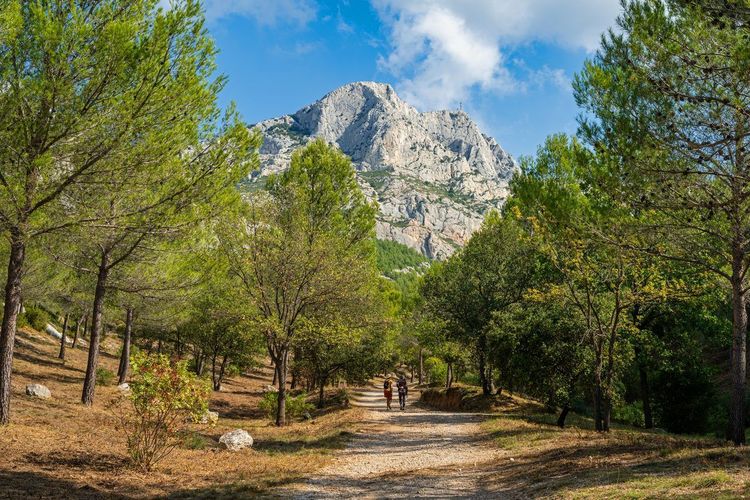
The Sainte-Victoire mountain rises to the east of Aix-en-Provence, its 1,011 metres of white limestone painted by Cézanne nearly seventy times without ever exhausting the subject. Several marked trails set off from the Bimont dam or the priory of Vauvenargues, ranging from the shortest (2 hours return to the Croix de Provence) to the most demanding (the full ridge traverse, reserved for experienced hikers).
You do not have to climb to enjoy the site: the road running along the southern flank already offers several viewpoints by car, particularly towards the Lac de Bimont, a turquoise lake nestled at the foot of the cliffs. The lake also draws families in summer for a picnic by the water in the shade of the pines — a less demanding alternative to hiking up to the Croix de Provence for children or tired knees. The Ryo article on the Sainte-Victoire mountain details the various hiking starting points according to your fitness level.
At the foot of the northern slope, the village of Vauvenargues is home to the château de Vauvenargues, a private property belonging to the Picasso family since the artist purchased it in 1958. He is buried in the grounds, but the château itself is not open to visitors: only the exterior and the particularly peaceful village can be explored on foot.
Plan to set off early if you intend to hike: the mountain offers little shade and temperatures rise quickly from spring onwards. Allow half a day for the return trip to the Croix de Provence, or a full day for the ridge traverse to the priory.
Château La Coste, the Calanques of Cassis, the Luberon, and the Mémorial des Milles
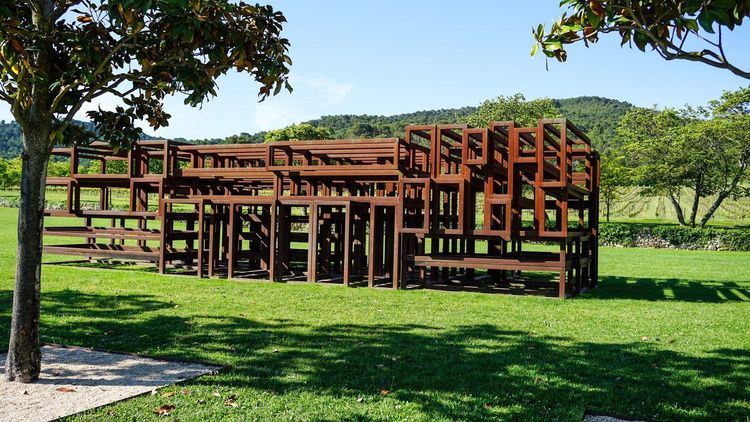
The third day lends itself to several different excursions depending on your interests — fitting them all into a single day is impossible, so it is better to choose one direction.
For contemporary art lovers, the Château La Coste estate, 25 minutes north of Aix, combines an organic vineyard with an open-air art trail: a Calder sculpture in the middle of the vines, a pavilion designed by Renzo Piano, a chapel by Tadao Ando. Allow half a day for the full walk and a wine tasting.
For the sea, head south to the calanques of Cassis, 45 minutes by road. The calanque de Port-Miou can be reached on foot from the port of Cassis, while Port-Pin and En-Vau require a more sustained walk (1h30 to 2 hours return) or a boat trip from the old harbour.
To the west, the Luberon strings together its hilltop villages (Gordes, Roussillon with its ochres, Ménerbes) a little under an hour's drive away. A day barely suffices for two villages and a leisurely terrace lunch.
Closer by, just 15 minutes from the city centre, the Mémorial des Milles (Chemin de la Badesse, 13090 Aix-en-Provence, rated 4.6/5 on Google from 2,291 reviews) occupies the former tile factory converted into an internment and then deportation camp between 1939 and 1942. The visit, which is particularly rich in content, takes around two hours and remains one of the most powerful memorial experiences in the region.
Two more distant options round out the list for those with a full day to spare: the hilltop villages of the Provence Verte around Cotignac and Barjols, less crowded than the Luberon, and the basilica of Saint-Maximin-la-Sainte-Baume, which, according to Provençal tradition, houses the relics of Mary Magdalene. Visiting Marseille from Aix also remains feasible as a half-day trip, with the TER regional train linking the two cities in around 35 minutes.
What to Do in Aix-en-Provence with Family or on a Rainy Day
Aix-en-Provence is well suited to family stays, provided you adapt the pace of the three days accordingly. What can you do in Aix-en-Provence with children? The place Richelme market works as an activity in its own right for younger visitors: colours, smells, fruit tasting, without needing to buy anything. The fontaine de la Rotonde, with its ground-level water jets in summer, also draws children who want to cool off at the end of the day.
For a more structured activity, the natural history museum (6 Rue Espariat, 13100 Aix-en-Provence, rated 4.4/5 on Google from 4,894 reviews), housed in the former Hôtel Boyer d'Éguilles, presents a collection of fossils and dinosaur eggs discovered in the Sainte-Victoire massif — a local angle that speaks easily to children with an interest in prehistory.
The gentle walk up to the Lac de Bimont, on the heights of the Sainte-Victoire, is also suitable for families with young walkers, unlike the more technical ridge paths.
What can you do in Aix-en-Provence when it rains? The city has enough covered museums to turn a rainy day into a cultural interlude without frustration: the musée Granet, the Hôtel de Caumont, the Fondation Vasarely, and the Pavillon de Vendôme, all reachable within a few minutes' walk of one another. The Thermes Sextius offers a wellness alternative for adults in search of warmth, while an independent cinema such as the Renoir in the city centre provides a way to wait out a prolonged downpour.
Rainy days are also the right moment to explore the covered arcades and boutiques of the Mazarin quarter without worrying about the weather, or to linger longer than planned in a tearoom on the Cours Mirabeau. For an outdoor break suited to young children in fine weather, the parc Jourdan, a short walk from the historic centre, has a shaded playground and a pétanque court where children enjoy watching the impromptu games that spring up at the end of the day. The Ryo guide to things to do in Aix-en-Provence and the surrounding area lists further options by season and age group. Ryo's audio-guided tour of Aix-en-Provence passes both the Hôtel de Caumont and the Hôtel Boyer d'Éguilles, a good option to keep moving between rain showers.
Where to Eat in Aix-en-Provence
Choosing a table depends mainly on the time of day. In the morning, head to a terrace on the Cours Mirabeau or the more discreet place des Cardeurs for a coffee and a local tarte tropézienne before setting off to explore the Vieux Aix.
At lunchtime, on market days, nothing beats a picnic assembled on the place Richelme itself: goat's cheese, seasonal tomatoes, country bread, to be carried to the garden of the Pavillon de Vendôme or the parc Jourdan to eat in the shade. For a sit-down lunch, the small restaurants on the rue des Cordeliers and the place des Cardeurs offer set menus at around 18 to 25 euros, well away from the crowds of the Cours Mirabeau.
In the evening, several Aix addresses come up regularly in local recommendations. Chez Yves (13 Rue Fabrot, 13100 Aix-en-Provence, rated 4.2/5 on Google from 31 reviews), known for its generous Provençal plates served on the terrace, remains a reliable choice for a relaxed dinner. For more refined cooking, look to the bistros of the Mazarin quarter, where the concentration of good restaurants per square metre far exceeds that of the tourist centre.
Lovers of traditional Provençal cuisine will seek out a Friday aïoli or a daube simmered for several hours — two dishes more easily found outside the peak tourist season, when restaurants cook more for a local clientele than for a set menu. Book your tables at weekends, particularly during festival season, when the best addresses fill up by midday.
For smaller budgets or a quick bite between visits, bakeries in the centre sell slices of pissaladière and pan bagnat for under 6 euros — more than enough to keep you going until dinner. Budget an average of 15 to 20 euros for a simple lunch, and 35 to 50 euros for dinner with a starter, main course, and a glass of wine at a good address in the centre.
Those with a sweet tooth will finish their meal with a calisson or a slice of orange-blossom tart, a speciality less well known than the calisson but equally rooted in the pâtisseries of Aix.
Where to Stay in Aix-en-Provence: Neighbourhoods and Best Hotels
Everything here comes down to choosing the right neighbourhood. The historic centre, between the Cours Mirabeau and the Vieux Aix, puts everything within walking distance but also concentrates the bulk of the evening activity — worth bearing in mind if you are looking for peace and quiet.
For an upscale stay, the Villa Gallici (Impasse des Grands Prêtres, 13100 Aix-en-Provence, rated 4.8/5 on Google from 528 reviews), a former 18th-century mansion converted into a garden hotel a few minutes' walk from the centre, remains a benchmark for its Provençal setting and its swimming pool surrounded by cypress trees.
The Mazarin quarter, more residential and quiet in the evenings, is well suited to a relaxed stay while remaining five minutes' walk from the Cours Mirabeau. Several bed-and-breakfasts occupy former townhouses there, often a more affordable option than the large central hotels for equivalent charm.
On the immediate outskirts, near the TGV station or towards Puyricard to the north, chain hotels offer gentler rates and free parking — a real advantage if you are arriving by car and plan to drive out for the Day 3 excursions without returning to the centre. Allow 15 to 20 minutes to reach the Vieux Aix from there, by car or bus.
For smaller budgets, several youth hostels and student residences open their doors to travellers in summer, when the university frees up its accommodation. Prices start at around 30 euros per night in a dormitory, compared to 90 to 150 euros for a decent double room in the city centre, and over 250 euros for charming addresses such as the Villa Gallici in high season.
Short-term furnished rentals, plentiful in the Vieux Aix as well as in Mazarin, remain an interesting alternative for family stays or trips with friends: they allow you to cook with produce bought at the place Richelme market and often cost less than an equivalent hotel for three nights, provided you book far enough in advance during high season. A few bed-and-breakfasts scattered at the foot of the Sainte-Victoire, among vines and olive trees, offer a rural alternative for those who prefer to explore by car rather than staying in the city centre.
Book early if your stay coincides with the Festival d'Aix-en-Provence in July: hotel prices rise noticeably and the best addresses fill up several weeks in advance. Whatever neighbourhood you choose, bear in mind that the historic centre is largely pedestrianised: it is advisable to opt for accommodation with included parking if you are arriving by car, or to park in one of the underground car parks on the immediate edge of the centre.
Evenings Out in Aix-en-Provence
Where do you go in Aix-en-Provence once night falls? Nightlife revolves mainly around the Cours Mirabeau and its terraces, lively well past midnight on summer evenings, and the Mazarin quarter, quieter and more intimate, where several wine bars stay open later than average.
The Grand Théâtre de Provence (380 Avenue Max Juvénal, 13100 Aix-en-Provence, rated 4.6/5 on Google from 1,693 reviews) and the Conservatoire Darius-Milhaud programme concerts and performances year-round, with a peak of activity during the Festival d'Aix-en-Provence in July — an international reference for opera since 1948.
Outside festival season, several bars in the centre host live music evenings, particularly around the place des Cardeurs, where terraces fill up from aperitif time onwards. Some bars in the Mazarin quarter also put on impromptu jazz sessions at weekends, offering a more intimate atmosphere than the larger terraces of the Cours Mirabeau.
The city's nightlife nonetheless remains relatively modest compared to university towns of a similar size: Aix-en-Provence winds down fairly early on weeknights outside the summer season, and most bars close around 1 or 2 in the morning. For a quieter evening, a last drink on the terrace of the place Richelme, once the market stalls have been packed away, offers an atmosphere completely different from the daytime bustle.
Film lovers will also find what they are looking for at the Renoir, an independent cinema in the city centre that often screens original-language versions — a pleasant way to round off an evening without staying out too late before another day of walking.
How to Get to and Around Aix-en-Provence
By Car, Train, or Plane: How to Reach Aix
How you get to Aix-en-Provence depends mainly on your starting point. Arriving by car is convenient from Marseille (30 minutes via the A51) or Avignon (50 minutes via the A7), but parking is a consideration: the pedestrianised historic centre means you will need to leave your car in one of the underground car parks on the immediate edge of the centre, such as the Mignet or Bellegarde car parks.
The train is often the simplest option for a three-day stay without a car. The Aix-en-Provence TGV station, 15 minutes from the centre by shuttle or bus, receives direct trains from Paris (just under 3 hours) as well as from Lyon and Marseille. The Aix-en-Provence Centre station, in the heart of the city, is served by regional trains (TER) from Marseille in around 35 minutes.
Arriving by plane means landing at Marseille-Provence airport, just 25 minutes away by car or direct shuttle. It is the closest and best-connected international airport for reaching the city — far preferable to Nice if your stay focuses on the Pays d'Aix and its immediate surroundings.
If you plan to cover the Sainte-Victoire, Cassis, and the Luberon on Day 3, renting a car for that single day and picking it up at the TGV station is often more economical than keeping one for the entire stay, given that the city centre is entirely walkable.
Getting Around the City on Foot or Without a Car
Can you really manage without a car? Absolutely: the historic centre is fully walkable end to end in just under an hour, and most of the Day 1 and Day 2 sites are within 15 minutes' walk of one another. Visiting Aix-en-Provence on foot is, in any case, the only real way to enjoy the fountains and squares, since car traffic is restricted throughout most of the Vieux Aix and the Mazarin quarter.
For the Day 3 excursions, however, public transport shows its limitations: buses to the Sainte-Victoire or Cassis exist but run infrequently, and renting a car or carpooling often becomes necessary to avoid losing half a day making connections.
Wheelchair accessibility in Aix-en-Provence varies by neighbourhood. The Cours Mirabeau and most streets in Mazarin are manageable by wheelchair thanks to relatively wide pavements, but some cobbled and hilly lanes in the Vieux Aix make getting around considerably more difficult. The main museums (Granet, Hôtel de Caumont, Fondation Vasarely) have adapted access, unlike some of the older townhouses.
Ryo's audio-guided tour of Aix-en-Provence, best done on foot, follows an itinerary designed with walking in mind, with short stages that leave time to breathe between two fountains rather than chaining kilometres together without a break.
Budget and Best Time to Visit Aix-en-Provence
What Budget to Plan for Three Days
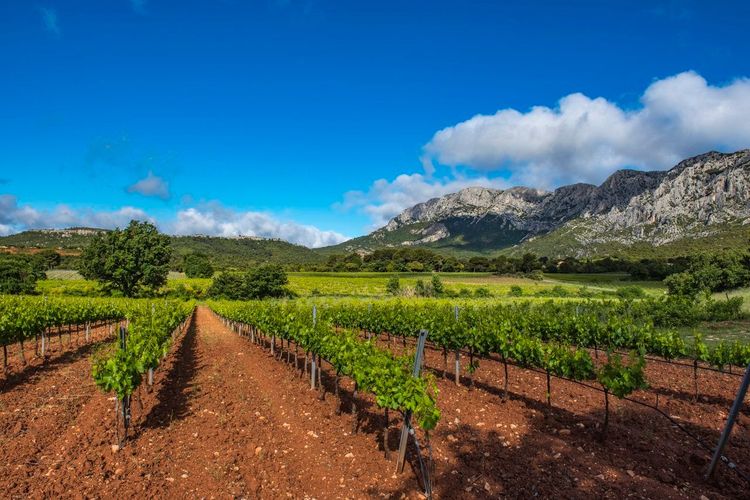
The budget for a three-day stay depends heavily on the level of comfort you are looking for. For a budget-conscious traveller, plan around 80 to 100 euros per day per person: accommodation in a hostel or shared rental (30 to 40 euros), simple meals bought at the market or bakery (20 euros), and free or low-cost visits (the Cézanne trail, squares and fountains, a walk on the Sainte-Victoire).
For a comfortable stay, budget closer to 150 to 200 euros per day per person, including a charming hotel, lunch and dinner at good restaurants, and entry to two or three museums (allow 8 to 14 euros per site, slightly more for Cézanne's studio and the Fondation Vasarely). Add transport costs if you rent a car for Day 3: around 50 to 70 euros for the day including fuel for trips to Cassis or the Luberon. Do not overlook city-centre parking either, generally charged at 2 to 3 euros per hour in underground car parks — a cost often underestimated by visitors arriving by car.
Over three full days, a couple with a comfortable budget can therefore expect to spend between 900 and 1,200 euros in total, including accommodation, meals, visits, and one car excursion.
When to Go: the Best Time to Visit
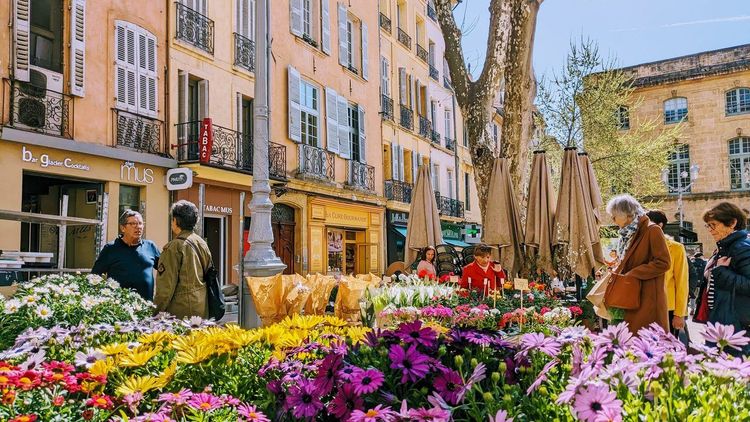
The choice of season depends mainly on your tolerance for heat and crowds. Spring, from April to June, offers pleasant temperatures, a particularly flattering light on the ochre stone, and still-manageable queues at the museums.
Summer, from July to August, is the liveliest but also the busiest period: the Festival d'Aix-en-Provence draws an international audience in July, temperatures regularly exceed 30°C during the day, and accommodation needs to be booked weeks in advance. It is, however, the best season to enjoy the calanques of Cassis and the evening terraces.
Autumn, from September to October, brings back a mildness comparable to spring, with the added bonus of the harvest season in the surrounding vineyards, including those of Château La Coste. May and September often offer the best compromise between clement weather, reasonable crowds, and hotel rates still close to low season. Winter is underrated: museums can be visited without queuing, hotel prices drop sharply, and sunny days are far from rare thanks to the Mediterranean climate — though hiking excursions on the Sainte-Victoire call for more caution in the wind.
FAQ
How many days do you need to discover Aix-en-Provence?
Three days allow you to cover the Vieux Aix, the Cours Mirabeau, the main museums, and a day trip to the surrounding area. Two days are enough for the essentials of the historic centre and Cézanne's footsteps, while a single day limits the visit to the most iconic squares and fountains.
Is it easy to visit Aix-en-Provence without a car?
Yes, the historic centre is entirely walkable. A car or short-term rental only becomes useful for the third-day excursions to the Sainte-Victoire, Cassis, or the Luberon.
Where can you find the best calissons in Aix?
The confiserie du Roy René on rue Espariat, and the maison Béchard on the Cours Mirabeau, are among the historic addresses most often recommended by the people of Aix themselves.
Is the city accessible to people with reduced mobility?
The Cours Mirabeau and the Mazarin quarter are generally accessible by wheelchair, unlike some of the cobbled and hilly lanes of the Vieux Aix. The main museums have adapted access.
What budget should you plan for three days on the ground?
Budget between 80 and 100 euros per day per person for a thrifty stay, and between 150 and 200 euros for a comfortable stay including a charming hotel, restaurants, and museum visits.
Can you discover Aix-en-Provence in 1 or 2 days?
Yes. In one day, focus on the Cours Mirabeau, the fountains, and the Vieux Aix. In two days, add the museums and Cézanne's studio, saving excursions to the Sainte-Victoire or Cassis for a future trip.
Which villages are worth visiting around Aix-en-Provence?
The Luberon (Gordes, Roussillon), the hilltop villages of the Provence Verte around Cotignac, and Vauvenargues at the foot of the Sainte-Victoire are among the most popular day trips from Aix.
Three days on the ground rarely exhaust the charm of Aix-en-Provence, but they are enough to understand why the city has continued to fascinate painters, food lovers, and admirers of ochre stone for centuries. Between the fountains of the Cours Mirabeau, Cézanne's studio frozen in time, and the calanques of Cassis less than an hour's drive away, the itinerary proposed here covers the essentials without ever rushing.
To extend your exploration step by step, Ryo's audio-guided tour of Aix-en-Provence covers 25 stages through the historic centre, to follow at your own pace on the Ryo app, fountain by fountain, without ever losing the thread of Aix's history.
À lire également