© Shutterstock
 Votre guide Ryo
Visiting Aix-en-Provence in 2 Days: The Complete 2026 Itinerary
Under the century-old plane trees of the Cours Mirabeau, the fountain water flows long before you've even set down your suitcase anywhere in the city. Aix-en-Provence lines up around forty working fountains for approximately 145,000 inhabitants, a ratio that neatly sums up the spirit of the place. Visiting Aix-en-Provence in 2 days is enough to cover the essentials: the ochre old town, the studio where Cézanne painted the Sainte-Victoire, and the markets fragrant with thyme at the crack of dawn. The Ryo audio-guided tour of Aix-en-Provence maps out this very itinerary across 24 stops, without requiring you to follow it to the letter.
Over two days, you'll encounter a cathedral that took nearly a thousand years to build, a studio left frozen since its owner's death in 1906, and a 17th-century pavilion where two atlantes stand guard before a French formal garden. The first day focuses on the historic center and its fountain-lined squares; the second follows in the footsteps of Paul Cézanne all the way to the foot of the Sainte-Victoire mountain. Enough to leave with a clearer sense of what sets Aix apart from its Provençal neighbors, Marseille or Avignon.
Aix-en-Provence in 2 Days: How Much Time Do You Need?
Two days in Aix-en-Provence allow you to cover the entire historic center, the Cézanne trail and a foray toward the Sainte-Victoire, all without rushing. This is the format most visitors opt for when coming from Marseille (35 to 45 minutes by regional train) or on a day trip from the Côte d'Azur.
If you only have one day, you'll need to choose between the old town and the Cézanne universe, potentially sacrificing the Pavillon de Vendôme or the Fondation Vasarely. The one-day format works best if you arrive early: the Cours Mirabeau and the place Richelme market in the morning, the cathedral and the Mazarin quarter in the afternoon, and nothing else. Conversely, a third day frees up time for the surrounding area, a wine estate or a day at the calanques of Cassis (Port de Cassis, 13260 Cassis, rated 4.6/5 on Google with 15,007 reviews). It's also the threshold from which an excursion into the Luberon becomes comfortable, without spending half your time in the car.
The itinerary that follows proposes a day 1 centered on the Cours Mirabeau, the old town and the Mazarin quarter, followed by a day 2 devoted to Cézanne and the Sainte-Victoire mountain. Two bonus sections then round out the picture: a more off-the-beaten-track approach to the city, and the surrounding area for extending the stay beyond this two-day format. The practical sections at the end of the article bring together transport, accommodation, dining and budget.
Day 1: The Old Town, the Cours Mirabeau and the Mazarin Quarter
The first day plays out entirely on foot, within a perimeter that never exceeds fifteen minutes' walk. Start early: the morning light on the ochre façades of the Cours Mirabeau is worth the early rise on its own, and the café terraces are not yet overrun. The itinerary then heads up toward the cathedral before descending into the quieter Mazarin quarter in the late afternoon.
The Cours Mirabeau and the Fontaine de la Rotonde
It's impossible to imagine a stay in Aix without strolling along the Cours Mirabeau, this 440-meter boulevard lined with plane trees planted from the 17th century onward. Four fountains punctuate its length, including a moss-covered hot-water fountain that steams gently even in midsummer, fed by a thermal spring at 34°C. The grand townhouses lining it, built between the 17th and 18th centuries for the Aixois parliamentary nobility, explain why Aix long carried the nickname "city of a hundred fountains": around forty are in working order today, scattered across a historic center that can be walked end to end in just under an hour.
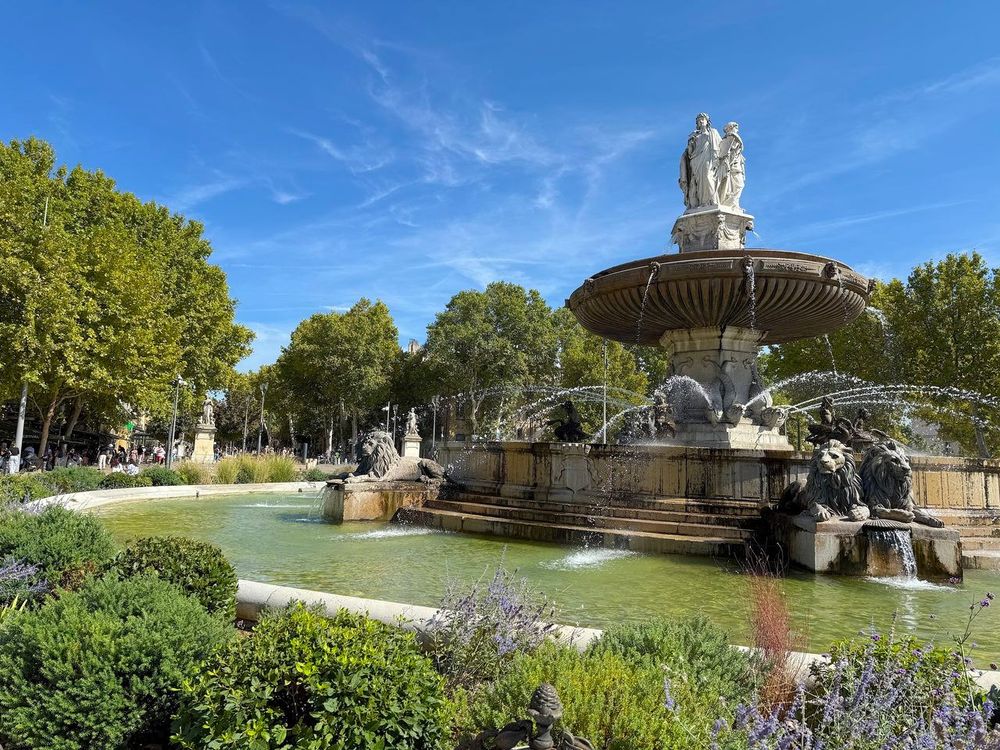
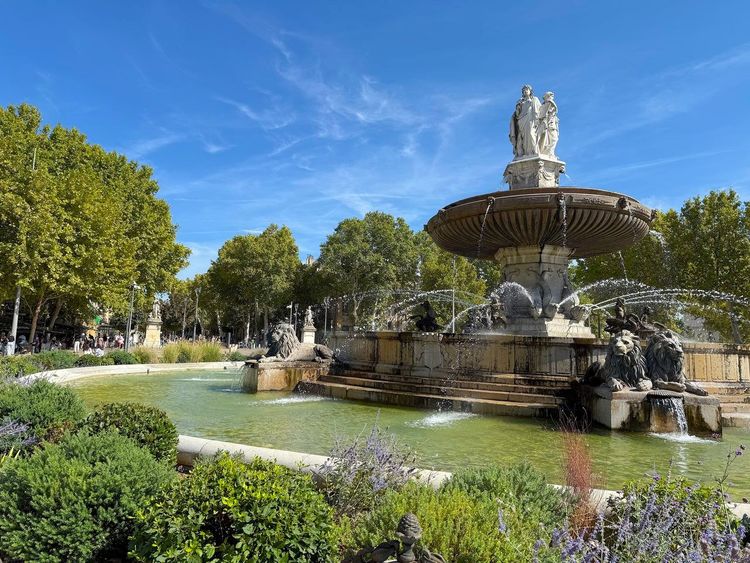
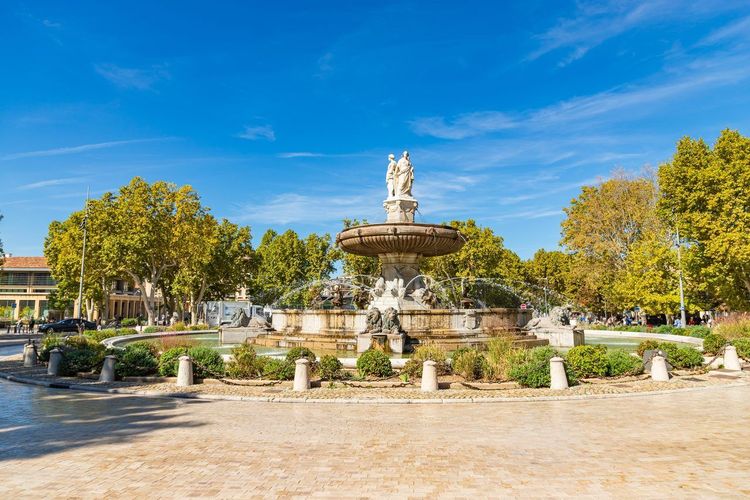
At the western end of the boulevard, the Fontaine de la Rotonde marks the symbolic entrance to the city from the train station and the motorway. Erected in 1860, it carries three statues representing Justice, Agriculture and the Fine Arts, an iconographic program that speaks plainly to the city's 19th-century ambitions. Each statue faces a specific direction: Justice toward the Cours Mirabeau, Agriculture toward the road to Marseille, and the Fine Arts toward the road to Avignon. You'll inevitably pass it on arrival: it's the first landmark Aixois residents mention when directing a lost visitor.
The Old Town and Its Fountain Squares (Albertas, Cardeurs, Hôtel de Ville)
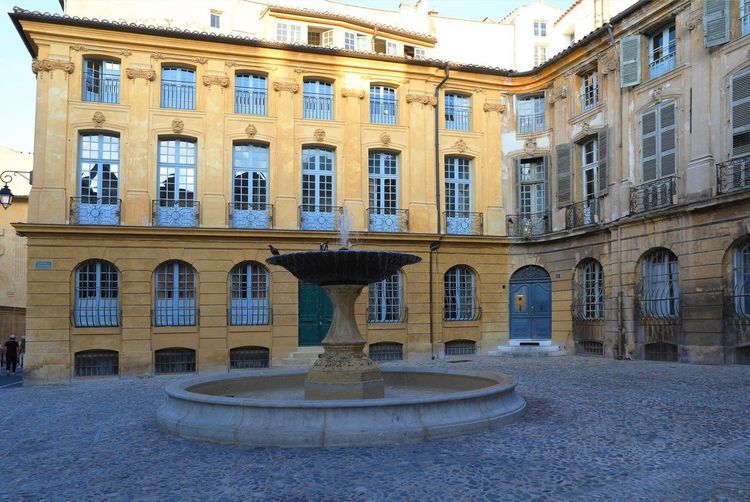
Heading north from the Cours Mirabeau, the cobbled lanes of the old town narrow and shift in pace. The place d'Albertas, paved in a fan pattern and enclosed on three sides by 18th-century classical façades, is often cited as the most photogenic square in Aix, slightly removed from the main tourist flow. At its center stands a fountain added well after the façades were built, in the early 20th century, almost incidental against the surrounding architecture. The classical music concerts held here in summer benefit from a natural acoustics that is remarkably rare for an open square.
A little further on, the place des Cardeurs shifts to a completely different register: restaurant terraces, an open esplanade and a distinctly livelier atmosphere from midday onward. It's a good spot for a lunch break between visits, provided you avoid the tables most exposed to the July sun. Continue on to the place de l'Hôtel-de-Ville, dominated by the early 16th-century Clock Tower, whose niche houses four wooden statues that are changed with the seasons — a detail few visitors notice on a first pass. The former grain market on the south side of the square now houses municipal offices behind a sculpted façade well worth a look.
The Cathédrale Saint-Sauveur and the Musée du Vieil Aix
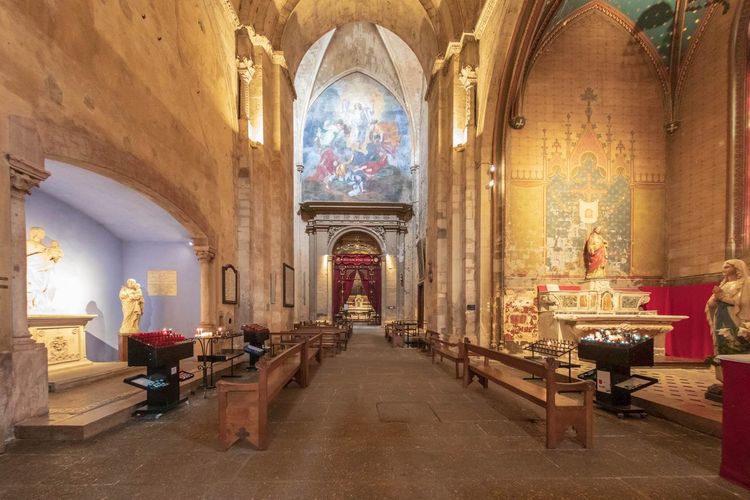
Five minutes' walk away, the Cathédrale Saint-Sauveur d'Aix-en-Provence encapsulates almost a thousand years of religious architecture: a 12th-century Romanesque nave, a Gothic nave raised from the 13th century onward, and a Renaissance portal carved in the 16th. The early Christian baptistery, with its reused ancient columns, dates back to the 5th–6th centuries, making it one of the oldest surviving monuments in all of Provence. Inside, the triptych of the Burning Bush painted by Nicolas Froment around 1476 is worth lingering over for a few minutes, even without a particular interest in sacred art. Admission is free; the adjoining Romanesque cloister is visited according to the hours posted at the entrance.
Just next door, on rue Gaston de Saporta, the Musée du Vieil Aix occupies the Hôtel d'Estienne de Saint-Jean, a 17th-century townhouse, and holds collections tied to local history: santons, marionettes, objects from the Fête-Dieu, a procession celebrated in Aix since the Middle Ages. The museum has undergone lengthy periods of closure for renovation in recent years, so check its opening status with the tourist office before making the detour. When it is open, the visit is short — around thirty minutes — ideal for catching your breath before walking on to the Mazarin quarter.
The Mazarin Quarter, the Place des Quatre-Dauphins and the Église Saint-Jean-de-Malte
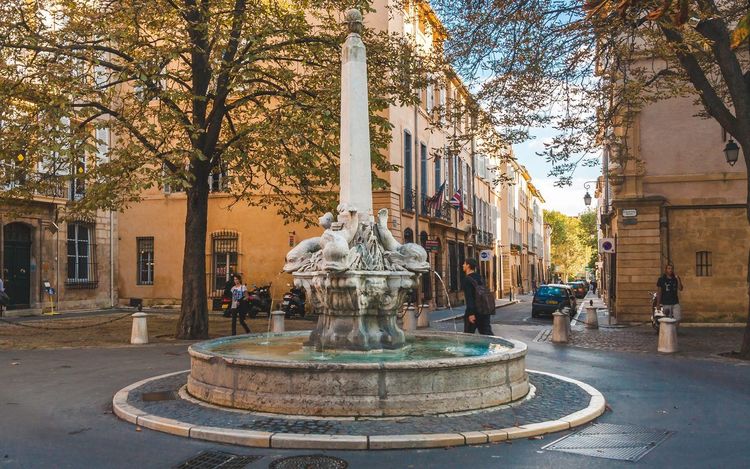
Cross the Cours Mirabeau heading south and the atmosphere changes completely: the Mazarin quarter, laid out in the mid-17th century on a grid plan at the initiative of Archbishop Michel Mazarin, lines up townhouses more discreet than those of the historic center. The streets are wider, the traffic calmer, and it quickly becomes clear why well-off Aixois residents continue to live here.
At its heart, the place des Quatre-Dauphins takes its name from the 17th-century fountain at its center, four stone dolphins spouting water at the base of an obelisk. It is one of Aix's most understated fountains, set in a residential crossroads, and yet one of the oldest in the quarter.
End the day at the Église Saint-Jean-de-Malte, considered the first Gothic church in Provence, built in the second half of the 13th century for the Hospitallers of Saint John of Jerusalem. Its austere façade contrasts with the ornamental richness of the cathedral, a deliberate architectural choice by the military order that commissioned it. The Ryo audio-guided tour of Aix-en-Provence details this historical lineage if you'd like to explore the subject while walking.
Day 2: In Cézanne's Footsteps and Toward the Sainte-Victoire
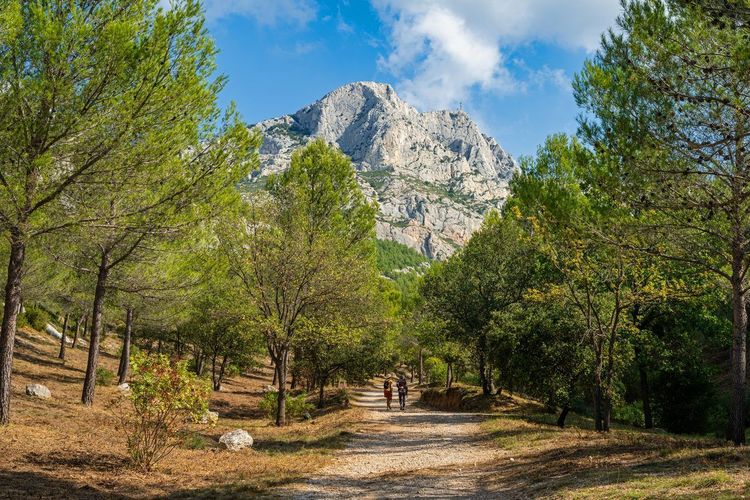
The second day follows a different geography: more spread out, it requires either a car or a good use of the city bus network that serves the upper parts of the city. The morning remains largely on foot, devoted to Paul Cézanne's world and the museums of the Mazarin quarter; the afternoon heads toward the Sainte-Victoire mountain, about twenty minutes from the city center.
The Atelier Cézanne, Starting Point of the Circuit
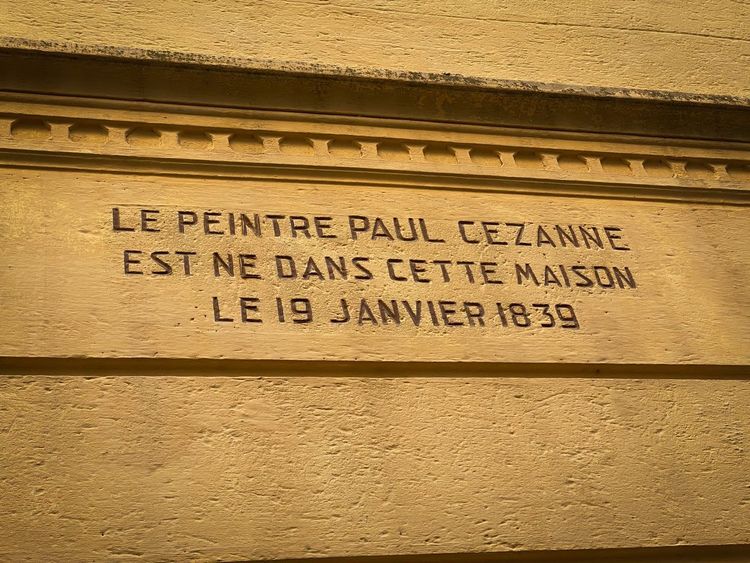
The Atelier Cézanne, on avenue Paul-Cézanne, has remained virtually frozen since the painter's death in 1906: his brushes, his smock, the objects he painted in his still lifes (a teapot, a skull, plaster apples) are still arranged exactly as he left them. Cézanne had it built in 1902 on the Lauves hill, with a large north-facing bay window for stable light throughout the day, a technical choice typical of painters' studios of the era. The visit, fairly brief (thirty to forty minutes), takes place in small groups to preserve the atmosphere of the place.
One point to check carefully before planning your day 2: following the extensive restoration project carried out around the painter's legacy, the Lauves studio and the family estate of the Jas de Bouffan now open only seasonally, and the tourist office announces a 2026 opening from July 4 to October 31. Outside that window, fall back on the Musée Granet and the Terrain des Peintres, which already give a good sense of the Cézannian universe without needing to secure advance tickets. Access to the Jas de Bouffan grounds alone remains very affordable, around 3 euros, and is free on the first and third Sundays of each month. When the sites are open, book online: visitor numbers are capped per time slot and slots fill up quickly. The Bibémus quarries, the third leg of this Cézanne trail, can only be visited by reservation and with a guided tour: allow half a day if you want to chain two visits together. The article Visiting Cézanne's Studio details up-to-date opening hours and a few anecdotes about the painter's final years in Aix.
The Musée Granet and the Hôtel de Caumont Art Center
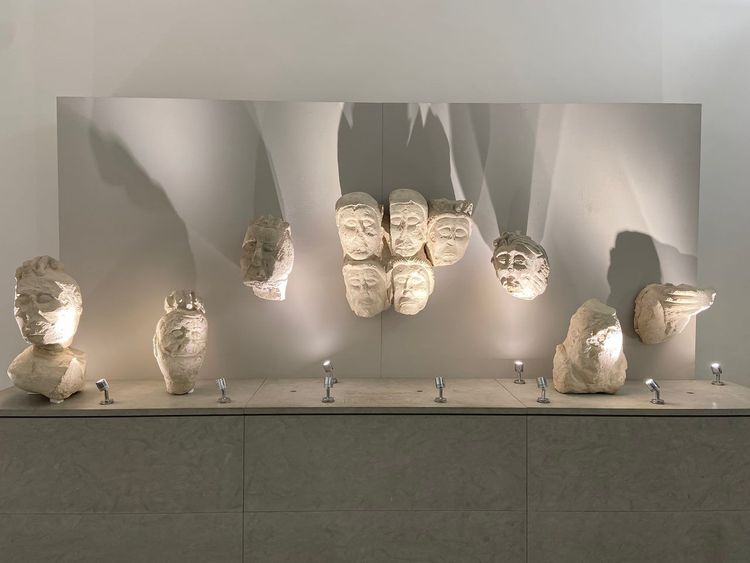
Back down toward the center, the Musée Granet occupies the former priory of the Église Saint-Jean-de-Malte and spans several centuries of painting, from 16th-century Italian art to 20th-century avant-gardes. Its Cézanne collection — around ten canvases and drawings — remains modest compared to the great Parisian museums, but has the merit of being shown in the city where the painter lived and worked, which changes how you read the pieces. Allow an hour and a half for a complete tour, more if you linger over the modern art collection displayed a few streets away in the Chapelle des Pénitents Blancs, which is affiliated with the museum.
Ten minutes' walk away, the Hôtel de Caumont, now an art center, occupies a carefully restored 18th-century townhouse, French formal garden included. The program changes two to three times a year, alternating major retrospectives with more intimate focused shows. The tearoom installed in the former private apartments, overlooking the garden, makes for a welcome mid-morning break.
The Pavillon de Vendôme and Its French Formal Garden
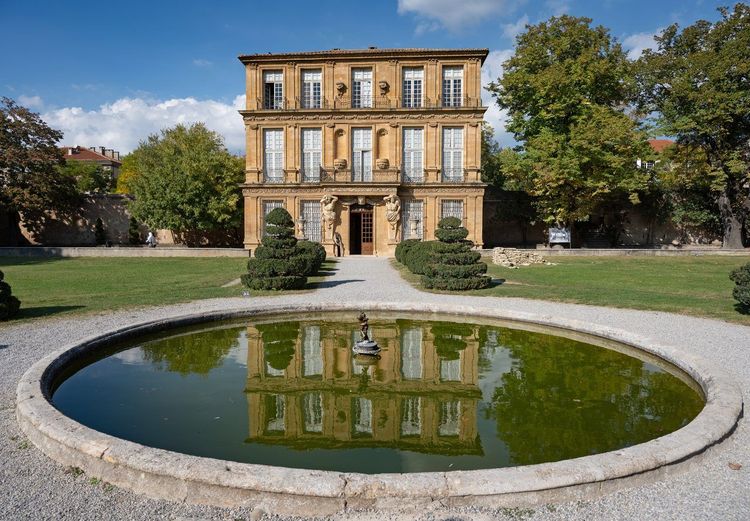
The Pavillon de Vendôme, built from 1665 onward for Louis de Mercœur, Duke of Vendôme, is a pleasure residence rather than a true château: a compact volume, raised by one story in the 18th century, but with a remarkably well-preserved French formal garden featuring a basin, geometric parterres and a pair of stone atlantes supporting the balcony above the doorway. The interior, furnished in Provençal style from the 17th and 18th centuries, can be visited in about half an hour. It is the garden, however — freely accessible even without a ticket to the rooms — that justifies the ten-minute detour from the Cours Mirabeau. Come in late morning: the raking light catches the clipped boxwood hedges and the shaded benches are still free. The pavilion also hosts temporary exhibitions of modern and contemporary art, often programmed in dialogue with the municipal collections.
The Sainte-Victoire Mountain, Cézanne's Muse
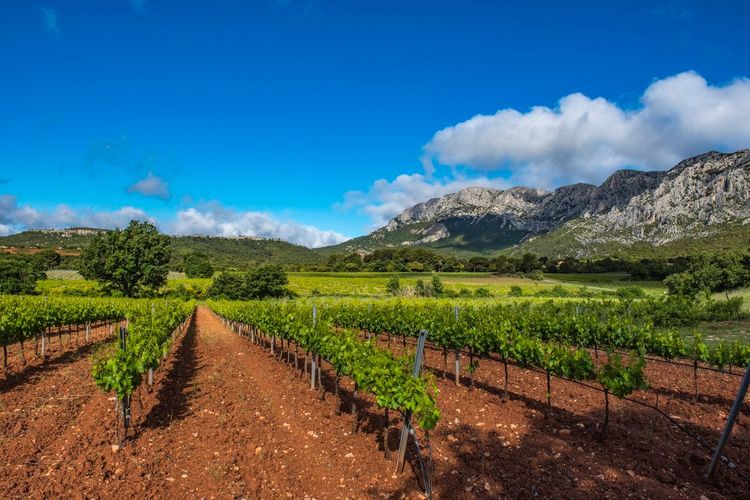
The afternoon shifts to an entirely different landscape: the Sainte-Victoire mountain, the limestone ridge that peaks at 1,011 meters at the Pic des Mouches and that Cézanne painted more than eighty times between 1882 and his death. From the center of Aix, allow about twenty minutes by car to the Bimont dam or to the village of Vauvenargues, two classic starting points for a short hike. Without a car, a few interurban bus lines serve Vauvenargues and Le Tholonet in season, but departures are limited and the return journey at the end of the day needs to be planned in advance.
For a view without physical effort, the road running alongside the Zola dam and the Bimont dam already offers several viewpoints accessible by car. The Terrain des Peintres, on the chemin de la Marguerite north of the city, offers for free the same vantage point Cézanne chose for several of his canvases, just ten minutes' walk from the studio. More motivated hikers can reach the Croix de Provence at 946 meters in two to three hours on foot from Les Cabassols. The article Montagne Sainte-Victoire lists the trails by level and season, useful before setting out on a poorly shaded path in the height of summer. Note: access to the massifs is regulated and sometimes closed in summer depending on fire risk, with a prefectural order published each afternoon for the following day.
Aix-en-Provence Beyond the Classics: Markets, Calissons and Contemporary Art
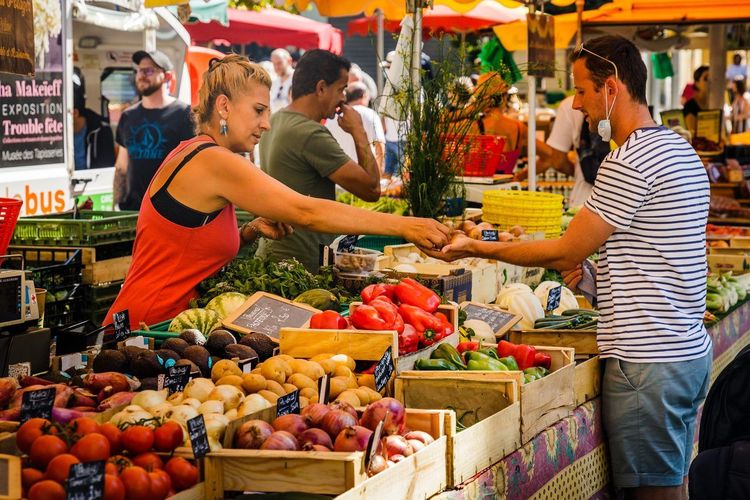
Beyond the classic itinerary, a few addresses and local rituals offer a less museum-oriented angle on Aix: its markets, its signature sweet and a strand of contemporary art that many hurried visitors overlook entirely.
Provençal Markets and the Place Richelme
Every morning, the place Richelme hosts a food market that never empties before noon: aged goat's cheeses, olives of every size, freshly made tapenade, fruit and vegetables from the Bouches-du-Rhône. It's probably the most direct way to sense the Aixois rhythm before the tour groups arrive, who generally favor the larger but less food-focused market on the place des Prêcheurs. On Tuesdays, Thursdays and Saturdays, the main market extends as far as the place de Verdun and spills into the surrounding streets, a layout inherited from a trading tradition dating back to the Middle Ages. Arrive before 9 a.m. if you want to avoid the crowds and get the best produce, often gone by noon.
The Calisson d'Aix, a Specialty Whose Recipe May Date Back to the 15th Century, Linked by Legend to the Marriage of King René d'Anjou to Jeanne de Laval, Though Local Historians Are Quick to Temper That Rather Romantic Account. Several Confectionery Shops in the City Center, Often Run by the Same Family for Several Generations, Offer Making Workshops Open to the Public, a Good Way to Fill a Free Hour Between Visits. Expect to Pay Between 25 and 40 Euros per Kilogram Depending on the Maker, With Smaller Boxes Available for the Less Ambitious Sweet Tooth. The Article on the Culinary Specialties of Aix-en-Provence Lists the Addresses Considered Most Reliable by Aixois Residents Themselves.
The Fondation Vasarely, Temple of Op Art
On the western edge of the city, the Fondation Vasarely stands in stark contrast to the historic center: a concrete and aluminum building inaugurated in 1976 by Victor Vasarely himself, a pioneer of op art and kinetic art. Sixteen hexagonal cells display monumental works, some exceeding six meters in height, designed to play with the visitor's perception as they move through the space. The building suffered from relative neglect for years before a restoration campaign launched in the 2010s restored its status as a fully fledged architectural curiosity in the region. Allow an hour on site, and plan your transport: the foundation is about thirty minutes' walk from the center, or ten minutes by bus from the Rotonde.
The Parc Jourdan, a Green Pause
For a breather between visits, the Parc Jourdan (Avenue Jules Ferry, 13100 Aix-en-Provence, rated 4.1/5 on Google with 3,334 reviews), a short walk from the Mazarin quarter, spreads several hectares of century-old trees (cedars, plane trees, chestnuts) around a vast pétanque ground where games run back to back in the late afternoon. It's a spot very much frequented by Aixois residents themselves on weekends, far from the classic tourist routes, making it a good pause for observing the city from a different angle. Entry is free, the play areas keep children occupied, and closing times extend in summer.
What to Do Around Aix-en-Provence?
If your stay extends beyond two days, or if you prefer to devote half a day to an excursion, several destinations are accessible in less than an hour's drive from Aix. Here are the four most common options depending on your interests.
The Villages of the Luberon
The Luberon begins less than an hour's drive north of Aix. Gordes, a hilltop village listed among France's most beautiful villages, remains the most photographed destination, with its dry-stone houses clinging to the hillside. Nearby, Roussillon stands out for its ochre cliffs in shades ranging from pale yellow to deep red, a geological site mined industrially until the mid-20th century. Allow a full day to visit two or three villages at a leisurely pace, including a lunch break at one of the many restaurants set on shaded squares. The Abbaye de Sénanque, with its lavender fields photographed endlessly in July, often rounds off this itinerary for visitors arriving in high season.
The Calanques of Cassis
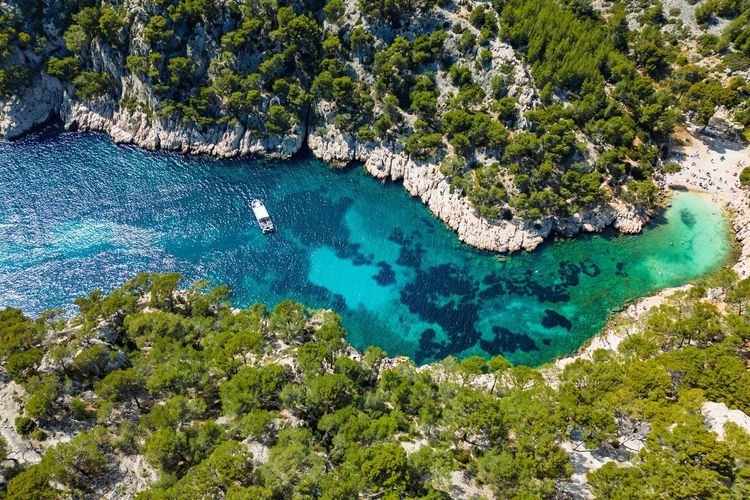
About forty minutes south of Aix, Cassis opens the way to the calanques, those narrow inlets nestled between limestone cliffs and turquoise water stretching all the way to Marseille. The calanque of Port-Miou, the closest to the village, can be reached on foot in about twenty minutes, while Port-Pin and En-Vau require a more demanding hike, better suited to those who have come prepared with appropriate footwear. In summer, access to the massifs is regulated according to fire risk, which pushes most visitors toward the maritime shuttles departing from Cassis harbor — a comfortable option that allows several calanques to be seen in a single outing. Book your slot in advance in July and August, as departures sell out early in the morning.
The Wine Route and the Wine Estates Around Aix
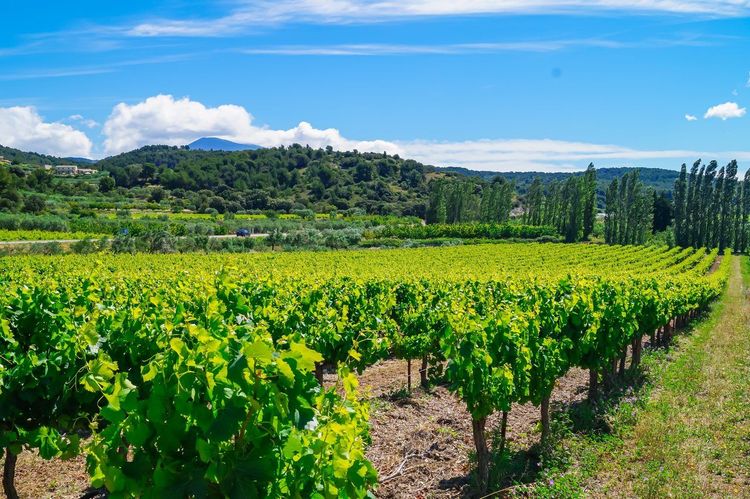
Aix-en-Provence sits at the heart of several well-regarded appellations: the coteaux d'Aix-en-Provence, but also Palette, a tiny AOC (fewer than fifty hectares) nestled just to the east of the city, on the communes of Le Tholonet and Meyreuil. A dozen or so wine estates open to visitors are located within twenty minutes of the center, offering tastings and sometimes cellar tours, usually on simple telephone reservation. The Château de Vauvenargues, the former property of Pablo Picasso where the painter is buried, stands on the road leading toward the Sainte-Victoire, making it easy to combine a wine excursion with a view of the mountain. The Provence wine route offers several themed itineraries depending on the time available, from half a day to a full weekend. One obvious but easily forgotten precaution in Provence: designate a driver or target estates served by a shuttle, as checks on the departmental roads around Aix are frequent.
The Verdon, the Estérel and the Sainte-Victoire for Extending Your Stay
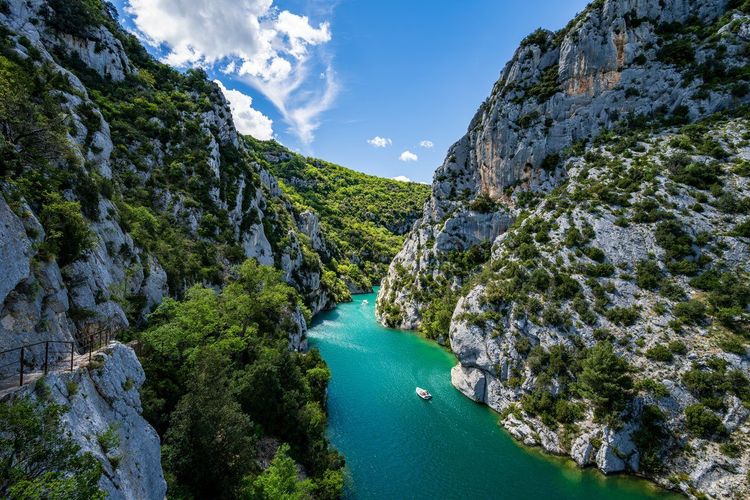
For a more ambitious third day, the Gorges du Verdon can be reached in just over an hour and a half's drive to the northeast. The canyon, one of the deepest in Europe (up to 700 meters), can be discovered by car along the Route des Crêtes, or by pedalo and canoe on the Lac de Sainte-Croix for visitors who prefer turquoise water to winding roads. The article Route des Crêtes du Verdon details the best viewpoints by season. To the east, the Estérel massif and its red rocks plunging into the Mediterranean require a full day's drive from Aix, better integrated into a longer Provençal itinerary than treated as a simple day trip. Closer to home, the article Things to Do in Aix-en-Provence and the Surrounding Area lists further half-day outing ideas, useful when time doesn't allow for a full excursion.
How to Get to Aix-en-Provence?
By train, the Aix-en-Provence TGV station is about fifteen minutes from the city center by shuttle (frequent services during the day, a few euros per trip), with direct connections from Paris (around 3 hours) and Lyon (1h40). Be careful not to confuse this TGV station, located out in the countryside to the southwest of the city, with the smaller Aix-en-Provence centre station, served by regional trains from Marseille-Saint-Charles and Pertuis, which drops you ten minutes' walk from the Rotonde.
By plane, Marseille-Provence airport is about 25 minutes away by road, with regular shuttle services to the Aix bus station. From Marseille, the interurban coach line between the two cities runs very frequently during the day at a fare of around 6 to 7 euros, often more practical than the regional train. By car from Marseille or Avignon, allow 30 and 50 minutes respectively by motorway. Since the city center is largely pedestrianized, it's best to park in one of the underground car parks on the immediate periphery (Rotonde, Mignet, Carnot) rather than searching for a surface space, or to use one of the park-and-ride facilities at the city's entry points. Once you have parked, the Ryo audio-guided tour is an easy way to explore the historic centre on foot.
Getting Around Aix-en-Provence: on Foot, by Tourist Train or Without a Car
The historic center of Aix can be visited entirely on foot: the distance between the Fontaine de la Rotonde and the Mazarin quarter is no more than fifteen minutes' walk, and most of the day 1 sites are within ten minutes of each other. It's also the best option for enjoying the narrow lanes of the old town, which are often awkward for vehicles. Going car-free is therefore perfectly feasible on the first day, provided you're happy to walk for several hours on cobblestones that can be slippery at times.
For day 2, however, the Atelier Cézanne and especially the Sainte-Victoire mountain are further from the center. Without a car, rely on the city bus network, whose main lines converge at the Rotonde and the bus station, with a single ticket costing around one euro and cheaper multi-journey cards available. The Aix-en-Provence tourist train, departing from the Rotonde, offers a commented tour of about forty minutes: a comfortable option for a first introduction, especially with children or in intense heat, even if it remains more superficial than a walking tour. Expect around ten euros for an adult, half that for a child, and check timetables out of season, which tend to be more irregular.
For the Sainte-Victoire and the wider surroundings (Luberon, Cassis, Verdon), a rental car remains the most flexible solution. Allow around 40 to 60 euros per day depending on the season, booked several weeks in advance in July and August when demand surges across Provence. A bicycle, finally, is poorly suited to the cobbled historic center but comes in handy for reaching the Fondation Vasarely or the heights of Les Lauves.
Where to Stay in Aix-en-Provence?
The choice of neighborhood matters almost as much as the choice of hotel. The historic center, between the Cours Mirabeau and the cathedral, puts everything within walking distance but often means smaller rooms in old buildings without a lift. Slightly more peripheral neighborhoods, around the bus station or toward Sextius-Mirabeau, offer newer establishments and better value for money, at the cost of fifteen to twenty minutes' walk or a bus ride.
On the budget side, a decent room in the historic center starts at around 90 to 110 euros per night in low season, and can easily double in July and August or during the Aix-en-Provence Festival (opera), which saturates hotel availability every summer. The boutique hotels installed in former townhouses of the Mazarin quarter, more expensive, trade on architectural charm and a pleasant evening calm. For tighter budgets, a few hostels and bed and breakfasts exist on the immediate outskirts, generally 15 to 20 minutes' walk from the Cours Mirabeau.
Book at least two to three months ahead for a summer stay: between the festival, weddings that monopolize certain establishments on weekends and the influx of visitors from the nearby calanques, availability dries up quickly. Outside the season, from September to June, rates become more reasonable and the city, freed from a large part of its tourist crowds, can be discovered in better conditions — particularly at the morning market on the place Richelme.
If you plan to explore the Sainte-Victoire or the Luberon as well, accommodation close to a motorway exit makes rental car journeys easier without taking you far from the city center, provided you choose an establishment well served by the city bus network.
Where to Eat in Aix-en-Provence?
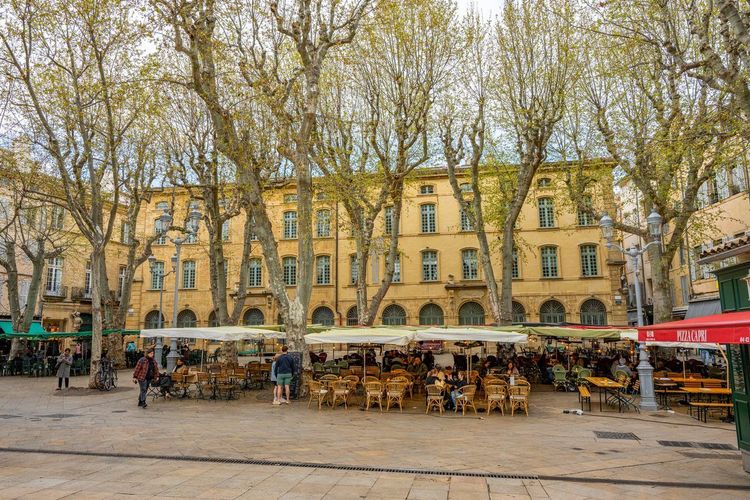
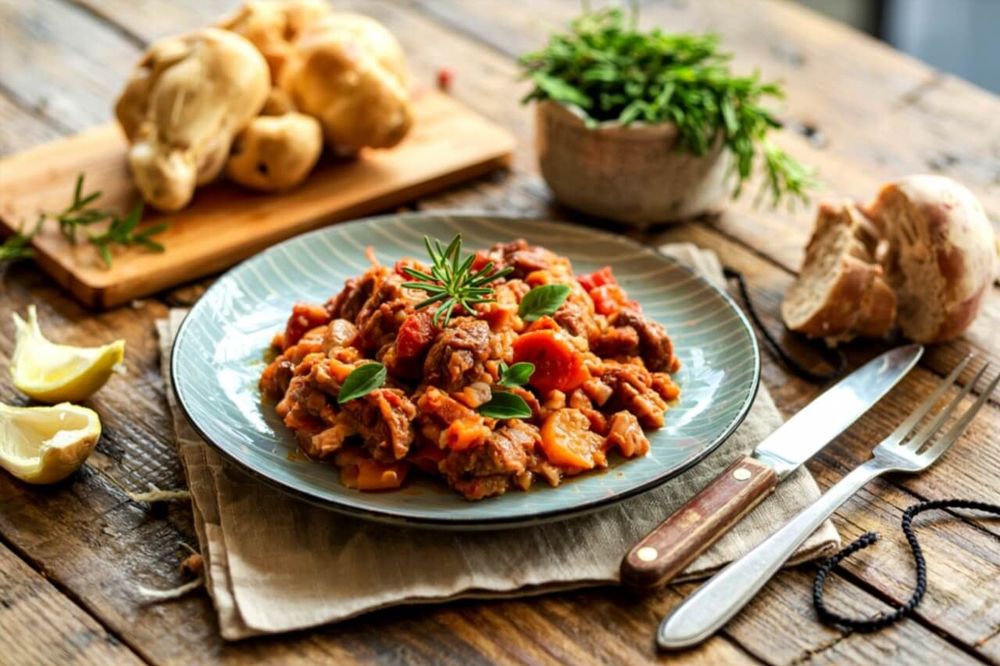
The place Richelme market, already mentioned, remains the best base for a quick lunch: bread, cheese, tapenade and seasonal fruit to assemble yourself, then taken to one of the public gardens in the center. For a sit-down meal, the terraces around the place des Cardeurs and the place Ramus concentrate a large part of the tourist offering, with fairly classic Provençal cuisine (daube, pieds et paquets, vegetable tians) at prices that climb quickly in high season.
Aixois residents themselves often prefer to venture slightly away from the Cours Mirabeau, toward the quieter streets of the Mazarin quarter or the place des Quatre-Dauphins, where a few bistros offer more carefully crafted cooking without the over-exposure of the most visible addresses. Generally expect between 20 and 35 euros for a full meal in this range, a little more at the gastronomic establishments in the historic center. At lunchtime, the starter-and-main-course formula at around 18 to 22 euros remains the best deal, even at houses that charge considerably more in the evening.
On the sweet side, you'll struggle to find a pastry shop in the center without calissons in the window, but the artisan ice cream makers of the old town are also worth a detour, particularly in the late afternoon between two museums. One final tip: the historic cafés of the Cours Mirabeau, including Les Deux Garçons, an institution once frequented by Cézanne and Zola, are priced for the terrace rather than the plate, but they are part of the scenery. Bear in mind, however, that this address, devastated by a fire in December 2019, has reopened after several years of renovation work: don't expect to find the original patinated décor entirely intact. The article Culinary Specialties of Aix-en-Provence goes into more detail with specific addresses and up-to-date prices.
Practical Tips: Budget, Best Time and Useful Information
For two days in Aix-en-Provence, allow an average daily budget of 80 to 150 euros per person, accommodation included, excluding travel to the city: accommodation in the center, two or three admission tickets (the Atelier Cézanne, the Fondation Vasarely and the Hôtel de Caumont each fall in a bracket of around 10 to 16 euros) and meals at the market or on a terrace. This budget rises fairly quickly if you add a rental car excursion or a wine estate visit with paid tasting. Conversely, a very economical stay is possible: the cathedral, the squares, the fountains, the Pavillon de Vendôme garden and the Parc Jourdan cost nothing.
The best time remains spring (April–June) or early autumn (September–October): pleasant temperatures, soft light on ochre façades, and crowds significantly lower than in July and August, when the Aix-en-Provence Festival attracts an international audience and pushes accommodation prices up. One nuance to factor in if Cézanne is your primary motivation: since the Cézanne sites open in summer and autumn, a spring visit will favor the museums and historic center instead. Summer remains the season for late-evening terraces and open-air concerts, provided you can handle the heat and the crowds. Winter, quieter, gives the city back to the Aixois, with a Christmas market that sets up on the Cours Mirabeau and around the Rotonde from late November onward.
Book the Atelier Cézanne and the Hôtel de Caumont online as soon as ticketing opens on busy weekends: slots fill up fast, especially for the most high-profile temporary exhibitions. Most other sites (cathedral, squares, markets) are freely accessible or ticketed on the door without prior reservation. The tourist office, located a short walk from the Rotonde, centralizes ticketing for the Cézanne sites, themed guided tours and multi-site discount passes: a useful first stop at the beginning of your stay. The article Events in Aix-en-Provence lists the up-to-date cultural calendar, useful for timing your visit to coincide with a festival — or to avoid one if peace and quiet is what you're after.
On the weather front, the heat can become difficult between 1 p.m. and 4 p.m. in July and August: plan a break in the shade, in an air-conditioned museum or at the Parc Jourdan, rather than pushing on in full sun. Shops and some museums sometimes close between noon and 2 p.m. outside the tourist season, a southern rhythm to anticipate in your schedule. Note also that most municipal museums close on Mondays — a day better reserved for markets, squares and an excursion toward the Sainte-Victoire. Finally, pack comfortable shoes: the cobblestones of the historic center, slippery after rain, are more than a match for smooth-soled footwear by mid-morning.
FAQ
How Many Days Do You Need to Visit Aix-en-Provence?
Two days are enough to cover the old town, the Cours Mirabeau, the Cézanne universe and a foray toward the Sainte-Victoire. A third day allows you to add an excursion to the Luberon, Cassis or the surrounding wine estates.
Can You Visit Aix-en-Provence on Foot?
Yes, the historic center can be explored entirely on foot, with a maximum of about fifteen minutes' walk between the most distant points. Only the Sainte-Victoire and excursions to the surrounding area require another means of transport.
Is It Possible to Visit Aix-en-Provence Without a Car?
The first day, entirely on foot, presents no problem at all. For the second, city buses cover part of the routes, including up to the heights of Les Lauves, but a rental car remains more practical for reaching the Sainte-Victoire or the surrounding area.
Is Cézanne's Studio Open All Year Round?
No. Following restoration works, the Lauves studio and the Jas de Bouffan operate seasonally: the tourist office announces a 2026 opening from July 4 to October 31. Check the dates and book online before building your day 2 around these sites.
What Is the Best Time to Discover Aix-en-Provence?
Spring and early autumn offer the best balance between pleasant weather and moderate crowds. Summer, hotter and busier, is better suited if you plan to combine the city with a trip to the calanques of Cassis or a visit to the Cézanne sites.
Which Villages Should You Visit Around Aix-en-Provence?
Gordes and Roussillon, in the Luberon, remain the most popular destinations within less than an hour's drive. The village of Vauvenargues, at the foot of the Sainte-Victoire, also attracts art lovers for its château linked to Picasso, while Le Tholonet offers the closest Cézannian views to the city.
Is the Aix-en-Provence Tourist Train Worth It?
It offers a good quick introduction (about forty minutes) to the city's geography, useful with children or in intense heat, but remains less rewarding than a walking tour or the Ryo audio-guided tour.
Two days in Aix-en-Provence leave enough time to understand why the city continues to fascinate painters, food lovers and admirers of ochre stone for centuries. Between the fountains of the historic center, Cézanne's studio frozen in time and the limestone silhouette of the Sainte-Victoire on the horizon, the itinerary proposed here covers the essentials without ever rushing from one site to the next.
To plan your two days without relying entirely on a paper map, the audio walking tour of Aix-en-Provence offers an audio-guided tour of 25 stages, aligned with the city's actual geography and available directly from our Ryo app. The perfect way to turn this list of places into a real guided walk, from the Cours Mirabeau all the way to the foot of the Sainte-Victoire.
À lire également