© Shutterstock
 Votre guide Ryo
The Neighborhoods of Aix-en-Provence in 2026: A Complete Guide to Visiting and Choosing Where to Live
To understand the neighborhoods of Aix-en-Provence, simply cross the Cours Mirabeau. On one side, the narrow, shaded lanes of Vieil Aix, where laundry sometimes still hangs from the windows of ochre buildings. On the other, the perfectly aligned 17th-century facades of the Mazarin quarter, designed for the parliamentary nobility. This shift in just a few meters sums up the city rather well: its districts look nothing alike, and that is precisely what makes it so fascinating to explore. The Ryo audio guide tour of Aix-en-Provence follows exactly this logic, neighborhood by neighborhood, with 24 audio stops spread over 3.8 km and 2 hours 20 minutes of walking.
Because Aix is not limited to its postcard image. There is the daily market at Place Richelme, the hôtels particuliers of the Mazarin quarter whose carriage gates sometimes conceal flower-filled inner courtyards, the Camp des Milles turned into a memorial site, and a Puyricard chocolate shop that the people of Aix have been treating themselves to on special occasions since 1967. The municipality has 14 administrative neighborhoods and several affiliated villages. From the historic center to the peripheral business zones, this guide reviews around twenty districts, from the most touristy to the most hidden, to help you visit smartly or choose where to put down roots.
The Historic Center (Vieil Aix), the Soul of the City
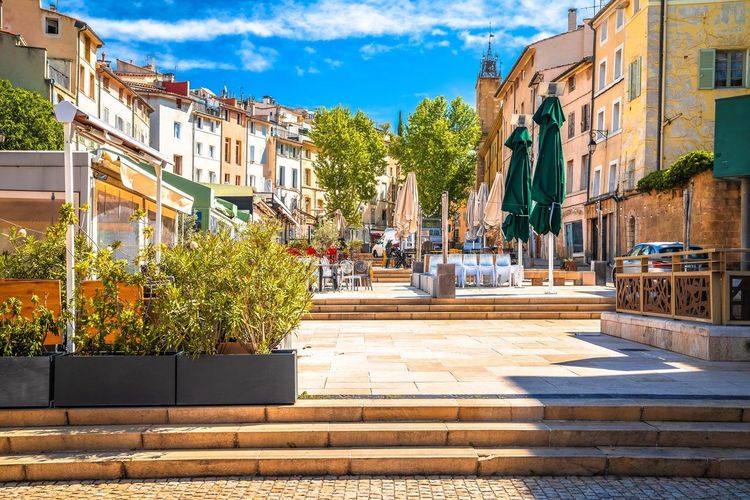
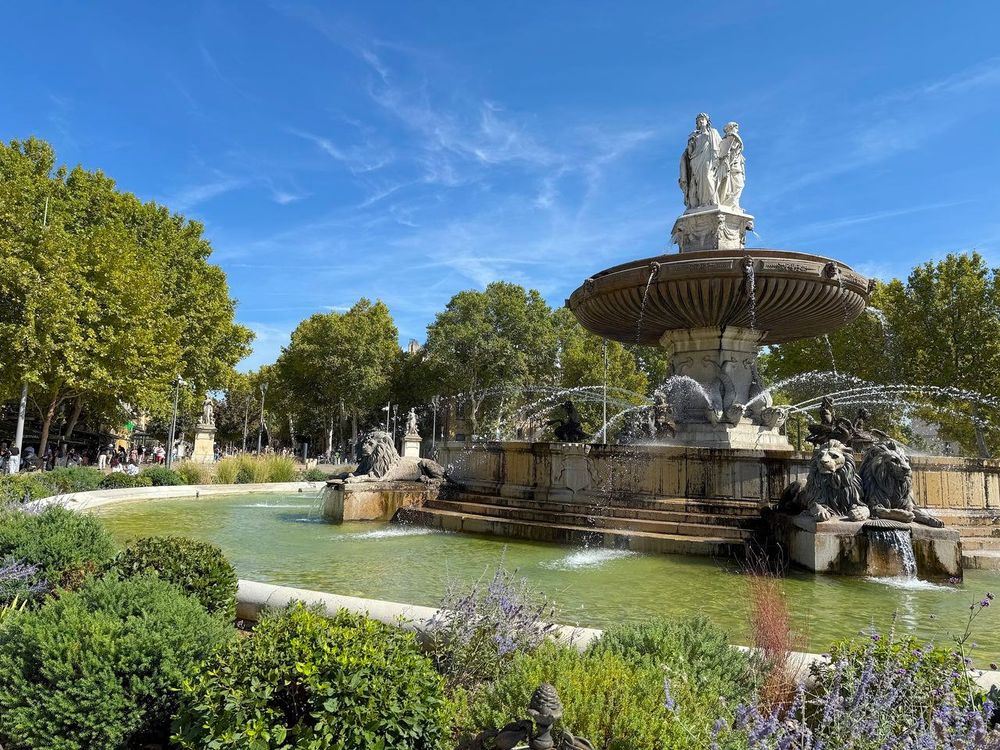
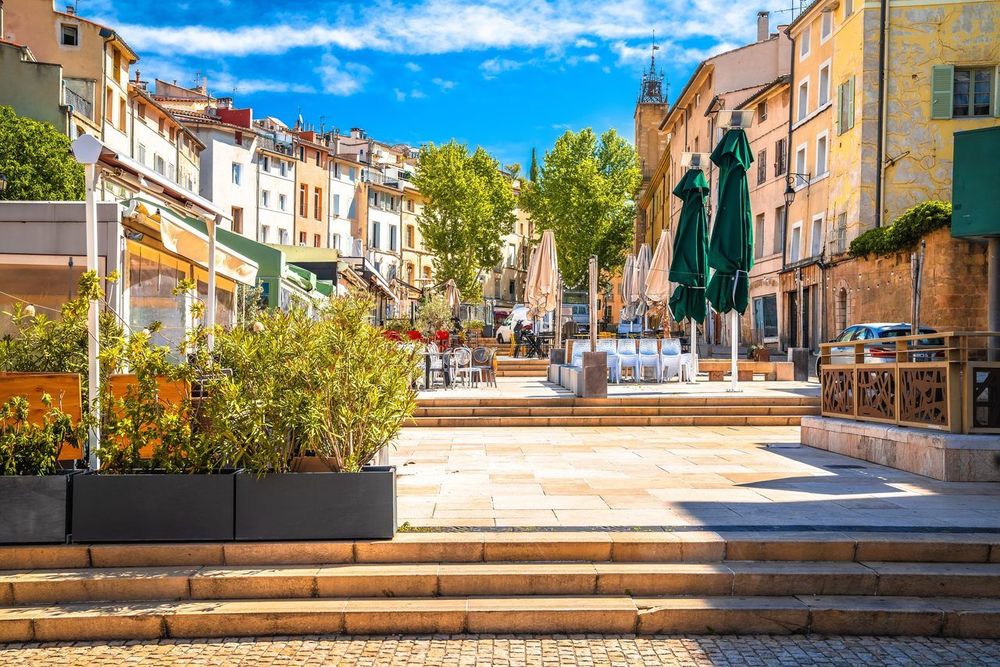
Vieil Aix can be explored without a map, or almost. The cobbled lanes wind around a few main arteries, and all you need to do is follow the sound of water to stumble upon a fountain, then another. The city has dozens of them, some so discreet that you discover them by chance while looking for an address.
At the heart of the district, the Hôtel de Ville stands on a paved square that hosts a flower market on Tuesday, Thursday, and Saturday mornings. Look up toward the neighboring clock tower: its automaton changes character with each season. A few minutes to the north, the Cathédrale Saint-Sauveur blends Romanesque, Gothic, and Baroque styles across several centuries of construction, with a 12th-century Romanesque cloister that many visitors miss for lack of looking for it.
In the morning, head to Place Richelme (Place Richelme, 13100 Aix-en-Provence), where the Provençal market sets up every day: tomatoes, goat's cheeses, olives, and lavender fill the stalls from dawn. You will find just as many tourists as locals doing their shopping, which gives the place an authenticity that more heavily photographed markets have long since lost. On Tuesdays, Thursdays, and Saturdays, walk on to Place de Verdun, in front of the palais de justice, for the antiques market.
It is precisely this blend of local life and heritage that the Ryo audio guide tour of Vieil Aix captures: a dedicated audio stop for each square, with the anecdotes a guide would not always have time to develop. At your own pace, with no booking or set schedule, you listen to the history of the fountains while photographing them.
The Mazarin Quarter, Aristocratic Elegance
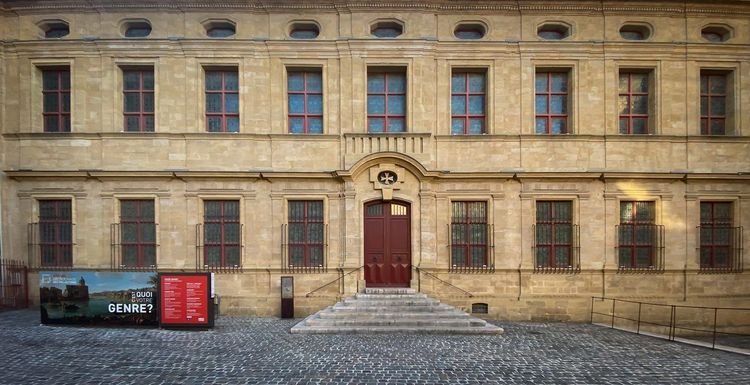
Located just south of the Cours Mirabeau, the Mazarin quarter stands in sharp contrast to the organic disorder of Vieil Aix. Planned in 1646 by Archbishop Michel Mazarin, the cardinal's brother, it was laid out on an almost perfectly geometric grid plan, a rarity for the time in a Provençal city.
The hôtels particuliers follow one after another, complete with sculpted gateways and paved courtyards. Many still belong to private owners, which explains why so many facades remain closed to the public despite their architectural interest. The Fontaine des Quatre-Dauphins, at the corner of Rue Cardinale and Rue du 4-Septembre, remains one of the most photographed symbols of the quarter: its four stone dolphins have been spouting water since 1667.
At the end of Rue Cardinale, the Musée Granet (Place Saint-Jean de Malte, 13100 Aix-en-Provence, rated 4.4/5 on Google based on 4,952 reviews), housed in the former priory of the Knights of Malta, rounds off the visit with a collection ranging from classical Provençal painting to Cézanne and Giacometti. If you only enter one museum in the quarter, make it this one.
A section of the Ryo audio guide tour recounts the history of the parliamentary families who had these mansions built. No need to stop and decipher a plaque: the story reaches you as you walk past each hôtel particulier.
The Cours Mirabeau and the Allées Provençales
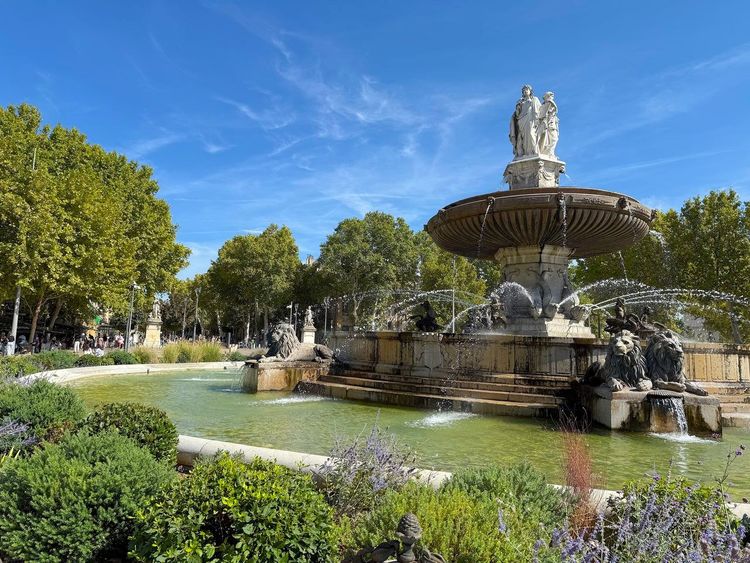
If Aix had only one address to remember, it would be this one. The Cours Mirabeau stretches some 440 meters of plane trees between the Rotonde and Place Forbin, separating Vieil Aix to the north from the Mazarin quarter to the south.
Several fountains punctuate the promenade, including the Fontaine des Neuf Canons (Cours Mirabeau, 13100 Aix-en-Provence, rated 4.6/5 on Google based on 78 reviews) and the mossy fountain of warm water, fed by a natural thermal spring, a discreet vestige of the city's thermal past. At number 55, the Cézanne family ran a hat shop: the painter was born in 1839 just a few streets away, on Rue de l'Opéra.
Here you will find the city's most popular café terraces, including that of Les Deux Garçons, where Cézanne and Zola have their legends. It is also the most commented stop in our Ryo audio guide: plane trees, mossy fountains, and memories of the boulevard's former social life.
Past the Rotonde, the scene changes completely. The Allées Provençales, opened in 2008, extend the center to the west in the form of a contemporary pedestrian district: national chain shops, restaurants, residences, and a casino. Less charming, certainly, but this is where many locals do their shopping, and the area serves as a link between the center and Sextius-Mirabeau.
Saint-Mitre, Les Granettes, and Pey Blanc: the Residential Northwest
Despite what its name might suggest — often associated with the cathedral where Saint Mitre rests — the administrative district of Saint-Mitre is located far from the center, in the northwest of the municipality. It groups together Saint-Mitre, the hamlet of Les Granettes, and Pey Blanc in a landscape halfway between town and countryside.
Villas, bastides, housing estates, and terraced gardens share the space, far from tourist flows. If you are looking for a house with land without straying too far from the routes toward Marseille or Salon, this is an area worth considering closely.
Sextius-Mirabeau, the New Business District
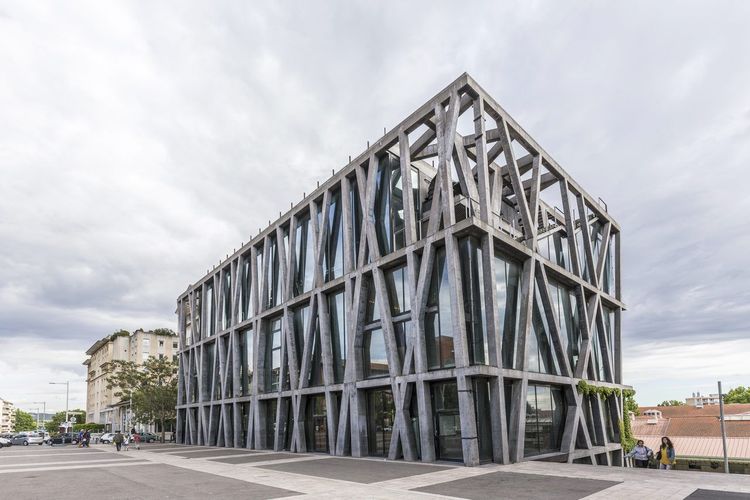
On the western edge of the city center, around the bus station and a stone's throw from the central SNCF train station, Sextius-Mirabeau embodies contemporary Aix. The district has been built since the 1990s on former railway and industrial land, with little architectural connection to the rest of the city.
The Grand Théâtre de Provence, inaugurated in 2007, and the Conservatoire Darius-Milhaud are its cultural showcases. A little further south, the Cité du Livre (8-10 Rue des Allumettes, 13100 Aix-en-Provence, rated 4.4/5 on Google based on 222 reviews), installed in a former match factory, brings together the Méjanes library, a cinema, and exhibition spaces in a carefully restored industrial building.
Offices and company headquarters stand alongside modern residential buildings, popular with executives who work nearby and want to avoid using a car. The contrast with the stonework of Vieil Aix, just ten minutes away on foot, always surprises first-time visitors.
Les Facultés, the Student Quarter
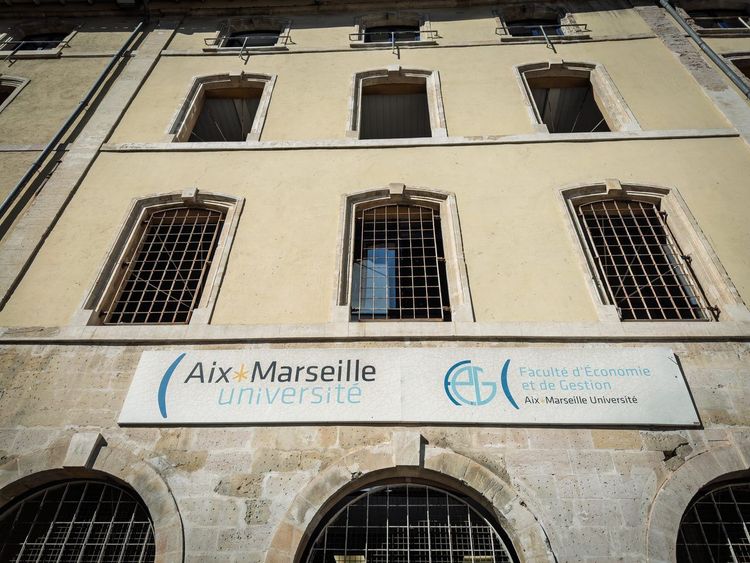
The Les Facultés district extends to the southwest of the center, along Avenue Robert-Schuman, where the law and arts faculties of Aix-Marseille University are located. Generations of students have rented their first room here.
Rents remain more accessible than in Mazarin, even though the Aix property market has eroded that advantage. Student cafés, bookshops, and fast food outlets shape the atmosphere, which is more laid-back than that of the historic center. For a tourist stay, it is not the most picturesque option, but everything is still reachable on foot.
Jas de Bouffan, in Cézanne's Footsteps
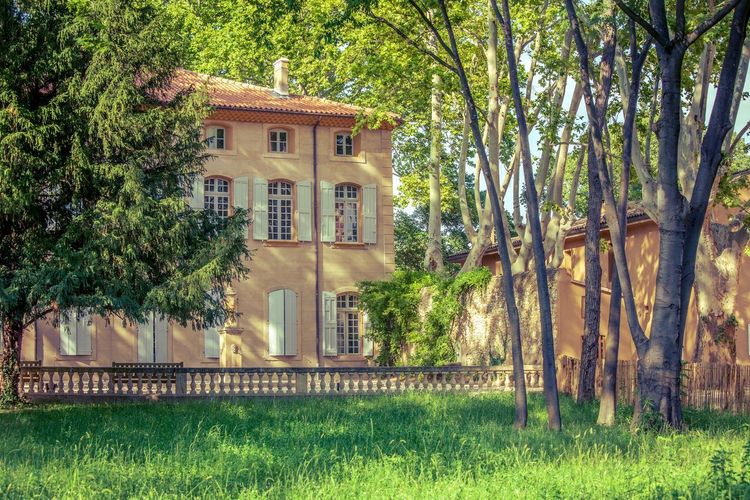
To the west of the center, Jas de Bouffan owes its renown to one man: Paul Cézanne. His father, Louis-Auguste, acquired the property in 1859, and the painter produced around thirty canvases there, returning again and again to the chestnut tree avenue and the basin under different lights.
The Bastide du Jas de Bouffan, which remained in the family until 1899, reopens its doors from 4 July to 31 October 2026, with a limited number of places: book early if you are visiting Aix in summer. The park has retained enough of its original layout for you to recognize certain landscapes painted by the artist.
A few hundred meters away, the Fondation Vasarely (1 Avenue Marcel Pagnol, 13090 Aix-en-Provence, rated 4.4/5 on Google based on 2,861 reviews) provides a striking contrast with its hexagonal cells inaugurated in 1976, designed by Victor Vasarely, a leading figure in optical art. Around these two cultural poles, the neighborhood extends into large residential complexes built from the 1970s onward, where rents remain well below those of the center.
To extend the visit, the Ryo article on Cézanne's studio details the itinerary tracing the painter's steps, all the way to the Atelier des Lauves in the north of the city. And if you start the day in the center, the Ryo audio guide tour takes you past the Cours Mirabeau cafés that the young painter used to frequent.
La Torse, Pont de l'Arc, and Val Saint-André
To the east and south of the center, this residential cluster is organized around the Arc river and its tributary, the Torse. The Pont de l'Arc (Pont de l'Arc, 13090 Aix-en-Provence), which gave its name to the southern district, crosses the river on the old Marseille road and remains a landmark for joggers and cyclists.
Further east, Val Saint-André and La Torse combine 1960s–1970s apartment blocks with individual houses. The Parc de la Torse, with its ponds and footpaths, serves as a green lung for residents. Allow a quarter of an hour on foot or a few minutes by bus to reach the Rotonde. It is a logical choice if you want a calm setting without giving up the center.
La Duranne, the New Plateau District
To the west of the municipality, on the Arbois plateau near Les Milles, La Duranne emerged from the early 2000s onward. This planned district combines housing, schools, and office buildings in close proximity to the Aix-en-Provence Business Park, one of the largest employment zones in the département.
For working professionals who commute between Aix, Marseille, and the Étang de Berre, it is a practical base: the motorway and the TGV station are a short distance away. Families find modern housing with parking here, in a setting that is less picturesque than the center but designed for everyday life.
Les Milles, the Former Industrial Village
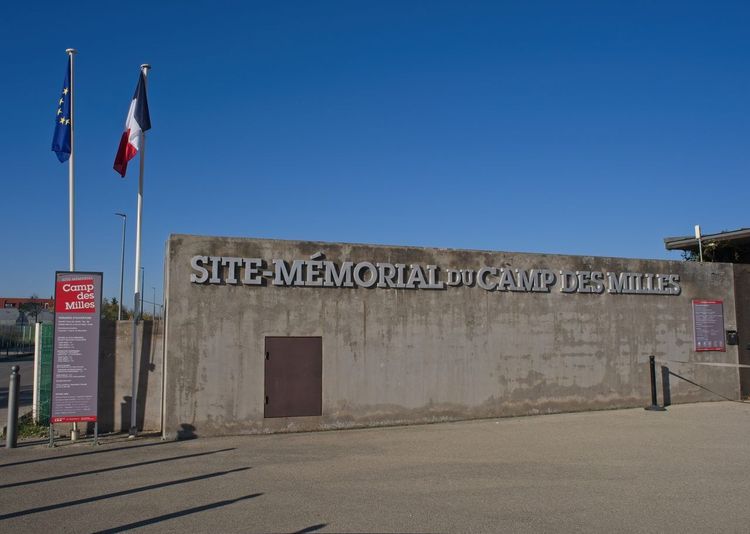
A village attached to the municipality of Aix, Les Milles long lived off the production of tiles and bricks thanks to local clay. The area also carries a heavier history: the Mémorial du Camp des Milles (40 Chemin de la Badesse, 13090 Aix-en-Provence, rated 4.6/5 on Google based on 2,316 reviews), opened in 2012 in a former tile factory, serves as a reminder that this site was used as an internment and deportation camp between 1939 and 1942.
Allow at least two hours: it is one of the most comprehensive memorial sites in France on the subject of deportation. Around the village, the Aix-les-Milles airfield, dedicated to light aviation, and the large business zones give the area an economic identity far removed from its past as a Provençal village.
Luynes, Between Nature and Tranquility
To the south of the city, on the road to Gardanne and Marseille, the village of Luynes remains one of the quietest areas of Aix: a small center with a few shops, and many individual houses nestled in the vegetation.
If peace and quiet and quick access to Marseille are your top priorities, Luynes makes sense, even if it means being dependent on a car. Allow a quarter of an hour to reach the Cours Mirabeau, longer during rush hours.
Les Hauts d'Aix, Puyricard, Cuques, and Encagnane: the Other Residential Districts
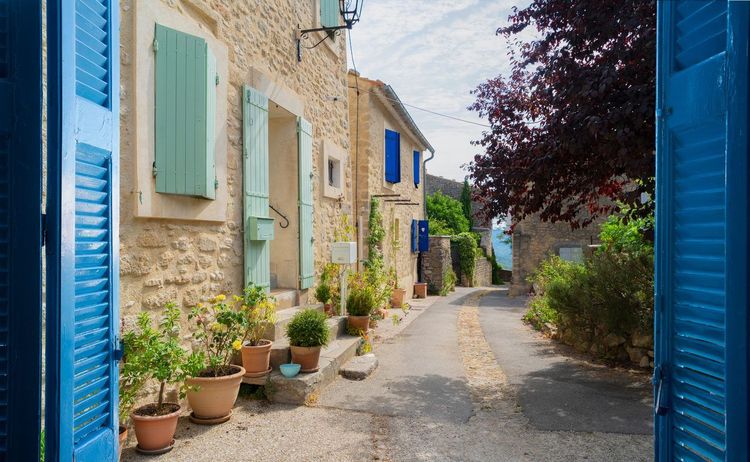
Four districts, four very distinct profiles. To the north, Les Hauts d'Aix and the neighboring Pont de Béraud area occupy the hillsides that overlook the city: villas, private swimming pools, and open views over the tiled rooftops. These northern neighborhoods of Aix-en-Provence rank among the most sought-after, alongside the Mazarin quarter.
Further afield, Puyricard and Couteron retain the feel of Provençal villages, with their church and shaded square. The Chocolaterie Puyricard (Route du Puy-Sainte-Réparade, 13540 Puyricard, rated 4.5/5 on Google based on 474 reviews), founded in 1967, produces chocolates and calissons, a traditional Aix confection.
Cuques, south of the center near the Arc, is a residential area popular with families for its proximity to schools and the city center. At the other end of the social spectrum, Encagnane and Corsy, to the southwest, bring together large social housing complexes built from the 1960s onward, classified as priority urban policy neighborhoods and engaged in an urban renewal program. The population there is younger than in the rest of the municipality, with some of the most affordable rents in Aix.
How to Choose Your Neighborhood in Aix-en-Provence
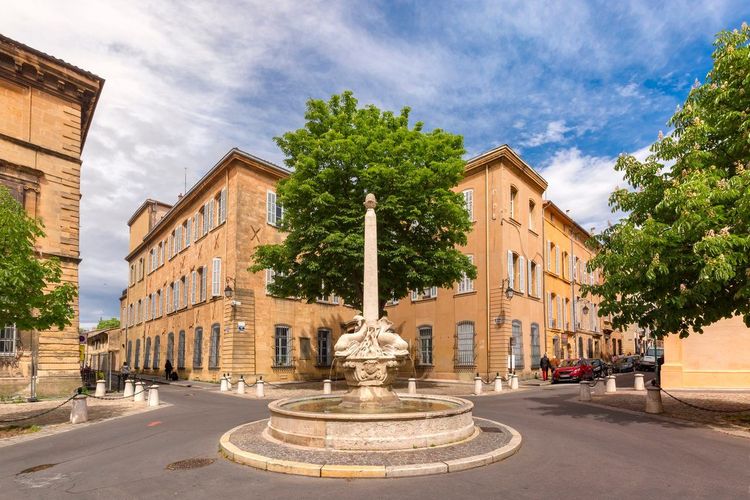
Budget remains the first filter. Aix is among the most expensive cities in the region outside the Côte d'Azur, and the gaps are significant from one district to another. The upscale neighborhoods of Aix-en-Provence — namely Mazarin, Vieil Aix, and Les Hauts d'Aix — display the highest prices per square meter, driven by the scarcity of old buildings and plots with views. Conversely, Encagnane, Corsy, and part of Jas de Bouffan make it possible to buy or rent on a considerably tighter budget, without moving far from the center. For a purchase project, consult the notaires' price indices, updated each quarter, rather than outdated averages.
Your profile matters just as much:
- Family with children: La Duranne, Cuques, Val Saint-André, or Luynes, for space, calm, and nearby schools.
- Student: Les Facultés, Encagnane, or Sextius-Mirabeau, close to university campuses and well served by bus routes.
- Working professional: La Duranne or Les Milles if you work at the Business Park, Sextius-Mirabeau for the bus station and quick motorway access toward Marseille.
- Countryside lover: Puyricard, Couteron, Saint-Mitre, or Les Granettes.
Finally, if you are coming primarily to visit, staying in Vieil Aix or the Mazarin quarter remains the most logical choice: everything is within walking distance. Before booking, our Ryo audio guide tour through Aix-en-Provence lets you explore both neighborhoods in 2 hours 20 minutes and get a feel for which one suits you best.
FAQ
Which is the most pleasant neighborhood to live in in Aix-en-Provence?
It mostly depends on your lifestyle. The Mazarin quarter appeals for its calm and heritage, Val Saint-André and Luynes for space and greenery, while Sextius-Mirabeau attracts working professionals who want everything within walking distance. There is no objectively better area, only different priorities.
Where should I stay in Aix-en-Provence to visit the historic center?
Vieil Aix and the Mazarin quarter remain the most convenient choices: you are just a few minutes' walk from the Cours Mirabeau, the fountains, and the museums. Hotel rates there are higher than on the outskirts, but you will save precious time if you only have two or three days on site.
Which are the most expensive neighborhoods in Aix-en-Provence?
The Mazarin quarter generally tops the list, followed by Vieil Aix and Les Hauts d'Aix for their villas with views. These three areas concentrate the most sought-after heritage and the strongest demand, which pushes prices up, whether buying or renting.
How many neighborhoods does Aix-en-Provence have?
The municipality is divided into 14 administrative neighborhoods, including Centre-Ville, Encagnane, Jas de Bouffan, La Duranne, Les Milles, Luynes, and Puyricard-Couteron. Each one groups together several districts and hamlets, which is why people commonly speak of around twenty neighborhoods.
Which neighborhood should I choose for a family with children?
La Duranne, Cuques, Val Saint-André, and Luynes offer the best balance between space, peace and quiet, and nearby schools. These residential areas often make it possible to have outdoor space at more affordable prices than in the historic center, at the cost of more frequent car trips.
Which is the liveliest neighborhood in the evening in Aix-en-Provence?
The Cours Mirabeau and the adjacent streets of Vieil Aix concentrate the majority of bars and restaurants open late, especially in summer. Around the Rotonde, the Allées Provençales and the Grand Théâtre de Provence offer entertainment more geared toward shows and the casino.
Aix-en-Provence, Several Cities in One
Visiting or living in Aix-en-Provence means choosing between several cities rolled into one. Vieil Aix and the Mazarin quarter concentrate the heritage and the buzz, while Puyricard, Luynes, and Val Saint-André offer a more Provençal and more tranquil face. None of these districts can be summed up in a single photograph: it is by moving through them one after another that the city of fountains truly reveals itself. To start with the historic heart, launch the Ryo audio guide tour of Aix-en-Provence: 24 audio stops, 3.8 km, and a story at every square.
À lire également