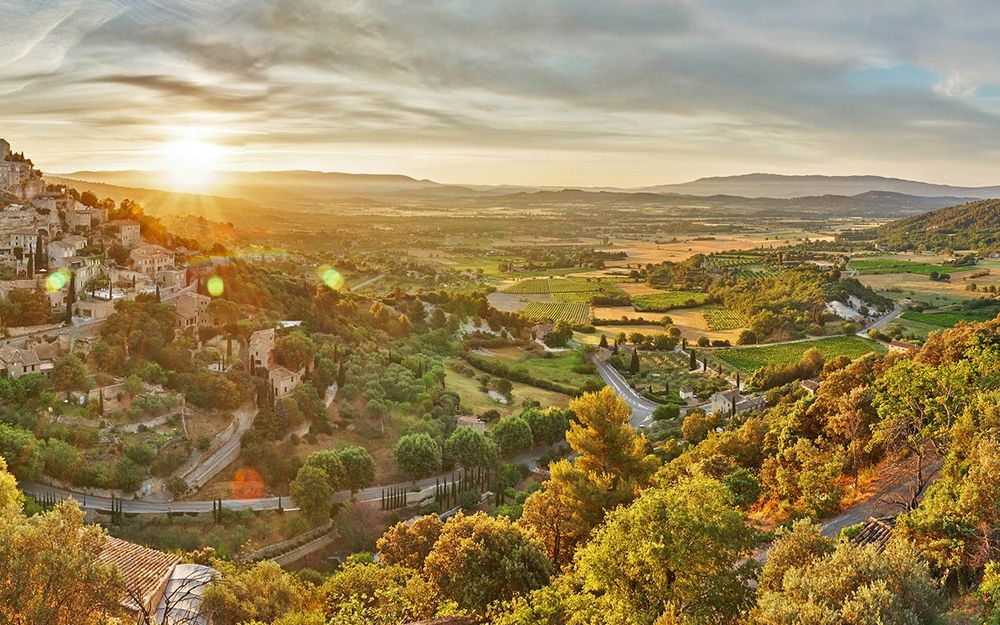
© Shutterstock
 Votre guide Ryo
Avignon's Culinary Specialties: 12 Essential Provençal Flavors in 2026
Avignon smells of garlic, lavender, and aged wine. That's not a metaphor — it's what you breathe when you push open the door of a fine grocery on the Rue des Marchands on a Tuesday morning. Here, every local specialty tells a story: for nearly a century, the city was the capital of Christendom, and that papal history left direct traces on the plate — a cuisine of splendor and spices, heir to both Rome and the Mediterranean. Before heading out to explore the Palais des Papes or the alleyways of the medieval center with the Ryo audio guide of Avignon, take the time to understand what the city truly eats.
If you're looking for a local specialty in Avignon that is genuinely rooted in its terroir, you'll discover here the papaline d'Avignon, a liqueur-confection created in 1960 and crafted by pastry-confectioners in the Vaucluse, but also the daube avignonnaise simmered with anchovies — a detail unknown to hurried tourists — and the crespeou, a multicolored omelet terrine that Vaucluse farmworkers once took to the fields. This guide covers 12 local specialties from Avignon and Provence, with the best addresses to taste them on-site, the markets where you can find producers, and the bottles of Châteauneuf-du-Pape that truly live up to their reputation. Not all of them are strictly from Avignon: some are Provençal or Comtadin, and we note this each time.
The Papaline d'Avignon: the Popes' Confection
France has dozens of candies or liqueurs bearing the name of a city. The papaline d'Avignon is not one of them in the ordinary sense. Created in 1960 by the Vaucluse master pastry makers' guild, it continues to be crafted artisanally by around sixty pastry-confectioners in the department, including the Recolin house in Avignon. The confection takes the form of a thin chocolate shell encasing a Comtat oregano liqueur, distilled from oregano and around sixty plants harvested on the slopes of Mont Ventoux. Just a few grams, a surprisingly herbal aroma, and a bitterness reminiscent of the mutage wines of the Rhône.
The story behind the name is worth a detour. During the Great Schism (1378–1417), Avignon hosted popes and then antipopes who governed the city with considerable grandeur. Papal gastronomy, documented in the records of the Apostolic Chamber, drew on rare spices and sophisticated confections. The papaline fits into this collective memory, even if the current recipe dates from the twentieth century.
If you haven't yet visited Recolin, here's what you need to know: the historic shop is located in the city center, just a few steps from the Palais des Papes. Papalines are sold in boxes of 6, 12, or 24 units, and they travel well — no risk of breakage unlike the calissons from Aix, which crumble under the heat of a car in summer.
Recolin Confiseur (19 Rue Saint-Étienne, 84000 Avignon, rated 4.2/5 on Google based on 474 reviews)
Production remains artisanal and limited: Vaucluse confectioners sell barely five tonnes per year. Outside confectionery shops, papalines can be found in a few fine grocery stores in Avignon and in souvenir shops around the Palais des Papes. Don't look in supermarkets: this deliberately restricted distribution explains why the specialty remains little-known outside the region.
A variation has existed since the 2000s: the milk chocolate papaline, milder, which is more popular with children. But if you're after authenticity, stick with dark chocolate, whose bitterness interacts with the oregano in a far more interesting way.
The Daube Avignonnaise: the Sunday Slow-Cooked Stew
In the rest of Provence, daube is made with beef, red wine, olives, and herbs. In Avignon, anchovy fillets are added. This detail, which may seem minor, changes everything: the anchovies melt during the three or four hours of cooking and contribute an umami depth you simply cannot achieve any other way. The dish isn't salty — the anchovies enrich without over-salting, provided they are used in the right quantity.
The classic Avignon recipe calls for quality beef (shank or chuck), red wine from the Rhône valley, carrots, onions, thyme, bay leaves, black olives from the Drôme, and those essential oil-packed anchovies. The marinade lasts at least one night. Some cooks add dried orange zest, another Provençal signature, or a splash of marc de Provence at the end of cooking to lift the whole dish.
La daube avignonnaise
Restaurants that serve it with care are becoming increasingly rare at lunchtime, but some family-run establishments in the city center offer it on Sundays or as a weekday special on Wednesdays. The most reliable sign of a good homemade daube: the sauce should be glossy and slightly sticky, not watery. If it looks like broth, it hasn't reduced long enough.
As for accompaniments, the traditional choice is polenta or jacket potatoes. Polenta is more faithful to the Comtadin tradition, which was long a cuisine of poor farmers for whom corn was cheaper than bread. Some contemporary chefs serve the daube on a slice of garlic-rubbed toast — an adaptation that works well provided the sauce is thick enough.
If you want to recreate it at home, note that daube avignonnaise is even better reheated the next day. Like many wine-based stews, it gains in aromatic complexity after a night's rest in the refrigerator. Prepare it the evening before — it's almost an unwritten rule in Vaucluse households.
The Crespeou: the Colorful Vaucluse Terrine
The crespeou (or crespeïu in Provençal) is one of the most visually striking preparations in regional cuisine. It consists of a terrine made up of several layers of thin omelets, each flavored with a different ingredient: tomatoes, spinach, peppers, artichokes, fresh herbs, caramelized onions... The layers alternate colors — red, green, yellow, white — and when sliced, the terrine looks like an edible mosaic.
Its origins are clearly peasant. Agricultural workers in the Vaucluse took crespeou to the fields during long days of plowing or harvesting. It is eaten cold, requires no reheating, keeps for two days without issue, and provides protein and vegetables in a single compact preparation. It is the Provençal lunchbox of the nineteenth century.
Marché des Halles d'Avignon (Place Pie, 84000 Avignon, rated 4.3/5 on Google based on 7,151 reviews)
Today, crespeou has become a popular starter in regional restaurants and a staple at wedding buffets in Provence. Its preparation requires patience — each omelet must be made separately and left to cool before the next one is added — but the result is worth the effort. No two restaurants offer exactly the same version: some add goat cheese between the layers, others incorporate dried herbes de Provence or marinated sardine fillets.
To find a homemade crespeou in Avignon, the covered market at Place Pie is the best spot. Several produce sellers and caterers offer whole crespeous or slices in the morning. Arrive before 10am to have the best selection.
The Soupe au Pistou: Summer in a Soup Tureen
Provençal pistou is not Genoese pesto, even though both draw their name from the same gesture — pounding (pisdar in Occitan, pestare in Italian). The main difference: in the Provençal version, there are no pine nuts. Pistou consists solely of fresh basil, garlic, olive oil, and sometimes grated Parmesan or dry tomme. Simple, direct, summery.
Soupe au pistou is a quintessentially summer dish. It brings together seasonal vegetables — zucchini, fresh green and white beans, potatoes, tomatoes, carrots — with pasta or corn gnocchi, the whole finished with a generous spoonful of pistou stirred in at the last moment, off the heat. The basil aroma is thus preserved: the soup's warmth releases it gradually in the bowl.
In Avignon, soupe au pistou appears on restaurant menus from mid-June through late September. Some families still prepare it on Thursday evenings using vegetables from the morning market. If you're visiting between July and August, look for it on the menus of brasseries or trattorias in the old town — that's when fresh beans are at their best.
Restaurant Sevin (ex-Christian Etienne) (10 Rue de Mons, 84000 Avignon, rated 4.5/5 on Google based on 820 reviews)
A lighter, quicker version exists for the summer months: pistou on its own, served with garlic-rubbed toast and marinated anchovies. This starter can be found in tapas bars and wine bars in the Balance neighborhood — less filling than the soup, but just as aromatic.
The Brandade de Morue: a Mediterranean Legacy
Brandade de morue is a dish that crosses the Mediterranean. It is found in Nîmes, Marseille, Barcelona, and as far as Portugal in similar forms. The Avignon version is creamy, emulsified with olive oil and garlic, without potatoes — unlike the Nîmes brandade, which contains nearly as much potato as fish. The result is denser, stronger in flavor, more decidedly Mediterranean.
Salt cod (dried and salted haddock) was once one of the few sources of animal protein accessible to inland populations, far from the coast. In Avignon, a trading city since the Middle Ages thanks to the Rhône, merchants imported salt cod from Atlantic or Scandinavian ports. The culinary tradition was built on this once-common ingredient, now rediscovered by regional chefs.
La Fourchette (17 Rue Racine, 84000 Avignon, rated 4.6/5 on Google based on 808 reviews)
To taste a serious brandade in Avignon, traditional Provençal cuisine restaurants are your best bet. Brandade is typically served warm, on golden olive oil-fried croutons, with a few black olives and a rocket salad. Avoid the industrial versions sold in supermarket trays — they often contain more potato than fish and lose entirely the rich, garlicky character of the traditional version.
To buy good brandade to take home, the caterers at the Halles Pie offer fresh versions prepared that very morning. It keeps for 48 hours in the refrigerator and reheats in the oven at 160°C for fifteen minutes.
Tapenade and Provençal Olives
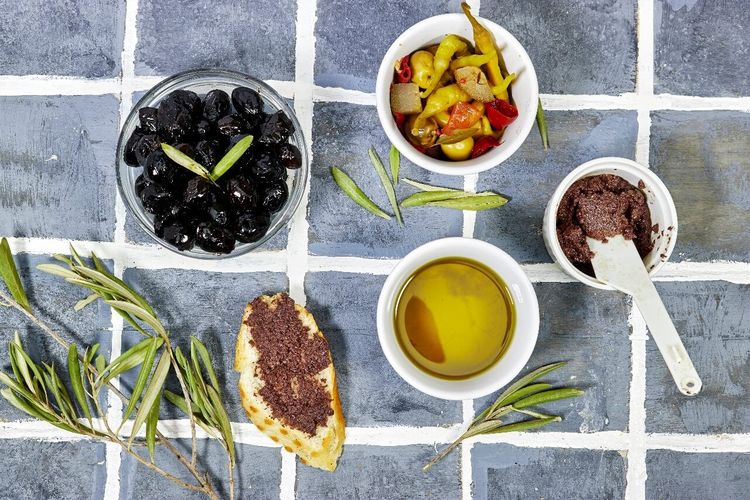
It would be a mistake to consider tapenade a mere buffet condiment. In the Vaucluse, it is a daily practice. The name comes from the Provençal word tapenas, meaning capers — an essential ingredient in the classic recipe, often left out of commercial versions. Traditional black tapenade combines well-ripened black olives (ideally olives from the Alpilles region or Nyons olives, PDO-certified), capers, oil-packed anchovies, garlic, and olive oil. It is pounded or blended depending on the desired texture: coarse for purists, smooth for toasts.
Green tapenade also exists, made from green olives, almonds, fresh herbs, and sometimes lemon. Milder and less salty, it pairs well with fresh goat cheeses.
Saturday market, Place des Carmes
Avignon's markets are the best place to compare tapenades. Several producers offer tastings in the morning, and the differences between recipes are striking — depending on the olive variety, the proportion of anchovies, or the addition of herbs like thyme or rosemary. If you're buying a jarred version, check that olive oil appears among the first two ingredients on the label: it's a sign of a reasonably quality product.
For loose olives, producers from the Alpilles and Nyons hold regular stalls at the Wednesday market (Place des Carmes) and the Saturday morning market (the Halles). Cracked olives with garlic and fennel are a local specialty that must be tasted — their firm, slightly bitter flesh is a world apart from standardized brine-cured olives.
Provençal Black Nougat and Berlingots de Carpentras
Provençal black nougat has nothing to do with the white nougat from Montélimar that you probably know. It is a hard, dense, caramelized confection made primarily from lavender honey, whole unpeeled almonds, and a thin layer of wafer paper. The texture is crunchy, the aroma powerful — lavender, caramel, honey, roasted almonds — and the traditional format is a thick square that you break with your fingers or your teeth, depending on your character.
It is one of the Thirteen Desserts of the Provençal Christmas tradition, alongside quince paste, dates, dried figs, calissons, and other candied fruits. This tradition of thirteen desserts is alive throughout the region; in Avignon, pastry makers and confectioners celebrate it from mid-December onward.
Confiserie du Mont Ventoux (65 Rue du Portail Matheron, 84000 Avignon, rated 4.9/5 on Google based on 251 reviews)
About twenty kilometers from Avignon, Carpentras produces another confectionery treasure: the berlingot de Carpentras. It is a hard candy in the shape of a tetrahedron, striped in white and a color corresponding to its flavor — mint, pineapple, caramel, strawberry. The distinctive feature of the Carpentras berlingot: its honey-vinegar aroma, which gives it a slight acidity that cuts through the sweetness. The recipe dates back to the sixteenth century and is protected by a local geographical indication.
Berlingots can be found in all Avignon confectionery shops, but to buy them at the source, a trip to Carpentras is worthwhile. The Friday morning markets there are among the liveliest in the Vaucluse. It's also a good opportunity to bring back pâtes de fruits de Carpentras — a distinct and lesser-known specialty, made from the fruits of the plain: apricots, cherries, strawberries, blackberries.
Avignon's bakers also offer sarments du pape — small toasted breadsticks coated in dark chocolate or praline, whose shape recalls the Rhône vineyards. This is not an ancient confection — the sarments were invented in the 1980s — but they are now ubiquitous in the old town's shops.
Provençal Fougasse and Brassados
Provençal fougasse is a flat bread, cut in a diamond pattern with characteristic openings that give it the appearance of a stylized leaf. It comes in a savory version — with lardons, olives, cheese, or herbs — and a sweet version, flavored with orange blossom. The Avignon version is generally flavored with extra-virgin olive oil and orange blossom water, with a slightly brioche-like crumb but without excessive sugar.
Don't confuse Provençal fougasse with Alsatian fougasse or Italian focaccia, even though all three derive their name from the Latin focus (hearth, oven). The texture is different: crispier on the surface, less airy than focaccia, with a tight crumb that holds toppings well.
Boulangerie Benoit Castel - Avignon
Brassados (or brasades) are rings of dough that are boiled then baked in the oven, flavored with orange blossom and anise. Their texture sits somewhere between a pretzel and a bagel — boiling before baking creates a shiny, slightly caramelized crust. In Vaucluse households, brassados accompany morning coffee or are dipped into a glass of naturally sweet wine such as Muscat de Beaumes-de-Venise.
Good fougasse and brassados can be found in most artisan bakeries in central Avignon. The Halles Pie market also offers them in the morning — look for the stalls of artisan bakers who deliver directly from their village ovens.
For quality sweet fougasse, Friday and Saturday mornings are the best windows: bakers produce more for the weekend, and fougasse is always at its best on the day it's made — still warm, lightly golden.
Vaucluse Cheeses: Banon and Fresh Goat Cheese
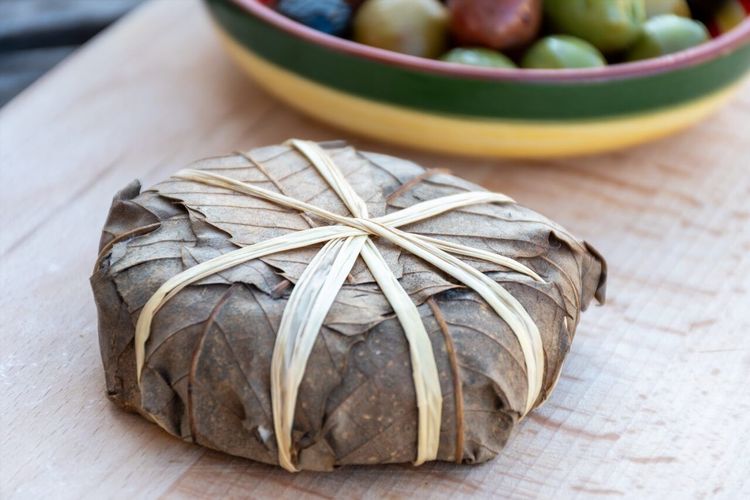
Vaucluse cheese production is dominated by one major figure: banon, a goat's milk cheese wrapped in chestnut leaves tied with raffia strands. The Banon PDO covers an area centered on the eponymous village in the Alpes-de-Haute-Provence, but its natural commercial distribution runs through Avignon, the region's trading city.
Banon is a raw goat's milk cheese with a soft paste and natural rind, molded and then ripened for a few days before being wrapped in its leaves, where it continues to age for one to four weeks. The older it gets, the creamier and stronger it becomes — a young paste is mild and milky, while a four-week-old paste is almost runny and develops aromas of undergrowth and mushroom. The chestnut leaves contribute tannins that play a role in the aging process.
Fromagerie La Cave d'Avignon (6 Rue du Vieux Sextier, 84000 Avignon, rated 4.8/5 on Google based on 41 reviews)
The Vaucluse also produces several types of fresh goat cheeses without PDO status but of excellent quality: ash-coated goat cylinders, small ashy rounds from Sault, goat pucks with herbes de Provence. These cheeses are found in abundance at department markets; in Avignon, the Halles and Place des Carmes markets feature affineurs who work directly with farmers from the Sault plateau or the Alpilles.
For a complete regional cheeseboard, also look for pélardon des Cévennes (PDO, a drier and stronger goat cheese than banon, produced in the neighboring Gard) and tomme de Camargue, a fresh ewe's milk cheese enjoyed with fleur de sel and a drizzle of olive oil. Pick some up before setting off on our audio-guided tour of Avignon: they make a fine break between two stops.
Rhône Wines and Châteauneuf-du-Pape
Avignon sits at the heart of one of France's most complex wine regions. Less than 20 kilometers north of the city, Châteauneuf-du-Pape produces powerful reds based primarily on grenache, sometimes complemented by syrah, mourvèdre, counoise, or a dozen other grape varieties permitted in the appellation. The Châteauneuf-du-Pape AOC is one of France's first AOCs, established in 1936, and its wines regularly top international rankings.
The appellation also produces white Châteauneuf wines based on grenache blanc, clairette, bourboulenc, and roussanne — rare, little exported, and of astonishing aromatic complexity. If you have the chance to taste one in an Avignon restaurant, don't pass it up.
Domaine du Vieux Télégraphe, Châteauneuf-du-Pape
Around Avignon, other appellations deserve attention:
- Gigondas: powerful red, often more accessible than Châteauneuf, dominated by syrah and grenache. Ideal with daube.
- Vacqueyras: neighboring appellation to Gigondas, slightly more rustic, excellent value for money.
- Muscat de Beaumes-de-Venise: naturally sweet wine, golden, fragrant with muscat blanc à petits grains. Drink chilled, as a dessert wine or with goat cheeses.
- Tavel: France's only 100% rosé appellation, produced between Avignon and Nîmes. Structured, dry, fruity rosé, designed to age — unlike most rosés.
- Côtes du Rhône Villages: a transitional category, with villages such as Cairanne or Roaix producing characterful wines at reasonable prices.
Cave de la Vigneronne (Place des Corps Saints, 84000 Avignon, rated 4.7/5 on Google based on 389 reviews)
For purchases, the private cellars of estates in Châteauneuf and Gigondas welcome visitors Monday through Saturday. From Avignon, allow 20 minutes by car to Châteauneuf-du-Pape. Independent wine merchants in Avignon's city center offer more curated selections and better advice than the tourist shops along the main pedestrian thoroughfares.
If you visit Avignon during the festival (July), several estates organize late-evening tastings in inner courtyards — a pleasant way to combine culture and gastronomy in the July heat.
Vaucluse Fruits: Strawberries from Carpentras and Cherries from the Luberon
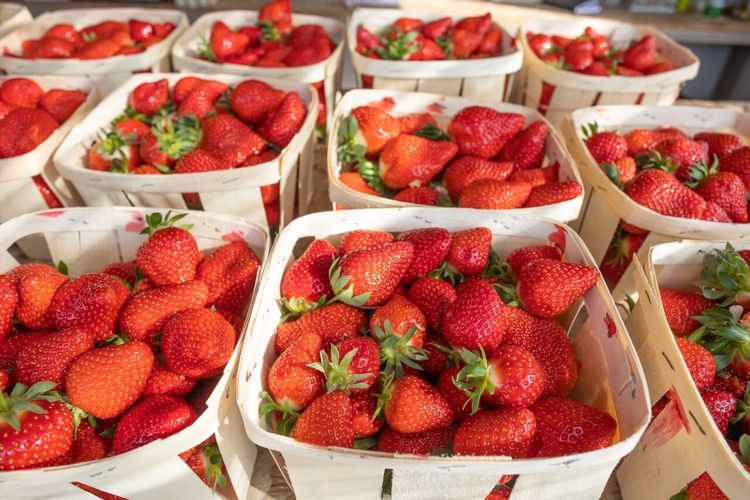
The Vaucluse is one of France's leading fruit-producing departments. The plain between Avignon and Carpentras concentrates a massive output of strawberries, cherries, apricots, and melons that flood regional markets from May to September. This is no accident: the alluvial soil of the Comtat Venaissin, irrigated by canals fed by the Durance, is exceptionally fertile.
Carpentras strawberries have long enjoyed a strong reputation, linked to the gariguette variety — long, conical, bright red, with firm and tangy flesh. The season begins in mid-April and lasts through June. They are found at all Vaucluse markets, but the best prices are at the Friday morning market in Carpentras, directly from the market gardeners.
Marché de Carpentras (Place du 25 Août 1944, 84200 Carpentras, rated 4.1/5 on Google based on 24 reviews)
Luberon cherries — notably the bigarreau cherries from the Luberon and table cherries from Bonnieux — are harvested in June. The burlat variety is the earliest, sweet and juicy, followed by the summit and the regina, firmer in texture. They are transformed locally into jams, eaux-de-vie (Luberon kirsch has no official designation but can be purchased from artisan distilleries in the region), or simply used in clafoutis.
Cavaillon melons are perhaps the region's most celebrated fruit at a national level. Émile Zola loved them so much that he offered the town library his complete works in exchange for an annual allocation of twelve melons. The charentais variety, grown around Cavaillon 25 kilometers from Avignon, is at its peak in July and August — orange flesh, meltingly soft, sweet without being cloying.
Where to Eat in Avignon: Restaurants and Markets
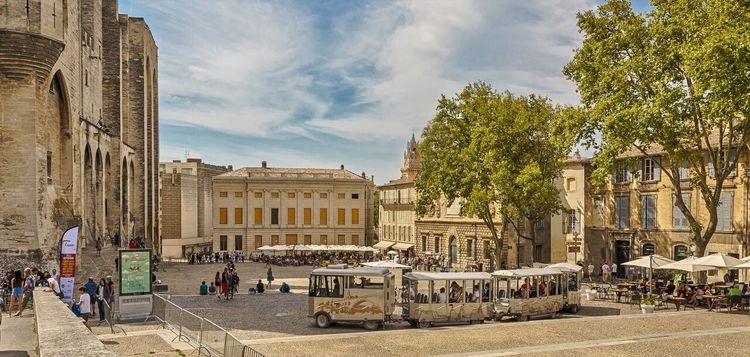
Tasting a local specialty in Avignon often means sitting down at a table: the city has no shortage of restaurants, but the tourist density of the historic center requires some discernment. The best traditional Provençal cuisine restaurants are concentrated in the side streets away from the main pedestrian axes — Rue Saint-Jean le Vieux, Rue de la Bonneterie, Rue Racine, Rue des Lanterniers.
The Essential Markets
The Halles d'Avignon (Place Pie) are the city's main gastronomic hub. Open Tuesday through Sunday morning (closed on Mondays), they bring together around sixty producers and traders: cheese affineurs, charcutiers, bakers, greengrocers, a fishmonger, and fine food merchants. The market is covered, air-conditioned in summer, with an integrated wine bar and rotisserie for those who want to eat on-site. Arrive before 9:30am to avoid the weekend crowds.
Les Halles d'Avignon
The Carmes market (Place des Carmes) is more intimate, frequented more by locals than by tourists. It takes place on Wednesday and Saturday mornings. You'll find excellent seasonal vegetables, flowers, a few organic market gardeners from the Comtat plain, and one or two stalls selling regional specialties such as loose olives and dried herbs.
Notable Dining Tables
La Fourchette (Rue Racine) is the historic address for traditional Avignon home cooking. The menu changes with the seasons and always includes two or three classic Provençal dishes — daube, brandade, Alpilles lamb. Reasonable prices for the quality on offer. Reservations recommended in July and August.
Restaurant Sevin, taken over by chef Guilhem Sevin, occupies a medieval building adjoining the Palais des Papes and retains its Michelin star. The cuisine is gastronomic — a contemporary interpretation of regional produce: fresh garden tomatoes in season (the famous all-tomato menu of Christian Etienne in August), Sisteron lamb, Tricastin truffles in winter. Prices are high, but the experience — dining in a fourteenth-century dining room — is unique.
Restaurant Sevin (ex-Christian Etienne)
For wines, the Hiély cellar and Cave de la Vigneronne (Place des Corps Saints) offer selections from regional producers with on-site tasting available. Their range of Châteauneuf and Gigondas is among the best in the city.
Les bouchons du Festival: during the Festival d'Avignon (first two weeks of July), around forty pop-up bouchons open their terraces in the inner courtyards of the old town. Quality varies, but some offer affordable lunch menus featuring local producers. It is one of the most convivial ways to eat à l'avignonnaise amid the festival atmosphere.
Additional Practical Addresses
L'Épicerie (Place Saint-Pierre, 84000 Avignon, rated 4.5/5 on Google based on 1,362 reviews) is a natural bistrot-style restaurant — natural wines, market produce, a short menu that changes every week. Relaxed atmosphere, unfussy market cuisine. Ideal for a light lunch after visiting the Palais des Papes.
Le Grand Café (la Manutention, Rue Escalier Sainte-Anne) is at once a bar, restaurant, and performance venue. Generous cuisine, lovely courtyard terrace. Open late into the evening — which is rare in central Avignon outside the festival.
L'Épicerie
Taking Avignon Specialties Home: Gourmet Souvenirs
If you'd like to bring back a local specialty from Avignon, here is what travels well and what is best enjoyed on-site.
What travels well:
- Recolin papalines in a metal tin: shock-resistant, keeps for several months
- Black nougat vacuum-packed: compact and sturdy
- Berlingots de Carpentras in a sealed bag: unbreakable and delicious
- Tapenade in olive oil jars: check that the lids are tightly sealed
- Wines: a bottle of Châteauneuf well wrapped in bubble wrap (some wine shops provide special packaging for checked luggage)
- Jams and fruit pastes from Carpentras: in jars, no problem
Best enjoyed on-site only:
- Fresh crespeou from the market: to be enjoyed the same day
- Fresh brandade from the Halles caterers: maximum 48 hours
- Ripened cheeses (leaf-wrapped banon): possible if you're heading home the same day, otherwise opt for vacuum-packed versions
- Fresh fruits (Carpentras strawberries, Cavaillon melons): do not withstand long-distance transport
For bulk purchases, the Rue des Marchands and Rue Saint-Agricol are home to several fine grocery stores and wine shops in the city center. Avoid the generic souvenir shops facing the Palais des Papes — prices there are consistently higher for lesser quality.
Practical Tips for a Gastronomic Stay in Avignon
A few useful reference points for organizing your visit around local gastronomy.
Market schedule: Tuesday through Sunday morning, Halles Pie (covered) / Wednesday and Saturday morning, Carmes (open-air) / Friday morning, Carpentras (open-air, 25 km away). Open-air markets close around 1pm.
Best gastronomic season: June to September for fruits (strawberries in June, melons and cherries in July, apricots in July–August). December for the thirteen Christmas desserts, nougats, and confections. November to March for Tricastin truffles in gastronomic restaurants.
Dining budget: expect €15–22 for a lunch menu at a traditional bouchon, €35–50 for dinner at a classic Provençal cuisine restaurant, €80–120 for fine dining (Restaurant Sevin, ex-Christian Etienne). The Halles Pie allow a full standing lunch for €10–14.
Getting around: Châteauneuf-du-Pape, Carpentras, and Cavaillon are accessible by car in 20–30 minutes from Avignon. There is no practical public transport for these gastronomic excursions — consider renting an electric bike for villages within 15 km. And to explore Avignon's medieval center on foot, the Ryo audio guide of Avignon accompanies you over 5.4 km with 27 commented stops.


FAQ
What is the most typical specialty of Avignon?
The papaline d'Avignon is undoubtedly the city's most emblematic specialty: created in 1960, it bears the name of the popes of Avignon and contains a liqueur made from Comtat oregano, a very local fragrance. It is produced by confectioners in the Vaucluse, including several Avignon establishments. But if we're talking about a culinary dish rather than a confection, the daube avignonnaise, with its distinctive anchovies, best represents the Comtadin culinary tradition.
Where can I buy papalines d'Avignon?
From confectioners and pastry makers in the Vaucluse, starting with Recolin Confiseur, a historic shop located on Rue Saint-Étienne in the center of Avignon, a few minutes' walk from the Palais des Papes. Several fine grocery stores and confectionery shops in the old town also carry them. It's best to buy them on-site: they are rarely available in supermarkets.
What is crespeou?
Crespeou is a terrine of layered omelets, each layer flavored with a different vegetable or herb (tomatoes, spinach, peppers, artichokes...). It is eaten cold, as a starter or at a picnic, and is one of the most colorful preparations in Provençal cuisine. You can find it at the Halles d'Avignon and in regional cuisine restaurants.
Which wines go best with Avignon specialties?
- With daube: a red Châteauneuf-du-Pape or a Gigondas (grenache and syrah, present but fruity tannins)
- With brandade or goat cheeses: a white Châteauneuf or a white Luberon
- With crespeou or a light starter: a Tavel rosé
- For dessert with nougat: a well-chilled Muscat de Beaumes-de-Venise
When is the best time to visit Avignon for gastronomy?
The June–August period is the best for Vaucluse fruits and vegetables (strawberries, cherries, melons, zucchini, tomatoes). November through March is truffle season from the Tricastin area in gastronomic restaurants. December is ideal for Christmas confections and the thirteen Provençal desserts. Outside the festival (July), restaurants are less crowded and reservations are easier to come by.
Is there a covered market in Avignon?
Yes, the Halles d'Avignon (Place Pie) are open Tuesday through Sunday morning, from 6am to 2pm. It is the city's main covered market, with around sixty stalls from local producers and artisans. It is closed on Mondays. Entry is free, and on-site dining is available (wine bar, rotisserie).
Conclusion
Avignon is a city to be eaten as much as seen. Its local culinary specialties tell the story of the Comtat Venaissin — the fertility of the plain, the papal influence on spices and confections, the trade routes that brought salt cod from northern ports and spices from the Mediterranean. Behind the medieval facades, behind the Châteauneuf vineyards, behind the open-air markets of the Vaucluse, there is a living and precise food culture.
To extend the discovery beyond the plate, the Ryo audio guide of Avignon takes you on a 5.4 km walk through the old city with 27 commented stops, from the Palais des Papes to the ramparts, through the alleyways of the Balance neighborhood where the cardinals' kitchens left traces in the street names. And if you'd like to expand your exploration to the wider region, the most beautiful villages around Avignon are within half a day's drive.
À lire également