© Shutterstock
 Votre guide Ryo
Cotentin by Motorhome: Complete Itinerary, Stopovers and Must-Sees (2026)
At the tip of Normandy, the Cotentin peninsula thrusts its cliffs into the Channel like a challenge to the elements. On westerly wind days (which accounts for roughly two out of every three), sea spray reaches the viewpoint car parks and lashes the sides of motorhomes parked facing the horizon. This is precisely why the peninsula fascinates motorised travellers so much: a wild freedom that hotels simply cannot sell.
In a week touring the Cotentin by motorhome, a single road trip lets you park facing Utah Beach, drive out to the Nez de Jobourg, one of the westernmost points on the continent, then finish your loop in front of the dunes at Barneville-Carteret with oysters from Saint-Vaast bought that morning at the harbour. In between: a visitable nuclear submarine in Cherbourg, a paratrooper dangling from a church steeple in Sainte-Mère-Église, marshes where bluethroats nest within binocular range, and coastal roads that change colour every hour depending on the tide and the light.
This guide details a 7-day itinerary across the peninsula, the best stopovers (free or paid), the driving rules you need to know, the unmissable local food, and the natural spots you shouldn't leave without having seen. Whether you arrive from Caen via the A13 or from England on the Cherbourg ferry, you will find everything here to plan a Cotentin motorhome road trip that outshines most itineraries available online.
Why the Cotentin Is Made for Motorhomes
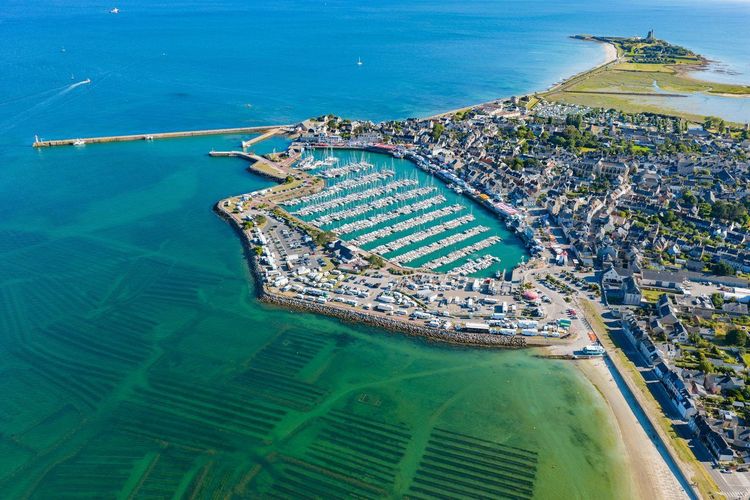
The very shape of the peninsula works in favour of motorised travellers. Three stretches of water border the Cotentin: the Channel to the north, the Norman-Breton Gulf to the south-west, and the Baie des Veys to the east. This means that almost every night, you can sleep facing the water without any particular effort to find a spot.
The road network remains on a human scale. The main coastal roads (D650, D900, D971) wind between bocage and cliffs with only a few genuinely narrow stretches. Motorhomes under 3 metres in height can travel everywhere without difficulty. Beyond 3.5 m, a few minor roads through the oldest villages call for a little forward planning, but nothing insurmountable with a good sense of navigation.
Tourist density remains well below that of neighbouring Brittany. Outside the June commemorative days and the July–August weekends, you will find stopovers with space available and farm markets whose prices have not yet absorbed the seasonal pressure. The Cotentin rewards those who arrive at the right time.
The 7-Day Itinerary: Overview
Here is the backbone of this Cotentin motorhome itinerary. It is organised as a loop from Cherbourg-en-Cotentin, which allows you to adapt it according to your arrival point (Channel ferry port, A13 motorway from Paris, or train followed by a motorhome rental).
- Days 1–2: Cherbourg and the cap de la Hague
- Days 3–4: Utah Beach, Sainte-Mère-Église and the D-Day beaches
- Day 5: Carentan and the Cotentin marshes
- Days 6–7: Barneville-Carteret and the west coast
Total distance: approximately 320 km of driving, to which detours to certain sites must be added. Allow a maximum of 3 to 4 hours of driving per day, with the remaining time devoted to sightseeing, hiking and food stops.
If you only have a long weekend of 3–4 days, three options are available: focus the itinerary on the north (Cherbourg, cap de la Hague), on the D-Day sector (Utah Beach, Sainte-Mère-Église), or on the west coast (Barneville-Carteret, Granville). Each area stands on its own for a short but memorable getaway.
Days 1–2: Cherbourg and the Cap de la Hague
Cherbourg-en-Cotentin is the natural entry point to the peninsula. The city is not merely a transit port: it deserves at least half a full day before heading off to explore the Hague.
The Cité de la Mer, housed in the former transatlantic maritime station of the great ocean liners (the Normandie, the France, and the Queen Mary all called here), is home to the nuclear submarine Le Redoutable, the world's largest visitable submarine at 128 metres in length. Alongside it, the tropical tank with hundreds of marine species captivates children and adults alike. Allow 2h30 to 3 hours for a full visit; admission is around €20 per adult.
For an overnight stop in Cherbourg, L'Anse du Brick (a seaside campsite 8 km east of the town centre) is the most popular choice among passing motorhomers. Pitches with electric hook-ups, sanitary facilities, direct access to a shingle beach and panoramic views of the Hague coast. Open April to October, prices around €15–18 per night. The site is often fully booked at weekends in July and August.
The following morning, make your way to the cap de la Hague by following the coast westward. This territory that locals simply call 'la Hague' is one of the least-known destinations for the general public and one of the most striking in France. The elevated moorland, swept by offshore winds, looks more like the English Cornish coast or Ireland than the bocage countryside of Normandy.
The Nez de Jobourg is the highlight of the visit. From the car park (free, accessible for motorhomes up to 6 m), a 15-minute walk leads to the viewpoint which, on a clear day, offers a view of the Channel Islands. Below, the cliffs plunge 128 metres into a sea with violet and grey hues depending on the light, making them among the highest on the European continent. The sight is particularly intense at high tide, when the foam rises to the foot of the rock faces.
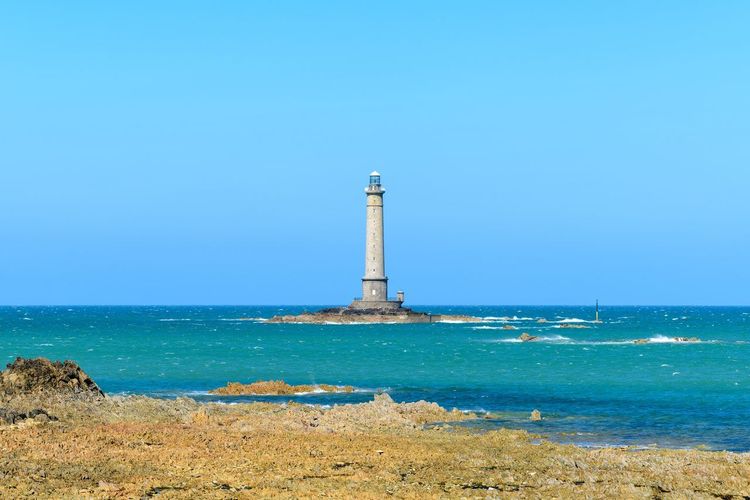
Further north, the village of Goury (Goury, 50440 Auderville, rated 4.5/5 on Google from 480 reviews) is worth a stop. It is the only place in France where a lifeboat is permanently kept at sea because of the violence of the currents in the Raz Blanchard, considered one of the most powerful in Europe with speeds reaching 12 knots. The Goury car park is accessible to motorhomes with no service point, and the race is visible from the road.
For the second night, the Flamanville stopover offers parking at harbour level, free in low season with a waste disposal point. The location is modest, but the red cliff visible at sunset makes the stop worthwhile. From Flamanville, you can head south along the west coast in 45 minutes or return to Cherbourg via the D901 to complete the northern loop.
Days 3–4: Utah Beach, Sainte-Mère-Église and the D-Day Beaches
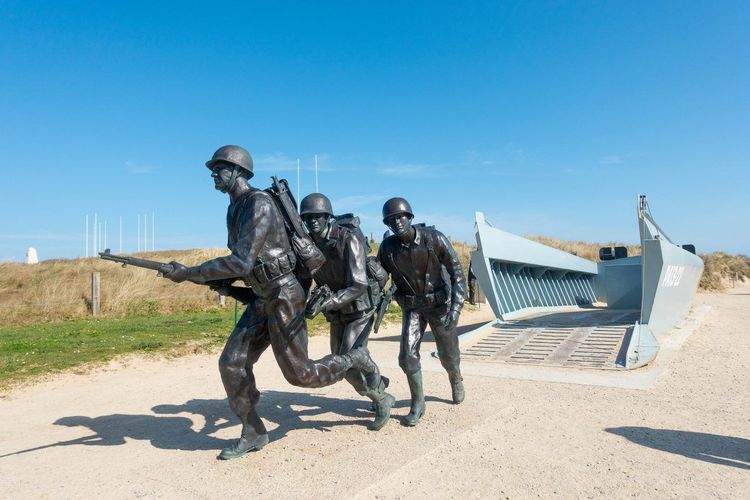
From Cherbourg, head south-east on the D974 to reach the D-Day beaches. The drive takes about 50 minutes, but allow the whole morning if you stop in Sainte-Mère-Église along the way.
Sainte-Mère-Église was one of the first communes liberated by the Allies during the Landings, several hours before the assault on the beaches. On the church steeple, a dummy paratrooper recalls the fate of American paratrooper John Steele, whose parachute snagged on the spire during the night of 5–6 June 1944. Suspended for two hours under fire, he survived. The town has preserved his memory with touching fidelity, and the central square remains one of the rare places in France where this fragment of world history can be read directly in the landscape.
The adjacent Airborne Museum retraces Operation Overlord from the perspective of the paratroopers of the 82nd and 101st US Airborne Divisions. Two buildings shaped like inverted parachutes house an original Waco glider, uniforms, weapons and diorama models of remarkable quality. It is one of the most immersive museums in all of D-Day Normandy.
From Sainte-Mère-Église, Utah Beach is just 20 minutes' drive to the east. The westernmost of the five D-Day beaches presented a relatively favourable outcome for the Allies on 6 June: casualties were lighter than at Omaha, partly due to a navigation error that landed troops slightly south of the originally planned zone, accidentally steering the men away from the strongest defences.
The Utah Beach Landing Museum stands directly on the beach in a fully renovated building. It displays an authentic LCVP landing craft, a DD Sherman tank that took part in the fighting, and traces the events of 6 June hour by hour from the Utah perspective. The beach itself, with its blockhouses partly buried in the white sand dunes, can be visited freely and free of charge.
The Camping-Car Park Utah Beach stopover offers the unique opportunity to sleep a few hundred metres from the historic shoreline. Electricity, water and waste disposal on site. Overnight rate around €14–17. The site has only about twenty pitches and is fully booked several weeks in advance in July and around 6 June. Book via the Camping-Car Park app.
The following day (day 4), the most motivated travellers head to the Pointe du Hoc (Pointe du Hoc, 14450 Cricqueville-en-Bessin, rated 4.6/5 on Google from 3,303 reviews), about forty kilometres beyond the Cotentin in the Calvados. This site managed by the American Battle Monuments Commission is one of the most evocative in all of Normandy: the bomb craters and German bunkers are still intact, the ground still bears the craters from 1944, and the view from the cliff gives a physical sense of what the assault was like.
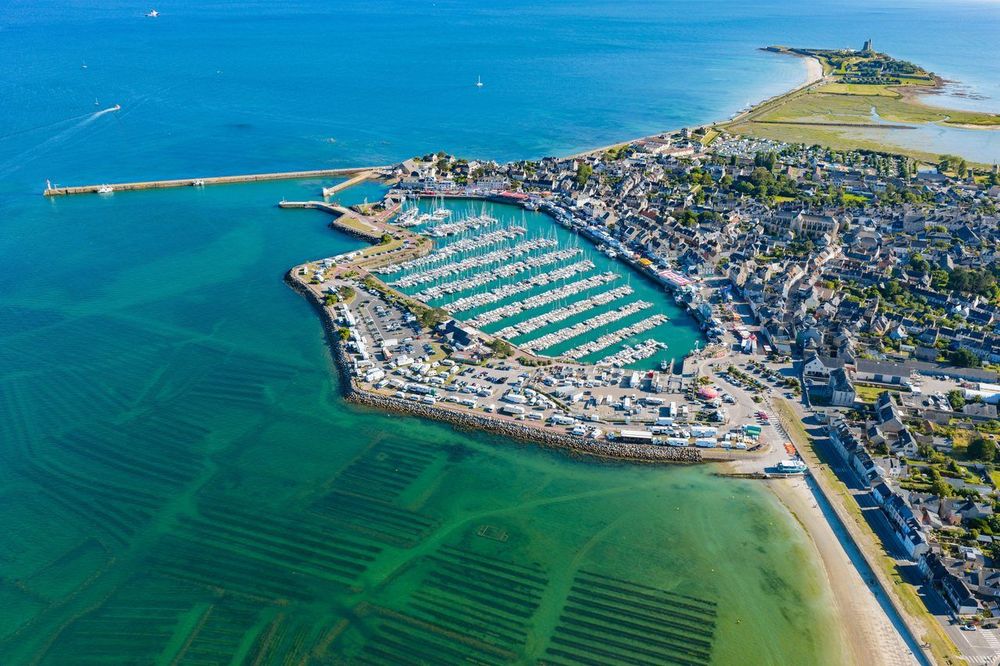
On the way back to the Cotentin, a stop at Saint-Vaast-la-Hougue is a must. This fishing and oyster-farming harbour, whose basins shelter oyster beds in the shadow of the UNESCO-listed Vauban tower, is one of the peninsula's essential gastronomic stops. Buy a dozen oysters directly from the harbour stalls and sit on the quayside: it is one of the finest moments the Cotentin can offer.
Day 5: Carentan and the Cotentin Marshes
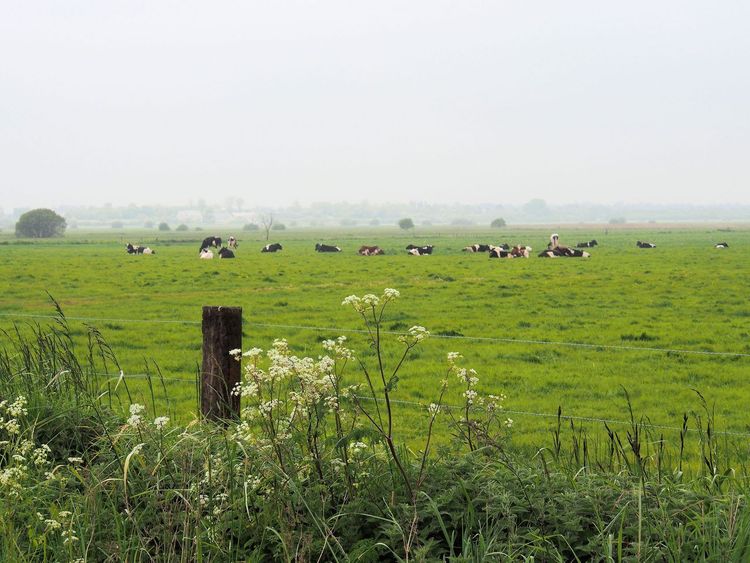
Carentan-les-Marais (Place de la République, 50500 Carentan-les-Marais) is the gateway to the Parc naturel régional des Marais du Cotentin et du Bessin: approximately 145,000 hectares of floodable meadows, wet bocage and canals that constitute one of the most important wetlands in western France. This little-known territory captivates ornithologists, anglers and all those who know how to read slow-paced landscapes.
The Carentan Memorial (7 rue Holdy, 50500 Carentan, rated 4.5/5 on Google from 38 reviews) recalls the fierce fighting that took place in and around the town in the days following the Landings. Carentan was a major strategic objective: its capture would link the Utah Beach and Omaha Beach bridgeheads to form a continuous front. The museum, recently renovated with an immersive scenography, retraces those June 1944 days through reconstructions and veterans' testimonies.
For nature lovers, a rowing boat trip from Carentan's marina is an experience hard to match anywhere in the region. The dense vegetation of reeds and willows hides civilisation just 200 metres from the bank. In spring, grey herons, curlews and bluethroats nest in these reedbeds. An hour of navigation is enough to find absolute calm.
The Camping-Car Park de Carentan, Le Port stopover is one of the best-situated on the entire peninsula. Directly facing the marina, it accommodates around forty motorhomes with a 10A electric hook-up, water and waste disposal. The local market is held a few minutes' walk away on Tuesday mornings. Rate around €12–15 per night.
From Carentan, you can head south to Coutances (35 km south) to see the Gothic cathedral that dominates the bocage hills, then join the west coast in the late afternoon via the D971 to arrive at Barneville-Carteret at sunset.
Days 6–7: Barneville-Carteret and the West Coast
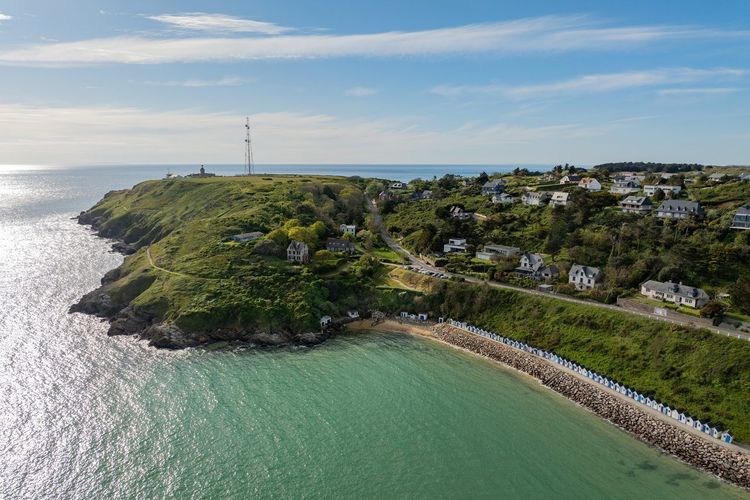
The west coast of the Cotentin is often described as a 'little Norman Atlantic coast': white sandy beaches, dunes covered in marram grass, ever-changing light and an open horizon towards the Channel Islands. Barneville-Carteret is its capital, formed by two merged communes around a natural harbour.
Carteret is the lively half of the pair. Its harbour, from which fast ferries depart for Jersey (about one hour's crossing), comes to life from spring onwards. The narrow streets climbing towards the lighthouse offer panoramic views over the bay and, on a clear day, towards the Jersey coastline. In July and August, book your table at a harbour restaurant well before arriving: sea-view terraces are snapped up from noon.
Barneville on the beach side offers a long ribbon of fine west-facing sand, perfect for surfing and land sailing. The Dune Verte dunes (a Natura 2000 site) stretch for several kilometres northward. For motorhomes, the Saint-Jean-de-la-Rivière parking area allows you to stop just behind the dunes with direct pedestrian access to the beach.
Further north, Portbail (Place du Général Leclerc, 50580 Portbail, rated 4.5/5 on Google from 583 reviews) is a picturesque haven with its old wash-house and Romanesque church whose forecourt overlooks the sea at high tide. The dune car park is accessible to motorhomes, free out of season, with a direct view over the estuary.
Heading south, Coutainville and Agon-Coutainville offer large family beaches with comfortable parking. Granville, at the southern tip of the Cotentin, perched on its rock above the casino and the harbour, deserves a two-hour stop for its ramparts, its lanes and its museum dedicated to Christian Dior, who was born there in 1905. It is also from Granville that boats depart for the Chausey Islands, a Channel archipelago where camping is possible on the main island.
The Cotentin's Essential Nature Spots
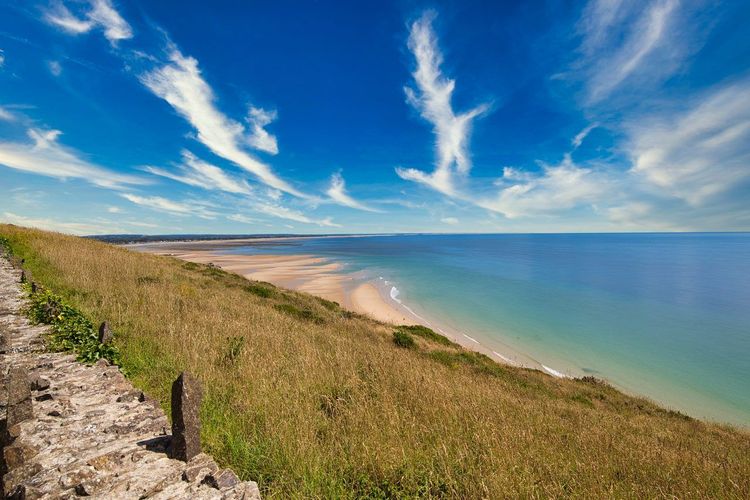
Beyond the chronological itinerary, a few sites merit a detour depending on your interests.
Barfleur is listed among the 'Most Beautiful Villages in France', a distinction fully deserved for its grey granite houses, its small fishing harbour and its preserved atmosphere. Access is possible by standard motorhome from Cherbourg via the D901. Arrive in the morning to find a spot in the beach car park; in summer, the village attracts photographers and watercolourists who fill the quaysides from 10 a.m.
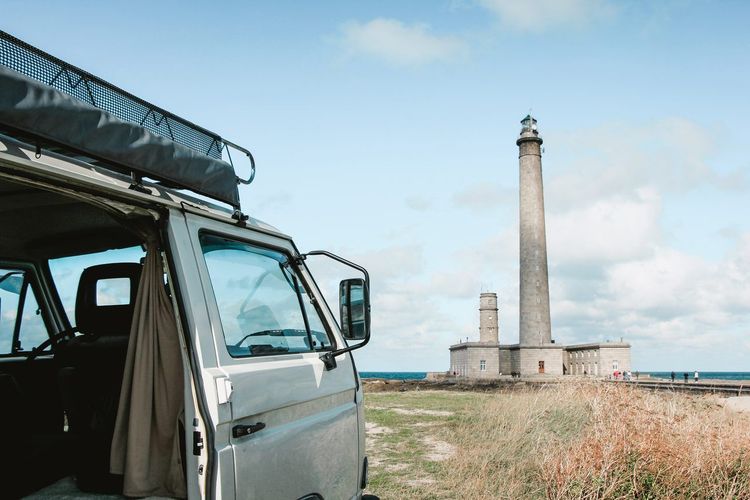
The Gatteville Lighthouse (pointe de Barfleur) is the second tallest lighthouse in Europe at nearly 75 metres, and its light carries up to 56 km offshore. The staircase of 365 steps leads to a panoramic terrace overlooking the entire east coast of the Cotentin. On a clear day, you can make out the cap de la Hague on the horizon.
The Havre de Régnéville (50590 Régnéville-sur-Mer, rated 4.6/5 on Google from 219 reviews) (west coast, between Granville and Coutances) is a wild estuary frequented by hundreds of wading birds during the migration periods of March–April and July–September. Sandpipers, black-tailed godwits and oystercatchers feed on the mudflats during the hours of the falling tide. An ornithological spectacle in a setting where no building is visible on the horizon.
Motorhome Stopovers in the Cotentin: Where to Park?
Finding the right stopover is often the central question for motorised travellers. The Cotentin has around thirty official stopovers spread across the whole peninsula. Here are the main ones, organised by geographical area.
Northern Area: Cherbourg and the Cap de la Hague
L'Anse du Brick (Maupertus-sur-Mer) is the most popular seaside motorhome stopover north of Cherbourg. Pitches with electric hook-ups, sanitary facilities and access to a shingle beach. Open April to October, prices around €15–18 per night.
Les Cottages de Collignon in Tourlaville (eastern suburb of Cherbourg) offer an alternative with a sandy beach. Less spectacular pitches but better equipped, ideal for a transit night.
In Flamanville, a municipal stopover at harbour level offers free parking in low season with a waste disposal point. Nothing particularly scenic, but useful as a base for exploring the Hague coast.
Eastern Area: Barfleur, Saint-Vaast and Utah Beach
Camping La Gallouette in Saint-Vaast-la-Hougue is the most highly regarded address in the eastern Cotentin. Set between forest and sea, this 3-star campsite offers wide pitches for large vehicles, a heated swimming pool and walking access to the oyster beds. Open April to late September.
The Camping-Car Park Utah Beach stopover in Sainte-Marie-du-Mont is certainly the most symbolic on the entire peninsula. Paid, with electricity, water and waste disposal. Overnight rate around €14–17. The site has only about twenty pitches; advance booking via the Camping-Car Park app is essential, especially for the weeks surrounding 6 June.
Central Area: Carentan and the Marshes
The Camping-Car Park de Carentan, Le Port is directly opposite the marina, 10 minutes' walk from the town centre. Around forty pitches with electric hook-up, water and waste disposal. Rate around €12–15 per night. It is one of the best value-for-location addresses on the entire peninsula.
Western Area: Barneville-Carteret and Granville
Camping Les Ronds Duval (Dune des Ronds Duval, 50270 Barneville-Carteret, rated 4.8/5 on Google from 140 reviews) in Carteret is a must-visit on the west coast. This 3-star campsite sits directly on the dunes, 50 metres from the beach, with marked pitches equipped with an electric hook-up. Open May to September.
L'Aire naturelle L'Oraille (marsh area, east coast) is a budget option for those seeking the tranquillity of the wetlands. Grassy pitches, basic sanitary facilities, minimal rates. The peace and the views over the tidal channels make up for the limited comfort.
Camping La Blanche Nef (Granville area) and Camping Le Ranch are two useful addresses for motorhomers heading to the southern tip of the peninsula. Rates comparable to other 2–3-star campsites in the region: €13–19 per night depending on the season.
Free Stopovers in the Cotentin
Several communes tolerate overnight parking by motorhomes in their public car parks, particularly outside July–August. The most used spots: Portbail dune car park, Goury car park (cap de la Hague) and the Havre de Régnéville car park. The Park4Night app lists real-time user reports on active spots in the Manche département.
Be aware, however: since 2022, several communes have tightened their anti-bivouac by-laws on beaches and protected natural areas. Fines can reach €1,500 for illegal parking in a sensitive site. Always check local signage before setting up.
Driving in the Cotentin by Motorhome: Rules and Practicalities
Vehicle Size and Roads
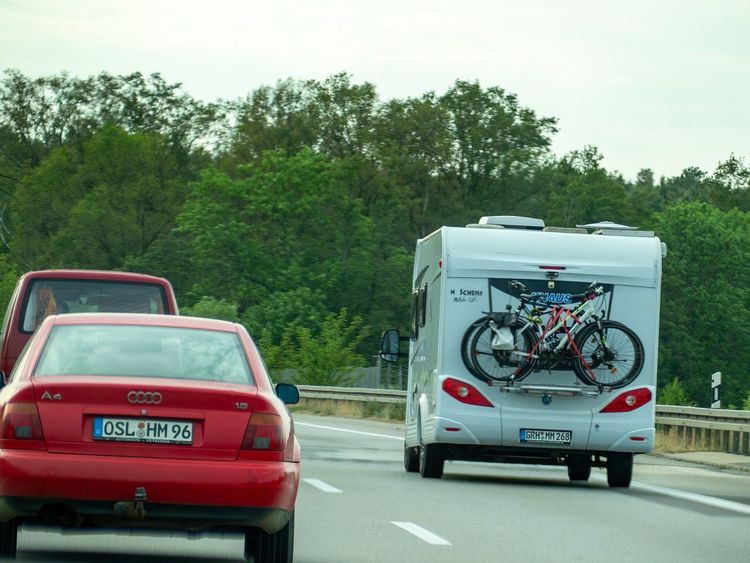
The main coastal roads are wide and well maintained. The minor roads leading to certain sites — the inland Hague, the Carentan marshes, small harbours — become narrow with tall bocage hedgerows on either side. A vehicle over 7 metres may encounter difficulties in the historic villages of Barfleur, Goury and Portbail. The reflex to adopt: park the motorhome at the village entrance and continue on foot or by bike.
Toll Roads
From Paris, the A13 motorway to Caen (around 215 km), then the N13 towards Cherbourg or the A84 towards Carentan, is the most direct route. Tolls are classified according to your vehicle category:
- Class 2 (motorhome under 3 m in height): standard rate, slightly higher than the car rate
- Class 3 (motorhome over 3 m in height): approximately 50% surcharge compared with class 2
- Class 4 (motorhome over 3 m with trailer): the highest rate in the range
For the Paris–Caen stretch, budget between €25 and €45 depending on your category. A toll-free alternative exists via the N138, but it adds around 45 minutes to an hour to the journey.
Urban Parking
In Cherbourg, several car parks on the outskirts are accessible to motorhomes (Parking du Quai de Caligny, Parking des Flamands). In the town centre, some covered passages have height restrictions of 2 metres. Plan your route in advance on Google Maps by filtering for 'avoid low-clearance tunnels'.
Seasonal Restrictions
The Parc naturel régional des Marais du Cotentin applies circulation restrictions for heavy vehicles on certain minor roads between November and March (waterlogged ground). Check local signage or the park's website before venturing onto secondary tracks in winter.
Renting a Motorhome for the Cotentin
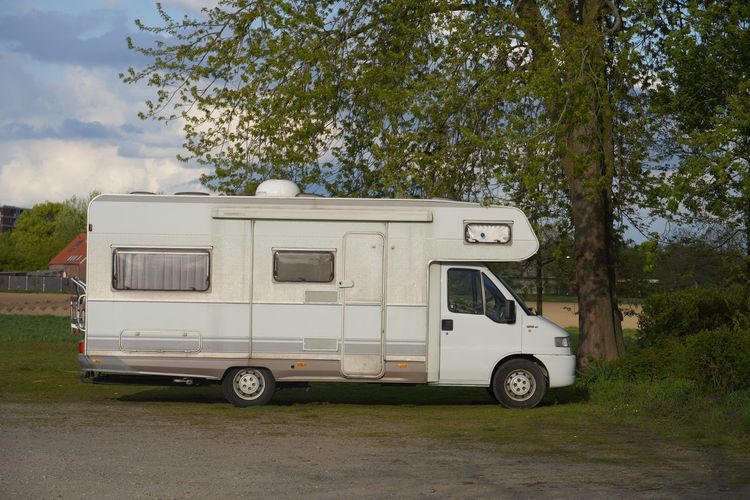
Don't own a motorhome yet? Renting is an ideal way to test the motorhome travel format on a destination as varied as the Norman peninsula.
From Paris or Caen
Major national agencies (Camping-Car Le Voyageur, Avis Campingcar, DreamScape) have branches in Paris and Caen. From Paris, allow 2h30 of driving to Cherbourg via the A13 and the N13. From Caen, the gateway to the Cotentin is only 30–40 minutes away. The Ryo guide to motorhome rental in Paris details the agencies, average seasonal rates and steps to anticipate before departure (deposit, insurance, included mileage).
From the Cotentin
A few local agencies offer rentals in Cherbourg and the Manche département. Availability is more limited than in larger cities; if you want to rent directly on location, check several weeks in advance, especially for high season.
Estimated Budget for 7 Days
- Motorhome rental for 4–6 people, high season: €130–200/day (insurance included)
- Paid stopovers: €12–18/night, i.e. €84–126 for 7 nights
- Diesel fuel: approximately 60–80 L/day for a 3.5-tonne motorhome, i.e. €75–100/day
- Museum admissions (Utah Beach, Airborne, Cité de la Mer): €15–22 per adult
- Total budget for 7 days for two: between €1,500 and €2,200 depending on comfort level and chosen activities
Cotentin Gastronomy: What to Taste Along the Way
The Cotentin does not enjoy the media profile of the great starred restaurants, but its local gastronomy is among the most generous on the French Atlantic coast. Here are the stops and purchases that make the difference during a Cotentin motorhome trip.
Saint-Vaast-la-Hougue Oysters
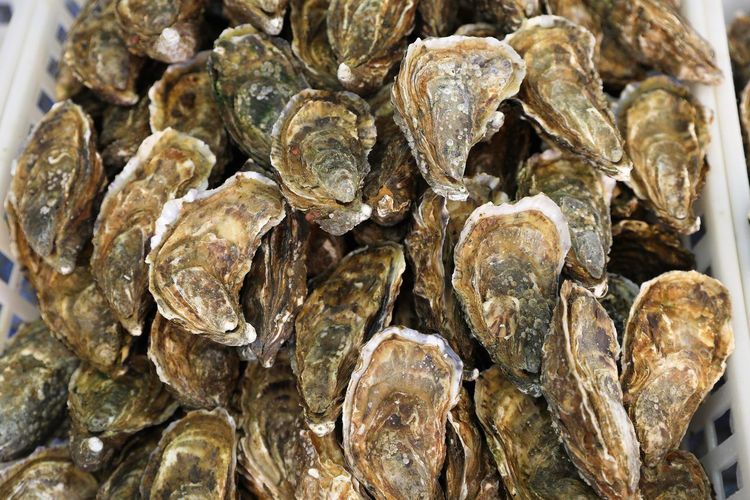
The oysters from Saint-Vaast are farmed in protected beds at the foot of the UNESCO World Heritage-listed Vauban tower. Their thick, slightly briny and low-acid flesh sets them clearly apart from Breton oysters. Tasting them directly from the harbour oyster farmers costs €6–9 per dozen depending on size. Buy a tray in the morning and keep them in a damp cloth in your motorhome: they will easily last 48 hours.
Calvados and Pommeau de Normandie
The Route du Calvados winds through the Cotentin hinterland and many producers open their estates for tastings. Young calvados (under 2 years old) pairs perfectly with oysters or cheese. Old calvados (VSOP, over 10 years in oak casks) is enjoyed as a digestif. Pommeau de Normandie, a blend of fresh apple juice and aged calvados at around 17% ABV, is the quintessential local aperitif — aromatic and round on the palate.
Salt Marsh Lamb
The sheep that graze on the salt meadows (herbus) of the Cotentin havens and the bay of Mont-Saint-Michel feed on halophytic vegetation that naturally seasons their meat with a subtle marine flavour. Salt marsh lamb from Mont-Saint-Michel has held a PDO designation since 2012. Butchers in Carentan, Coutances and Granville stock it year-round, often at prices well below those of Parisian delicatessens.
Markets and Bocage Cheeses
The markets in Cherbourg (Tuesday, Thursday and Saturday mornings at the covered market), Saint-Lô and Coutances are brimming with farmhouse cheeses (PDO camembert, livarot, pont-l'évêque) and salted churned butter with salt crystals. It is the ideal opportunity to stock up your motorhome at prices well below those of delicatessens or motorway service areas.
When to Visit the Cotentin by Motorhome?
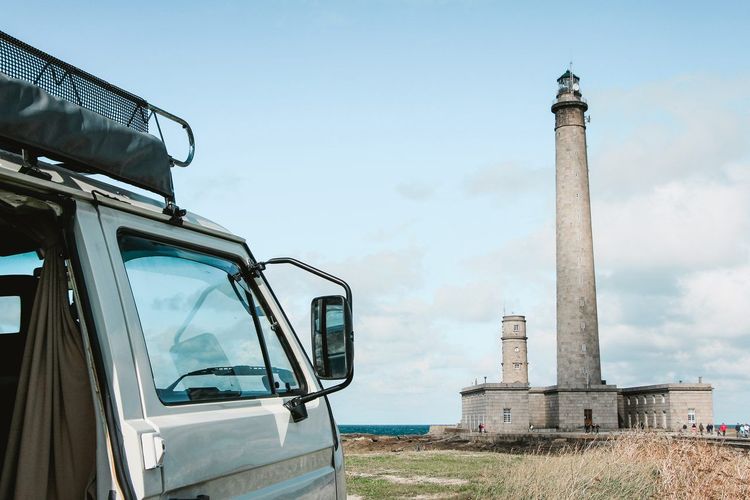
The Cotentin by motorhome can be visited year-round, but each season offers a distinct experience.
Spring (April–May): the light returns, the bocage turns a vivid green, the beaches are virtually deserted and stopovers still offer low-season rates. The wind persists but temperatures become pleasant (12–16°C). Summer (June–August): high season draws a significant flow of motorhomers, especially during the D-Day commemorations in early June. Stopovers are in high demand — book in advance without exception. The weather is mild (18–22°C) but unpredictable: a westerly wind can transform a beach day in under an hour. August offers the best conditions for crossings to the Channel Islands from Carteret or Granville.
Late season (September–October): probably the best period for experienced motorhomers. The crowds disappear, temperatures remain mild (14–18°C), the September light on the coasts is superb and some campsites stay open until mid-October with rates reduced by 20–40%.
Winter (November–March): reserved for seasoned travellers. Several stopovers close, winds on the headlands can exceed 80 km/h, and managing the plumbing (risk of freezing) requires serious preparation. In return, the peninsula in winter offers a solitude and a raw beauty that summer simply cannot match.
FAQ
How Long Does It Take to Visit the Cotentin by Motorhome?
Seven days is the minimum to cover the essential parts of the peninsula without rushing. This pace allows you to see Cherbourg, the cap de la Hague, the D-Day beaches and the west coast, including the main museums and a few hikes. A long weekend of 3–4 days allows for a shorter version focused on one area. With 10 to 14 days, you can add excursions to Mont-Saint-Michel (2h30 drive from Granville), the Omaha Beach shores and the Pointe du Hoc in the neighbouring Calvados, and possibly a day crossing to Jersey from Carteret. Under 3 days, the Cotentin is too large and too rich to explore without frustration.
Are There Free Motorhome Stopovers in the Cotentin?
Yes, several exist, particularly off-season. The car parks at Goury (cap de la Hague), Portbail dune and the Havre de Régnéville are the most used by motorhomers looking for free overnight stays. Some communes such as Flamanville and Auderville offer free pitches in low season with a waste disposal point. The Park4Night app and the Campingcar-infos.com forum list active spots in the Manche département in real time. In summer, free spots are either taken by 4 p.m. or subject to municipal by-laws limiting parking to a maximum of 24 or 48 hours.
Are the D-Day Beaches Accessible by Motorhome?
Yes. Utah Beach is the most accessible, with a large open car park near the museum and a dedicated area a few hundred metres from the beach. For Omaha Beach and the Pointe du Hoc, which are in the Calvados (not in the Cotentin), HGV car parks exist but are limited in size. Avoid these sites on days close to 6 June if you are driving a large vehicle: the crowds can block access to the car parks for several hours and law enforcement manages traffic very strictly.
Do You Need a Special Licence to Drive a Motorhome in the Cotentin?
No, for motorhomes whose Maximum Authorised Mass (MAM) does not exceed 3,500 kg, a standard category B licence is sufficient. Above 3,500 kg, which applies to most large integrated motorhomes and models on HGV chassis, a C1 licence is required. Check the registration document of your rental vehicle before setting off. In the case of a rental, the agency is required to specify the vehicle category and the licence needed before you sign the rental agreement.
Is the Cap de la Hague Accessible to Large Motorhomes?
The main road to the cap de la Hague (D901 from Cherbourg) is passable for motorhomes up to 8 m in length. The Nez de Jobourg car park is tarmacked and spacious, accessible for vehicles up to 6 m in declared length. Some tracks leading to coves and wild beaches (Anse de Vauville, Anse de Sciotot) are narrow and not recommended for vehicles over 5.5 m. To explore the inland Hague, plan to park in a village and continue on foot or by bike: several waymarked routes allow you to cross the moorland without having to drive on the narrowest lanes.
Can You Combine the Cotentin with Other Motorhome Destinations in France?
Absolutely. The Cotentin fits naturally into a broader Normandy circuit (Bayeux, Caen, Étretat, Deauville) or into a road trip along the Atlantic coast towards Brittany. For other motorhome destinations after Normandy, the Ryo guide to the Côte d'Azur by motorhome and the Ryo guide to the Canal du Midi by motorhome detail the itineraries and the best stopovers to note. For an international adventure by van or motorhome, the Ryo guide to Iceland by motorhome is the reference resource for travellers seeking the ultimate motorhome travel destination.
Conclusion
The Cotentin is one of those destinations that truly reveals itself from a motorhome. No fixed schedule to follow, no hotel reservation to honour at the last minute: just the freedom to drive along the Hague cliffs at dawn, to stop facing Utah Beach for a coffee, or to find Saint-Vaast oysters still in their tray at the harbour at 8 in the morning. The peninsula rewards curious travellers who take the time to look beyond the Norman clichés.
Ryo accompanies travellers who want to explore beyond the usual tourist circuits. Whether you are planning this Cotentin motorhome road trip or considering other van and motorhome adventures across France and Europe, find on Ryo the practical guides that make every journey richer.