© Shutterstock
 Votre guide Ryo
Côte d'Azur by Motorhome: Complete Guide from Menton to Cassis (2026)
The Côte d'Azur by motorhome is both the ultimate dream and the greatest challenge for any motorhome traveler: 300 kilometers of Mediterranean coastline, turquoise coves accessible only on foot, and hilltop villages perched 400 meters above the sea. But also corniche roads that GPS systems don't flag as dangerous, car parks packed solid by mid-July, and parking regulations that change from one town to the next without warning. This guide covers the complete itinerary from Menton to Cassis, the best stopover areas at each stage, toll rates by vehicle category, and the best times to avoid traffic jams on the A8. Planning a Côte d'Azur motorhome trip requires a little method — and that's exactly what this guide gives you, step by step.
Expect to spend two days in Nice and leave with the feeling of having barely scratched the surface of the Vieux-Nice. Plan a night above Monaco to see the lights of the Rock from your skylight. Allow 15 minutes by ferry from La Tour Fondue to reach Porquerolles and its crystal-clear waters. Save the Lérins Islands for a Tuesday outside school holidays, when the boats aren't packed. To plan your swimming stops, check out the Ryo guide to the most beautiful beaches on the Côte d'Azur, where every cove and beach along the itinerary is detailed.
Why Choose a Motorhome to Discover the Côte d'Azur?
The motorhome on the Côte d'Azur divides opinion. Skeptics cite the corniche roads, inaccessible town centers, and the cost of stopover areas on a coastline where property is the most expensive in France. They're not entirely wrong. But what a motorhome allows here, no other mode of transport can offer: sleeping in Èze-Village and walking down to the sea at sunrise, or leaving Saint-Tropez at 6 a.m. before the day-trippers arrive, with your window open to the gulf.
The decisive advantage remains flexibility. Unlike a fixed campsite, you're not tied to a pitch booked six months in advance. If a stopover disappoints, you move on to the next. If exceptional weather rolls into Menton on a Tuesday off-season, you stay an extra day with no penalty. For families or couples who want to combine several towns without the constant luggage shuffling, it's also the most practical and often the most economical solution when you add up hotels, restaurants, and transfers.
How Many Days Should You Allow for a Complete Itinerary?
An itinerary from Menton to Cassis covers around 350 kilometers of coastal road including detours. Allow a minimum of 10 days for the main highlights, or 15 days for a comfortable pace that lets you truly explore Nice, Saint-Tropez, and the islands. If you have 3 weeks, you can include excursions into the hinterland: the Gorges du Verdon from Fréjus, the village of Moustiers-Sainte-Marie, or the climb toward Sospel from Menton.
Motorhome travelers who try to do everything in 7 days end up exhausted, with the impression of having mostly driven. It's better to cut two stages and truly experience the ones that remain.
Menton and Roquebrune-Cap-Martin: A Gentle Start
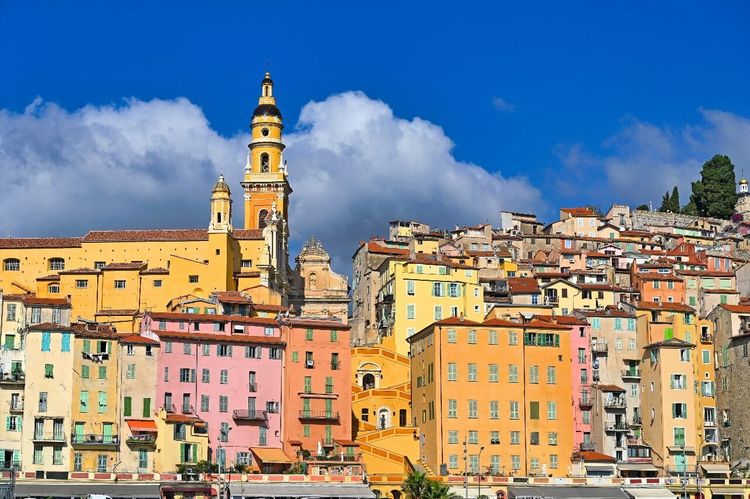
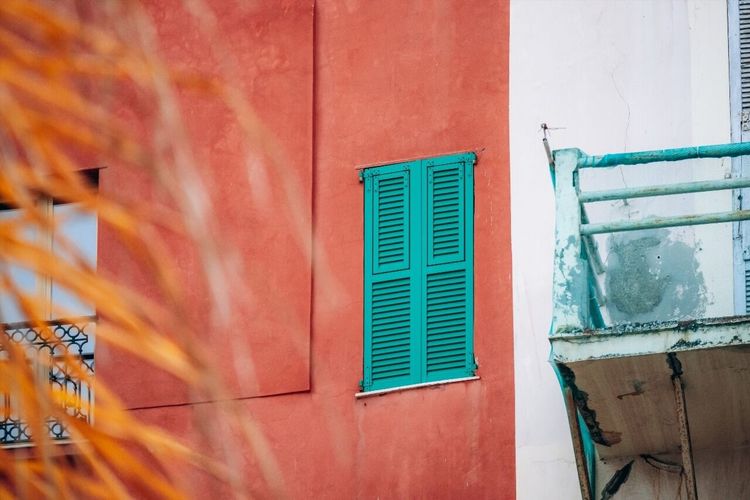
Menton is the best entry point from Italy, with its baroque old town of ochre and lemon-yellow facades tumbling down to the sea. The lemon capital — the Fête du Citron takes place every February — has something quieter than its neighbors. Hurried tourists pass through by car; motorhome travelers linger.
The Camping Saint-Michel motorhome area is located 1.5 kilometers from the town center, with shaded pitches and walking access to the Halles market. Expect to pay 18 to 25 euros per night depending on the season, water and electricity included. From there, the old port is a twenty-minute walk.
Five kilometers to the west, Roquebrune-Cap-Martin is unjustly underrated. The medieval village clinging to its rock offers a view of Monaco from the castle's rampart walk, without the crowds of the Rock itself. Cap Martin remains one of the most unspoiled stretches of coastline in the region, with its customs officers' path running along the sea between Belle Époque villas. Allow half a day for this section of coast before heading toward Monaco.
Monaco and Èze: Climbing toward the Heights
Monaco poses an immediate practical problem for motorhome travelers: the Principality prohibits vehicles over 3.50 meters in height from most of its underground car parks. Dedicated motorhome parking areas do not exist on Monegasque territory. The solution is straightforward: park in Beausoleil or Cap-d'Ail on the French side and enter Monaco by train or on foot. The journey takes 10 minutes, entry to the Rock is free, and you avoid the car park headache.
Èze is one of the most striking stops on the entire itinerary. The village perched at 429 meters above sea level dominates the sea with an almost theatrical precision. The road up from Èze-sur-Mer (the Grande Corniche) is manageable in a standard motorhome as far as the village car park, but models over 8 meters will need to stay at the bottom. The exotic garden at the summit is worth the 6-euro entry fee for the view alone.
Nice: Two Days at the Heart of the Riviera
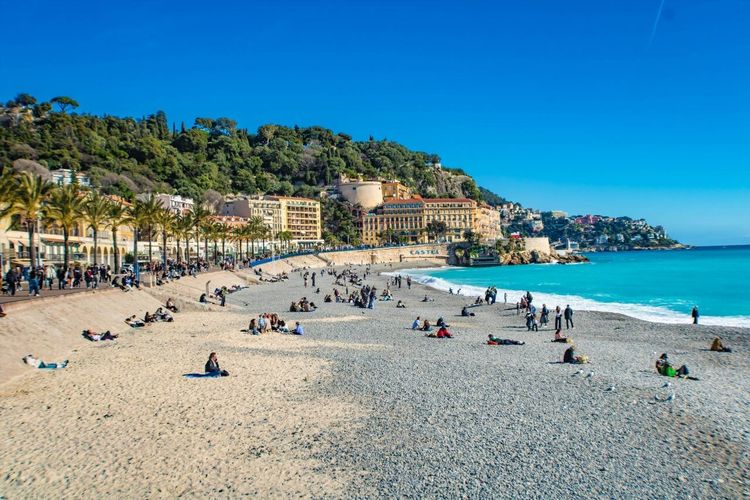
Nice is the most packed stop on the itinerary and deserves at least two nights. Three parking options are available depending on your budget: Camping Terry to the west of the city with direct tram access, Camping Magnan two kilometers from the Promenade, or the Cagnes-sur-Mer stopover area if you prefer to stay outside the city and take the train in. No stopover area sits in the city center — that's a reality to factor in from the planning stage.
The Promenade des Anglais is the obligatory landmark, but the Vieux-Nice (Cours Saleya, 06300 Nice, rated 4.7/5 on Google across 456 reviews) deserves equal time. The 76 hectares of the baroque quarter, home to 24,000 residents and the Cours Saleya markets, form one of the most vibrant historic centers on the Mediterranean. Go early in the morning before the tourist crowds arrive, or in the evening when the restaurants open and the light falls on the facades.
The Musée Matisse, housed in the former Genoese Villa des Arènes in the north of the city, is free on the first Sunday of the month. Otherwise, entry costs 10 euros for a collection of 68 paintings and 218 sculptures spread across four floors. The Cimiez neighborhood around the museum, with its Roman ruins and olive grove, is worth the trip to eastern Nice in its own right.
For swimmers, the Ryo guide to the most beautiful swimming spots on the Côte d'Azur details access and water quality for each site — useful for choosing between the free public beaches in the center and the more secluded coves toward Villefranche-sur-Mer to the east.
Antibes and Juan-les-Pins: Picasso and Sandy Beaches
Antibes is the itinerary's surprise for many motorhome travelers who had written it off as a stopover between Nice and Cannes. The old town enclosed by Vauban-built ramparts, the covered Provençal market, and above all the Musée Picasso housed in the Château Grimaldi — where Picasso worked from September to December 1946 — justify an overnight stop in their own right.
The Cap d'Antibes, with its villas hidden behind pines and bougainvillea, is difficult to explore in a standard motorhome: the roads are narrow and parking is limited. Leave your vehicle at the Port Vauban stopover area — the largest marina in the Mediterranean with 1,600 berths — and take a bicycle or walk. The coastal path circles the cape in 3 hours with sweeping views of the Alps and the Lérins Islands.
Juan-les-Pins, adjacent to Antibes, is known for its jazz festival in July and its fine sandy beaches — a rarity on a coastline dominated by pebbles. Outside summer, the town takes on the atmosphere of a 1970s seaside resort, almost melancholy, with its own particular charm.
Cannes and the Lérins Islands: Glamour without Breaking the Bank
Cannes is not an expensive city for those who know where to go. La Croisette and its grand hotels are a façade; behind them, the Suquet quarter (the old hilltop town), the Forville market, and the port bars offer a city on a human scale. The Palais des Festivals, symbol of the famous May film festival, can be visited outside the festival period on a guided tour.
The benchmark motorhome area in this sector is Camping de Mandelieu-la-Napoule (Avenue de la Mer, 06210 Mandelieu-la-Napoule, rated 4/5 on Google across 811 reviews), 5 kilometers west of Cannes on the N98. Direct sea access, a bus every 20 minutes to central Cannes, and rates around 25 to 30 euros per night. Booking essential from June to August.
The Lérins Islands — Saint-Honorat and Sainte-Marguerite — are reached from the Vieux-Port of Cannes in 15 minutes by ferry for 13.50 euros return. On Sainte-Marguerite, the Fort Royal where the mysterious Man in the Iron Mask was imprisoned is worth a visit. On Saint-Honorat, Cistercian monks produce a red and a white abbey wine you can buy on site. No camping or vehicles on the islands: leave everything at Mandelieu and travel light.
Saint-Raphaël, Fréjus, and the Estérel Massif
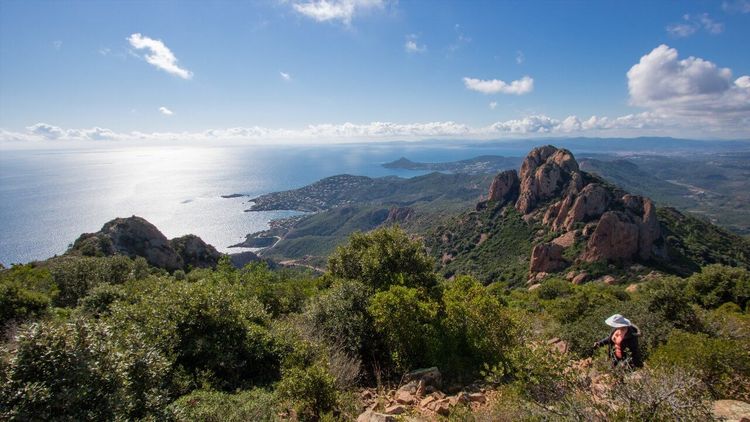
The Estérel Massif (Corniche de l'Estérel N98, 83700 Saint-Raphaël, rated 4.9/5 on Google across 28 reviews), between Cannes and Saint-Raphaël, is one of the Côte d'Azur's finest surprises: volcanic red porphyry rock dropping straight into an intensely blue sea, with a corniche road (the N98) overlooking inlets accessible only by boat. Designated viewpoints allow you to stop safely, and the road is manageable in a standard motorhome.
Fréjus and Saint-Raphaël form a continuous urban area that warrants an overnight stay. Fréjus has the best-preserved Roman arena in the region, with an original capacity of 10,000 spectators, a 5th-century early Christian baptistery, and a Romanesque cathedral. It's an archaeological ensemble that few coastal towns can claim. Saint-Raphaël is the departure point for boat trips to the Estérel inlets.
The Fréjus-Plage motorhome area is 500 meters from the arena and 10 minutes' walk from the beach. Rates: around 15 to 20 euros per night off-season, 30 euros in July and August.
Saint-Tropez and the Gulf: the Myth Made Accessible
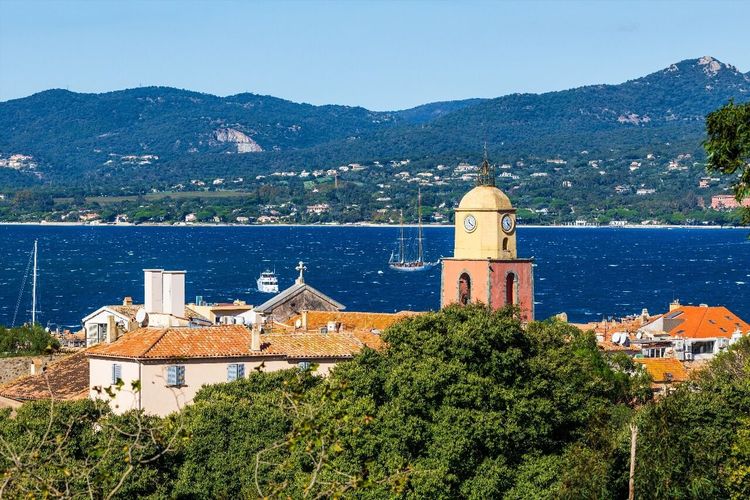
Saint-Tropez has become unmanageable by car in summer — imagine arriving by motorhome. The golden rule: never drive into the village in high season with your vehicle. Park at Port Grimaud (a well-equipped area, 8 km from Saint-Tropez), at Ramatuelle, or at La Croix-Valmer and take the water shuttles from the gulf. In May, September, or October, direct access is possible again early in the morning, and the road between Ramatuelle and La Croix-Valmer offers one of the finest views of the gulf.
The village out of season is magnificent. The Musée de l'Annonciade and its collection of Fauvist and Neo-Impressionist works — with Signac, Matisse, and their contemporaries leading the bill — occupies a former port chapel. The colorful lanes of the citadel, the Tuesday and Saturday market on Place des Lices, the pétanque tables in the autumn sun: this is an entirely different city from the one of yachts.
Pampelonne Beach (Route des Tamaris, 83350 Ramatuelle, rated 4.4/5 on Google across 2,517 reviews), 5 kilometers south of Saint-Tropez, stretches for 4.5 kilometers of fine sand. Private beach clubs occupy part of the seafront, but a free public section remains accessible year-round. In summer, arrive before 9 a.m. to find a space in the peripheral car parks before they close due to overcapacity. Nice, at the other end of the coast, is best taken on foot: our audio-guided tour covers 7.1 km through the old town.
Hyères, Le Lavandou, and Porquerolles Island
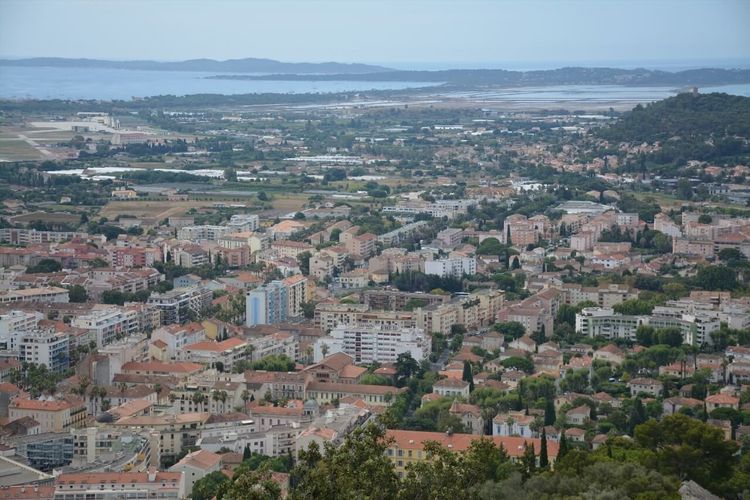
Hyères is the oldest winter resort on the Côte d'Azur. The English nicknamed it "Hyères-les-Palmiers" in the 19th century, and the town still has 5,000 palm trees lining its streets. The medieval old town on the hill, the Château Saint-Bernard and its gardens, the morning market on Place Massillon — this is a stop that rewards those who take the time.
Porquerolles is reached in 20 minutes by ferry from La Tour Fondue (ferry terminal in Giens, commune of Hyères), for around 20 euros return. The island is largely a national park: no motorized vehicles for visitors, cycle paths, and beaches — including Plage d'Argent and Plage Notre-Dame — that rank among the most beautiful in the Mediterranean with no commercial development whatsoever. Rent a bicycle at the port on arrival (15 euros per day) and set off to explore the island's 7-kilometer length.
Le Lavandou, east of Hyères, is a comfortable base for this part of the itinerary: a well-positioned motorhome area, direct access to the commune's 12 beaches, and a relaxed family resort atmosphere far removed from the glitz of the postcard image.
The Best Motorhome Stopovers on the Côte d'Azur
The honest answer: quality stopover areas are scarce along the seafront, rates are high (between 15 and 45 euros per night depending on the season), and booking in high season is non-negotiable. Here are the best stops by geographic area.
Menton, Camping Saint-Michel: one of the few areas close to the town center, 1.5 km from the old port. Full services, decent shade. Open year-round. Rate: 18–25 euros.
Beaulieu-sur-Mer, Municipal Area: small capacity (12 pitches), but an exceptional seafront location. Booking essential from April to October.
Nice, Camping Terry: the most accessible option for visiting Nice. Tram line 2 to the center in 30 minutes. Expect 28–35 euros per night.
Cannes / Mandelieu-la-Napoule: best value-for-location in the Cannes–Grasse area. Direct bus every 20 minutes to Cannes, swimming pool, beach within walking distance.
Fréjus-Plage, Municipal Area: reasonable rates (15–25 euros off-season), walking access to the beach and the Roman arena. Basic services, no frills.
Gulf of Saint-Tropez, Port Grimaud: the logical alternative to avoid Saint-Tropez by car. Direct water shuttle to the village (15 min). High-season rates (35–45 euros).
Hyères, Aire du Gapeau: 3 km from the center, close to the ferry terminal for Porquerolles. Open year-round, a good base for the Hyères islands.
Le Lavandou, Aire des Plages: central position for the commune's 12 beaches. Limited to 18 pitches; booking mandatory in July and August.
For motorhome travelers considering other Mediterranean itineraries, the Ryo motorhome guide for the Canal du Midi applies the same stage-by-stage organizational logic and can complement your season's planning.
Motorhome Traffic and Parking Rules
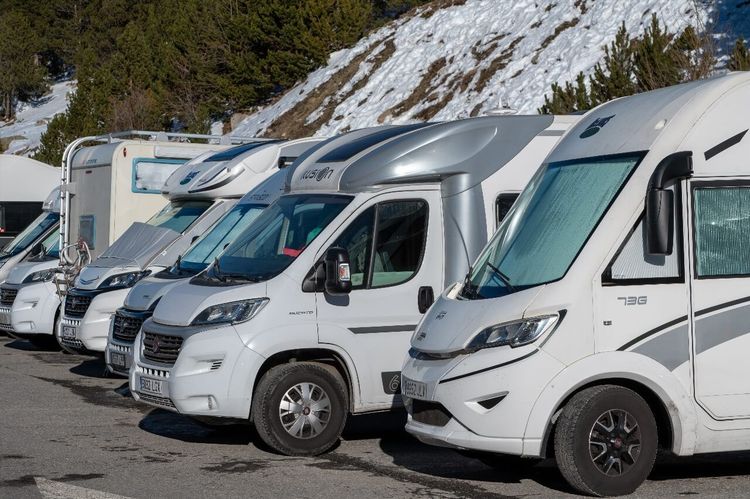
The first rule is about height: from 3.50 meters upward, most covered car parks in the region are inaccessible. Check height barriers before committing your vehicle — they are sometimes only indicated at the entrance to the underground car park, not earlier on the road.
The second rule concerns speed. Motorhomes over 3.5 tonnes GVW are limited to 80 km/h on roads and 110 km/h on motorways, compared to 80 and 130 for light vehicles. On the Côte d'Azur's departmental roads, this limit is frequently overlooked — fixed speed cameras on the A8 and N98 are numerous and unforgiving.
On-street parking is theoretically subject to the same rules as for a light vehicle, but Riviera municipalities have strict local regulations. Certain towns — Monaco, Èze-Village, Ramatuelle — have zones prohibited to vehicles over 2.5 meters in width. Check local signage at each village entrance, not just your GPS.
Wild camping (overnight stays outside campsites and official areas) is prohibited in virtually all coastal municipalities on the Côte d'Azur. Dunes and areas close to the shoreline are particularly monitored in high season, with fines starting at 135 euros and towing in repeat cases.
Toll Rates on the Côte d'Azur by Vehicle Category
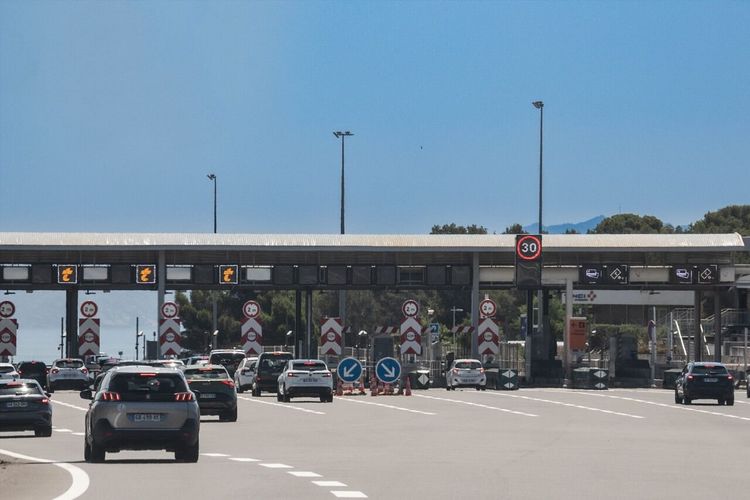
The A8 motorway (La Provençale) is the only fast route between the Italian border and Aix-en-Provence, and one of the most expensive motorways in France for motorhomes. Rates vary by vehicle category:
- Class 2 (GVW ≤ 3.5T, up to 3 axles): slightly higher rates than cars. On the Nice–Aix-en-Provence stretch (180 km), expect around 18–22 euros.
- Class 3 (GVW > 3.5T, 2 axles, height < 2.0 m): approximately 2 × the class 2 rate, i.e. 30–38 euros on the same stretch.
- Class 4 (GVW > 3.5T, more than 2 axles): heavy goods vehicle rates, 40 euros and above on the Nice–Aix stretch.
On the Menton–Cannes stretch (60 km), tolls come to 8–12 euros in class 2, 15–20 euros in class 3.
A worthwhile alternative: the N7 national road and the coastal D6007 allow you to bypass the motorway entirely, with incomparably finer views, at the cost of 40 to 60 extra minutes depending on the section. For unhurried motorhome travelers, this is often the best choice — both economically and aesthetically.
When to Travel by Motorhome on the Côte d'Azur?
May and June are the best periods: ideal temperatures (22–26 °C), the sea still cool but swimmable, stopover areas not yet saturated, and off-season rates at the majority of campsites. Roads remain clear and restaurants don't run two sittings.
September and October are the perfect alternative for those who missed spring. The sea reaches its warmest (23–24 °C), crowds have gone, and campsite prices drop by 30 to 50 %. This is often the best window for visiting Saint-Tropez or the islands.
July and August: possible but demanding. Stopover areas must be booked 2 to 3 months in advance, the heat is oppressive on some days, and traffic jams block every coastal road from 9 a.m. onward. Expect to spend one night per week in an inland campsite to decompress.
Winter (November to March): underrated. Menton and Nice see 14–18 °C in December, stopover areas are nearly empty, and the Mediterranean winter light has something unique about it. Fewer campsites are open, but municipal areas often operate year-round.
Practical Tips for a Successful Road Trip
Book stopover areas in advance. Park4Night and Camping Car Park both cover the region well, but the two platforms list different sites — use them together. From late May, the best coastal areas fill up by the week, not the night.
Bring bicycles. An e-bike completely transforms the experience on the Côte d'Azur. Monaco from Cap-d'Ail, the circuit around Cap d'Antibes, the Ramatuelle vineyard loop — routes closed to your motorhome become accessible within 20 minutes on two wheels.
Manage water and waste disposal. Service points (drinking water and grey water disposal) are not consistently available at every area. Check on Camperstop or Park4Night before arriving with full tanks. In high season, some service points are out of order.
Plan your parking in Nice in advance. Arrive before 8 a.m. if you're targeting areas near the center. After 9 a.m. in season, pitches are generally taken for the day.
Bring a 25-meter electric extension lead. Service points are sometimes poorly positioned relative to available pitches. A long extension lead removes the stress of arriving at an unfamiliar area.
If your road trip continues beyond the Italian border from Menton, Ryo has prepared a complete motorhome guide for the Italian Lakes with the best stopover areas and lake-by-lake itineraries.

FAQ
Can you park a motorhome in Monaco?
No. Monaco has no official motorhome areas and prohibits vehicles over 3.50 meters in height from its underground car parks. The recommended solution is to park in Beausoleil or Cap-d'Ail on the French side and enter the Principality on foot or by train. The journey from Cap-d'Ail takes 10 minutes on foot to the Rock. Entry to the Rock of Monaco is free, and the cathedral and Prince's Palace can be visited without a main entrance ticket.
Do you need to book motorhome stopover areas in advance on the Côte d'Azur?
Yes, absolutely for July and August. Most quality areas are fully booked from May onwards for summer nights. In May–June and September–October, booking is still advisable for the most popular spots such as Beaulieu-sur-Mer, Port Grimaud, or Le Lavandou. Outside the summer season, you can generally arrive without a reservation at municipal areas, but check the opening hours of service points, as some close in November.
What toll category applies to a motorhome on the A8?
Most motorhomes between 3 and 8 meters in length and under 3.5 tonnes GVW fall into class 2, with rates slightly higher than cars. Motorhomes exceeding 3.5 tonnes — the heaviest with a roof bed and full interior fit-out — move into class 3, which roughly doubles the bill. Check your vehicle's GVW and height before departure: classification also depends on the height declared at the toll booth.
How do you reach Porquerolles island by motorhome?
Park your motorhome in the secure car park at the La Tour Fondue ferry terminal in Giens (commune of Hyères). The car park is paid (around 12 euros per day) and operates year-round. The ferry crossing takes 20 minutes for a return trip at around 20 euros per adult. On the island, no motorized vehicles are permitted for visitors — rent a bicycle at the ferry dock to explore the island's 7 km length.
What equipment is essential for this road trip?
Beyond standard equipment (solar panel, 25 m extension lead), plan for: bicycles or e-bikes for town centers inaccessible by motorhome, a 10-liter water reserve outside the tank for days without a service point, and a navigation app configurable by your vehicle's height and weight. The Ryo app usefully complements your preparation with visit guides for the towns along the itinerary.
Conclusion
The Côte d'Azur by motorhome remains one of France's most rewarding road trips, provided you approach it realistically: it offers no forgiveness for improvisation in July, but it delivers unrivaled freedom in May or September, when the villages reclaim their residents and the stopover areas empty out. From Menton to the inlets of Cassis, these 350 kilometers concentrate a density of landscapes, heritage, and flavors that few French regions can match. Book your pitches, pack your bicycles, and let the Mediterranean do the rest.
À lire également