Créé par Emilie, le 17 nov. 2026
Votre guide Ryo
Nice, France
Nissa la Bella
Parcours audioguidé pour visiter Nice en 1 jour
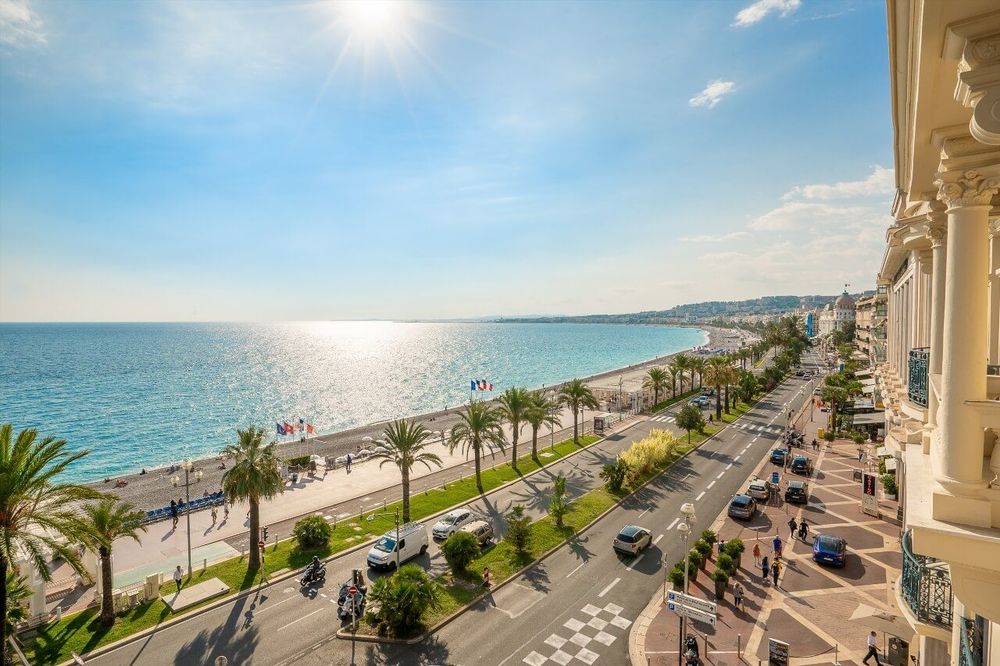
This tour of Nice invites you into a setting shaped by sea and mountains, where ochre-toned façades, fragrant markets, and balconies opening onto the blue horizon create an unforgettable atmosphere. Along the way, you’ll encounter the refined charm of the Belle Époque, the Baroque heritage of Old Nice, and that unmistakable Mediterranean way of life that still defines the city today. It’s a simple, immersive way to explore Nice at your own pace, guided by brilliant light and the lingering scents of the sea.
Quand partir à Nice ?
Jan.
9°
8
Feb.
10°
6
March
12°
7
April
14°
10
May
18°
10
June
22°
6
July
24°
3
Aug.
25°
4
Sept.
21°
7
Oct.
17°
9
Nov.
13°
10
Dec.
10°
9
The climate is Mediterranean, with mild winters ranging from 5 to 15°C and hot summers, often between 28 and 35°C, or even higher during heatwaves. The best times to visit are generally from April to June and then from September to October, when temperatures are still very pleasant without reaching summer peaks. This allows you to fully enjoy the cities, villages, and coastline in more comfortable conditions than in the height of summer.
Départ conseillé
No need to worry about where to begin! Our tours are designed as a loop, so you can jump in wherever you are. The navigation system and audio-guide will automatically adjust to your location. However, if you happen to be nearby, we do have a preferred starting point: Guynemer Square
Parking à proximité
Le Phare parking lot, on Guynemer square
À savoir
This visit will take you along the beautiful Promenade du Paillon followed by the Albert Ier Gardens. Please note that access to the promenade is closed after 9:00 pm, and that the gardens close at 11:00 pm. If you wish to visit after these hours, you can walk along Boulevard Jean Jaurès instead, and then go towards Avenue de Suède via Avenue Gustave V.
Découvrez 28 lieux d'intérêt pour visiter Nice


14. Massena square


22. I LOVE NICE

23. Free Elevator





What to see in Nice on your 3h15 tour?
This 7.1 km loop takes about 3 h 15 and links 27 sights. From Port Lympia it crosses old Nice to Sainte-Réparate Cathedral and Cours Saleya, crosses the green corridor to Place Masséna, then follows the Promenade des Anglais to the Statue of Liberty replica. It finally climbs Castle Hill, past the waterfall and viewpoints, before dropping back down to the port. With the Ryo app in your ears, every square, façade or legend reveals its story, at your own pace.
Information checked in October 2026 and subject to change.
1 - Port Lympia
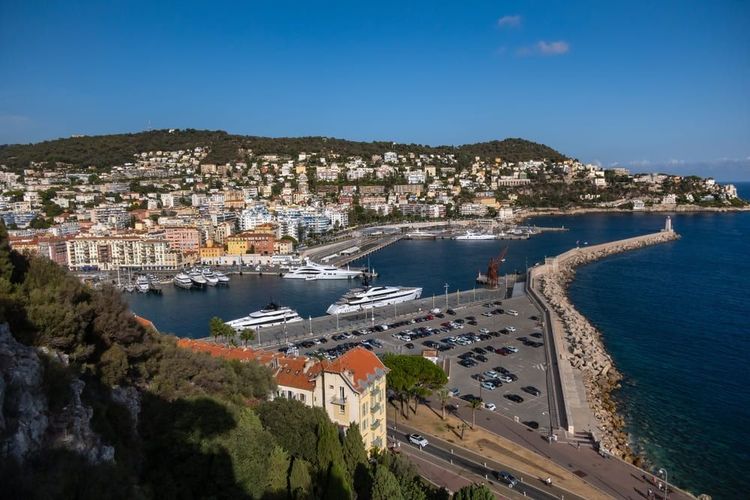
The walk begins by the old harbour, overlooked by the hill that once carried the citadel. Commissioned in the 18th century by the king of Sardinia to give Nice an opening to the sea, the basin took a century and a half to emerge from the surrounding marshland. Once attached to France, it grew into a busy cargo port and later a passenger link to Corsica, a crossing still running today. Admire its ochre, Italian-baroque facades, between yachts and traditional fishing boats.
Free entry
2 - Island of Beauty Square
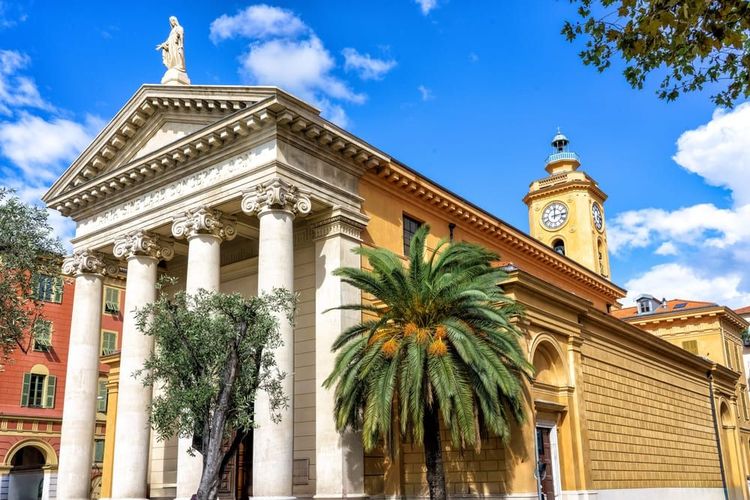
From here, the view opens onto the harbour below, dotted with pointus, brightly painted traditional fishing boats. The neighbouring church, Notre-Dame-du-Port, lines up neoclassical columns dating from 1830, commissioned by Charles Felix, ruler of Sardinia and Duke of Savoy: his House had held Nice since 1388. Annexation to France only came in 1860, when Napoleon III claimed the city in exchange for backing Italian unification. Further on, in the new town, a Gothic basilica stands out with its deliberately French style.
Free entry
3 - Garibaldi Square
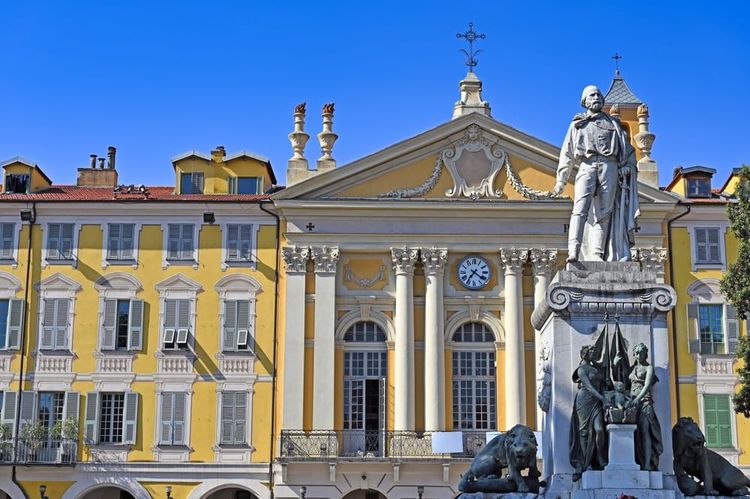
Nice's oldest major square owes its existence to Victor Amadeus III, king of Sardinia, who in 1780 wanted a proper road to Turin, his capital. The architect drew on it, hence the arcades. At its centre stands Giuseppe Garibaldi, a figure of Italian unity, rising above two bronzes representing France and Italy. Behind it, the chapel of the Holy Sepulchre carries a balcony once used by the Dukes of Savoy to address the people of Nice. Tramway works uncovered, beneath the square, 2,000 square metres of ancient remains.
Free entry
4 - Pairolière street
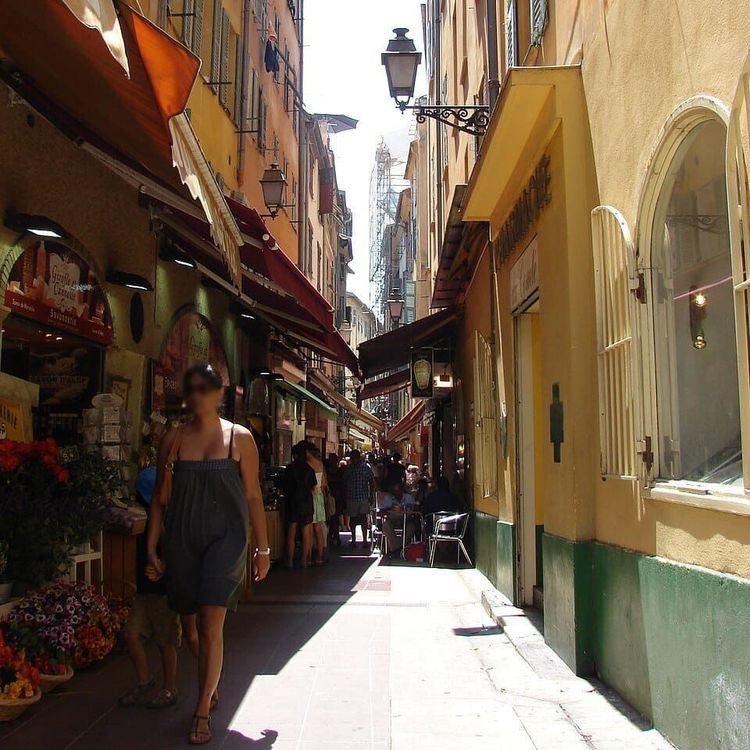
This narrow street ranks among the most typical in old Nice; its name comes from the pairouliers, the medieval coppersmiths' guild. It is lined with bakeries, butchers, fishmongers and delicatessens, a concentrated taste of Nicois culinary tradition. On a small square to one side stands the Saint-François tower, a former Franciscan bell tower turned communal clock after the Revolution, once the monastery had been destroyed. Restored during the 20th century, it opens to visitors on some weekends and offers, 50 metres up, a panorama over Nice.
Free entry
5 - The Cannonball
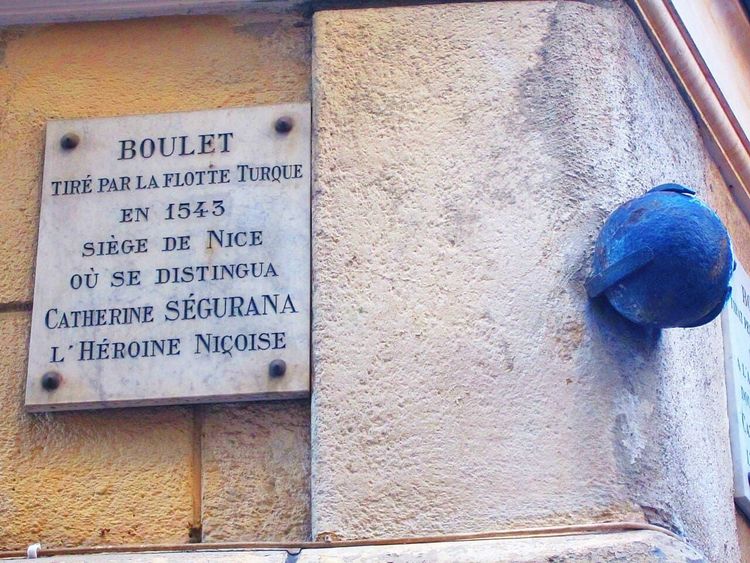
Where rue Droite meets rue de la Loge, a cannonball still lodged in the wall recalls the siege of 1543: the Ottoman fleet, allied with Francis I against his own uncle Charles V, bombarded the city for 10 days, aiming at the bastion that once stood on today's Place Garibaldi. Nice had barely a hundred defenders. Legend holds that a washerwoman, Catherine Segurane, knocked down a Turkish standard-bearer, reviving the inhabitants' courage before Charles V's relief force arrived.
Free entry
6 - Lascaris Palace
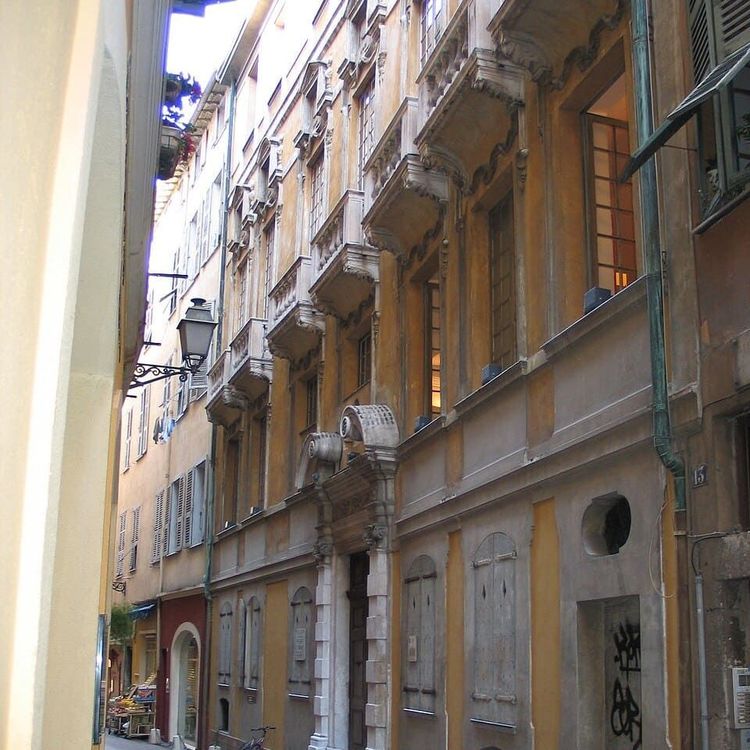
You are now on rue Droite, Nice's main artery in the 17th century, linking the port to Place Garibaldi - a name born from a mistranslation of the Nicois word drecha, meaning direct rather than straight. At number 15 stands a palace so lavish it earned the nickname little Versailles: the Lascaris residence, built by the Lascaris de Vintimille family. Now a museum labelled Musee de France, it charges a fee and reveals a monumental staircase, statue-lined galleries, and over 500 antique instruments from the Massena Museum.
Paid entry (about €5)
7 - Sainte-Réparate Cathedral
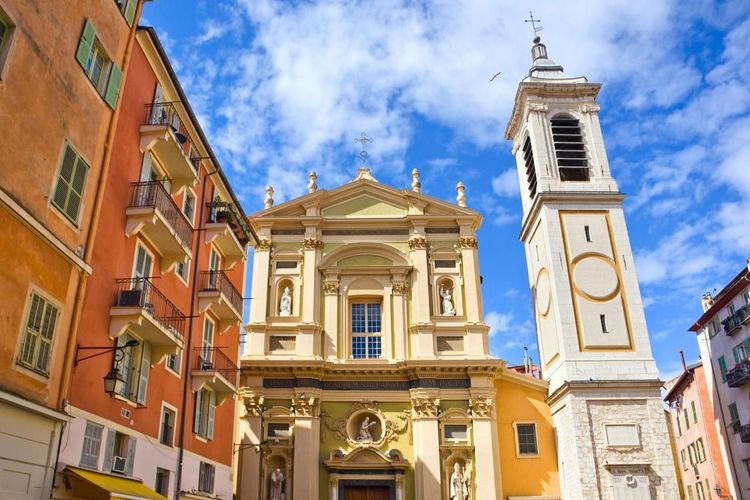
Place Rossetti, with its ochre facades and café terraces, evokes Italy - fittingly, since Saint Reparata is also patron saint of Florence. The body of this 3rd-century martyr is said to have been carried to Nice by angels in a boat, giving the Bay of Angels its name. A chapel was dedicated to her in the 11th century and became a cathedral in 1590; short of funds, the works dragged on until a collapsing vault in 1658, finishing only in 1899.
Free entry
8 - Gesù Church
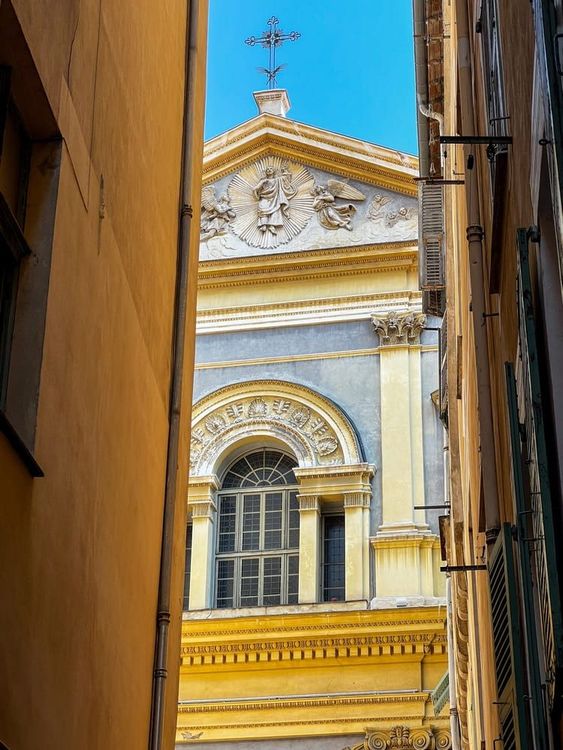
This small bluish church, dedicated to Saint-Jacques-le-Majeur, owes its nickname to its Roman model, the church of the Gesù. Funded by a wealthy Nicois merchant as the chapel of a Jesuit college, it marks the starting point of Baroque art in Nice: gilding, sculpture and little angels abound, in deliberate contrast to Protestant restraint. This decorative abundance would inspire almost every later church in the city. Listed as a historic monument since 1971.
Free entry
9 - Adam and Eve House

Where rue de la Barillerie meets rue de la Poissonnerie survives the only remaining example of a now-vanished custom: carving a Bible-inspired bas-relief onto one's house front. Dated 1584, this one shows a couple driven from Paradise, each threatening the other with a club. Popular Nicois legend reads it as a wink at the household's own domestic quarrels - it took some nerve to display that for all to see.
Free entry
10 - Saleya Avenue
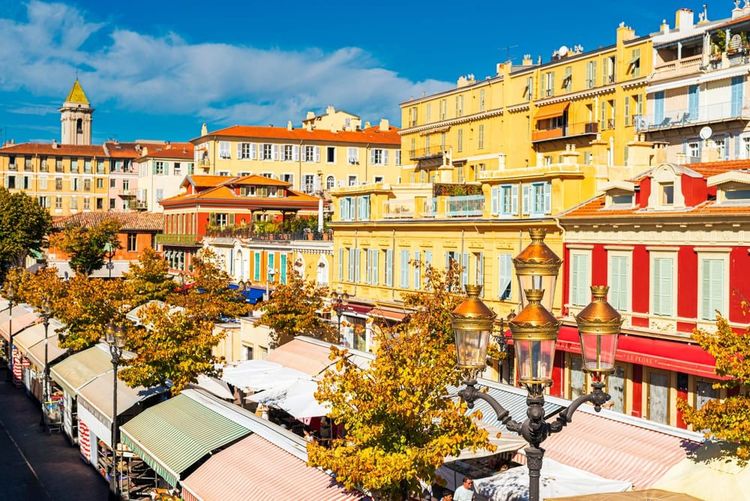
Laid out in the early 18th century on the site of a rampart that had become useless, Cours Saleya was once the fashionable promenade of a wealthy clientele before turning into the lively heart of popular Nice. Its market, among the most picturesque in France, mixes vegetable stalls with a flower market from Tuesday to Sunday, a Monday flea market, and a summer artists' night market. It is also the place to sample local food: pissaladiere, daube, panisses or socca, a chickpea flatbread baked over a wood fire.
Free entry
11 - Old Duke of Savoy Palace and Chapelle de la Miséricorde
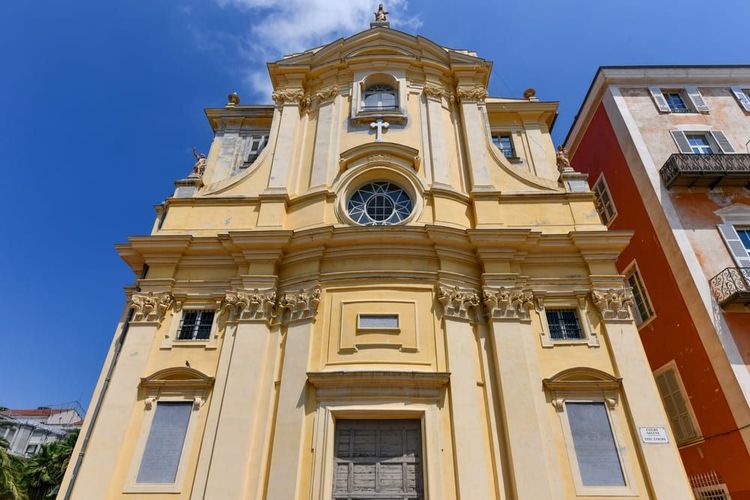
A little further along, a Baroque chapel houses the black penitents: built in the 18th century on Sardinia's former royal salt store, it recalls Nice's past on the salt route, origin of the avenue's name. Its dome is worth a glance. Next door, the Dukes of Savoy's former residence, begun in 1571, hosted almost every ruler before serving as a military hospital in 1792, then as the backdrop, in 1860, for the handover of Nice to France; it now houses the prefecture.
Free to see from outside
12 - Courthouse square
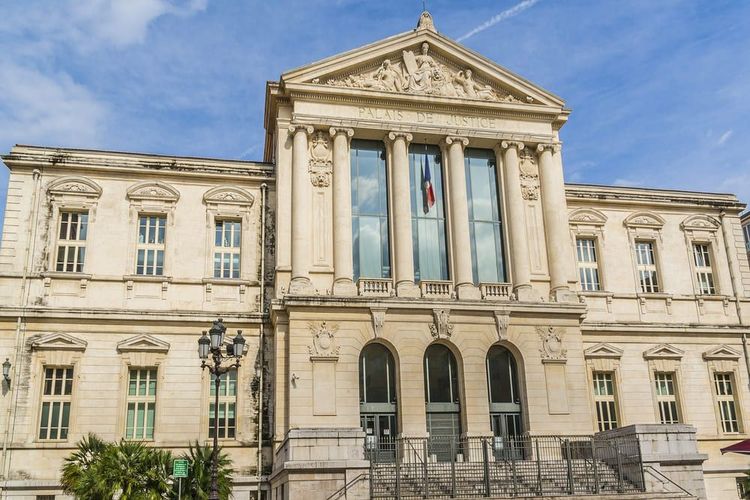
The square is dominated by the imposing courthouse, erected in 1892 where the Dominican convent once stood. At its feet, the Oulivier, a steel olive tree on a concrete base unveiled in 2021 by Laurent Bosio, embodies peace through the tree most typical of the region. On Saturdays, between 8am and 6pm, the square turns into a themed market: painters and artists twice a month, on the month's first and third Saturdays, old books on the second, vintage postcards on the fourth.
Free entry
13 - Paillon Promenade
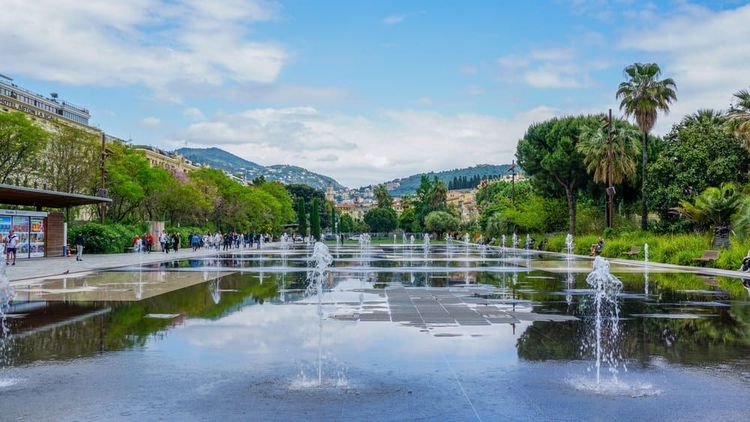
Seen from above, this vast urban park looks like a green carpet unrolled through the city, linking the modern art museum to the seafront. It is nicknamed the green corridor because it follows the course of the Paillon, a modest stream partly covered over in the 19th century. A thousand plantings from around the world, arranged in themed zones across four continents, punctuate the walk, as does the vast water mirror of nearly 3,000 square metres. Thanks to this redevelopment, old Nice regained a link with the city.
Free entry
14 - Massena square
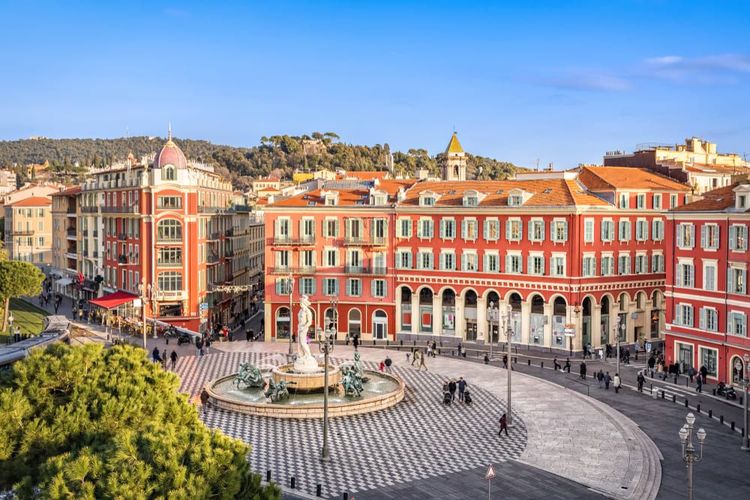
Beneath the black-and-white checkerboard floor of this pedestrian square flows the Paillon, buried long ago for hygiene reasons. The seven white resin figures by Jaume Plensa, perched more than 10 metres up, light up and change colour after dark. At the centre, the Fountain of the Sun only got its Apollo back in 2011: unveiled nude in 1956, the Greek god shocked locals, who had him moved elsewhere, leaving five bronze planet-deities to reign alone for decades.
Free entry
15 - Albert I garden
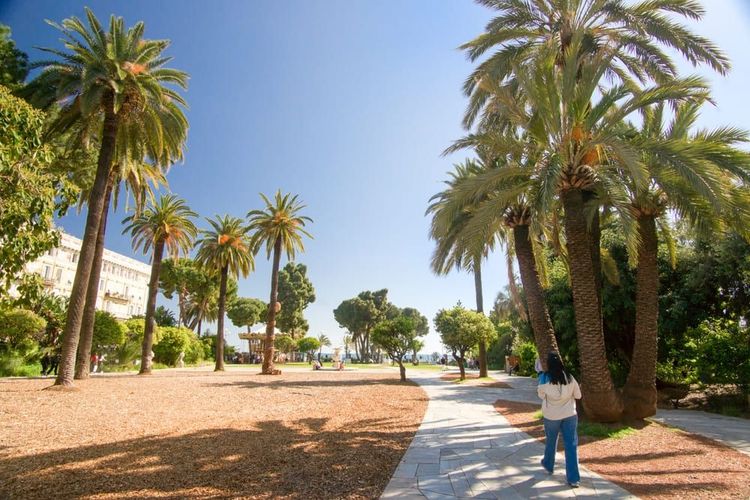
Created in 1852, this garden ranks among the oldest public spaces in Nice, just after the one on Castle Hill, opened in 1828. Back then, strolling was the favourite pastime of wealthy foreign winter visitors; later, tourism turned towards sea bathing, to the detriment of public gardens. It has kept its charm nonetheless: an open-air theatre in a Greek spirit, an old bandstand, a fake grotto, and a black metal arch evoking the Bay of Angels a little further down.
Free entry
16 - “Rue de France” and “Marble cross”
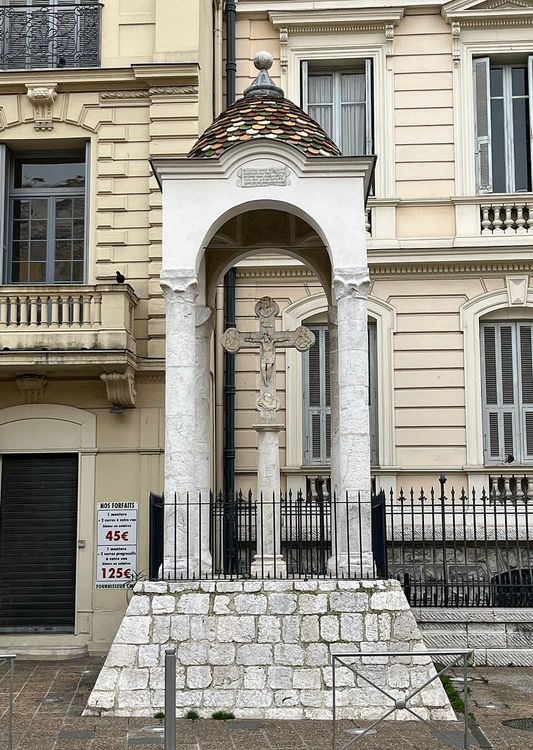
This street once led to the border, before Nice joined France: here one leaves the Italian facades behind for elegant townhouses once home to wealthy foreign winter visitors. The white marble cross commemorates a pope's efforts, during a congress held in Nice, to bring together Charles V and Francis I, long-standing rivals. The peace achieved lasted only 10 years, but it left us this cross and the rue du Congres, in memory.
Free entry
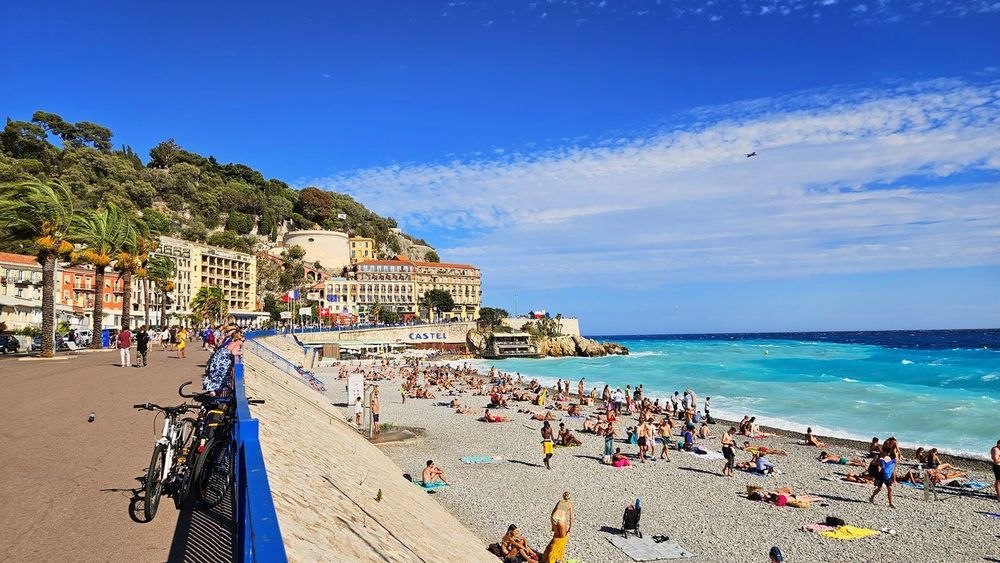
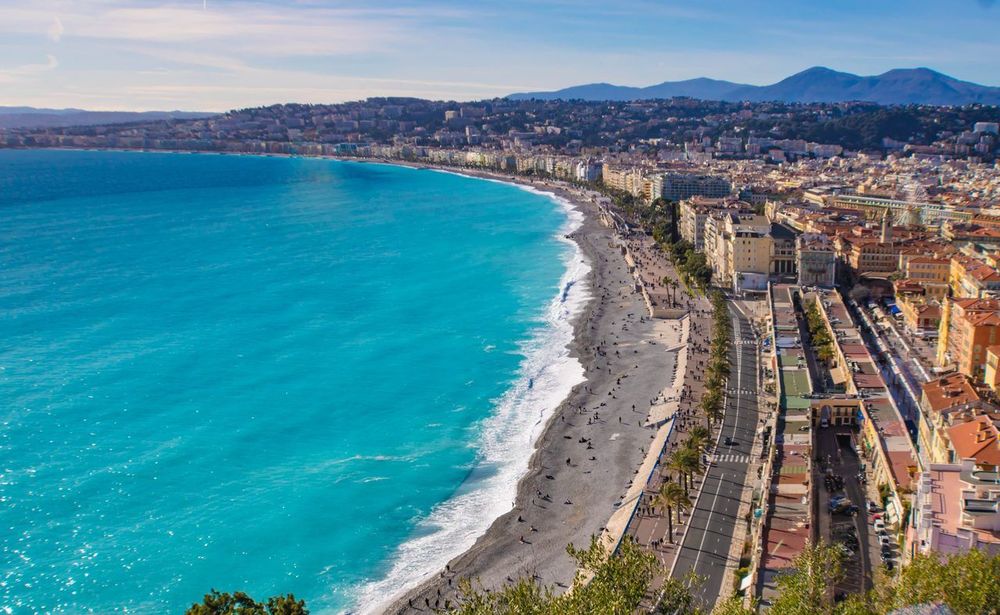
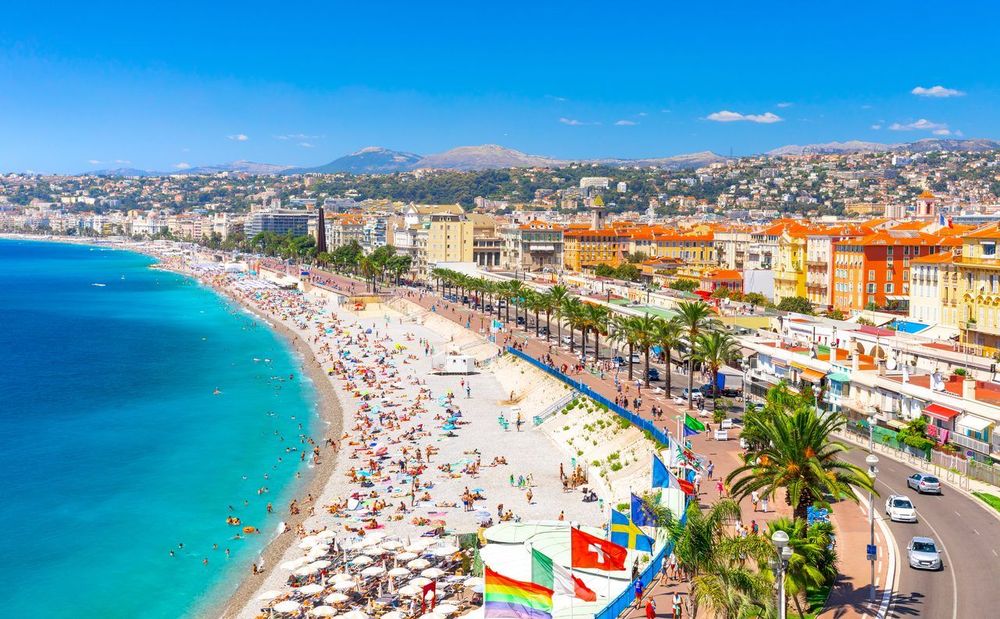
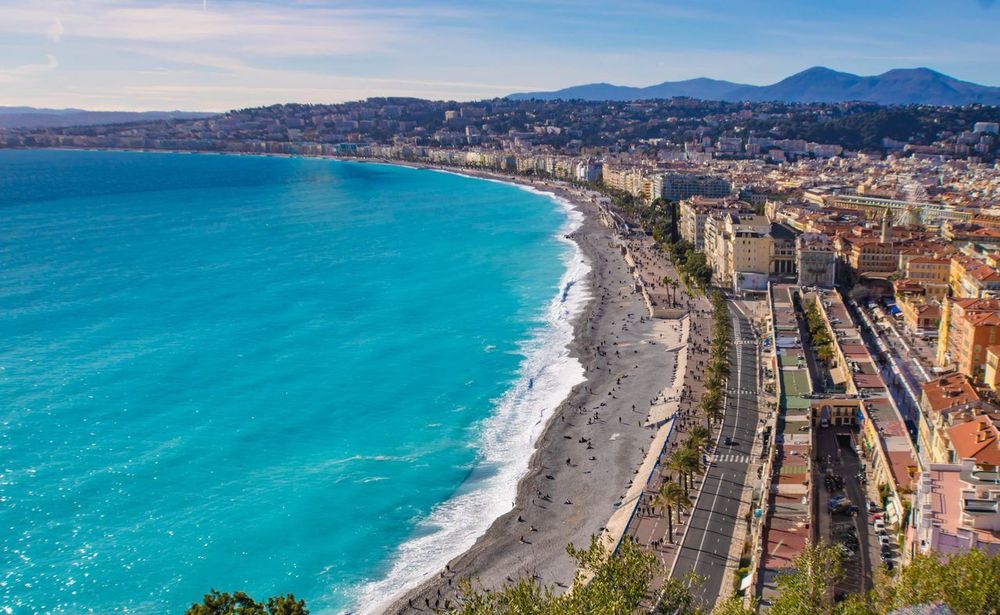
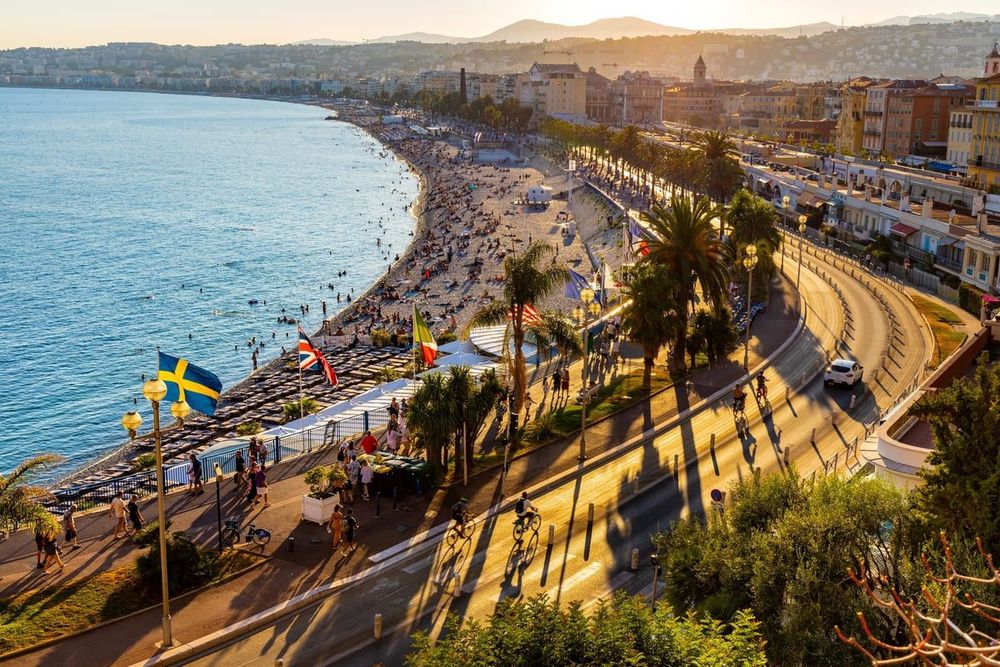
17 - Promenade des Anglais
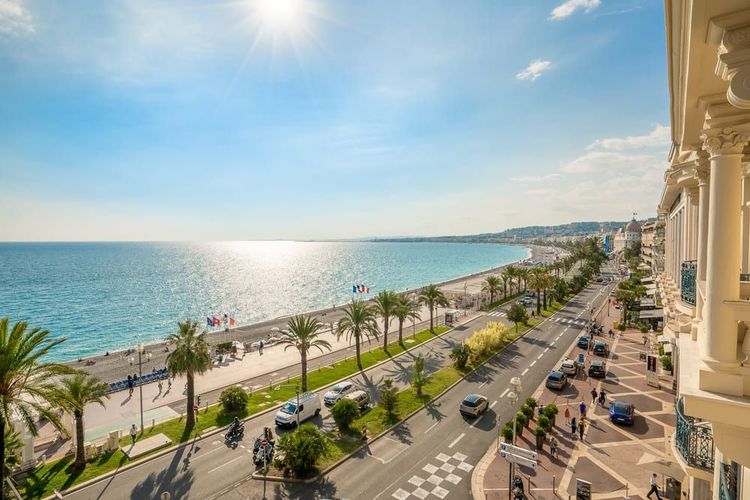
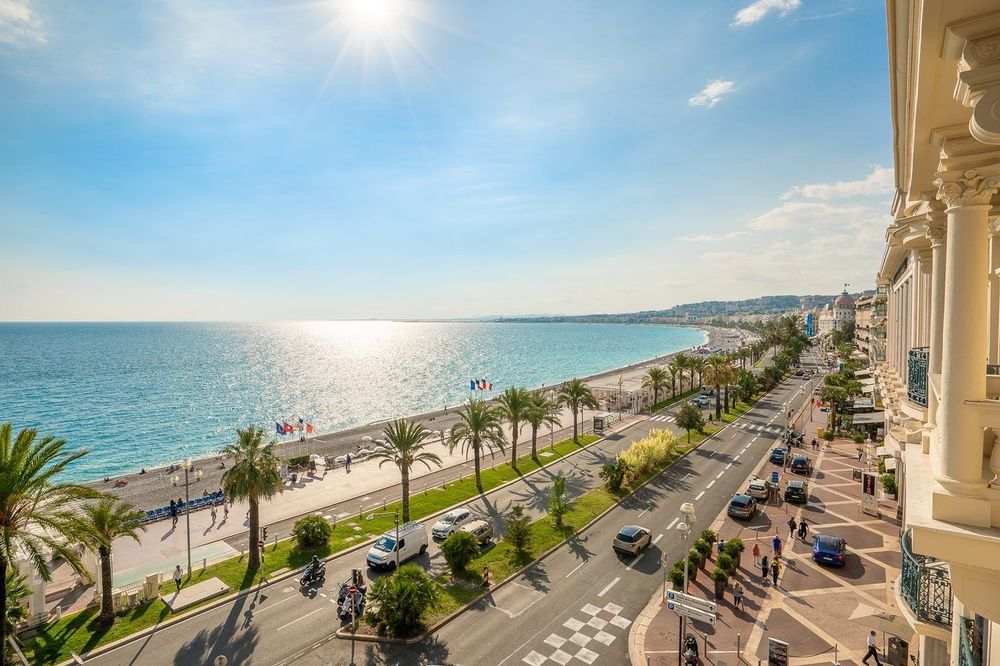
Here it is, the true star of Nice: running along the infinite blue of the Bay of Angels, the Promenade - the Prom to locals - was born in the 18th century out of English aristocrats' wish, having fled their country's grey winters, for a proper place to walk. Pastor Lewis Way launched the idea by employing jobless residents to level a 2-metre roadway. The promenade widened and became the centre of social life: the Negresco or the Regina Palace, built for the Queen of England, still attest to it.
Free entry
18 - Centenary Monument
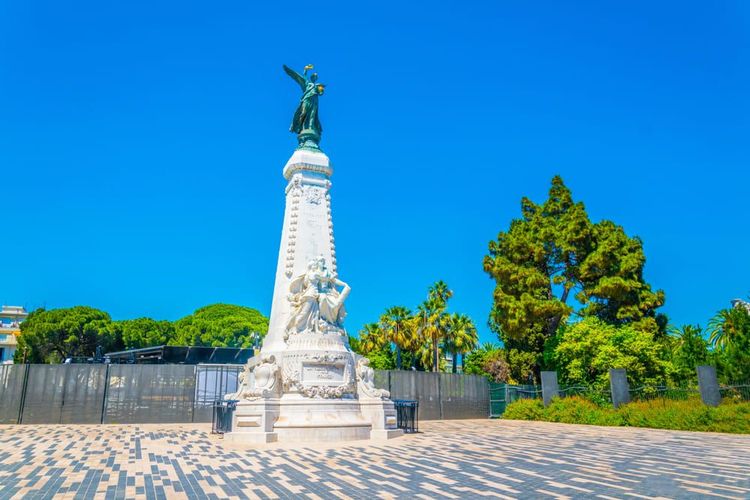
This monument celebrates a somewhat forgotten attachment: not that of 1860, but that of 1793, when Nice first became French before a return to the House of Savoy in 1814. At the foot of the pyramid, two women represent Nice giving herself to France, shown here helmeted and modestly covered, a symbol of a peaceful Republic. At the top, a Nike recalls the Greek origin of the city's name, Nikaia, she through whom victory comes. The monument was unveiled in 1893, for the centenary of that first episode.
Free entry
19 - Nine Oblique Lines
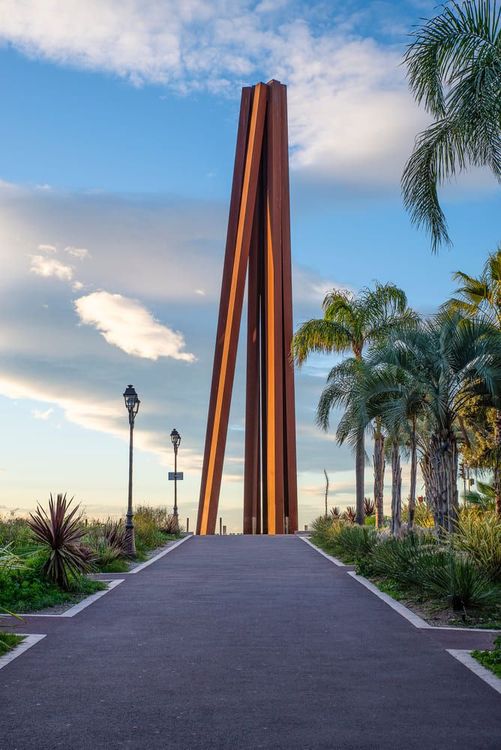
This steel sculpture, installed in 2010, was commissioned by the city to mark a century and a half since Nice's attachment to France. Each of its nine lines represents one valley of the former County of Nice, back when it still belonged to Savoy. It is the work of Bernard Venet, a French pioneer of conceptual and minimalist art, who works in corten steel, a metal that withstands weather and weathers over time into its recognisable rust tone. Its look, inevitably, divides opinion.
Free entry
20 - Nice Opera
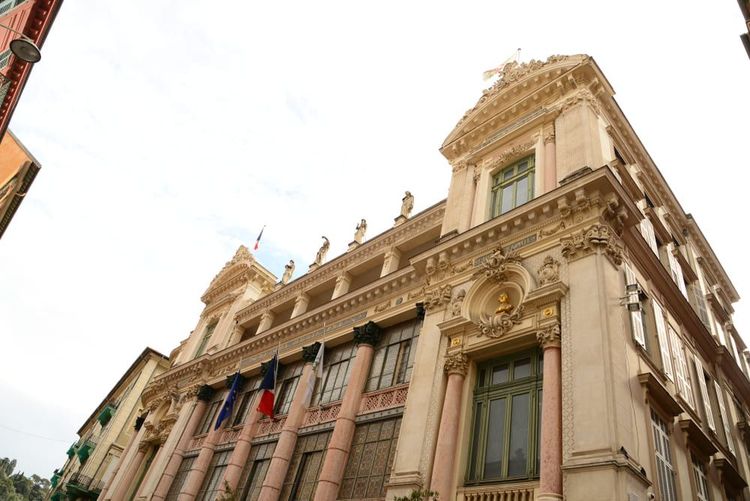
Today's opera house succeeded, in 1826, a simple wooden theatre authorised in 1776 by the king of Sardinia. The Turin architect Benedetto Brunati had Catherine Segurane's exploits painted on the stage curtain, and planned a removable glazed bay facing the sea - a feature the bourgeoisie soon had walled up. In the 19th century, the hall welcomed the great winter aristocracy, until a tragic fire broke out during a show in 1881. Across the street, the Dominican Church honours the founder of the austere, vegan Order of Minims.
Free to see from outside · Allow 1 h 30
21 - Replica of the statue of Liberty
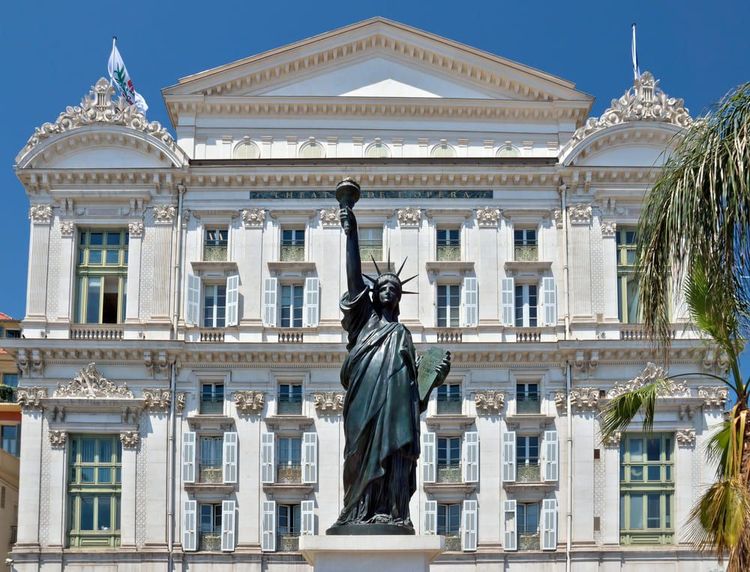
Here stands a genuine replica of the Statue of Liberty, signed by Bartholdi himself, its creator. Before offering the United States the 46-metre icon we know today, the sculptor worked in stages, building increasingly large models. Nice therefore holds one of the very first versions of Lady Liberty, after those already standing in Paris, Colmar and Tokyo.
Free entry
22 - I LOVE NICE
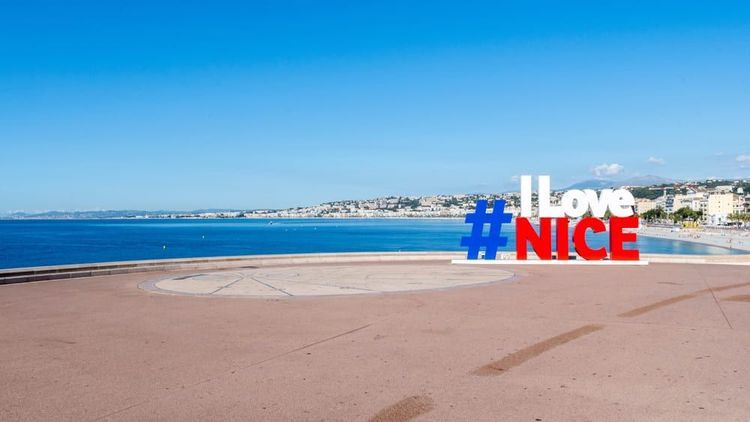
Every self-respecting city now needs its instagrammable spot: originally cut into the rock, the esplanade of the Rauba Capeu quay now carries a blue-white-red I Love Nice sign. A simple marketing move at first, the logo became a symbol of support widely shared on social media, following the deadly attack that struck the city in 2016. Many stop here just for the souvenir photo, not always aware of the graver story behind the image.
Free entry
23 - Free Elevator
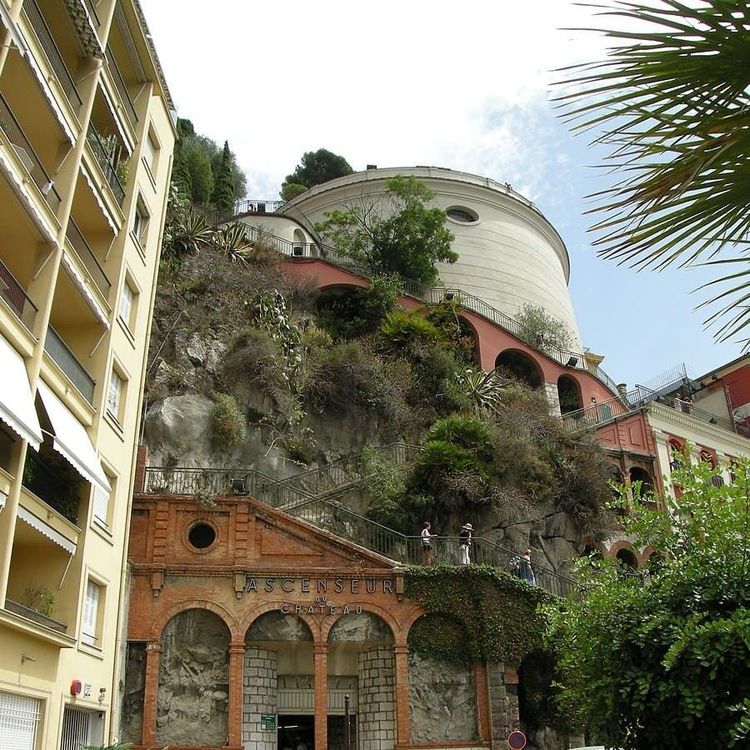
Climbing to the top of Castle Hill is a must for the sweeping view over Nice - so much so that the city installed a free lift so no one would miss out. Stairs or lift, the choice is yours; just know the lift only reaches the first viewpoint, and you will still need to walk a little further to reach the summit and its panoramas.
Free entry
24 - View from the Bellanda Tower
This first belvedere of the park offers a clear view from the Bellanda tower, which has shaped the Nice skyline since the 19th century - its genuine construction date, despite appearances. Like other features on the hill, it was designed in a romantic spirit, blending real and fake to echo the genuine medieval Saint-Elme tower set further back. First named Clerissi after its owner, it later inspired composer Hector Berlioz. It now houses the Bellandarium, a small museum on the history of Nice, open on Saturdays.
Free entry
25 - Castle’s waterfall
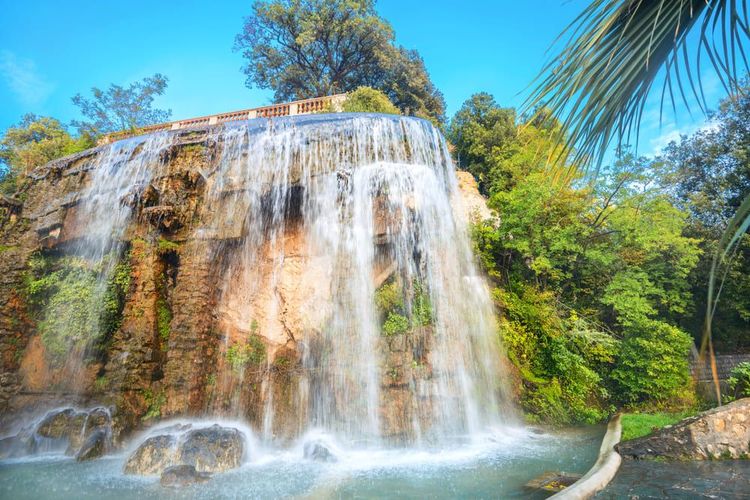
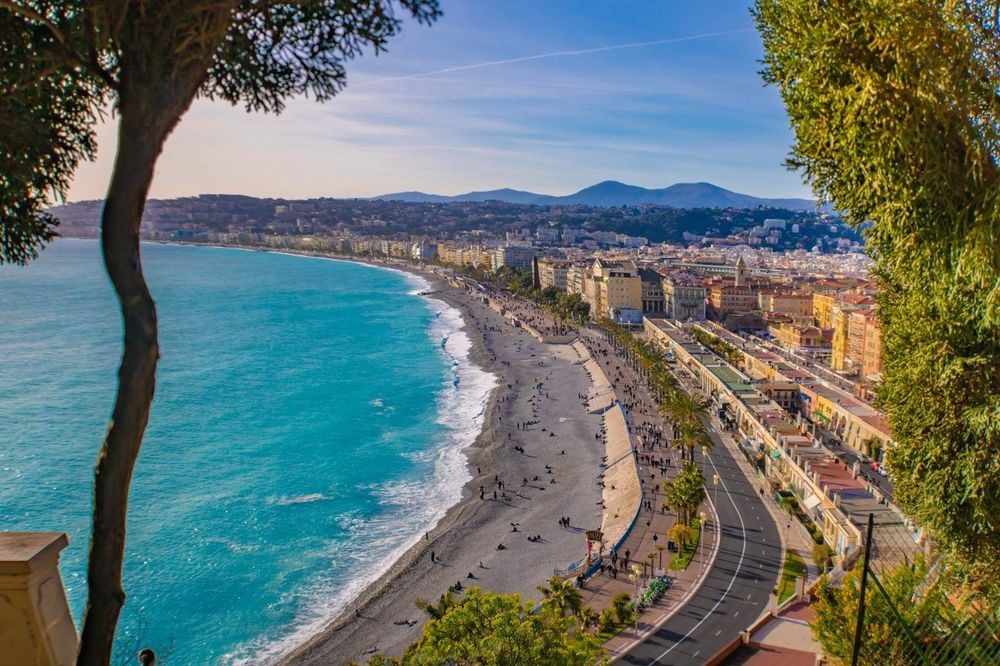
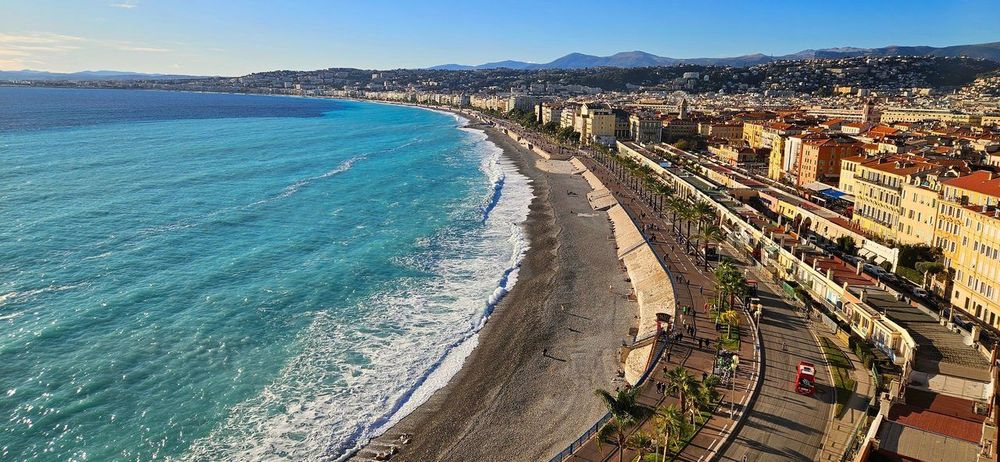
This artificial but refreshing waterfall exists thanks to King Charles Felix of Savoy, who in the 19th century bequeathed the hill to the municipality to create a park in the fashionable romantic-garden style, where grottoes and fake ruins mingle with the natural setting. Fed by the Vesubie canal, it can stop flowing when drought brings water restrictions. Just above it, a belvedere reveals one of the finest views over old Nice, bordered by the Promenade des Anglais.
Free entry
26 - Castle Hill
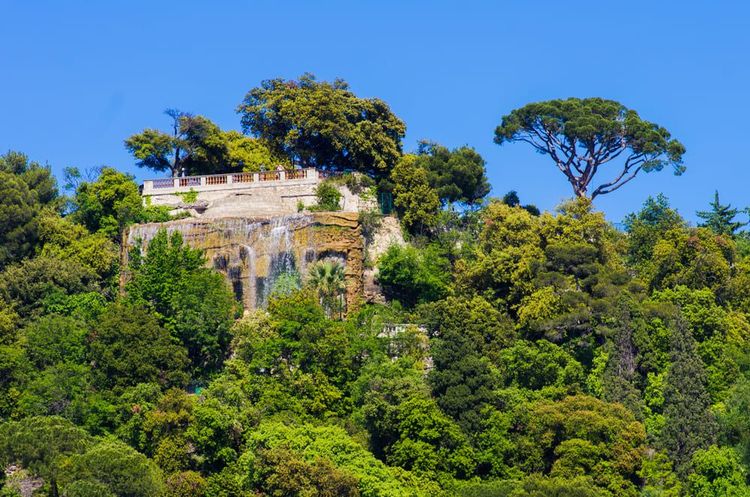
It all started here: Phocaean Greeks from Marseille founded Nikaia, she through whom victory comes, besieged by the Ligurians until Roman intervention in the 2nd century BC. The hill became the heart of the medieval city, with a cathedral and a castle-citadel, before the population moved down to today's old Nice in the 13th century. In 1705, Louis XIV besieged it; the fortress, which fell only after months of resistance, was razed on his order. What remains are ruins, mosaics, and the Castle cemetery, where Leon Gambetta rests.
Free entry
27 - View over Nice’s harbor
On the east side of the park, the panorama opens onto Port Lympia, the Nice lighthouse and the long Boulevard Franck Pilatte, which skirts Mont Boron and Cap de Nice - the way to head for a fine coastal walk. Small picturesque staircases even let you reach, on foot and along the blue water, the Villefranche shoreline as far as the Lazaret quarter.
Free entry
What to do in Nice in 2 or 3 days?
The audio-guided route loops in a single morning: 7.1 km and 27 stops in about 3h15, from Port Lympia to Castle Hill. With 2 or 3 days on hand, Nice reveals more of itself, between the harbour, the hills of Cimiez and the hinterland.
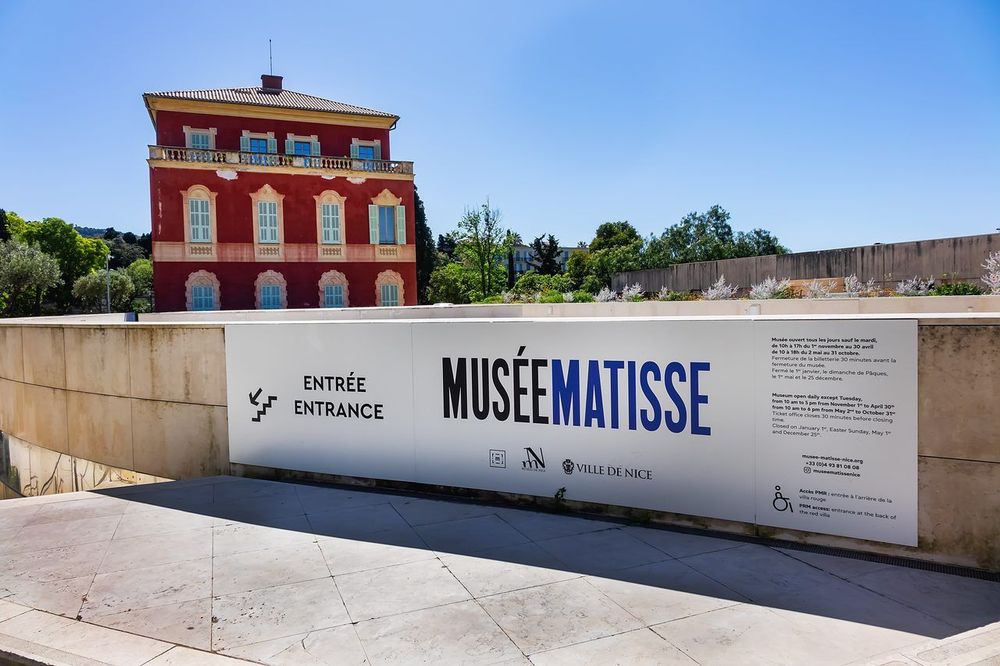
The next day, head up to Cimiez, where the Matisse and Chagall museums sit one after another on the same plateau. Our guide to visiting Nice in 2 days breaks this programme down hour by hour, from the quay to the collections.
On the third day, treat yourself to a swim in 24°C water, then catch the bus and climb, in under 25 minutes, to a village that overlooks the Mediterranean from more than 400 m up. The full three-day route, with walking times, is in our guide to visiting Nice in 3 days.
Which neighbourhoods does the tour cross?
In one loop, the route links several faces of Nice, from the old county of Savoy to the broad avenues of the 19th century.
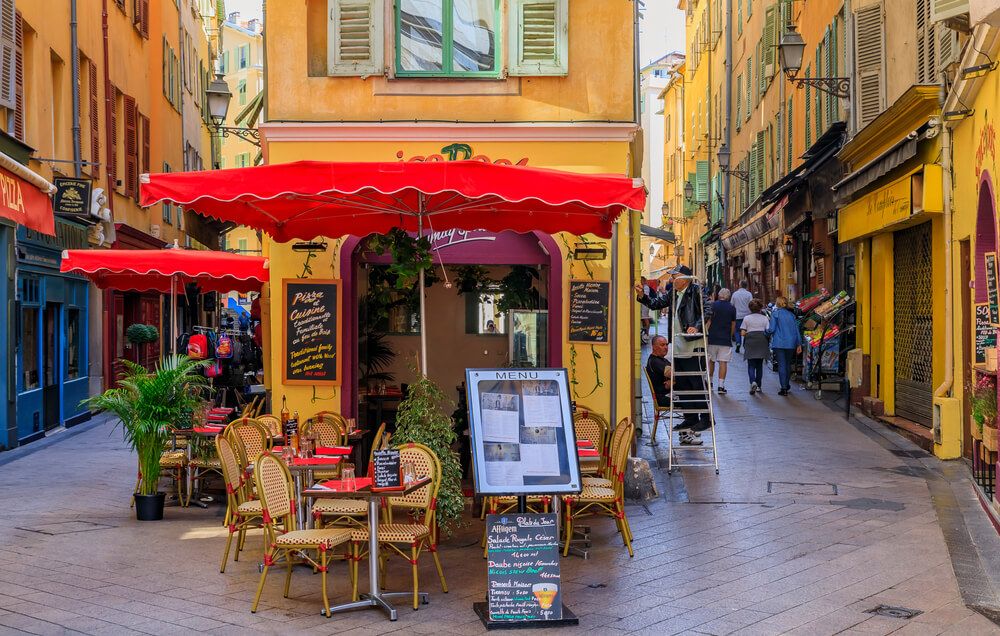
It starts at Port Lympia and Place de l'Île de Beauté (stops 1 and 2), crosses Place Garibaldi (stop 3), then enters the old town, that maze of ochre and yellow lanes inherited from the Kingdom of Sardinia, down to Cours Saleya and its Chapelle de la Miséricorde (stops 4 to 11).
It then passes the Courthouse Square and the Paillon Promenade (stops 12 and 13), reaches Place Masséna (stop 14), and continues to the seafront, from the Albert I Garden to the Statue of Liberty replica, a 19th-century seaside Nice covered in our guide to the neighbourhoods of Nice (stops 15 to 21).
The last stretch climbs Castle Hill, the birthplace of the ancient city, between a waterfall and viewpoints over the harbour (stops 22 to 27).
What to see in Nice in 2 hours?
If time is short, stick to the heart of the old town: stops 6 to 10 follow one another within a few minutes' walk, never straying far from Cours Saleya.
From Rue Droite, step into the Lascaris Palace, nicknamed the little Versailles for its baroque splendour, then admire the glazed-tile dome of Sainte-Réparate Cathedral. A few steps on, the Gesù Church marks the beginnings of Nice's baroque art, just before the 1584 fresco on the Adam and Eve house. The route finally reaches Saleya Avenue, the heart of Nice's social life since the 18th century.
How much does it cost to visit Nice?
Of the 27 stops on the route, 24 can be visited without a ticket. The other 3 are special cases:
- Lascaris Palace, where entry costs €5;
- the old Duke of Savoy Palace and its Chapelle de la Miséricorde, best admired from the outside;
- Nice Opera, which can also be toured in 1h30 for €8.
To keep sightseeing free, our guide to free activities in Nice lists other options, and the French Riviera Pass, €30 for 24 hours, opens access to several nearby sites, such as the Èze Exotic Garden or bike rental.
Information checked in October 2026 and subject to change.
Where to stop for a bite along the tour?
The route itself runs along a food-lover's street: Rue Pairolière (stop 4), where bakeries, butchers, tripe shops and fishmongers keep alive the trade of a neighbourhood named after the pairouliers, the Niçois word for the coppersmiths who worked there in the Middle Ages.
On Cours Saleya (stop 10), try socca, a chickpea pancake browned over a wood fire and eaten piping hot with your hands, or pan-bagnat, a tuna and vegetable roll. Our selection of Nice's culinary specialities gathers the other classics not to miss, from pissaladière to daube niçoise.
What to do in Nice with children?
The old town works well for a family outing: the trompe-l'œil façades, with their fake windows and fake balustrades, can be spotted on almost every corner, a game that quickly grabs the attention of 6 to 10-year-olds.
Sainte-Réparate Cathedral is free to visit, and the legend of its young patron saint, told in two minutes, interests even 7 to 10-year-olds. Along the Promenade des Anglais, a cycle path runs beside the sea without crossing any road; for swimming, pack water shoes, since Nice's beaches are made of pebbles, not sand. A dedicated guide to Nice with children lists further ideas by age and neighbourhood.
What should you know before visiting Nice?
Three details can change your plans, depending on the time or day you pass through.
The Paillon walk and the Albert I Garden, which the route follows, close after 9 pm, with the garden itself shutting at 11 pm; past those hours, simply stay on Boulevard Jean Jaurès and pick up Avenue de Suède via Avenue Gustave V. Castle Hill, for its part, closes its park at set hours, from 6 pm in winter to 8 pm in summer.
Cours Saleya also changes character by the day: the flower market fills the square every morning except Monday, when antique dealers take over instead. It also helps to know that Nice summers often climb to between 28 and 35°C, while spring and autumn offer more comfortable conditions for a full day on foot.
What to see around Nice?
Nice makes a good base for exploring further afield, between hill villages in the hinterland and nearby towns that also have their own audio-guided route.
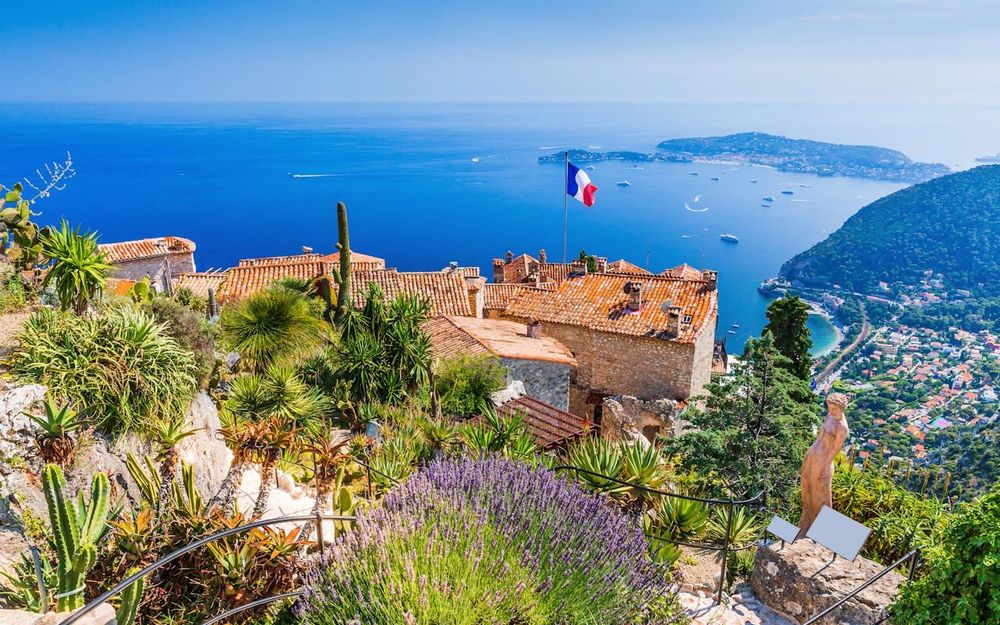
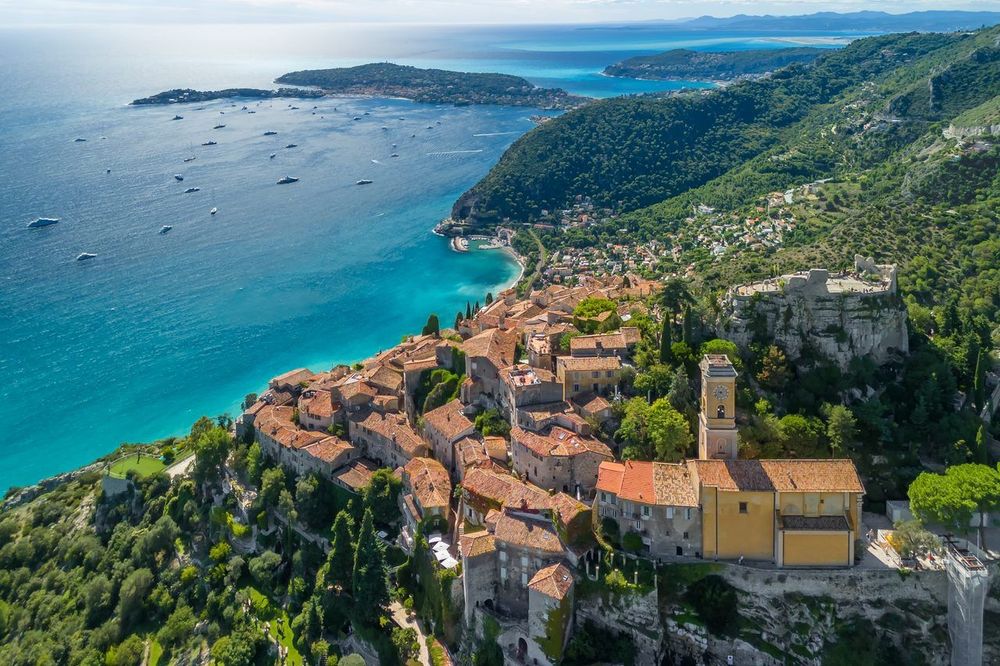
About 15 km away, the hills take over: Èze rises 429 m above the sea, while La Turbie, 8 km further on, overlooks Monaco from close to 500 m, around its Roman Trophy of the Alps. Other hill villages around Nice are gathered in our selection of the most beautiful villages around Nice.
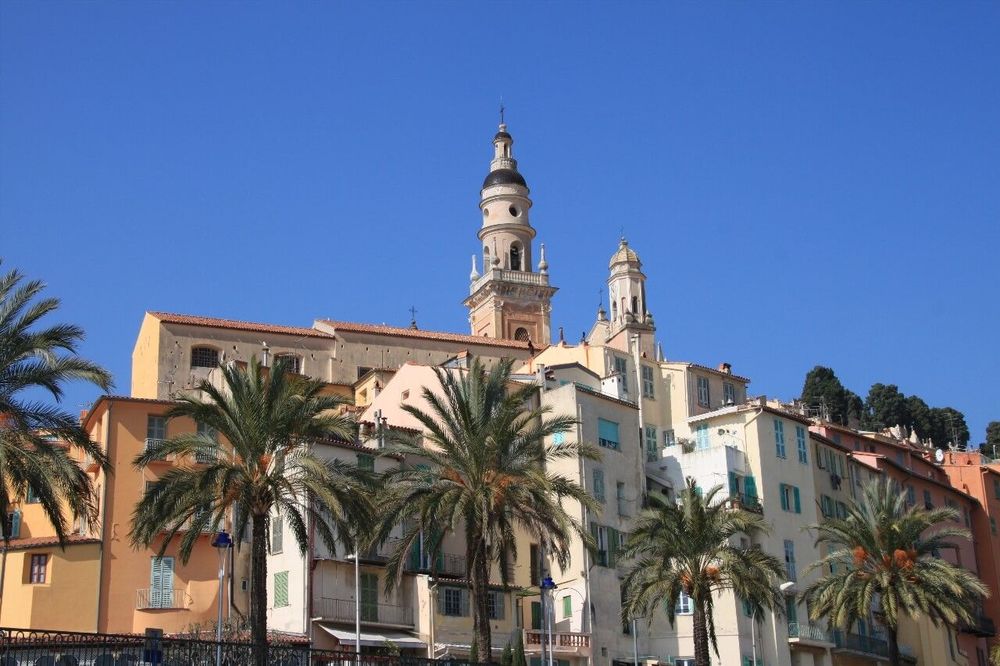
Monaco, 12 km away, packs a princely palace and an air of prestige onto its rock; Antibes, 17 km away, encloses its walled old town between a Provençal market and flower-lined lanes. Menton, 20 km away on the Italian border, keeps a sun-drenched rhythm of life between colourful façades and seafront terraces, and Cannes, 26 km away, blends the palaces of the Croisette with the quiet lanes of Le Suquet.
Further out, 70 km away, Saint-Tropez keeps, behind its glamorous reputation, a harbour and lanes that have stayed true to the spirit of a Provençal village; 113 km away, Hyères lines up an old castle, Belle Époque villas and views over the Golden Islands.
What's on in Nice right now?
As the year draws to a close, Nice dresses up for Christmas.
From 17 to 27 December, the Lou Presèpi Nissart living nativity brings Place Rossetti to life with Niçois tradition. On 24 December, Santa poses for photos at the Jean Bouin ice rink, where an ice garden and other activities await families. For more dates throughout the season, see our selection of events in Nice.
Information checked in October 2026 and subject to change.
Le plein d'inspirations
Explorez le monde en totale liberté, à pied au cœur des villes ou au fil des routes. Nos guides audios transforment chaque destination en une découverte culturelle immersive et unique.










FAQ for visiting Nice
When is the best time to visit Nice?
Nice is a pleasant place to visit all year round thanks to its privileged Mediterranean climate. The months of April to June and September to October are especially recommended, with mild temperatures and generous sunshine that let you make the most of the city without the heavy summer crowds. Summer remains very popular for seaside pleasures, despite temperatures that can exceed 30°C. Winter, with its sunny days and mild temperatures, offers a charming alternative for discovering Nice in a quieter atmosphere, even if swimming is reserved for the bravest.
How many days do you need to visit Nice?
A stay of three to four days lets you discover Nice in good conditions. Two days are enough to explore the Old Town with its colourful lanes, stroll along the Promenade des Anglais and climb up to Castle Hill. An extra day gives you time to enjoy the museums, the local markets and perhaps an outing to the heights of the city. With four days or more, you can adopt a more relaxed pace and even consider excursions to the perched villages nearby or to other gems of the French Riviera.
How do you get around Nice?
Nice has an excellent public transport network, with trams and buses that serve the whole city and its metropolitan area efficiently. The historic city centre is best explored on foot, letting you savour the atmosphere of the lively lanes and squares. The self-service bikes are a practical option for riding along the seafront or quickly reaching different neighbourhoods. For longer journeys or excursions into the hinterland, renting a car can be useful, although parking in the city centre often remains difficult. Taxis and ride-hailing services round out the options for your occasional trips.
What can you do for free in Nice?
Nice offers many free activities that reveal its authentic charm. Wandering through the Old Town immerses you in the Mediterranean atmosphere among colourful façades and lively little squares. The climb up to the park on Castle Hill rewards your efforts with spectacular views over the bay. The public beaches welcome you for swimming or relaxing, while the famous Promenade des Anglais invites you to contemplate the sea. The markets, notably the one on Cours Saleya, offer a colourful spectacle even without buying anything. The Ryo audioguide accompanies you on these discoveries with enriching commentary on the history and secrets of each iconic place.
Which local culinary specialities should you try in Nice?
Niçoise cuisine celebrates Mediterranean flavours with generosity and authenticity. Socca, that golden and crispy chickpea pancake, is enjoyed piping hot in the lanes of the Old Town. The traditional salade niçoise brings together tomatoes, hard-boiled eggs, anchovies and olives in perfect harmony. The petits farcis niçois, sun-drenched vegetables stuffed with sausage meat, embody local conviviality. The pissaladière, a Provençal cousin of pizza, marries caramelised onions and anchovies on a soft dough. Not forgetting the Swiss chard pie, a surprising blend of sweet and savoury, or the courgette-flower fritters that celebrate the delicacy of the local produce.
Where are the finest panoramic views of Nice?
Nice reveals its most beautiful panoramas from several strategic vantage points. Castle Hill remains a must with its 360-degree view embracing the Baie des Anges, the harbour and the ochre rooftops of the old town. The Mont-Boron park offers spectacular perspectives over the entire Riviera coastline. For a more intimate experience, the heights of Cimiez reveal the city from a different angle, with the Alps as a backdrop. The Nice Observatory lets you admire an exceptional panorama while discovering this historic scientific site. At the end of the day, these lookout points become privileged theatres for watching the sunsets that set the Mediterranean ablaze.
What can you visit in Nice when it rains?
Rainy days in Nice are the chance to discover its sheltered cultural treasures. The Marc Chagall Museum presents the largest public collection of the artist's work in a light-filled setting. The MAMAC immerses you in modern and contemporary art with its bold collections. The Masséna Museum retraces the history of Nice and the Riviera in a sumptuous Belle Époque palace. Shopping arcades such as Nice Étoile offer a dry retail interlude. The Libération covered market lets you discover local produce under cover. The Baroque churches of the Old Town, true architectural jewels, are also worth a contemplative visit away from the bad weather.
What should you see first on a first visit to Nice?
A first taste of Nice fits into a fairly compact area. The Promenade des Anglais unwinds along the seafront between the airport and the port; just behind it, Vieux-Nice lines up narrow lanes, ochre facades and the Cours Saleya market, given over to flowers in the morning. Castle Hill, reached on foot or by the lift built at the end of the quay, offers the most famous view over the Baie des Anges and the tiled rooftops. Coming back down, Place Masséna and its chequered paving open onto the green ribbon of the Paillon, while Port Lympia lines up its colourful buildings around the boats. Up in Cimiez, finally, the Matisse and Chagall museums complete the picture. The Ryo audio guide offers a dedicated Nice route that links these highlights on foot.
What can you visit around Nice without a car?
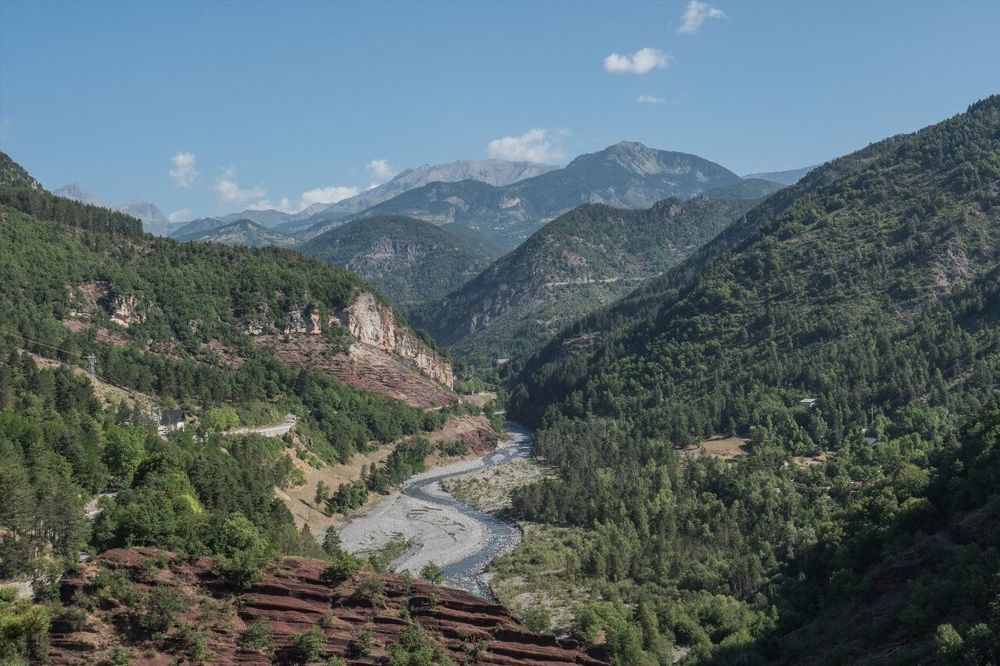
The railway line running along the Côte d'Azur makes Nice an ideal base for exploring without a car. Heading east, a few minutes are enough to reach Villefranche-sur-Mer and its bay, then Beaulieu, Èze-sur-Mer where a footpath climbs up to the hilltop village, Monaco and finally Menton with its gardens, almost on the Italian border. Heading west, the same line serves Antibes, Juan-les-Pins and Cannes. Regional coaches round things off inland, notably towards Saint-Paul-de-Vence, Vence or the Gorges du Loup, while a scenic train climbs the Roya valley up into the mountains. Allow half a day for this kind of outing as a rule, more if you plan to combine sightseeing with a swim.
What are the beaches in Nice like and where can you swim?
The beaches in Nice are made of pebbles rather than sand, which often takes visitors by surprise: water shoes and a thin mat make the day far more comfortable. Along the Promenade des Anglais, public beaches alternate with establishments renting out loungers and parasols, both reached by steps down from the seafront. To the east, beyond the port, the coast becomes more indented and shelters a few coves favoured by locals, where people sometimes swim straight off the rocks. If you have your heart set on sand, you need to head for the neighbouring towns west of the city. The sea is generally pleasant from late spring to early autumn.
What can you do in and around Nice, from the seafront to the hinterland?
It all starts on the Promenade des Anglais, 7 kilometres along the Baie des Anges, which takes under thirty minutes by bike or an hour and a half on foot. The lobby of the Hôtel Negresco, beneath its dome designed by Gustave Eiffel, is open to visitors. In Old Nice, the Cours Saleya hosts the flower market from Tuesday to Sunday and antique dealers on Mondays, close to Rue Droite and Sainte-Réparate Cathedral. Further afield, Monaco is thirty minutes away by train, the hilltop villages forty minutes and the Mercantour an hour and a half.
Plan your stay with our guide to things to do in and around Nice.
How can you make the most of the Nice Carnival, and where does the festival come from?
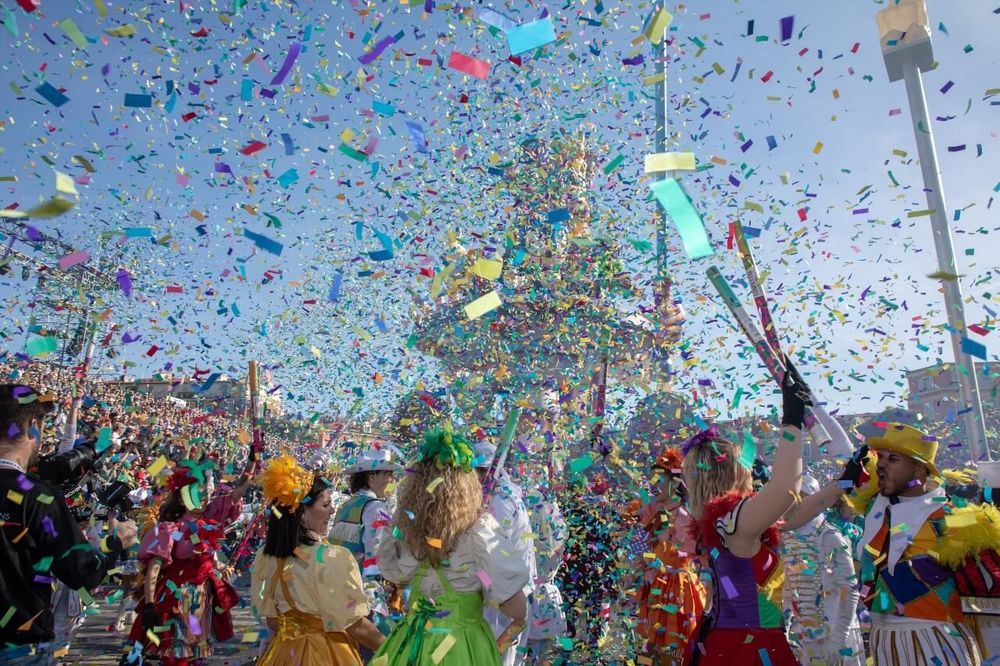
France's leading carnival turns the Promenade des Anglais into a giant stage every February, with grandstands and monumental floats. Its first written mention dates back to 1294, but it was in 1873 that a festival committee gave it its modern form. The first official Battle of Flowers took place in 1882, and since 1930 the effigy of His Majesty Carnival has been burnt at the close. Each edition involves more than 1,000 artists and volunteers over about a fortnight. The guide also covers ticketing by zone, accommodation, transport and safety.
Get ready with our complete guide to the Nice Carnival.
Which annual events should you not miss in Nice, apart from the Carnival?
Four events punctuate the year. The free Carnival takes up two weeks in February and draws hundreds of thousands of spectators, so book your accommodation early. In July, the Nice Jazz Festival, one of the oldest in France since its first edition in 1948, brings musicians from all over the world for a week. In May, the Fête des Mai celebrates Niçois folklore beneath the olive trees of the Jardins des Arènes de Cimiez, with socca, pissaladière and chard pie. In September, the Fête du Port gathers thousands of locals on the quays.
Find the dates in our selection of the best events in Nice.
Which hilltop villages and artists' villages should you visit around Nice?
More than thirty hilltop villages lie within an hour's drive of Nice. On the Corniche, Èze overlooks the sea at 429 metres and can be reached via the Nietzsche path, a 45-minute climb from the shore. Eight kilometres away, quieter La Turbie preserves the Trophy of the Alps, erected in 6 BC by Augustus. Roquebrune-Cap-Martin is home to a 10th-century castle and a thousand-year-old olive tree. Lesser-known Coaraze displays sundials signed by Cocteau. Thirteen villages are covered in all, with the time to allow for each.
Pick your stops in our selection of the most beautiful villages around Nice.
Which museums should you visit in Nice, alone or with family, and how much do they cost?
Nice runs a dozen municipal museums, which charge visitors and offer a 4-day pass for 15 euros, plus the Marc Chagall National Museum and its Biblical Message, the National Sports Museum and the Museum of Asian Arts. In Cimiez, the Matisse Museum occupies a 17th-century Genoese villa next to the archaeology museum, while Terra Amata preserves a camp some 400,000 years old. Several museums run workshops and interactive tours for children. Note that the MAMAC has been closed for renovation since January 2024.
Plan your visits with our complete guide to the museums of Nice and our tips for visiting Nice's museums with children.
Public beach or private club: where should you lay your towel on the Nice seafront?
Along the 7 km of the Promenade des Anglais, the public pebble beaches are free, with showers and toilets, while some thirty private clubs rent out sunloungers, from around €20 to €35 for half a day. Les Ponchettes, facing the old town, offers the most famous view; Le Centenaire is a labelled handiplage; Carras, the only municipal beach that allows dogs, and Magnan, further west, are quieter. East of the port, the small coves of La Réserve are popular with locals. There is almost no sand: bring water shoes and a thick towel.
Compare the spots in our selection of the most beautiful beaches in Nice and our guide to the beaches and clubs of the Nice seafront.
From socca to pan bagnat, which traditional Niçoise dishes should you taste?
Socca, a chickpea-flour pancake made with olive oil and cooked over a wood fire, is eaten hot straight from the oven, often with a glass of chilled rosé at aperitif time. Pan bagnat, a tuna sandwich moistened by its raw vegetables, is the local snack par excellence, and pissaladière combines onions, anchovies and olives. Daube, beef and bacon simmered in red wine, is served with Niçoise ravioli or gnocchi. Add salade niçoise, stuffed vegetables, courgette-flower fritters and Pastis de Nice, made from twenty-six plants and spices.
Explore the flavours with our ten culinary specialities of Nice.
Which day trips from Nice are worth taking, from Monaco to the Verdon Gorge?
Monaco combines the Prince's Palace, the Monte-Carlo Casino and the Oceanographic Museum, while Cannes offers the Croisette and its old town. Antibes has its fortified old town and the Picasso Museum in the Château Grimaldi, Saint-Paul-de-Vence its art galleries, and Èze, perched on a cliff, an exotic garden with sea views. Grasse, the perfume capital, opens the doors of Fragonard, Molinard and Galimard. Nature lovers can head for the Verdon Gorge, the Vallée des Merveilles and its petroglyphs, or the Lérins Islands, reached by ferry from Cannes.
Choose your outings from our top 10 must-sees around Nice.
Which lesser-known places can you discover in Nice without spending a cent?
Beyond the alleys of Old Nice, several treasures are free. Castle Hill, whose fortress was razed in 1706, offers one of the best viewpoints on the Côte d'Azur, with an artificial waterfall about 30 metres high; allow twenty minutes to climb the steps. Up in the hills, the gardens of a Franciscan monastery overlook the city. You will also find an Orthodox cathedral built for Russian princes, a theatre devoted to photography, Place Garibaldi and some twenty public beaches open without booking. Twenty free activities in all.
See the full list in our guide to free things to do in Nice.
What itinerary should I follow for a first visit to Nice, whether I stay one, two or three days?
For a first day, start early on the Promenade des Anglais, before 9am, then wander through the Cours Saleya market and the lanes of Old Nice. Next, climb Castle Hill (92 m) for the view over the bay, before heading to Place Masséna and the Promenade du Paillon.
Port Lympia offers a calmer break, and you should try socca, pissaladière and pan bagnat along the way. If you stay two or three days, extend your trip to Mont Boron, the Russian Orthodox cathedral or Cimiez.
To learn more, read the first-time visitor guide then explore our itineraries: first route, second route and third route.
How do you find your way around Nice's neighbourhoods, and which one should you stay in?
In Nice, changing neighbourhood often means changing era. Ten minutes by tram separate the ochre alleys of Old Nice, with the Cours Saleya and Sainte-Réparate Cathedral, from the white buildings of the Promenade des Anglais and the Belle Époque villas of Cimiez. The Port, founded in the 18th century by Charles Emmanuel III, keeps its colourful horseshoe of façades. The guide reviews some fifteen areas, including the Musicians' quarter and Gairaut with its observatory, with their postcodes, their reputation for safety and the best options for accommodation.
Get your bearings with our map of Nice's neighbourhoods.
What history lies behind the colourful façades of Old Nice?
Old Nice grew up in the 11th century on the slopes of Castle Hill, then passed to the House of Savoy in 1388 for almost five centuries, hence its Italian feel. In 1706, Louis XIV had the citadel razed: its stones filled the moat that would become the Cours Saleya, home to the flower market since 1861, every morning except Monday. After the 1887 earthquake, owners opted for painted trompe-l'œil decoration, now the district's signature. Less than one square kilometre thus holds a remarkable number of listed monuments.
Explore its alleys with our guide to Old Nice.
Vos commentaires, idées et suggestions
Aucun avis pour le moment