© Shutterstock
 Votre guide Ryo
20 Free Activities to Do in Nice in 2026
In Nice, the Mediterranean Sea stretches before every visitor, but the city also hides treasures once you leave the beach. Between the century-old market of the Cours Saleya, the permanent collections of the municipal museums open all year round, and a hill with no castle that nonetheless dominates the entire bay, free activities in Nice are plentiful for those who know where to look. Type "free activities Nice" into a search engine and you will mostly find hastily assembled lists: this 2026 guide goes much further. The Ryo audio guide for Nice lets you connect these sites and activities on foot, headphones on, without spending more than the price of a tram ride.
In the pages that follow, we climb a hidden staircase to reach a 30-metre artificial waterfall, push open the door of a Franciscan monastery whose gardens overlook the entire city, and discover why a square in Nice bears the name of an Italian revolutionary. Along the way, we also encounter an orthodox cathedral built for chilly Russian princes, a theatre dedicated exclusively to photography, and around twenty public beaches accessible without a reservation. Enough to fill a full week without ever touching the holiday budget.
1. Stroll Through the Lanes of Vieux-Nice
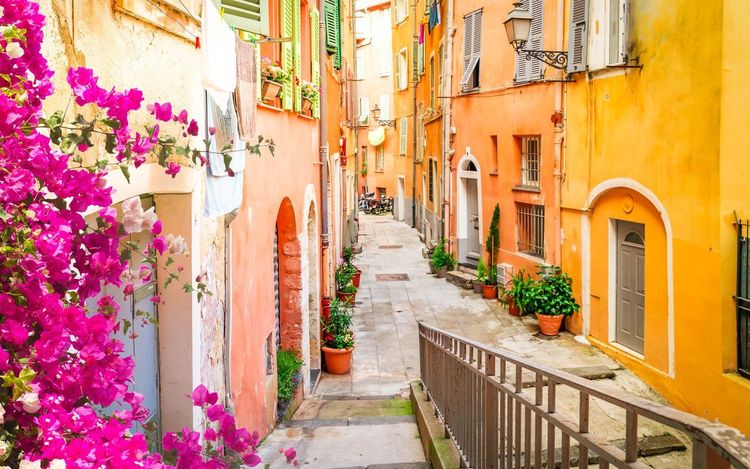
Vieux-Nice (06300 Nice, rated 4.7/5 on Google with 8.2K reviews) forms a tight quadrilateral between the Colline du Château, the Cours Saleya and the place Garibaldi, inherited from the medieval layout of the city when it belonged to the County of Nice and later to the Kingdom of Sardinia. The ochre, yellow and red façades line lanes so narrow that sunlight only reaches them at midday, and every doorway hides a baroque chapel or a century-old socca oven.
Getting lost here is part of the pleasure, whether in the rue Droite, under the archways of the rue de la Préfecture, or among the improvised stalls selling Niçois olives right on the pavement. The rue Pairolière, once the domain of fishmongers, is recognisable by the smell of pan-bagnat drifting out from as early as 11 in the morning. The Ryo app offers an audio-guided tour that details the history of every doorway and fountain in the neighbourhood, with no need to pay for a human guide.
The neighbourhood lives mainly to the rhythm of its food shops: horse butchers, wine merchants serving Bellet wine by the glass, olive oil shops pressing oil from the hinterland. An hour's walk is enough to understand why the people of Nice defend their county identity with such energy, between local specialities and pride in the Niçard language. The best time to visit is early in the morning, before tour groups arrive: the streets are almost deserted and the raking light highlights the pastel façades beautifully.
2. Climb the Colline du Château
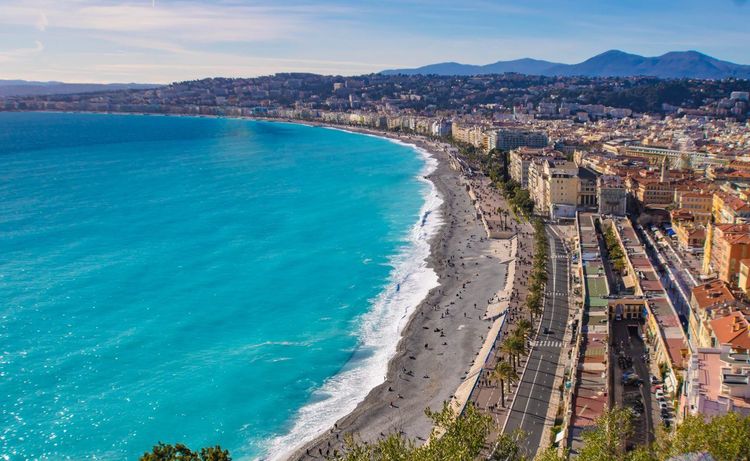
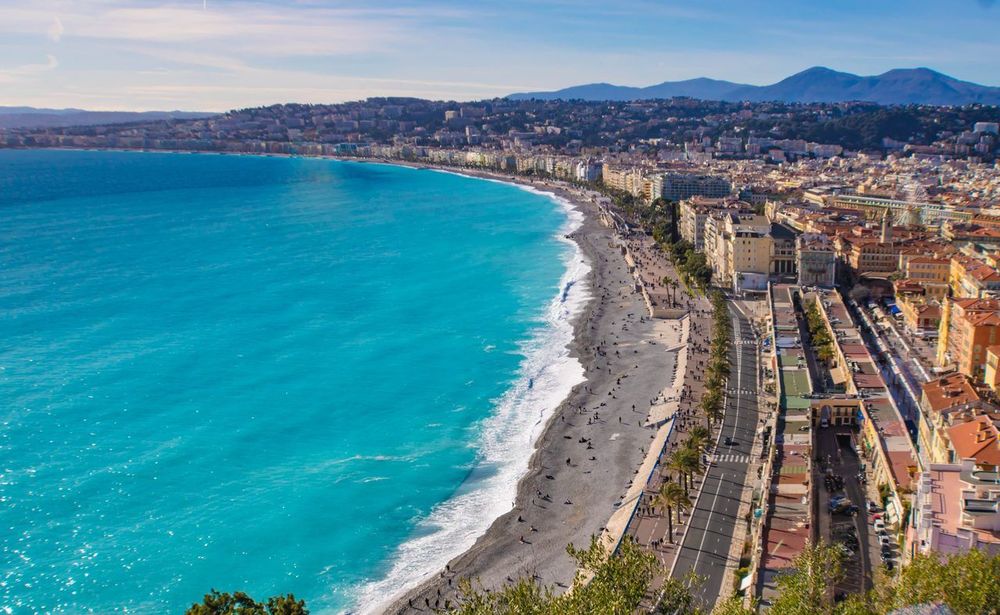
Despite its name, no trace remains of the fortress that gave this hill its name: Louis XIV's troops razed it in 1706, and the city then planted a public garden on its ruins in the 19th century. It is now one of the finest viewpoints on the entire Côte d'Azur, with the Baie des Anges on one side and the port Lympia on the other.
Access is on foot via several staircases from Vieux-Nice, or by a paid lift for those who want to spare their legs. Allow around twenty minutes to climb from the square of the same name, with shaded landings every fifty metres. An artificial waterfall about 30 metres high cascades down the western face of the hill, fed by a pipe installed in the 19th century to enhance the promenade of Nice's bourgeoisie.
At the summit, a 19th-century cemetery occupies part of the plateau: its tombs overlooking the sea are worth a detour for fans of funerary history, with headstones of Italian families and vaults of artists. You will also come across the remains of a medieval cathedral, simple foundations outlined on the ground, as well as a children's playground installed on the former bastion.
Come preferably in the late afternoon: the raking light turns the bay orange and the morning tourist groups have already left. A drinking water point is located near the playground, useful in the height of summer when Nice's thermometer exceeds 30 degrees. The site remains open all year round, unlike the lift which charges a few euros for the ride up.
3. Walk Along the Promenade des Anglais
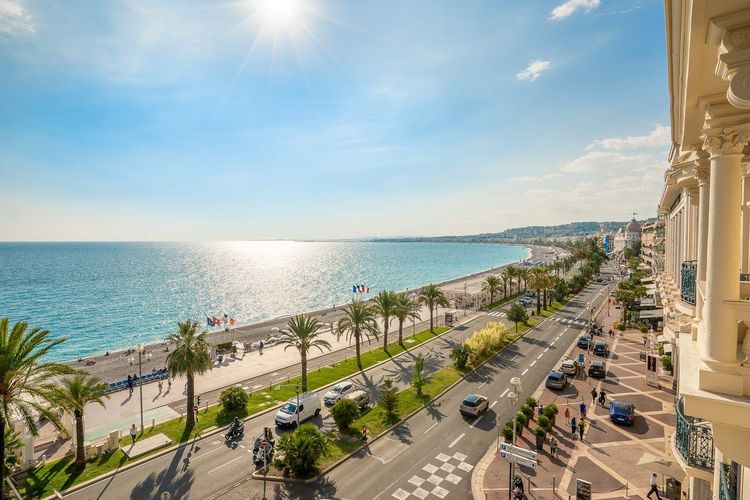
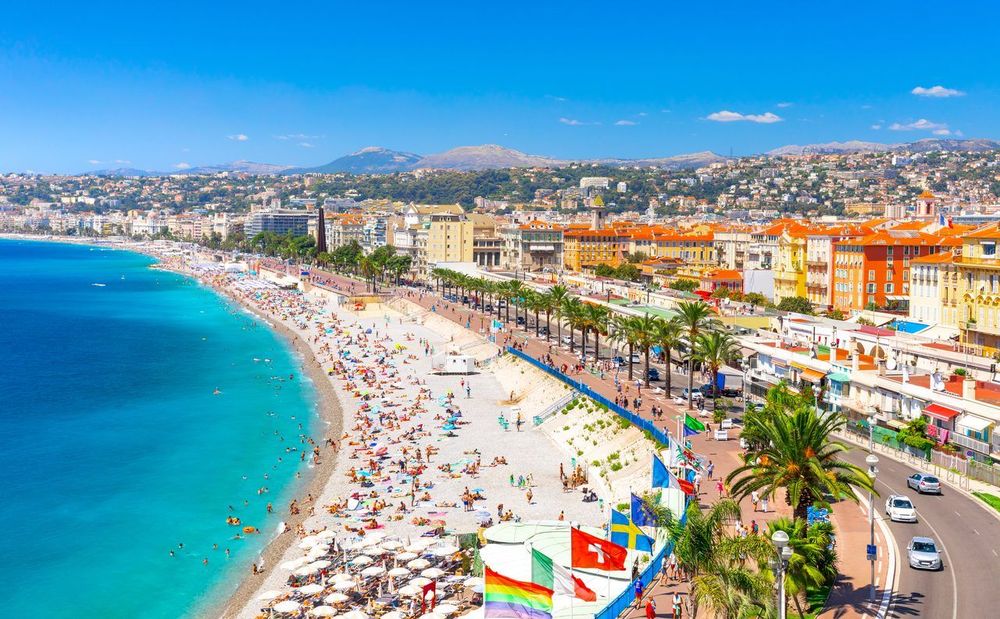
Built from the 1830s onwards thanks to donations from the British community wintering on the Riviera, the Promenade des Anglais today stretches more than seven kilometres along the seafront facing the Baie des Anges. Its blue balustrade, which has become one of the city's visual symbols, suits every pace: morning jog, electric bike or a simple post-lunch stroll.
Walking here requires no ticket, unlike the sun loungers set out in front of certain private establishments lining the road. The public benches are countless, often occupied at the crack of dawn by regulars who come to read the newspaper facing the sea. You will also encounter pétanque players on the courts set up near the Jardin Albert 1er, a local tradition that requires no registration.
The stretch between the airport and the city centre passes through several distinct neighbourhoods, from the popular beachfront to the Belle Époque buildings of the Musiciens district. Take the time to observe the façades on the city side: several century-old hotels, some of them listed, recall the golden age of aristocratic tourism in Nice. At dusk, the Art Deco lampposts light up one by one along the full length of the promenade, creating a particularly photogenic luminous perspective.
4. Swim on the Public Pebble Beaches
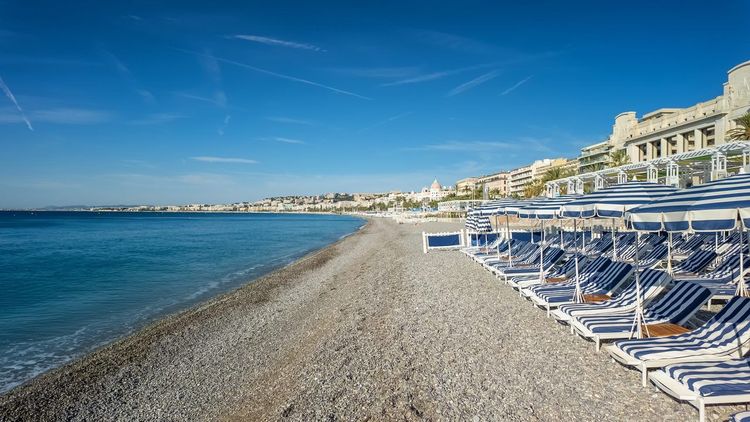
Nice has around twenty public beaches open to everyone along the Baie des Anges, alternating with paid private concessions. Unlike other resorts on the Côte d'Azur, the majority of Nice's coastline therefore remains open to all for laying down a towel.
Pebbles replace fine sand, which often surprises visitors from elsewhere: bring water shoes if your feet are sensitive. Showers and public toilets are provided at most municipal beaches, funded by the city and usable without any pass. Plage Beau Rivage (06300 Nice, rated 4.1/5 on Google with 3,726 reviews), right in the centre, remains one of the most frequented but also one of the best served by tram.
To avoid the summer crowds, head to the beaches further east towards the port district, which are generally less packed in July and August. A lifeguard supervises each public swimming area from June to September, a safety service provided by the city.
5. Browse the Cours Saleya Market
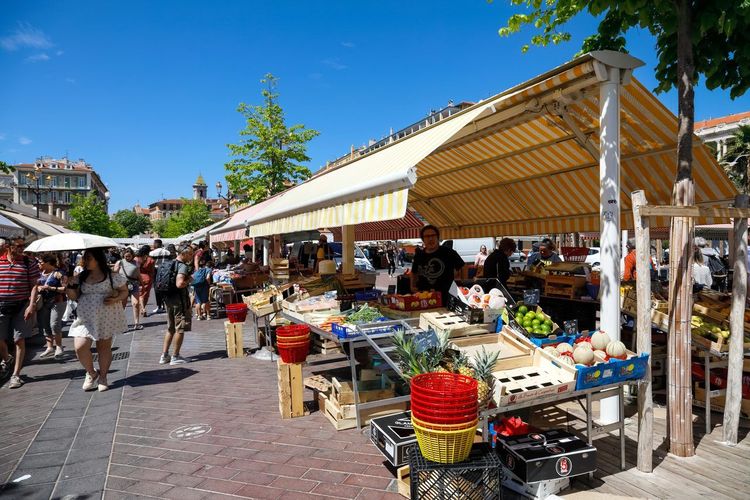
The Cours Saleya has hosted a flower and produce market since 1861, set up on this former square that once served as a promenade for Nice's notables. Colourful stalls of mimosa, carnations and local citrus fruits follow one after another every morning, except on Mondays when the square transforms into a flea and antiques market.
Wandering between the stalls is a pleasure in itself, even if the aromas of fresh socca and pissaladière make resistance difficult past 11 in the morning. Local producers sell tomatoes, courgettes and courgette flowers here, often at gentler prices than in supermarkets. A Ryo article on Nice's culinary specialities details the typical products to look out for first on these stalls.
The market generally closes in the early afternoon, replaced in the evening by restaurant terraces that take over the same square. Watching this transition, from the morning market to the night-time buzz, offers a vivid snapshot of the rhythm of life in Nice, far more telling than any tourist leaflet.
6. Walk Along the Coulée Verte
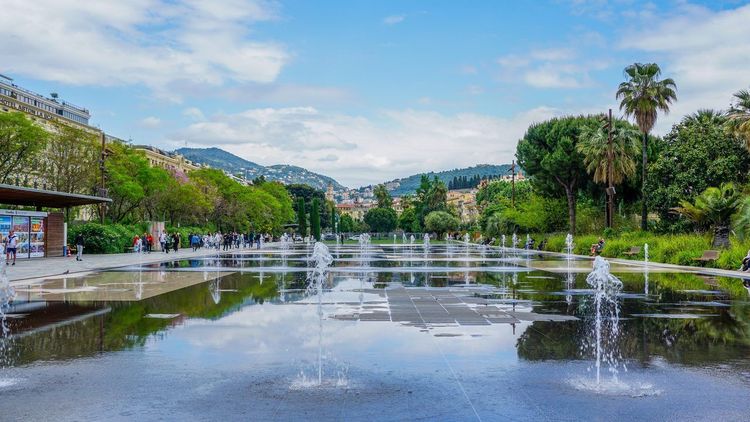
Inaugurated in 2013 on the site of a former underground car park, the Promenade du Paillon, nicknamed the Coulée verte, stretches about twelve hectares of green space right in the heart of the city, from the place Masséna to the museum of modern art. The project long divided the people of Nice before becoming one of the city's most popular relaxation spots.
A water mirror animates the central part of the park, where young and old wade freely from the first warm days, with no paid supervision or imposed hours. Themed play areas (dragons, giant compasses) punctuate the route, designed to keep children entertained while parents enjoy the shade of the olive trees planted along the paths.
The skate park on the MAMAC side draws a younger crowd, with local riders and passing tourists who simply come to watch the tricks. You will also find an impressive green wall, a kind of vertical continuation of the garden, as well as several dry fountains where water shoots directly from the ground at regular intervals. The Coulée verte makes an excellent resting point between two visits, with no need to order anything at a terrace café to sit down.
7. Admire the Cathédrale Sainte-Réparate
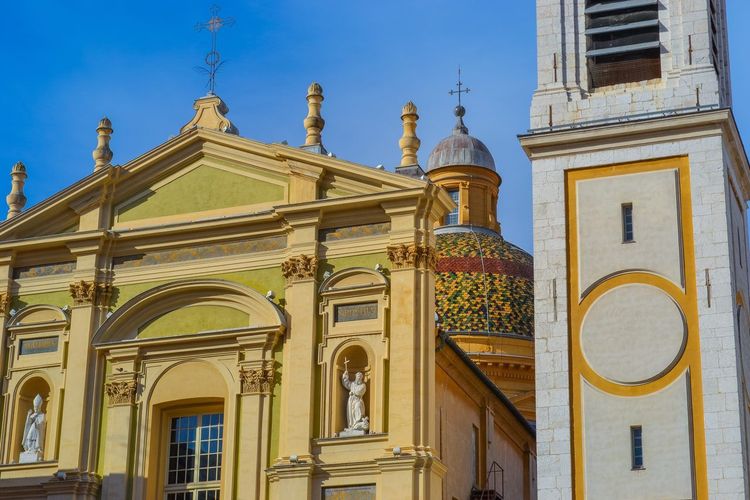
Built in the 17th century in the Niçois baroque style, the cathédrale Sainte-Réparate (Place Rossetti, 06300 Nice, rated 4.6/5 on Google with 5,199 reviews) occupies the heart of the place Rossetti, right in Vieux-Nice. Its dome covered with glazed tiles can be spotted from afar, while the interior displays gilded stucco and polychrome marble typical of Piedmontese baroque.
Entry is possible outside of religious services, allowing you to admire the side chapels at your leisure. The square in front of the building also houses one of the best ice cream parlours in the city, a sweet break that pleasantly complements the spiritual visit without overwhelming it.
8. Contemplate the Cathédrale Orthodoxe Saint-Nicolas
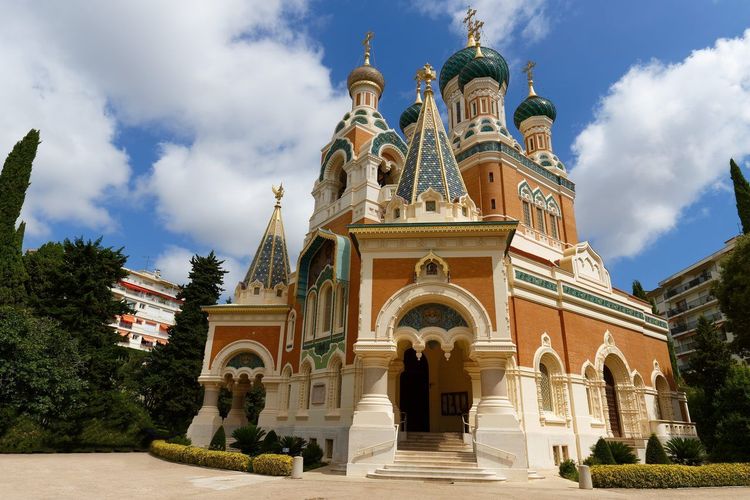
Built in 1912 to meet the needs of the large Russian aristocracy wintering on the Côte d'Azur, the cathédrale orthodoxe Saint-Nicolas (Avenue Nicolas II, 06000 Nice, rated 4.6/5 on Google with 10,512 reviews) remains one of the largest orthodox churches built outside Russia at that time. Its six gilded onion domes, visible from several surrounding streets, stand in sharp contrast to the Mediterranean architecture of the rest of the city.
The exterior and surrounding garden can be visited freely, offering a chance to photograph the multicoloured domes from every angle without spending a euro. Access to the interior requires a modest ticket, reserved for visitors who wish to admire the iconostasis and frescoes. Many visitors are content with the garden, which is more than enough to grasp the scale of the architectural project envisioned by the Russian patrons of the era.
9. Wander Along the Quays of Port Lympia
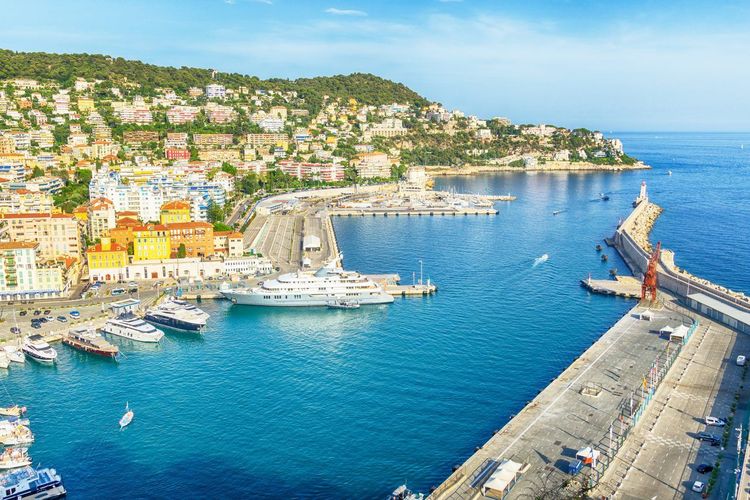
Excavated in the 18th century under the reign of Charles Emmanuel III of Sardinia, port Lympia retains its ochre and red façades lined along the quays, now home to fish restaurants and a few maritime companies serving Corsica. It is one of the least visited neighbourhoods for hurried tourists, making it a welcome break after the crowds of Vieux-Nice.
Strolling along the quays holds pleasant surprises, from watching ferries manoeuvre to amateur fishermen settled on the public pontoons. The Ryo guide to Nice devotes an entire chapter to this port district, often overlooked in standard itineraries despite its coherent architecture. Head up afterwards to the top of the Colline du Château for a bird's-eye view over the entire basin.
10. Explore the Gardens of the Cimiez Hill
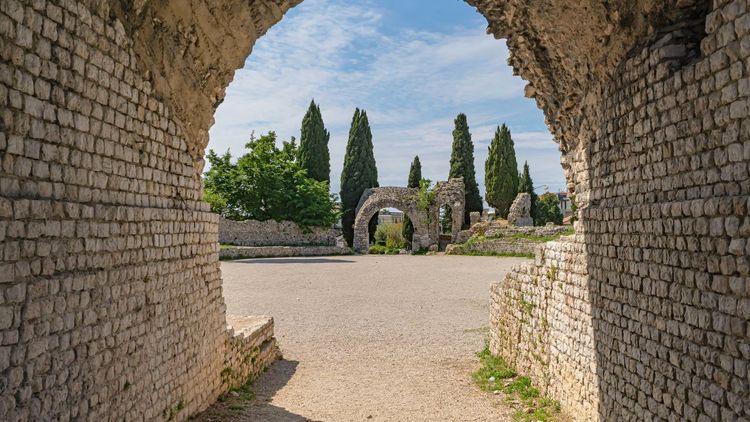
Situated on the heights of Nice, the Cimiez neighbourhood preserves the remains of an ancient Roman city, with an arena still used today for open-air concerts in summer. The century-old olive trees lining the paths give the site a Mediterranean atmosphere quite different from the seafront.
The gardens around the arena are freely accessible throughout the day, a park where the people of Nice come to picnic at weekends in the shade of umbrella pines. The partially excavated remains of the Roman thermal baths can be made out between the lawns without any paid signage blocking the way. You are here just a few minutes' walk from the Franciscan monastery, the logical next stop on this ascent towards the heights of the city.
Wear sturdy shoes: the climb from the boulevard de Cimiez is on a fairly steep slope, with no dedicated transport apart from a few regular bus lines.
11. Visit the Cimiez Monastery
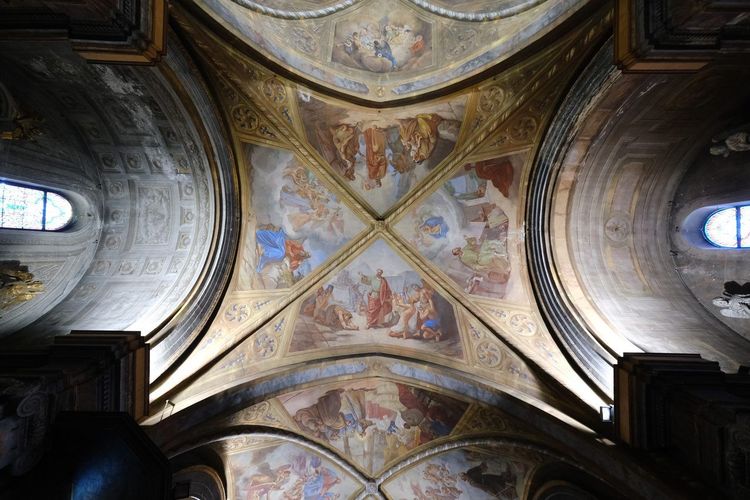
Still home to a small Franciscan community, the monastère de Cimiez (Place du Monastère, 06000 Nice, rated 4.6/5 on Google with 1,473 reviews) has occupied the summit of the hill of the same name since the 16th century. Its church houses several altarpieces by the Niçois painter Louis Bréa, considered one of the masters of early Niçois painting.
The church and its adjoining gardens remain open throughout the week, with an unobstructed view over the Baie des Anges that easily rivals that of the Colline du Château. The small attached Franciscan museum, dedicated to the history of the order, operates on a voluntary contribution rather than a fixed admission price. The formal gardens, planted with rose bushes, provide a calm setting ideal for catching your breath after the climb from the city centre. Ryo's audio-guided tour of Nice, Nissa la Bella, makes for a fitting complement further down in the historic centre.
12. Step Inside the Municipal Museums
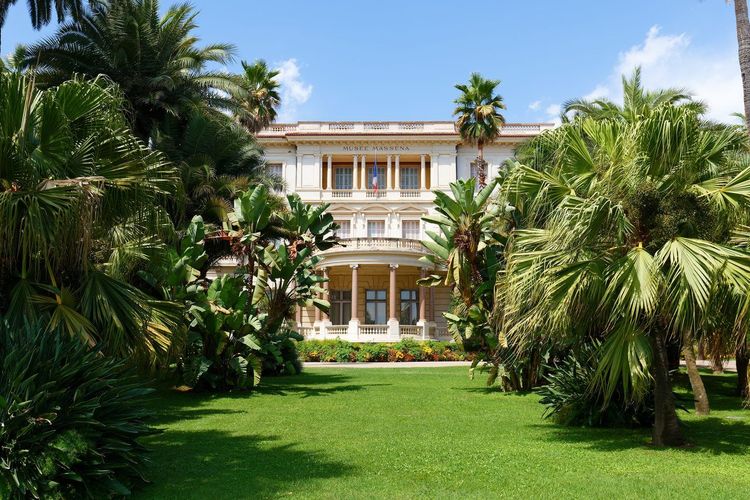
Since 2008, the city of Nice has abolished admission charges across all its municipal museums, a cultural policy rare enough in France to be worth highlighting. The musée Masséna, housed in a Belle Époque villa facing the sea, traces the history of Nice from its annexation by France in 1860.
The musée des Beaux-Arts Jules Chéret, in a former princely palace, brings together works by Chéret himself as well as Rodin, Monet and Dufy, all presented free of charge. The MAMAC (Place Yves Klein, 06300 Nice, rated 4.1/5 on Google with 4,320 reviews), the museum of modern and contemporary art located in the city centre, presents collections devoted to New Realism and the School of Nice, an artistic movement born locally in the 1960s.
A Ryo article dedicated to Nice's museums details all the permanent collections accessible throughout the year, from the archaeological museum of Cimiez to the Jakovsky international museum of naïve art. Only certain temporary exhibitions charge a separate admission fee, generally displayed clearly at the entrance to avoid any confusion. These institutions top any list of free activities in Nice, an argument often underestimated by classic travel guides that focus on the beach.
13. Discover the Théâtre de la Photographie et de l'Image
Housed in a 19th-century private mansion near the place Garibaldi, the Théâtre de la Photographie et de l'Image (27 Boulevard Dubouchage, 06000 Nice, rated 4.4/5 on Google with 1,374 reviews) presents temporary exhibitions devoted exclusively to photography, a fairly rare focus among French cultural institutions.
Entry is open all year round, in keeping with the same philosophy as the other municipal museums in Nice. The exhibitions change several times a year, ranging from documentary photography and portraits of local artists to historical retrospectives on the Côte d'Azur of the last century.
14. Take in Place Masséna and the Fontaine du Soleil
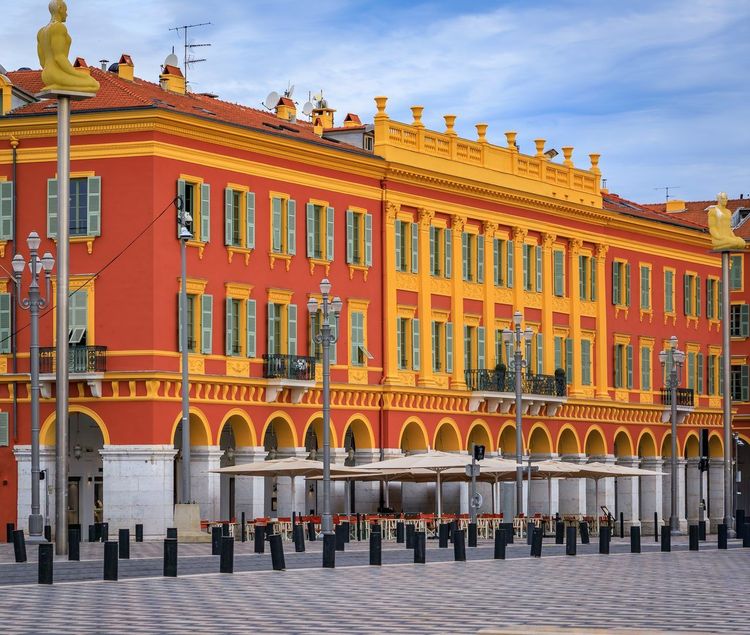
Built in the early 19th century, place Masséna (06000 Nice, rated 4.6/5 on Google with 27K reviews) displays its characteristic red ochre façades and a checkerboard of black and white paving stones that make it instantly recognisable in photographs of the city. Seven statues representing the continents, created by Catalan sculptor Jaume Plensa and installed in 2007, stand atop luminous masts that light up every evening.
The fontaine du Soleil, adorned with a statue of Apollo surrounded by the mythological figures of the planets, occupies the centre of the square and flows during the day to the delight of passers-by. The statue was deemed too provocative when it was installed in the 1950s, to the point of being hidden behind hoardings for a long time before eventually being accepted by the people of Nice.
The square serves as a natural starting point towards Vieux-Nice on one side and the Coulée verte on the other, an essential pedestrian crossroads even during the busiest summer tourist hours.
15. Cross the Place Garibaldi
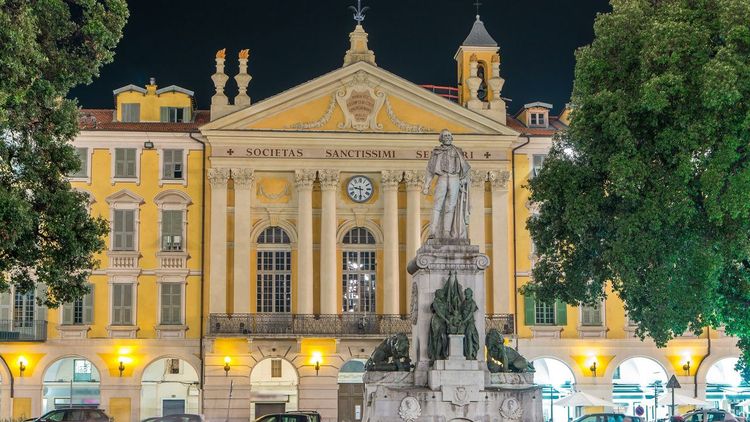
With its ochre yellow arcades and its statue of Giuseppe Garibaldi, born in Nice in 1807, this 18th-century square marks the historic entrance to the city from the neighbouring Piedmont.
The café terraces lining the arcades allow you to observe local life without any obligation to linger over a drink, and the central fountain offers a welcome coolness in the height of summer. The tram stops right here, making it a convenient passage point between Vieux-Nice and the port district.
16. Relax in the Jardin Albert 1er
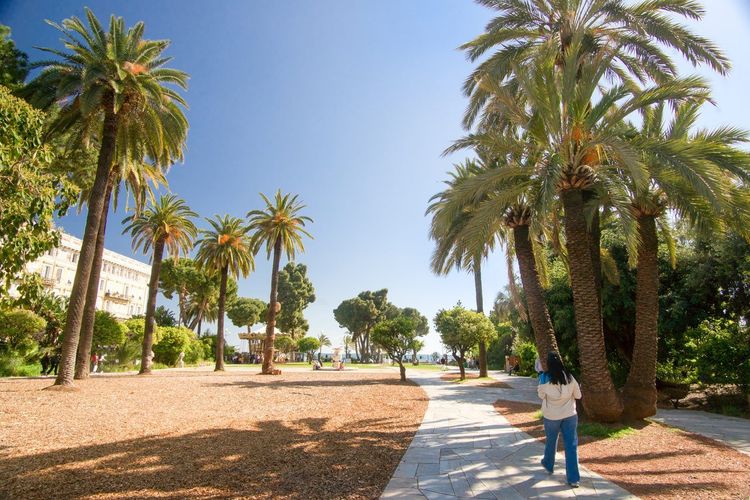
Opened to the public in 1852, the jardin Albert 1er is Nice's oldest public garden, originally laid out on the dried-up bed of the Paillon river. Its century-old palm trees and open-air green theatre make it a cool retreat right beside the Promenade des Anglais.
Concerts and other summer events are sometimes held here in the evenings, on a permanent stage set amid the tropical vegetation. The benches in the shade of the plane trees draw both neighbourhood retirees and tourists on a lunch break, a popular use that has never waned since the garden first opened.
17. Hike on Mont Boron
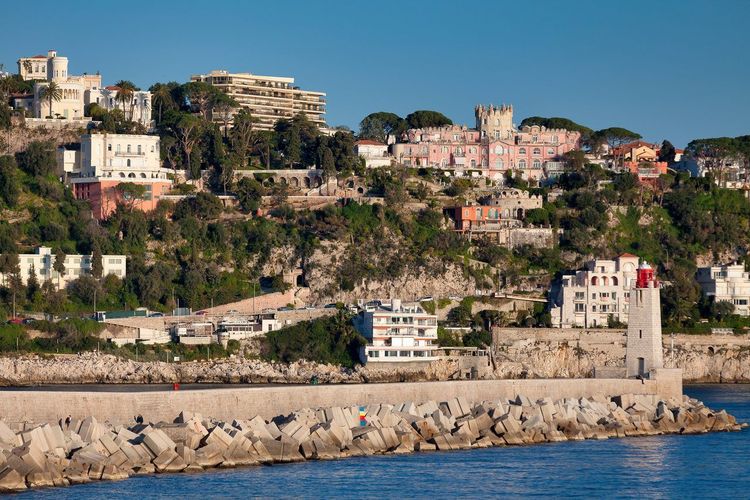
Rising to 191 metres, Mont Boron (06300 Nice, rated 4.6/5 on Google with 3,575 reviews) overlooks both port Lympia and the bay of Villefranche, offering one of the most spectacular perspectives on the Côte d'Azur without ever leaving the Nice area. The forest park at the summit was laid out on former military fortifications, several vestiges of which can still be discovered along the way.
Several marked trails, open all year round, allow you to reach the summit from the port or from the Corniche district. The climb takes around forty-five minutes at a leisurely pace, through a pine forest that shelters squirrels and occasionally a few mouflons that escaped from a former breeding enclosure. A Ryo article on activities in and around Nice lists other similar routes in the surrounding hills, for those who wish to string together several urban hikes.
At the summit, an orientation table helps identify cap Ferrat, île Sainte-Marguerite and, on a clear day, Corsica on the horizon. Bring water: there is no refreshment point once you have passed the entrance car park, unlike the more urban parks in the city.
18. Admire the Chapelle de la Miséricorde
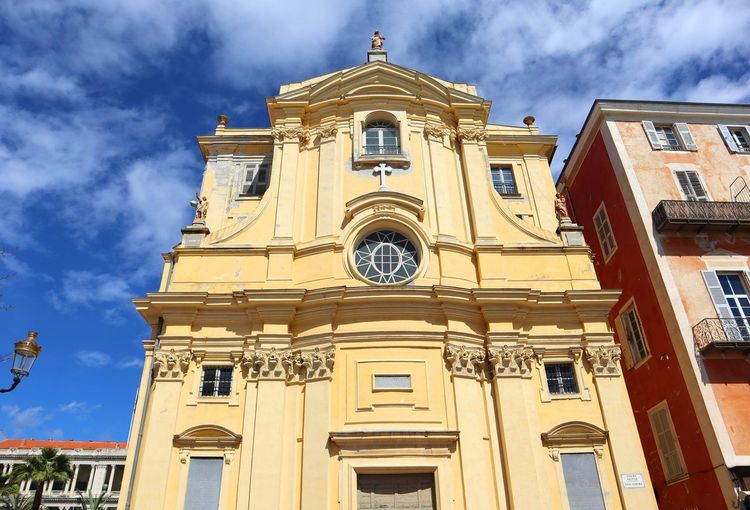
Located on the Cours Saleya, the chapelle de la Miséricorde (7 Cours Saleya, 06300 Nice, rated 4.3/5 on Google with 196 reviews) features one of the finest baroque façades in the city, attributed to Piedmontese architect Bernardo Vittone in the 18th century. Its interior decoration, less well known than that of the cathedral, nonetheless merits a visit during the rare hours when it is open to the public.
Entry is free when the chapel opens its doors, generally during temporary exhibitions organised by the Pénitents Noirs, a religious confraternity still active today that has managed the building since its founding.
19. Walk Up the Rue Saint-François-de-Paule
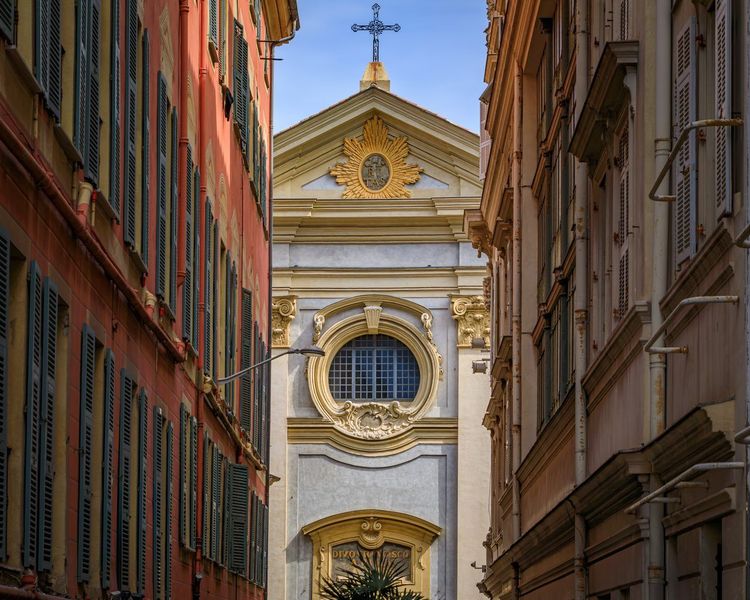
This elegant thoroughfare links Vieux-Nice to the Opéra de Nice, lined with long-established shops such as the confiserie Auer, founded in 1820 and still run by the same family after six generations. The windows covered with candied fruits and chocolates draw passers-by well before opening time.
Strolling past the façades satisfies heritage enthusiasts, between the Opéra built in 1885 and the fine food shops selling local olive oil by the bottle. This is also where you will find one of the city's best addresses for socca, a dish you can simply watch being prepared without necessarily buying it, if only for the spectacle of the large copper pan turned over the embers.
20. Join a Walk with a Nice Greeter
The Nice Greeters association offers entirely free guided walks, led by volunteer locals who show visitors around their city according to their own interests rather than a standardised tourist route. The concept, born in the United States, has been adopted by several major French cities including Nice for around fifteen years.
Booking is done online, generally several weeks in advance as demand outstrips the number of available volunteers. Each greeter designs their own itinerary, which explains why two visits to the same neighbourhood can tell completely different stories, one centred on gastronomy, another on architecture or local anecdotes. No financial contribution is required, although a tip or an invitation for a coffee is appreciated by the volunteers.
This format appeals particularly to visitors who return to Nice several times and want to explore a different angle on each stay. Allow around two hours of walking, a format sufficient to explore a neighbourhood in depth without simply ticking off a list of monuments.
FAQ
What are the must-see free activities in Nice?
The Colline du Château, the Promenade des Anglais, Vieux-Nice and the municipal museums (free for all since 2008) form the core of free activities in Nice. The public pebble beaches and the Coulée verte easily fill out a week of sightseeing.
Are Nice's museums really free all year round?
Yes, the municipal museums (Masséna, Beaux-Arts Jules Chéret, MAMAC, the archaeological museum of Cimiez) have not charged admission since a municipal decision in 2008. Only certain exceptional temporary exhibitions may charge a separate ticket, clearly posted at the entrance.
Can you explore Nice on a budget in a single day?
One day is enough to cover Vieux-Nice, the Colline du Château, the Promenade des Anglais and a municipal museum without a single entrance ticket. Simply plan for getting around by tram or on foot, and possibly a picnic for meals.
Where can you swim on Nice's public beaches?
The majority of Nice's coastline remains open to the public, with around twenty pebble beaches equipped with municipal showers. Only a few private concessions, identifiable by their rows of sun loungers, charge for access to their section of beach.
Are there free guided tours in Nice?
The Nice Greeters association organises walks led by volunteer locals, bookable online. The concept differs from classic guided tours since each volunteer designs their own itinerary based on their personal interests.
When are Nice's gardens and parks accessible?
The jardin Albert 1er, the Coulée verte, the gardens of Cimiez and the Mont Boron forest park are open all year round, with no strict closing time except at nightfall for certain enclosed areas.
Nice is therefore far from a city reserved for big budgets: between hills, gardens and municipal museums open to all, the majority of its heritage can be explored on foot. These free activities in Nice are enough to fill several full days, as long as you have good shoes and a little curiosity, without ever reaching for your bank card.
To extend the experience and connect these twenty stops without wasting time on unnecessary journeys, the Ryo audio guide for Nice offers a narrated itinerary covering the essentials of the historic centre and the surrounding hills, headphones on and smartphone in hand.
À lire également