© Shutterstock
 Votre guide Ryo
Visit Nice in 1 Day: Complete 2026 Itinerary
It's 8 a.m. and the raking light already glides across the ochre facades of the Cours Saleya, long before the first scent of socca rises from the copper pans. It is at this hour, before the tour groups arrive, that Nice reveals what holiday photos fail to capture: a city that is half Italian, half French, wedged between sea and hills, where fifteen centuries of history fit within a three-kilometre radius. Visiting Nice in 1 day is perfectly doable if you plan wisely: there is no need to rush through fifteen museums — a few well-chosen scenes are enough to understand why Matisse, Chagall and Nietzsche all set down their luggage here for a time.
This one-day itinerary moves from Old Nice at dawn to a quick climb up the Colline du Château for the panorama over the Baie des Anges, then a long walk along the Promenade des Anglais as far as the Négresco, followed by Place Masséna and its fountains before a sunset from Mont Boron. Factor in a lunch break over a pan bagnat, a possible detour through a free museum on the first Sunday of the month, and a final drink at Port Lympia. The whole day works without a car, on foot or by tram, which makes things considerably easier for those arriving by train or plane without out-of-the-way accommodation. To relive the experience once you are back home, the Ryo audio guide of Nice covers each step of this day with its full history, anecdotes and a step-by-step map.
Old Nice at Opening Time
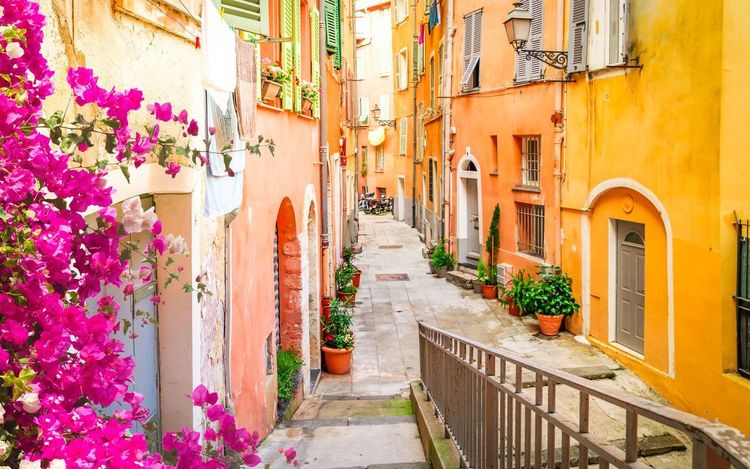
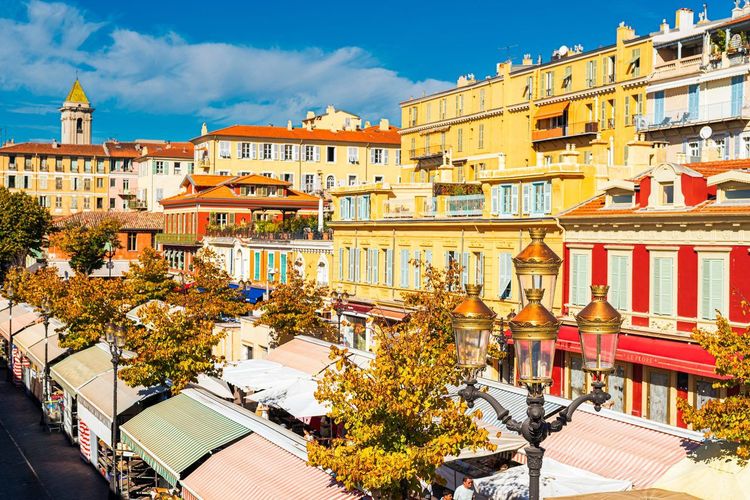
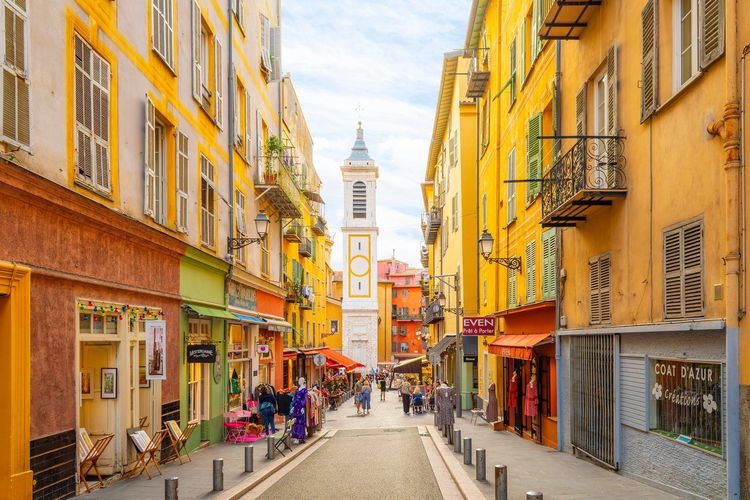
Before 9 a.m., the alleyways of Old Nice still belong to the locals. Shutters open one by one onto facades painted saffron yellow, brick red or deep ochre — a palette inherited from the period when Nice belonged to the Kingdom of Piedmont-Sardinia, right up to its annexation by France in 1860. This detail changes how you read the entire old town: the trompe-l'œil décors, the wrought-iron balconies and the tiny squares owe far more to Turin than to Paris, and this dual Franco-Italian identity runs all the way through to the Niçois dialect, still spoken by some of the older residents.
Walking up rue Pairolière, the commercial artery that runs through the neighbourhood from north to south, you will pass grocers still selling chickpea flour for panisse and dried salt cod for estocaficada, a little-known Niçois dish of cod and fish tripe simmered for several hours. Shops begin to open around 8:30 a.m., and this is the perfect moment to watch the morning deliveries, with crates of vegetables stacked in front of the carriage gateways.
Take a moment in front of the Palais Lascaris, a 17th-century Baroque mansion whose grand staircase and painted ceiling are well worth a visit, free for European residents under 26. The building belonged to the Lascaris-Vintimille family, one of the most powerful in the former County of Nice, and its sculpted facade deliberately contrasts with the sobriety of the neighbouring buildings.
The Cathédrale Sainte-Réparate, on Place Rossetti, deserves a five-minute stop: its dome of blue and green glazed tiles is visible from the Colline du Château, a useful visual landmark for the rest of the day. Built in the 17th century on the site of an older chapel, it bears the name of the city's patron saint, whose relics are said to have washed ashore on the nearby beach according to local legend. Right opposite, a celebrated ice cream parlour has been selling unique flavours since the 1930s, such as lavender or tomato-basil. It is no coincidence that the Niçois themselves queue there on Sundays, despite the competition from several other ice cream shops that have opened throughout the neighbourhood.
Continuing towards the Chapelle de la Miséricorde, a Baroque facade restored in 2019, you reach the far end of Cours Saleya. You can wander a little longer in the parallel alleyways: rue de la Préfecture, rue du Marché, or the small Place Saint-François where a fish auction takes place every morning — a tradition that has been going on for generations and usually begins around 6:30 a.m., well before most visitors are out of bed. The fishermen sell their night's catch directly to the neighbourhood's restaurateurs, a ritual that has changed little in a century despite the general decline in coastal fishing in the Mediterranean.
Allow 45 minutes to an hour for this first loop, longer if you give in to the temptation of sitting on a terrace. Many hurried visitors content themselves with crossing Cours Saleya without heading up into the side streets, which means missing much of the neighbourhood's real charm: it is precisely in these secondary alleyways, less photographed, that local life remains most visible.
Breakfast and the Cours Saleya Market
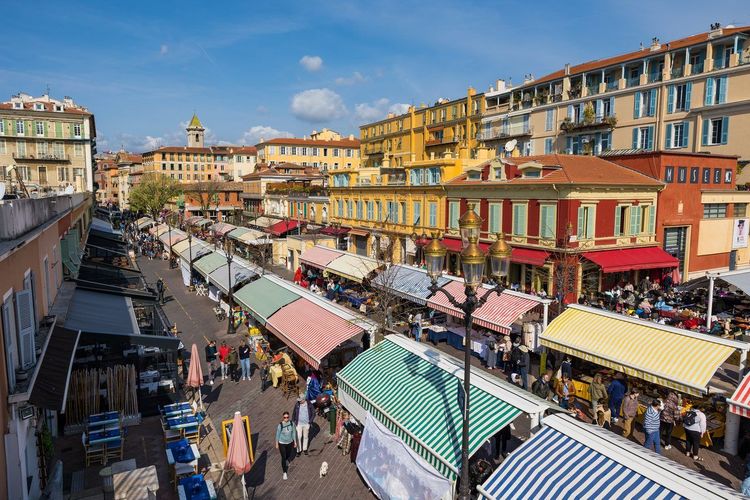
The Cours Saleya market (Cours Saleya, 06300 Nice, rated 4.5/5 on Google from 5,261 reviews) opens every day except Monday, from around 6 a.m. to 1:30 p.m. Flower stalls (mimosa in winter, carnations in summer) sit alongside fruit and vegetables from the hinterland, goat's cheeses from the neighbouring valleys and socca stands — that galette made from chickpea flour cooked over a wood fire, eaten standing up, with a fork, straight from an iron dish.
A simple tip transforms the visit: arrive before 8:30 a.m. to watch the producers set up their stalls without the crowd, or conversely after midday to take advantage of the reduced prices on flowers at the end of the session. A strong coffee and a pissaladière (caramelised onion tart with anchovies and Niçois olives) is more than enough to keep you going until lunch. On Mondays, the market changes character and becomes an antiques and brocante market — another way to discover the neighbourhood if your day falls on that date, with finds ranging from antique crockery to restored Provençal furniture.
The Colline du Château: Panorama and Waterfall
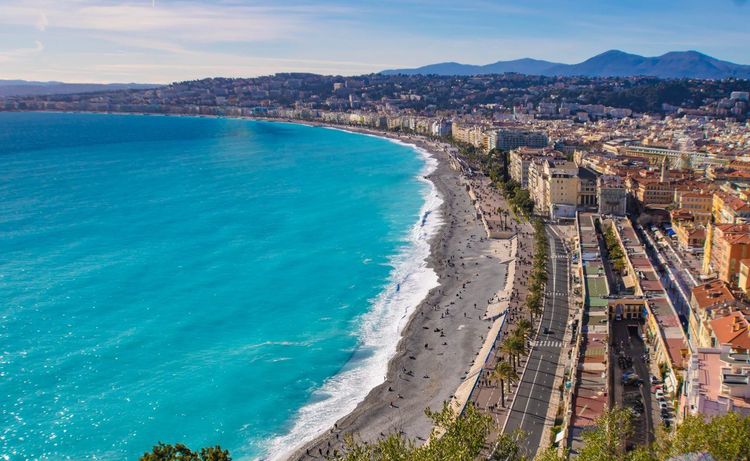
No visit to Nice in a single day should skip the Colline du Château (Montée Lesage, 06300 Nice, rated 4.7/5 on Google from 25,284 reviews), despite the absence of any castle since its destruction on the orders of Louis XIV in 1706, following the siege that ended the county's independence. The park that replaced it reaches 92 metres and can be accessed via a staircase of several hundred steps from Old Nice, or by a paid lift (€1 return) on rue des Ponchettes for those who prefer to save their legs for the rest of the day.
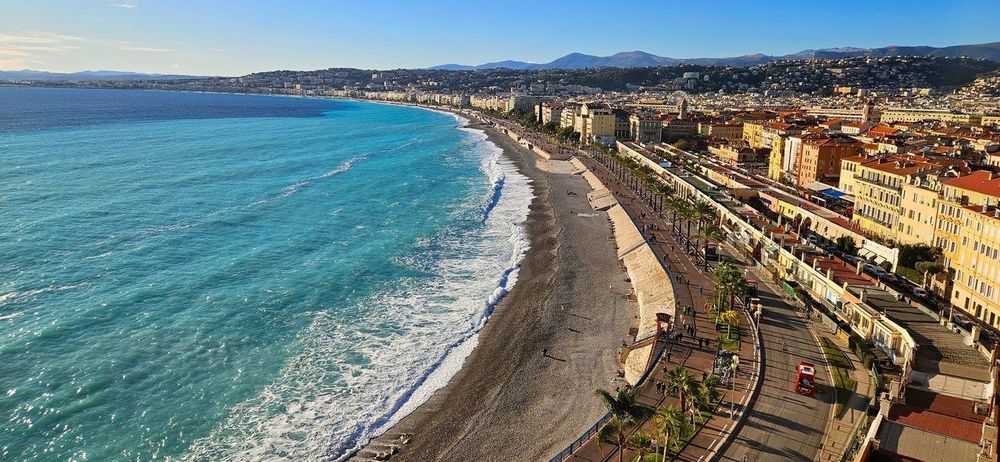
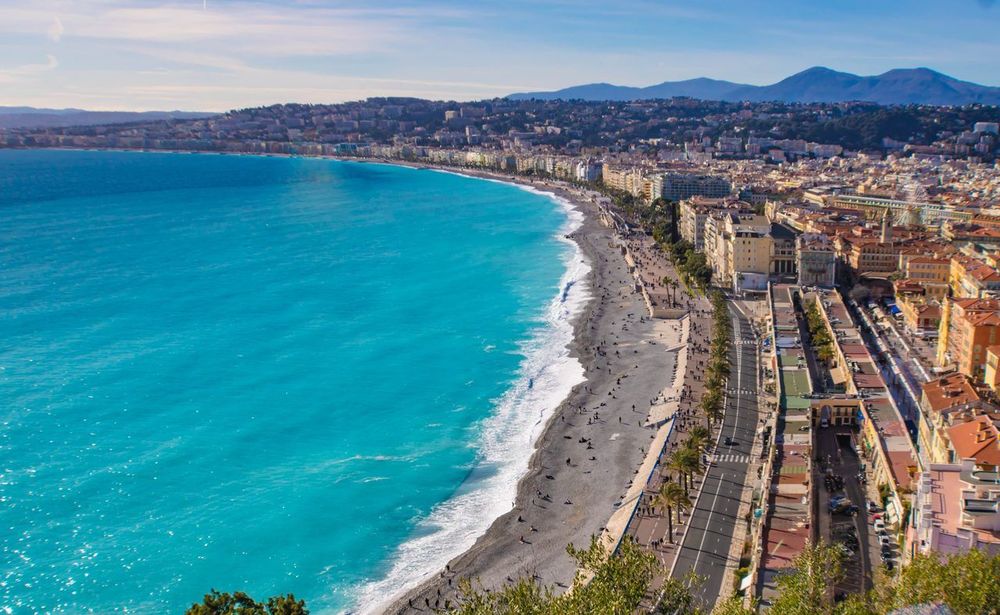
At the top, the orientation table offers the most complete view of the city: the Baie des Anges curving towards the airport, the rounded terracotta rooftops of Old Nice, and on clear days, the still snow-capped Alpine summits in winter. This is also where you understand Nice's topography, squeezed between sea and hillside, which explains why the city built so densely upward during the 19th century rather than spreading outward like other Mediterranean cities with more flat space available.
The artificial waterfall, fed since 1885, cascades down the face overlooking the port and creates a refreshingly cool microclimate in summer. It was originally designed to conceal a drinking water reservoir — a 19th-century feat of engineering that few visitors suspect when photographing it. Take time to descend via the path that runs alongside the Château cemetery, a monumental necropolis where several prominent Niçois families and a number of Resistance figures are buried, before making your way to the port district.
Allow 1 to 1.5 hours for the climb, the viewpoint and the descent, longer if you stay to picnic on one of the shaded lawns, open from 8:30 a.m. to 8 p.m. in summer and closing a little earlier the rest of the year. A free water point can be found near the children's play area, handy for refilling bottles before continuing the walk. If time is tight, this is the most easily sacrificed stop of the day for those who prefer to focus their energy on the seafront, without ruining the overall itinerary.
Down to Port Lympia
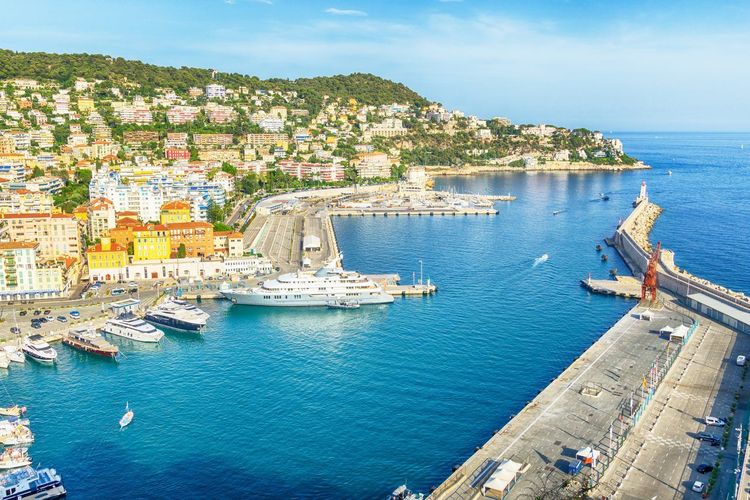
From the Colline du Château, a path leads directly down to Port Lympia, an 18th-century artificial basin where yachts, fishing boats and ferries to Corsica still moor today. The architectural ensemble surrounding it — ochre and yellow facades aligned in a semicircle — was designed at the time of the port's construction to give it visual coherence from the sea, a concern for aesthetics that was quite unusual for a port infrastructure of that era.
The port district keeps a different rhythm from the rest of the city: less touristy, more orientated towards neighbourhood cafés and the boat repair workshops that line the southern quay. Rue Ségurane, which runs along the north side of the port, is home to the majority of Nice's antique dealers — around thirty shops that are worth a 20-minute browse even without any intention of buying, between Art Deco furniture and marine objects sourced from across the region.
If you are travelling with children, the carousel on quai Cassini operates year-round and makes for a welcome break. For those who prioritise swimming over sightseeing, two pebble beaches within easy walking distance of the port — the plage de la Réserve and the plage de la Lympia — allow for a quick dip before resuming the walk westward. These two beaches remain less crowded than those in the city centre, a detail known mainly to local residents.
The Promenade des Anglais and the Baie des Anges
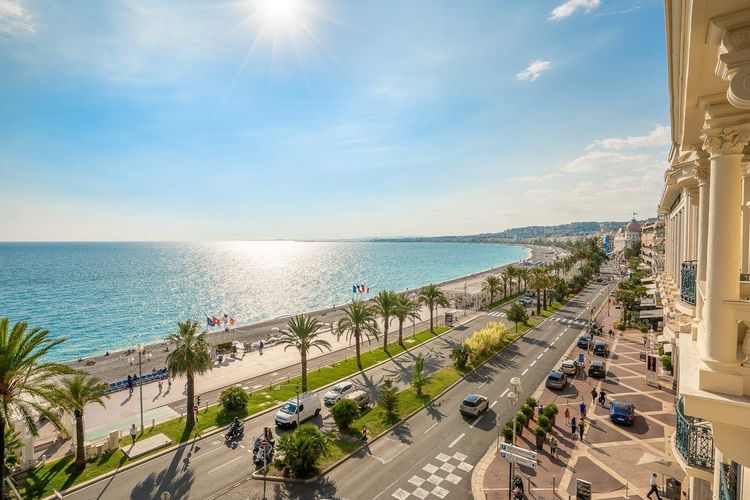
The Promenade des Anglais stretches 7 kilometres along the Baie des Anges, but a 2-to-3-kilometre section between quai des États-Unis and the airport is more than enough to grasp what has made it famous since its creation in 1820, at the initiative of the British community then wintering in Nice and eager to have a walkable path available in all seasons.
The promenade unfolds on two distinct levels: the upper path, lined with century-old palm trees and the famous blue railing that has become over the years one of the city's most photographed symbols, and the pebble beach below, dotted with free public areas and paid private beaches equipped with sun loungers and restaurants.
Walking this stretch takes around 45 minutes without stopping, but allow closer to 1.5 hours if you pause to dip your feet in the water, photograph the iconic blue chairs or watch the pétanque players who occupy certain central reservations from early afternoon. The bike-sharing scheme (Vélo Bleu network) remains a quick alternative for covering more ground if time is short; a station is located at each end of quai des États-Unis, with the first fifteen minutes free — more than enough for a section of the promenade.
Thrill-seekers will find several paddle and jet-ski clubs along this stretch, open from April to October, while families will appreciate the many play areas on the city side, particularly the one in Jardin Albert 1er, shaded by plane trees. It is also on this promenade that Nice's famous flower parade takes place each February during the Carnival, a tradition dating back to 1873 that temporarily transforms the entire route into a procession of flower-covered floats.
On the other side of the railing, the grand private mansions built between 1860 and 1930 tell the story of winter tourism on the Riviera all by themselves: Italian villas, Belle Époque palaces and a handful of Art Deco buildings follow one another without any real urban logic — a simple accumulation of fortunes from across Europe drawn here by the climate.
The Hôtel Négresco and Belle Époque Villas
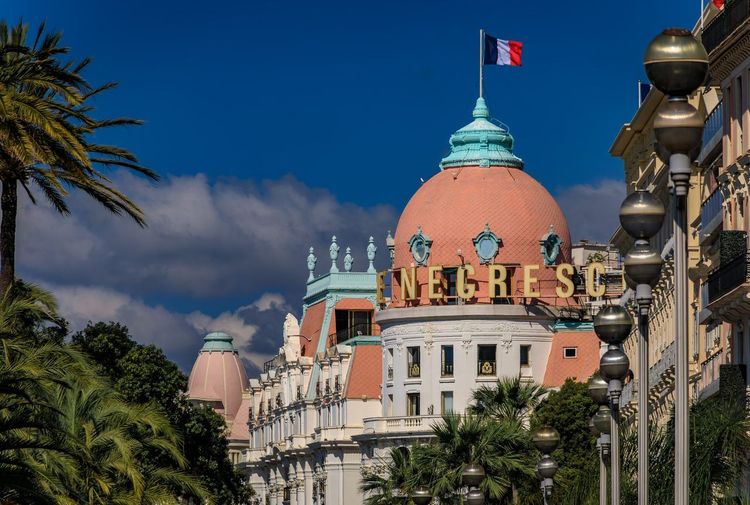
It is impossible to walk along the Promenade des Anglais without noticing the pink dome of the Hôtel Négresco (37 Promenade des Anglais, 06000 Nice, rated 4.6/5 on Google from 6,568 reviews), inaugurated in 1913 by Henri Negresco, a Romanian immigrant who had arrived in Nice penniless a few decades earlier. The palace, listed as a historic monument since 2003, houses a private art collection estimated at several tens of millions of euros, with works by Dufy, Niki de Saint Phalle and a Baccarat crystal chandelier that weighed over a tonne when it was installed.
The interior cannot be visited without staying or dining there, but the lobby remains accessible for a coffee at Le Relais bar, provided you are dressed appropriately. Just behind it, the villa Masséna, now a municipal museum, traces the city's history during the Belle Époque, when Russian and English aristocrats would winter on the Riviera in villas built all along this section of the promenade.
Admission costs €10, free on the first Sunday of each month, and the whole museum can be visited in 40 minutes. The garden surrounding the villa, planted with palm trees and orange trees, remains open free of charge even outside museum hours — a pleasant option for a shady break in the summer heat.
Place Masséna: Gateway to the New City
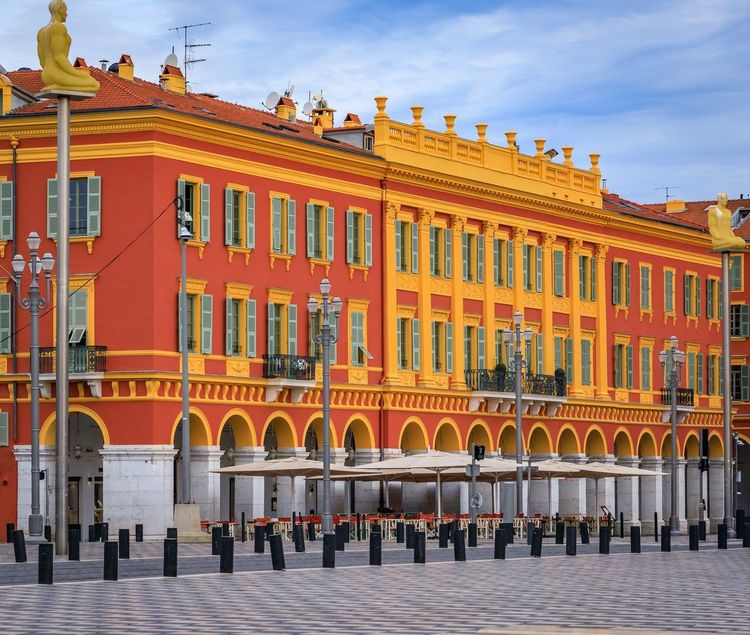
With its chequerboard of red and white paving stones, its ochre-coloured buildings modelled on the Turin style, and its seven suspended statues by Jaume Plensa that light up at night, Place Masséna (Place Masséna, 06000 Nice, rated 4.6/5 on Google from 18K reviews) marks the boundary between Old Nice and the 19th-century city. Each statue represents a continent — an installation placed in 2007 that initially divided locals before becoming a recognised symbol of the city, to the point of appearing on some of the postcards sold in the neighbourhood today.
The square also serves as a reference point for navigating the rest of the day: the tram (line 1) runs through it, the Promenade des Anglais is 5 minutes to the south, and Old Nice extends just to the east. In the evening, the fountains and statues create a different, almost theatrical atmosphere, which explains why many visitors return to stroll here after dinner, once the day's heat has subsided and coloured lighting replaces natural daylight. On the south side of the square, the Fontaine du Soleil bears a white marble statue of Apollo nearly seven metres tall, sculpted by Alfred Janniot and unveiled in 1956: deemed too immodest at the time, it was removed in 1979 before returning to its original plinth in 2011 — a detail most passers-by are unaware of as they photograph it.
A Museum in One Hour: Matisse or MAMAC
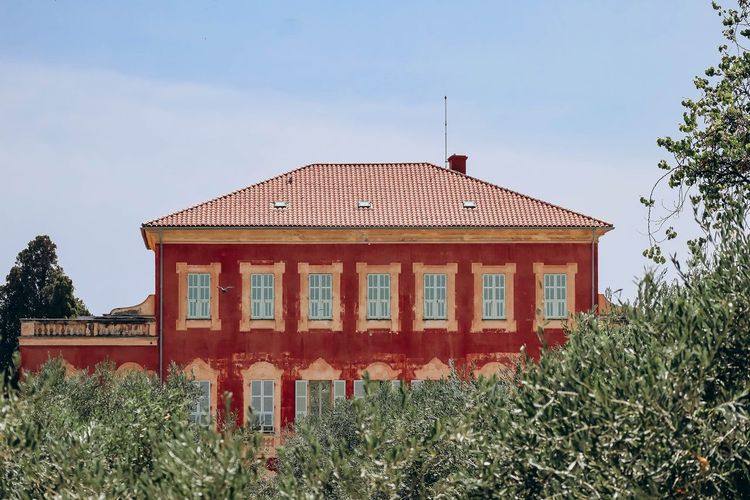
If your day leaves an hour to spare, two cultural options compete for your attention. The Musée Matisse, housed in a 17th-century Genoese villa in Cimiez, holds more than 400 works donated by the artist himself, who lived and is buried in Nice from 1917 until his death in 1954. Admission is €12, free on the first Sunday of the month, but the site is a 20-minute bus ride from the centre, which means sacrificing another step in the itinerary.
More convenient for a single day, MAMAC (Place Yves Klein, 06300 Nice, rated 4.1/5 on Google from 4,320 reviews) (the Museum of Modern and Contemporary Art), situated on the Promenade du Paillon a stone's throw from Place Masséna, presents works by Niki de Saint Phalle, Yves Klein (a Nice native) and the Nice School of the 1960s. Its terrace also offers an unobstructed view of the Colline du Château — a useful visual complement if you skipped the morning climb.
The MAMAC ticket, at €10, gives 48-hour access to all municipal museums and galleries as well as a temporary exhibition renewed several times a year, and the building itself — with its glass walkways linking four towers — is worth seeing even without going inside. Our dedicated article on the museums of Nice details opening times and free admission days if you prefer to plan this step in advance rather than improvise on the spot.
A Quick Niçois Lunch
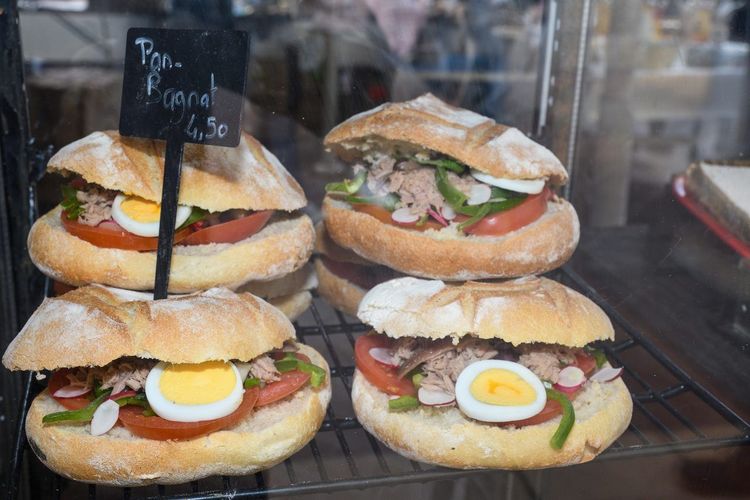
Eating quickly without compromising on quality is perfectly possible in Nice, as long as you know the right tricks. A pan bagnat — a round sandwich filled with tuna, hard-boiled eggs, tomatoes, peppers and anchovies drizzled with olive oil — can be eaten standing up and rarely costs more than €6 to €8 at a good deli in Old Nice.
Socca remains the fastest option: a few minutes' wait in front of the copper pan, around €5 a portion, and the guarantee of continuing your walk on a full stomach without losing time sitting down. For those with a bigger appetite, the original salade niçoise traditionally contains neither potatoes nor cooked green beans — a detail that often surprises visitors used to the version exported to the rest of France.
Our page on the culinary specialities of Nice lists around ten other local dishes worth trying if time allows, including the sweet Swiss chard tart — a local dessert that tends to baffle anyone who has never heard of it.
The Promenade du Paillon and Its Water Features
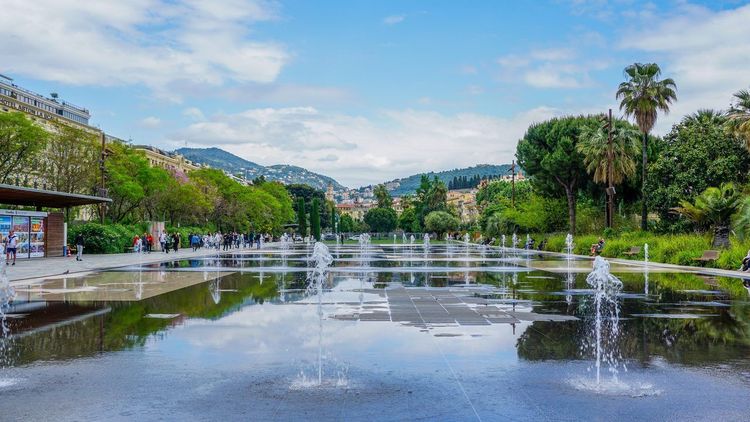
Beyond Place Masséna, the Promenade du Paillon unfolds across 12 hectares of landscaped gardens created in 2013 on the former covered bed of the Paillon river, which once ran open to the sky before being covered over in the 19th century. The water jets, particularly popular with families in summer, shoot up from the ground at intervals and draw children and adults alike in the July and August heat. The mirror fountain at the garden entrance, with its misting sheet of water that appears and disappears in cycles, serves as an impromptu playground for children from the first warm days and lowers the ambient temperature by several degrees on late afternoons.
The promenade continues northward to the Théâtre National de Nice and the media library, in a contemporary architectural complex that deliberately contrasts with the Belle Époque facades encountered earlier. A 15-minute pause on one of the shaded benches is enough to observe the local rhythm: morning joggers, retired residents deep in conversation, teenagers skateboarding on the ramps laid out at the northern end of the garden.
Cathédrale Orthodoxe Saint-Nicolas and the Russian Quarter
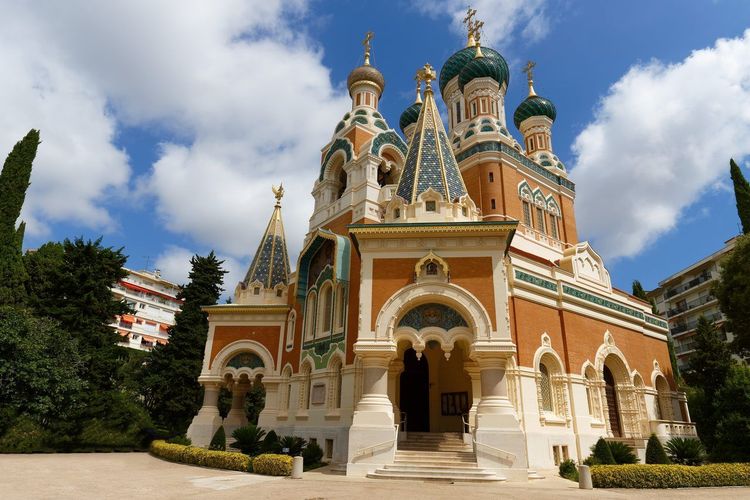
Ten minutes' walk from the station, the Cathédrale Orthodoxe Saint-Nicolas (Avenue Nicolas II, 06000 Nice, rated 4.6/5 on Google from 10,512 reviews) always surprises visitors who were unaware of its existence. Built between 1903 and 1912 thanks to donations from Tsarina Maria Feodorovna, it remains the largest Orthodox cathedral outside Russia, with its six onion-shaped domes covered in green and gold ceramic tiles that stand in sharp contrast to the surrounding Niçois architecture.
This Russian presence is no accident: from the 1860s onwards, the Russian aristocracy wintered in Nice alongside the British, drawn by the mild climate and by an already established colony. Tsarevich Nicholas Alexandrovitch, who died in Nice in 1865, even lent his name to the avenue that borders the building.
Admission costs €5 and the visit, interior included, takes 20 to 30 minutes. The gilded frescoes and carved iconostasis are worth the detour even for visitors unfamiliar with Orthodox religious art, and the silence inside contrasts sharply with the bustle of the city outside.
Sunset: The Best Viewpoints
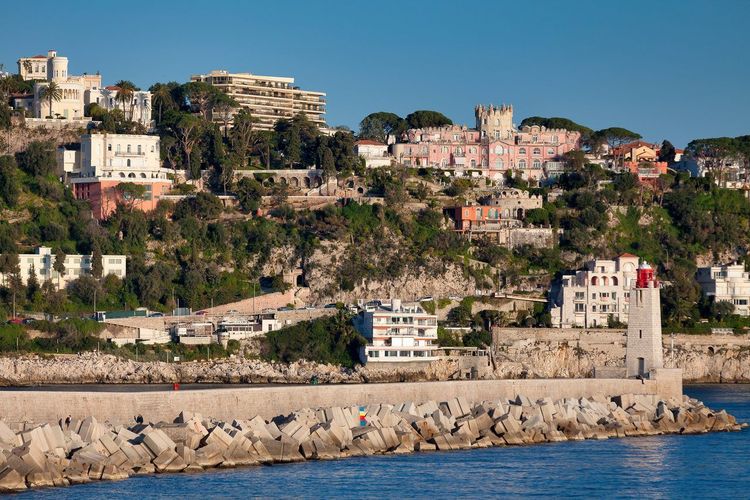
Ending a day in Nice means choosing your viewpoint for sunset, and three options stand out clearly. Mont Boron (Mont Boron, 06300 Nice, rated 4.6/5 on Google from 3.2K reviews), to the east of the city, offers from its sentier des Douaniers an unobstructed view of the entire bay, the Corniche and, on very clear days, the coastline of Corsica on the horizon. It can be reached in 30 minutes on foot from the port, or in 10 minutes by car if you have rented a vehicle for the day.
If the day's fatigue is already weighing on your legs, returning to the Colline du Château at sunset offers a very different experience from the morning visit: the raking light colours the rooftops orange and the ships anchored in the bay gradually light up — a spectacle that many visitors overlook, yet far less crowded than the midday slot.
Finally, simply lingering on the Promenade des Anglais as the Art Deco street lamps come on, with the Négresco silhouetted in the background, remains the easiest option for those with no more energy to climb anywhere. Amateur photographers gather there in numbers between 8 and 9 p.m. in summer, when the sky turns pink above the bay.
You can round off the evening with a final drink on a terrace at Port Lympia, where several bars offer a direct view of the moored boats — an atmosphere far more local than the seafront terraces, which are often pricier for equivalent quality. Ryo's audio-guided tour ties this stop back to the Promenade des Anglais earlier in the day, for anyone piecing the two moments together.
Practical Hour-by-Hour Itinerary
For those who prefer a chronological framework rather than a list of places, here is how to link everything together without any dead time. 8–9 a.m.: Cours Saleya market and breakfast. 9–10 a.m.: Old Nice alleyways, Palais Lascaris, Cathédrale Sainte-Réparate. 10–11:30 a.m.: climb to the Colline du Château, panorama and descent to Port Lympia.
11:30 a.m.–1 p.m.: Promenade des Anglais from quai des États-Unis to the Négresco, with a pan bagnat stop along the way. 1–2 p.m.: lunch or a cool-down break, possibly a museum if energy allows. 2–3:30 p.m.: Place Masséna, Promenade du Paillon and MAMAC. 3:30–4:30 p.m.: Cathédrale Orthodoxe Saint-Nicolas — a slight detour that is worth the extra walking for anyone who has never seen Orthodox architecture.
4:30–6 p.m.: return to the centre, shopping on rue de France or avenue Jean Médecin depending on your mood, then head up to Mont Boron or the Colline du Château for the evening light. 6–8 p.m.: sunset and aperitif at Port Lympia or on the Promenade des Anglais. This framework is indicative: each step can be shortened or extended depending on the weather, the season and your walking pace, and nothing stops you from reversing the order if your hotel is on the eastern side of the city.
In winter, shorter days mean tightening the programme: it is better to sacrifice either Cimiez or part of the seafront rather than trying to do everything in fading light from 5:30 p.m. onwards. In summer, by contrast, the itinerary can easily stretch to 9:30 p.m. thanks to the late light.
For those who want to keep a record of each story once back at the hotel or on the train home, the Ryo app lets you replay the audio commentary for every stop covered during the day, with no connection needed once the content has been downloaded in advance. The Ryo audio guide of Nice covers all the places mentioned here with 28 audio tracks and 3 hours 15 minutes of content spread over 7.1 kilometres — enough to turn this written itinerary into a fully commented walk on the ground.
Getting Around Nice in a Day
The question of how to get around Nice resolves itself fairly easily: the city lends itself very well to walking, with the essential part of the itinerary described here fitting within a 3-kilometre radius of Old Nice. Exploring on foot remains the most logical option for a single day, provided you bring comfortable shoes and a bottle of water, especially in summer when temperatures regularly exceed 30°C in July and August.
For tireder legs or groups with children, the Nice tourist train offers a 45-minute circuit taking in Old Nice, the Colline du Château and the Promenade des Anglais, with a fare of around €10 and departures every 30 minutes from Jardin Albert 1er. The hop-on hop-off double-decker bus tour covers a wider area in a morning, useful if you are adding Cimiez or the port to your programme without wanting to walk between every stop.
The tram, with a ticket at €1.70 valid for 74 minutes, remains the cheapest way to quickly connect the station, Place Masséna and the port. Three lines cover the city's main areas, and one runs directly from the airport to the centre in around twenty minutes — a practical option for visitors arriving on an early flight who want to start their day without delay.
Extending Your Stay: Day Trips and Where to Sleep
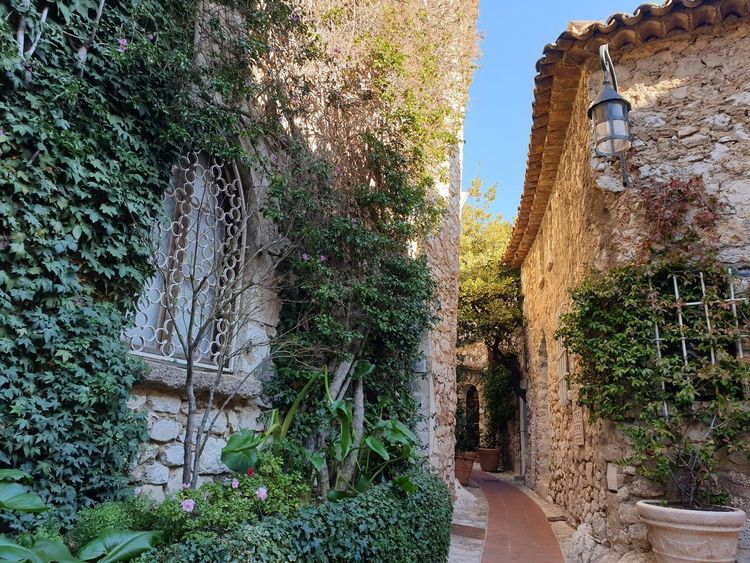
If this day has made you want to stay longer, two days on the ground allow you to add Cimiez with its Roman arenas and the neighbouring archaeological museum, while a third day leaves time for a trip to Èze (06360 Èze, rated 4.6/5 on Google from 9.8K reviews), a medieval hilltop village a 15-minute bus ride away, or to Villefranche-sur-Mer with its deep harbour, considered one of the most beautiful in the Mediterranean.
For accommodation, Old Nice offers the charm of narrow alleyways but sometimes questionable noise levels at weekends, while the Promenade des Anglais district guarantees peace and sea views at higher prices, particularly near the Négresco. The area around the station, less glamorous but undergoing significant renovation in recent years, remains the most affordable and within reasonable walking distance of the entire itinerary described here.
For organising a trip into the Nice hinterland or to the most beautiful villages around Nice, it is best to set aside a full day, as the winding mountain road invites you to stop frequently at viewpoints overlooking the gorges and the perched villages that punctuate the Alpes-Maritimes hinterland.
FAQ
How long does it take to visit Nice?
One day is enough to cover the essentials of the historic centre, the seafront and a panoramic viewpoint, provided you start early and walk at a steady pace. Two to three days allow time to add the Cimiez museums and a trip to the hinterland villages without ever feeling rushed.
What should you absolutely see in Nice in 1 day?
Old Nice and its market, the Colline du Château for the panorama, the Promenade des Anglais as far as the Négresco, and Place Masséna form the unmissable heart of the city, rounded off with a sunset from either Mont Boron or the seafront.
What can you visit in Nice for free?
The Colline du Château, the Promenade des Anglais, Place Masséna, the Promenade du Paillon and the exterior of the Orthodox cathedral can all be visited without spending a euro. Several municipal museums, including Matisse and MAMAC, are free on the first Sunday of each month, and entry remains free year-round for residents of the Nice metropolitan area with the museum pass.
How do you visit Nice without a car?
The tram, bus and walking are more than sufficient: the main sites fit within a 3-kilometre radius of the centre, and the Vélo Bleu network usefully complements longer journeys to the port or Cimiez for those who want to save time.
Is Nice easy to explore on foot?
Yes, it is even the best option for a day trip: the terrain remains moderate outside the Colline du Château and Mont Boron, and walking allows you to spot details that transport invariably causes you to miss, such as the hidden alleyways of Old Nice.
What is the best time to visit Nice?
Spring (April–June) and early autumn offer a pleasant climate without the tourist density of July and August. Winter remains mild and allows you to enjoy the flower market and a noticeably quieter city, provided you are willing to accept shorter days.
Conclusion
One day in Nice is never quite enough, but it is more than sufficient to understand why so many visitors come back year after year. Between the morning market, the panorama from the Colline du Château, the long walk along the Promenade des Anglais and the sunset from Mont Boron, this itinerary covers the essentials without ever rushing from one site to the next.
If certain stops left a stronger impression than others, the Ryo Nice tour lets you take home the full history of every place you passed through, to listen to again at home or on a future visit to the Côte d'Azur.
À lire également